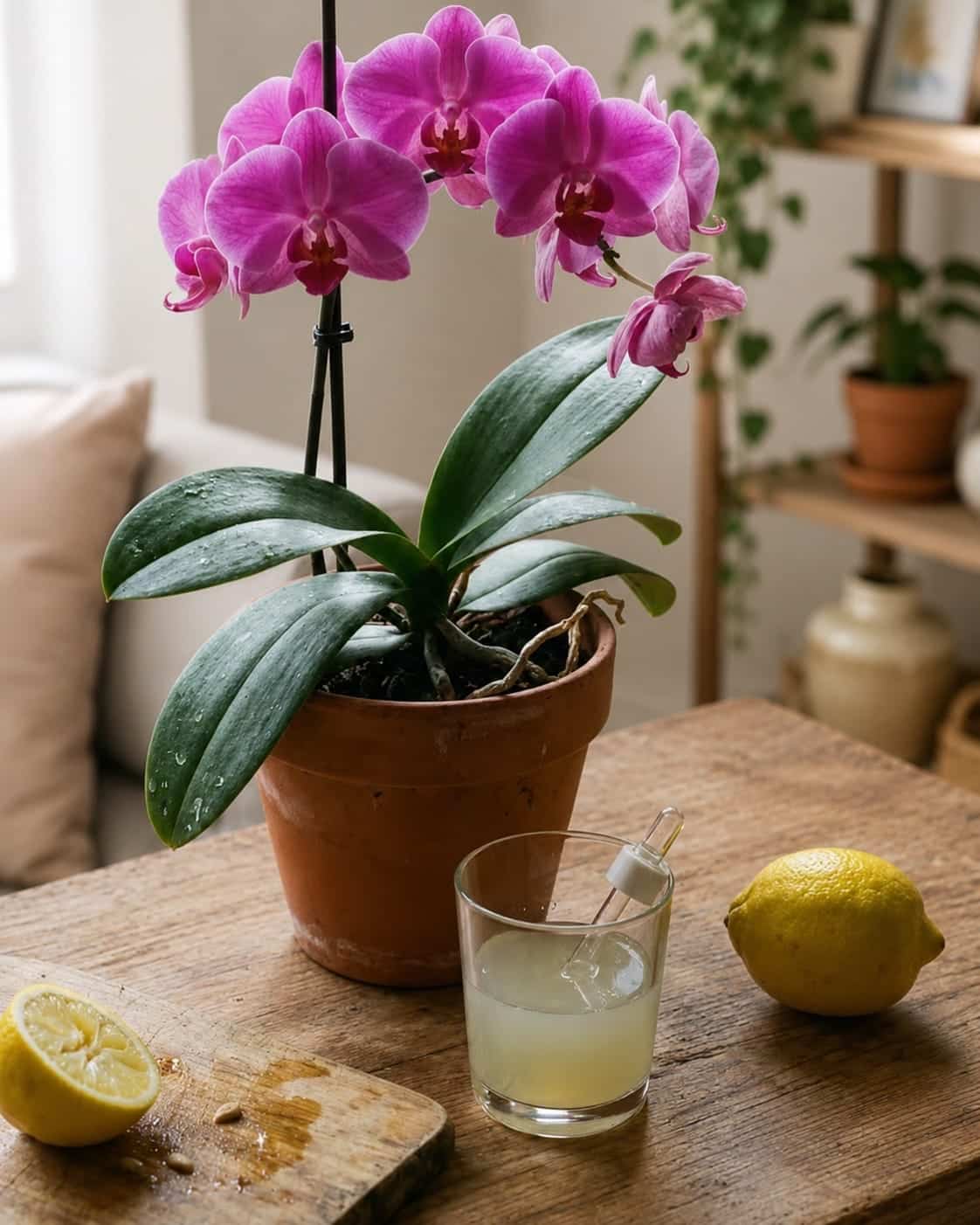
The Real Secret to Orchid Reblooming
The real secret to orchid reblooming is strong, steady care. For many common orchids, bright indirect light is essential. The plant should receive enough brightness to create energy, but not harsh sun that burns the leaves.
After the flowers fade, the orchid needs time to rebuild. It may grow new roots and leaves before it makes another flower spike. This rest period is normal and healthy.
Many Phalaenopsis orchids also respond to a slight drop in nighttime temperature. A few weeks of cooler nights may help signal the plant to produce a spike. The plant should still be protected from cold drafts and freezing conditions.
Balanced feeding during active growth also helps. Use a proper orchid fertilizer diluted according to directions. Fertilizer supports future blooms more reliably than lemon water.
Best Light for Orchids
Most indoor orchids prefer bright indirect light. An east-facing window is often ideal. A south or west window may work if filtered through a sheer curtain. A north-facing window may be too dim unless it is very bright.
Leaf color can give clues. Medium green leaves usually suggest good light. Very dark green leaves may mean the orchid needs more brightness. Yellow, bleached, or scorched patches may mean too much direct sun.
Without enough light, the orchid may grow leaves but refuse to bloom. Lemon water cannot replace light.
If your orchid is not reblooming, improve light gradually. Do not suddenly place it in harsh sun.
Best Potting Medium for Orchids
Most common orchids should not be planted in regular potting soil. Their roots need air. A chunky orchid bark mix is usually best for Phalaenopsis orchids.
The potting medium should hold some moisture but allow air to move around the roots. If the bark has broken down into a dark, dense, soil-like material, it may stay too wet and cause root rot.
Repot orchids every one to two years, or when the medium breaks down. Use a pot with drainage holes and fresh orchid mix.
Lemon water cannot fix old, compacted bark. If the medium is bad, repotting is the real solution.
How to Water Orchids Correctly
Watering depends on the pot, medium, temperature, and light. In general, orchids should be watered when the bark is approaching dryness but before the plant becomes severely dehydrated.
Healthy Phalaenopsis roots often look silvery when dry and green when wet. This can help you understand when the plant needs water.
When watering, let water flow through the pot and drain completely. Do not let the orchid sit in water. Do not leave water pooled in the crown.
Overwatering is one of the biggest orchid problems. Constantly wet roots can rot. Underwatering can cause shriveled leaves and dry roots. The goal is a wet-dry rhythm with airflow.
Why Orchid Roots Matter More Than Flowers
Flowers are beautiful, but roots are the foundation. An orchid with healthy roots can recover, grow new leaves, and bloom again. An orchid with rotten roots may lose flowers and decline quickly.
Healthy roots are firm. They may be green after watering and silvery when dry. Some roots grow outside the pot, and this is normal. These aerial roots help the plant absorb moisture and air.
Rotten roots are mushy, brown, black, hollow, or smelly. They should be trimmed with clean scissors during repotting.
Before trying lemon water or any bloom hack, always check root health. A plant with strong roots has the best chance of flowering again.
How to Feed Orchids for Better Flowers
Orchids benefit from gentle feeding during active growth. Use a fertilizer designed for orchids, diluted according to the label. Many growers prefer weak feeding rather than strong feeding.
Do not fertilize a dry orchid. Water first if the roots are very dry, then fertilize lightly. Do not overfertilize, because excess salts can burn roots.
Lemon water is not fertilizer. It does not provide complete nutrition. If your orchid needs feeding, use proper orchid fertilizer.
Flush the pot with plain water occasionally to reduce fertilizer buildup. This is especially important if you use tap water or fertilizer regularly.
Should Lemon Water Be Used on Orchid Flowers?
No. Lemon water should not touch orchid flowers. The petals are delicate and can spot, discolor, or age faster if acidic liquid gets on them.
Keep lemon water away from blooms and buds. If it splashes on a flower, gently blot with plain water and a soft tissue.
Flowers last longest when the plant is kept stable: bright indirect light, no drafts, no sudden temperature swings, and no wet petals.
Use lemon water only on leaves as a careful wipe or in the potting medium as a very weak rinse.
Can Lemon Water Fix Yellow Leaves?
No. Lemon water will not turn yellow orchid leaves green again. Yellow leaves can happen from natural aging, overwatering, root rot, low light, too much sun, cold stress, or nutrient imbalance.
If one lower leaf slowly yellows while the rest of the plant is healthy, it may simply be aging. If several leaves yellow at once, check the roots and light.
If the roots are mushy, repot and remove rot. If the plant is sunburned, move it to gentler light. If the plant is in low light, increase brightness gradually.
Do not use lemon water as a cure for yellow leaves without diagnosing the real cause.
Can Lemon Water Fix Limp Orchid Leaves?
Limp leaves often mean the orchid is not getting enough water into its tissues. This can happen from underwatering, but it can also happen from root rot. If the roots are rotten, the plant cannot absorb water even if the pot is wet.
Check the roots before treating limp leaves. If the bark is dry and roots are firm but silvery, water the orchid properly with plain water. If roots are mushy or dead, repotting is needed.
Lemon water will not fix limp leaves if the roots are damaged. In fact, acidic liquid may stress weak roots further.
Restore root health first. Flowers can come later.
Can Lemon Water Remove Mineral Spots?
A very weak lemon-water wipe may help remove light mineral spots from orchid leaves. This is one of the safer uses of lemon when done carefully.
Use only a few drops of lemon juice in a cup of water. Wipe gently with a soft cloth, then wipe again with plain water. Do not leave lemon residue on the leaves.
Avoid wiping flowers, buds, and the crown. Do not clean leaves in direct hot sun.
For regular cleaning, plain water is usually enough. Lemon is only needed for stubborn mineral residue.
Can Lemon Water Cause Root Burn?
Yes, if it is too strong. Orchid roots are sensitive, and concentrated lemon juice can burn root tips or disturb the root environment.
Always dilute heavily. Never pour pure lemon juice into the pot. Never use bottled lemon drinks or sweetened lemon products.
If you accidentally used strong lemon water, flush the pot with plain room-temperature water and let it drain completely. Watch the roots and leaves over the next few days.
If the plant declines, inspect the roots and repot if needed.
What to Do If You Used Too Much Lemon
If you used too much lemon juice, rinse the orchid immediately with plain water. Let water run through the bark mix to flush out excess acidity. Make sure the pot drains fully.
If lemon got into the crown, blot it carefully with a paper towel or soft cloth. Do not let liquid sit in the crown.
If leaves were wiped with strong lemon juice, wipe them again with plain water. Keep the plant out of direct sun while it recovers.
Do not fertilize or apply other treatments right away. Let the plant stabilize.
⚠️ Important: Lemon water is not a substitute for proper orchid care. Always diagnose root health, light, and watering before using any homemade treatment.
A Safe Lemon Water Routine for Orchids
Use lemon water only as an occasional support. For leaf cleaning, mix three drops of fresh lemon juice into one cup of water, wipe gently, then wipe again with plain water.
For a very mild root-zone rinse, mix five to ten drops of fresh lemon juice into one quart of water. Use only when the orchid is due for watering, and let the pot drain completely.
Do not repeat often. Once every two to three months is enough if used at all.
Between lemon treatments, care for the orchid normally: bright indirect light, proper watering, good airflow, healthy bark mix, and gentle orchid fertilizer during active growth.
Common Mistakes to Avoid
- Using pure lemon juice – it is too strong and can damage roots and leaves.
- Using lemon water too often – orchids need stability, not constant acidic treatments.
- Pouring lemon water into the crown – this can encourage crown rot.
- Using lemon on flowers – it can spot or damage petals.
- Using lemon drinks, sweetened lemon juice, or bottled products with additives.
- Expecting lemon water to force blooms – orchid blooming depends on light, roots, temperature, and maturity.
- Using lemon water on a plant with root rot instead of repotting and trimming damaged roots.
Frequently Asked Questions
Is lemon water good for orchids?
Very weak lemon water can be used occasionally for leaf cleaning or as a mild acidic rinse, but it is not necessary for most orchids. It must be heavily diluted.
Can lemon water make orchids bloom?
No. Lemon water cannot force blooms. Orchids bloom best with bright indirect light, healthy roots, correct watering, proper feeding, and sometimes cooler nights.
How much lemon should I use?
For leaf cleaning, use three drops of lemon juice in one cup of water. For a mild root-zone rinse, use five to ten drops in one quart of water.
Can I pour lemon juice directly into the orchid pot?
No. Pure lemon juice can burn roots. Always dilute heavily with water.
Can I wipe orchid leaves with lemon?
You can use a very weak lemon-water solution to remove mineral spots, but wipe again with plain water afterward. Do not use lemon on flowers or the crown.
How often can I use lemon water?
Use it rarely, about once every two to three months if needed. Many orchids do not need it at all.
Can lemon water replace orchid fertilizer?
No. Lemon water is not fertilizer. Use a proper orchid fertilizer diluted correctly during active growth.
What should I do if my orchid looks worse after lemon water?
Flush the pot with plain water, wipe leaves with plain water, keep the plant out of direct sun, and check the roots. Repot if roots are damaged.
🌿 Lemon water is a gentle occasional helper, not a miracle cure. For healthier orchid leaves, stronger roots, and longer-lasting flowers, focus on bright indirect light, proper watering, airy bark, good airflow, and gentle feeding. Use lemon only as a rare support – and let consistent orchid care do the real work.