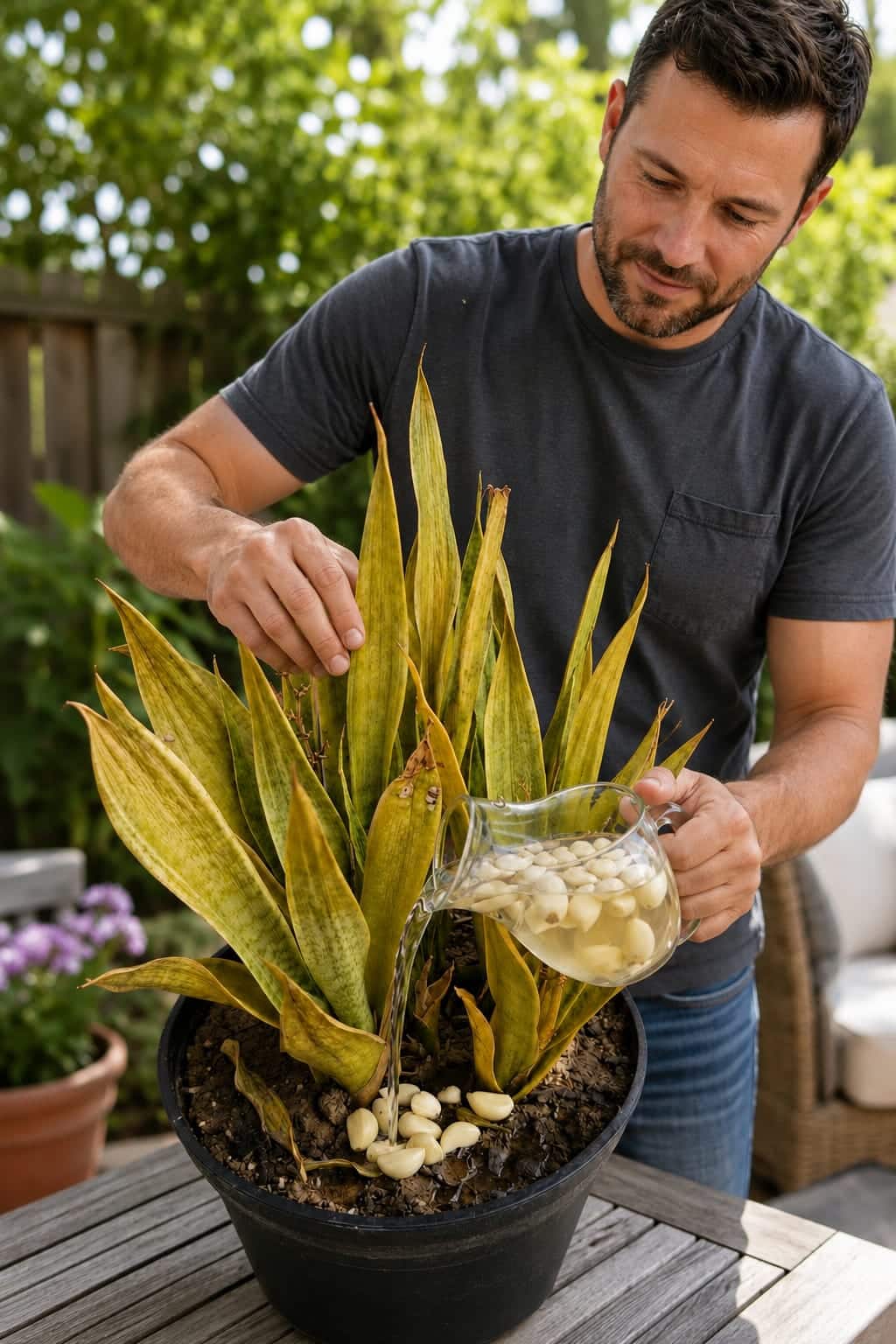
The First Step: Check the Soil
If your snake plant is yellowing, check the soil before doing anything else. Push a finger or wooden stick deep into the pot. If the lower soil is damp, wait before watering. If it smells sour, the soil may be staying too wet.
Look at the texture. If the soil is hard, compacted, muddy, or heavy, it may not be suitable for snake plants. A dense mix can hold water around the roots and cause slow decline.
If the soil is dry, loose, and airy, the plant may be suffering from another issue, such as cold damage, old leaves, poor light, or nutrient depletion.
Never assume a yellow snake plant needs more water. Many yellow snake plants are actually overwatered.
The Second Step: Inspect the Roots and Rhizomes
If several leaves are yellow, soft, or collapsing, remove the plant from the pot and inspect the roots. This is the most important rescue step.
Healthy snake plant rhizomes are firm. They may be pale, cream, orange, or light brown depending on the plant and soil. Healthy roots should also feel firm, not mushy.
Rotten roots are dark, soft, slimy, hollow, or foul-smelling. Rotten rhizomes may collapse when pressed. These parts cannot recover and must be removed.
Use clean scissors or a clean knife to cut away all mushy roots and rhizomes. Keep only firm healthy sections. Let cut areas dry and callus before repotting into fresh dry-friendly soil.
Do not use garlic water before removing rot. Treating rot without cutting it away is not enough.
How to Repot a Yellowing Snake Plant
If the soil is bad or the roots are damaged, repotting is often the best solution. Choose a pot with drainage holes. Use a fast-draining cactus or succulent mix. You can improve it further with perlite, pumice, coarse sand, or small bark chips.
Place the plant at the same depth it was growing before. Do not bury the leaf bases deeply. Deep planting can trap moisture around the crown and increase rot risk.
If you trimmed roots or rhizomes, wait several days before watering. This gives cuts time to dry and reduces the chance of rot returning.
After repotting, place the plant in bright indirect light and keep it warm. Do not fertilize immediately. Do not use garlic water immediately if the root system was heavily damaged. Let the plant stabilize first.
Best Soil for Snake Plant Recovery
Snake plants need soil that drains quickly and allows air around the roots. A regular houseplant mix may hold too much moisture unless amended heavily.
A good rescue mix can include cactus soil, perlite, pumice, coarse sand, and a little orchid bark. The mix should feel gritty and loose. Water should not sit in it for days.
If you squeeze the soil and it forms a dense wet ball, it is too heavy. If it dries too quickly and becomes hydrophobic, add a small amount of quality potting mix or coco coir for balance.
The goal is not bone-dry dust. The goal is fast drainage with enough structure for roots to hold.
Best Light for Snake Plant Recovery
Snake plants tolerate low light, but recovery is better in bright indirect light. A plant that is yellowing needs energy to replace damaged tissue and grow new roots.
Place the plant near a bright window, but avoid harsh direct afternoon sun if the plant is weak or recently repotted. Gentle morning sun can be helpful. Bright filtered light is ideal.
If the plant has been in very low light, move it gradually. Sudden intense sun can scorch the leaves.
Better light helps the soil dry at a healthy pace and gives the plant energy for new growth. Garlic water cannot replace light.
How to Water a Snake Plant After Stress
After a snake plant has yellowed or been repotted, watering must be careful. Do not water immediately unless the roots are healthy and the soil is very dry.
When you do water, water deeply and let the excess drain. Then wait until the soil dries completely before watering again.
Do not give small daily sips. This keeps the surface damp and can encourage pests without properly supporting the roots.
In low light or cool weather, a snake plant may need water only every several weeks. Always check the soil before watering.
If you use garlic water, treat it as one watering, not an extra watering.
Can Garlic Water Replace Fertilizer?
No. Garlic water is not fertilizer. It does not provide complete nutrition. Snake plants are light feeders, but they may benefit from a small amount of fertilizer during the growing season.
Use a cactus or succulent fertilizer diluted to half strength once or twice in spring or summer. Do not fertilize a stressed plant with damaged roots. Wait until new growth appears and the plant is stable.
Do not use fertilizer and garlic water on the same day. Too many treatments can overwhelm a weak root system.
Simple care is better than constant feeding for snake plants.
Can Garlic Water Help With Pests?
Garlic water may discourage some minor pests because of its strong smell and natural compounds. However, it is not a complete pest-control solution.
If your snake plant has mealybugs, scale, spider mites, or fungus gnats, identify the pest and treat it properly. Wiping leaves, isolating the plant, using sticky traps, or applying a houseplant-safe pest treatment may be necessary.
Garlic water may be used as a mild support, but it should not be the only step for serious infestations.
If fungus gnats are present, focus on drying the soil, improving drainage, and removing decaying material. Garlic cloves left in the pot can make gnat problems worse if they rot.
Can Garlic Water Fix Yellow Leaves?
No. Yellow snake plant leaves will not turn green again. Once a leaf has turned yellow from stress, rot, age, or damage, the tissue is already changed.
The goal is to prevent more leaves from yellowing. That means correcting the cause. If the cause is overwatering, dry the soil and inspect roots. If the cause is cold, move the plant to a warmer place. If the cause is low light, increase brightness gradually.
You can cut away fully yellow, soft, or dead leaves with clean scissors. Remove them near the base if they are not helping the plant.
Healthy new growth is the real sign of recovery.
Can Garlic Water Fix Brown Tips?
Garlic water usually does not fix brown tips. Brown tips can be caused by inconsistent watering, mineral buildup, fertilizer burn, cold damage, sunburn, low humidity, or physical injury.
Old brown tissue will not become green again. You can trim brown tips with clean scissors if you want a neater look.
To prevent new brown tips, improve watering consistency, avoid overfertilizing, protect the plant from cold drafts, and use suitable light.
If your tap water is very hard, occasional flushing with plain water or using filtered water may help more than garlic water.
What to Do With Severely Yellow Leaves
If a leaf is mostly yellow, soft, or collapsing, remove it. Severely damaged leaves use space and may harbor rot near the base.
Use clean scissors or a clean knife. Cut the leaf as close to the soil line as possible without damaging healthy rhizomes. If the base is mushy, inspect the rhizome below it.
If only the tip is damaged and the rest of the leaf is firm, you can trim the damaged portion. But if the leaf is yellow from the base upward, it is usually better to remove the entire leaf.
After pruning, keep the plant dry for a few days if cuts are near the soil.
What to Do If Garlic Water Smells Bad
Fresh mild garlic water will smell lightly of garlic. It should not smell rotten, sour, or fermented. If the mixture smells bad, do not use it.
If the pot smells bad after garlic water, stop using it. Let the soil dry. Improve airflow and check whether the pot drains properly.
If the smell remains, remove the plant and inspect the roots. Sour smells often mean root rot or decomposing organic matter.
Repot into fresh fast-draining soil if needed. A healthy snake plant pot should smell earthy and clean.
⚠️ Important: Never leave garlic cloves in the pot. They rot, smell, attract pests, and harm the root environment. Always strain garlic water well.
What to Do If You Used Too Much Garlic
If you used very strong garlic water or left garlic cloves in the pot, remove any garlic pieces immediately. If the soil smells strong or sour, remove the top layer of soil and replace it with fresh dry mix.
If the plant begins yellowing more, inspect the roots. Strong garlic water may irritate already stressed roots, but the bigger issue is often wet soil or rot.
If the pot drains well and the soil is not already soggy, you can flush lightly with plain water and let it drain completely. Then allow the soil to dry.
Do not add fertilizer or another homemade treatment right away. Let the plant recover with simple care.
A Safe Garlic Water Rescue Routine
First, check the soil and roots. Remove rotten parts if needed. Repot into fast-draining soil if the old mix is heavy or sour. Place the plant in bright indirect light and keep it warm.
After the plant stabilizes and the soil has dried properly, you may use one mild garlic-water treatment. Soak one small crushed garlic clove in two cups of water for one to two hours. Strain well and dilute with two more cups of water.
Apply a small amount to the soil only when the plant is due for watering. Let the pot drain fully. Do not repeat for at least six to eight weeks.
Between treatments, use plain water only. Watch for new firm growth. New growth means the plant is recovering.
Common Mistakes to Avoid
- Pouring garlic water onto wet soil – this can worsen rot.
- Using strong garlic water – a mild diluted infusion is safer.
- Leaving garlic cloves in the pot – they can rot and attract pests.
- Expecting garlic water to turn yellow leaves green again – it cannot reverse damaged leaves.
- Using garlic water instead of checking the roots – root inspection is essential for yellowing snake plants.
- Using dense soil – snake plants need fast drainage.
- Watering too often after treatment – snake plants must dry between waterings.
Frequently Asked Questions
Is garlic water good for snake plants?
Mild diluted garlic water can be used occasionally as a natural soil support, but it is not necessary for most snake plants. Proper watering, drainage, soil, and light are more important.
Can garlic water save a yellow snake plant?
Not by itself. Yellowing usually requires checking the roots, correcting watering, improving drainage, and removing damaged parts. Garlic water may support recovery only after the main problem is fixed.
How do I make garlic water for snake plants?
Soak one small crushed garlic clove in two cups of water for one to two hours. Strain well, dilute with two more cups of water, and use fresh.
How often should I use garlic water?
Use it rarely, about once every six to eight weeks if needed. Do not use it every watering.
Can I leave garlic cloves in the soil?
No. Garlic cloves can rot, smell bad, attract pests, and create unhealthy soil conditions. Use strained garlic water instead.
Can garlic water replace fertilizer?
No. Garlic water is not complete fertilizer. Use a diluted cactus or succulent fertilizer only when the plant is healthy and actively growing.
Should I use garlic water if the soil is wet?
No. Wet soil is a warning sign for snake plants. Let the soil dry and inspect roots if the plant is yellowing.
Will yellow leaves turn green again?
No. Yellow leaves will not become green again. Remove badly damaged leaves and focus on healthy new growth.
🌿 Garlic water is a gentle occasional support, not a miracle cure. For a yellow snake plant, start with checking roots, soil, and watering. Use fast-draining soil, a pot with drainage, bright indirect light, and proper dry-down between waterings. Only then consider mild garlic water – and let healthy new growth be your true measure of recovery.