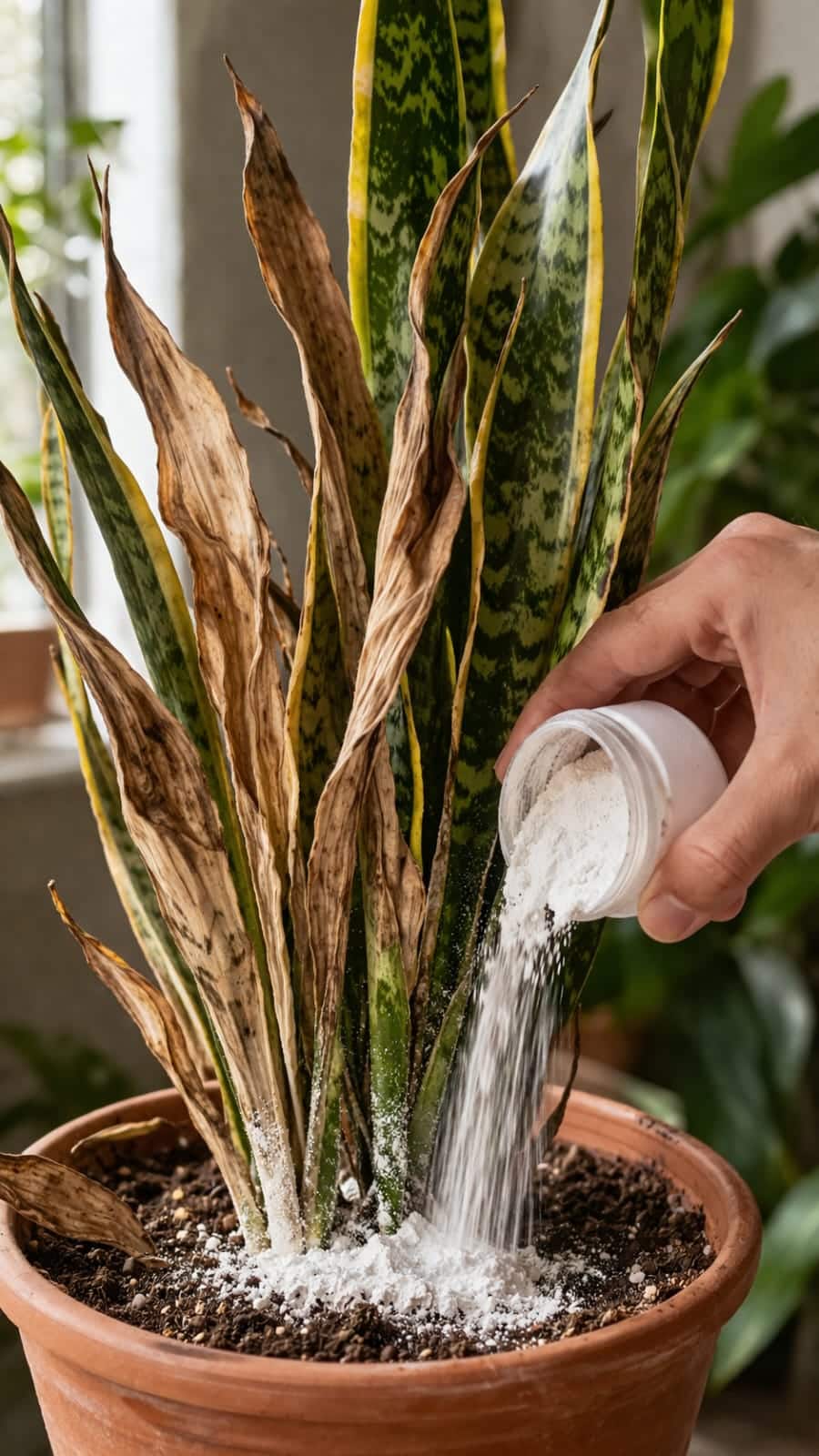
The Real Secret to Recovery – Fix Your Care Habits
The powder helps, but the real recovery comes from changing how you care for your snake plant. Here are the permanent fixes.
☀️ 1. Light – Bright, Indirect Sunlight
Snake plants tolerate low light, but they need brighter conditions to regain strength. Place them near an east or west window. A few hours of gentle morning sun is excellent.
💧 2. Water – Only When the Soil Is Completely Dry
The golden rule: when in doubt, don’t water. Stick your finger 2–3 inches into the soil. If it feels dry, water. If it’s damp, wait. In typical indoor conditions, this means watering every 2–4 weeks, even less in winter.
🪴 3. Soil – Well‑Draining Mix
Never use heavy garden soil or standard potting mix alone. Always add perlite, pumice, or coarse sand to ensure fast drainage.
🌡️ 4. Temperature – Avoid Cold Drafts
Keep your snake plant above 50°F (10°C). Ideal temperatures are 65–80°F (18–27°C). Avoid placing near drafty windows or air conditioning vents.
🧂 5. Fertilizer – Less Is More
Do not fertilize a recovering plant for at least 2–3 months. When you do, use a balanced houseplant fertilizer diluted to half strength, once in spring and once in summer.
What Happens Next – Signs of Recovery
With proper care, you’ll start to notice positive changes. Here’s what to look for.
Timeframe Signs of Recovery
2–4 weeks Existing leaves may stop browning further. The plant looks stable.
1–3 months New green shoots (pups) emerge from the soil. This is the best sign.
3–6 months Pups grow into full leaves. The plant fills out and looks healthy.
Note: Severely damaged leaves will not turn green again. You can leave them (they still provide energy) or cut them off at the base once new growth appears.
Common Mistakes to Avoid During Revival
Mistake Why It’s Harmful Correct Approach
Watering right after repotting Roots need time to heal; wet soil promotes rot Wait 5–7 days before first watering
Using too much cinnamon Not harmful, but wasteful Light dusting is enough
Placing in direct sun after repotting Stressed plant can burn Bright, indirect light only
Fertilizing too soon Burns tender new roots Wait 2–3 months
Expecting instant results Leads to over‑caring Be patient – recovery takes months2
When to Give Up – Signs Your Snake Plant Is Beyond Saving
In some cases, the plant cannot be revived. Look for:
· Complete root rot: All roots are black, mushy, and foul‑smelling, with no healthy white roots.
· Mushy rhizome: The thick horizontal stem feels soft and rotten.
· No green tissue left: All leaves are completely brown, dry, and crispy – no green at all.
If this happens, don’t despair. You may still be able to propagate healthy leaf cuttings (if any green remains) or buy a new plant. But often, a seemingly dead snake plant still has life in its roots – so try the revival steps first.
Frequently Asked Questions (FAQs)
Q: Can I use baking soda instead of cinnamon?
Yes, but cinnamon is better. Baking soda can raise soil pH too much and leave salt residue. Use cinnamon for its antifungal properties.
Q: How often should I apply cinnamon to the soil?
A single application at repotting is usually enough. You can dust the soil surface again if you see mold, but don’t overdo it.
Q: My snake plant has no roots left – can I save it?
If the rhizome is still firm and green, you can root it in water or soil. Place the rhizome in a shallow dish of water (just the bottom) until roots grow (4–6 weeks). Then plant in soil.
Q: Can I use cinnamon on other plants?
Yes – cinnamon is safe for most houseplants. Use it on cut stems, to prevent damping off in seedlings, or as a mild antifungal powder.
Q: Why are my snake plant leaves still turning brown after repotting?
It’s normal for damaged leaves to continue to brown. They won’t recover. Focus on new growth. Cut off completely brown leaves at the base.
Q: How do I know if my snake plant has root rot?
Gently remove the plant from its pot. Healthy roots are firm and white/light tan. Rotten roots are black, soft, mushy, and may smell bad.
Q: Should I water after repotting a snake plant?
No – wait 5–7 days. This gives cut roots time to callus over and prevents rot.
Final Thoughts – Don’t Give Up Too Soon
Snake plants are survivors. They’ve evolved to endure drought, poor soil, and harsh conditions. When you see one turning brown and crispy, it’s often not dead – just stressed. With a little patience, the right diagnosis, and a simple antifungal powder like cinnamon, you can bring it back to life.
Before you throw away a struggling plant, try adjusting how you care for it. Check the soil, improve drainage, give it proper light, and water only when dry. Sometimes, a small change – combined with a simple treatment – can make all the difference.
And remember: even if the leaves look terrible, the roots or rhizome may still be alive. Don’t give up. Your snake plant wants to live.
Now it’s your turn! Have you ever revived a dying snake plant? What worked for you – cinnamon, repotting, or something else? Drop a comment below – I’d love to hear your story.
And if you found this guide helpful, share it with a friend who’s about to throw away their snake plant. Pin it for later, and subscribe to our newsletter for more plant rescue tips.
Stay hopeful, stay patient, and keep growing. 🌿✨