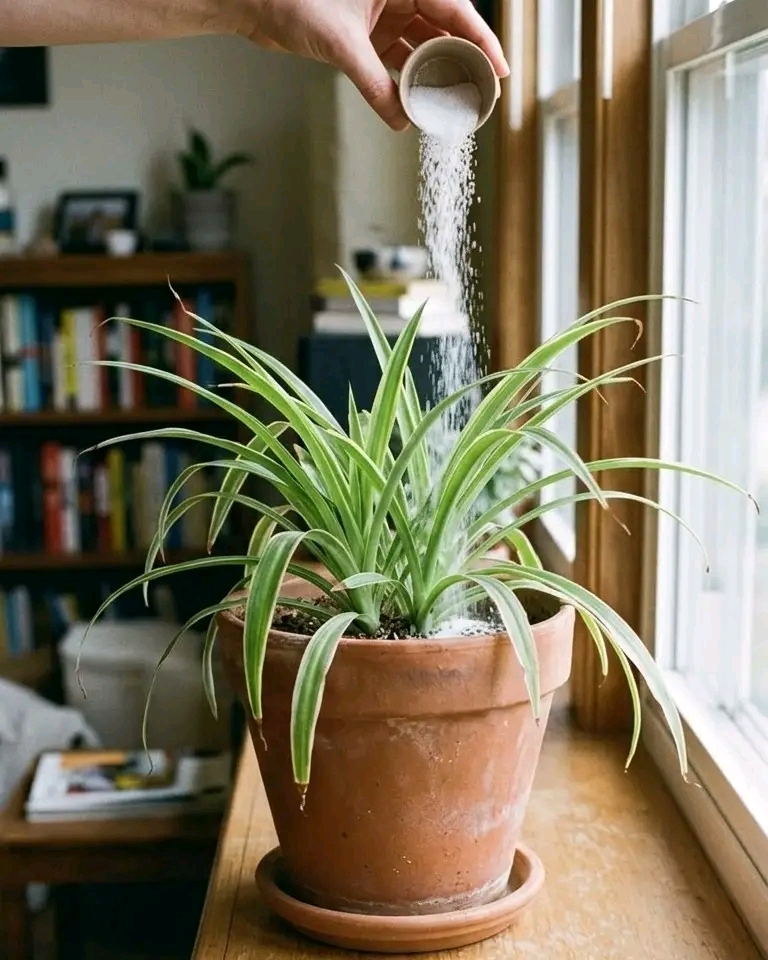
When to Repot a Spider Plant
Repotting is useful when the plant is severely root-bound, the soil is old and compacted, water runs straight through without soaking evenly, or the plant dries out almost immediately after watering. A spider plant with thick crowded roots may still survive, but it may look tired if the root system has no room to function.
The best time to repot is during active growth, usually spring or early summer. Choose a pot only slightly larger than the current one and use fresh airy potting mix. After repotting, avoid heavy fertilizer right away. The plant should settle first. If fresh potting mix already contains nutrients, extra white powder may not be necessary for several weeks or months.
Repotting can also be a good time to divide a very large spider plant. Divisions can be placed into separate pots to create more plants. However, division should be done gently, and each section should have healthy roots and a strong crown. After division, keep the care simple until new growth resumes.
Problems Caused by Too Much White Powder
Too much fertilizer powder can burn roots. The plant may respond with brown tips, yellowing leaves, drooping, or dry edges. Because slow-release fertilizers can continue releasing nutrients over time, the problem may not appear immediately. This is why measuring matters. A small pot needs only a small amount.
Too much eggshell powder can create a chalky layer that does little for the plant and may make the soil surface look messy. Too much diatomaceous earth can create dust and crust, especially when it gets wet. Too much lime or alkaline powder can shift soil conditions and stress the plant. Too much of any powder can reduce the clean, natural look that makes spider plants attractive indoors.
If too much powder was used, remove as much as possible from the surface. If the product was fertilizer and the pot drains well, flush the soil with clean water and allow it to drain completely. If the soil is contaminated, crusted, sticky, or sour-smelling, repot into fresh soil. After that, avoid feeding until the plant shows stable growth.
Indoor Decor and Placement Ideas
Spider plants are beautiful in kitchens because their fresh striped leaves brighten windowsills, shelves, and counters. A terracotta pot near a bright kitchen window gives a warm, natural look. The plant should not sit too close to hot glass, heating vents, or cold drafts. It should also be protected from greasy residue if placed near cooking areas.
In the living room, spider plants soften furniture and add movement. They work well on plant stands, side tables, shelves, and hanging baskets. A large full plant can break up hard lines in modern decor, while a trailing plant can bring a relaxed garden feeling indoors. In a home office, the plant adds brightness without looking too formal. Clean leaves and a tidy pot make it suitable for video-call backgrounds and desk-adjacent plant styling.
In a bedroom, spider plants create a calm, fresh appearance. A simple white ceramic pot, woven basket cover, or natural terracotta container can match many decor styles. For luxury home staging, spider plants can make a room feel cared for and lived in without overpowering the space. In commercial interiors, they are useful because they are familiar, attractive, easy to propagate, and visually soft.
Simple Recovery Plan for a Weak Spider Plant
If a spider plant looks weak, do not start with powder. Start by checking the soil. If the soil is wet and heavy, let it dry and consider whether the pot has drainage. If the soil is bone dry and the plant is limp, water thoroughly and let it drain. If the plant has brown tips, think about water quality and fertilizer strength. If the plant is pale and thin, check light. If fungus gnats are present, reduce moisture and improve the soil surface.
Once the plant is stable, gentle feeding can be considered. A weak plant with damaged roots should not be fertilized heavily. Roots need to recover before they can use nutrients. A healthy plant in active growth can receive light feeding, but still not too much. Spider plants reward consistency more than dramatic tricks.
The simplest recovery routine is bright indirect light, clean water, a pot with drainage, airy soil, and patience. Trim damaged leaves only when needed. Do not keep changing treatments every few days. A spider plant needs time to respond. New growth is the best sign that the care routine is working.
Final Thoughts
Easy spider plant care begins with simple habits, not complicated shortcuts. A light white powder may support growth if it is a safe, identified product used in a small amount, but it should never replace the core routine. Spider plants need bright indirect light, well-draining soil, drainage holes, steady moisture, gentle feeding, clean leaves, and enough time to grow naturally.
If the powder is fertilizer, measure it carefully and use it only during active growth. If it is eggshell powder, keep it clean, dry, and light. If it is diatomaceous earth, use it only for a specific pest reason and keep it dry. If it is unknown, skip it completely. The healthiest spider plants are not the ones with the most powder on the soil; they are the ones with strong roots, clean striped leaves, balanced watering, and good light.
With careful maintenance and the right presentation, spider plant can become a full, vibrant, and elegant indoor feature for kitchens, living rooms, bedrooms, home offices, bright windowsills, plant shelves, modern apartments, commercial interior landscaping, luxury home staging, and premium plant displays. Healthy roots, fresh foliage, controlled feeding, and patient care will always create a stronger result than risky powder shortcuts.