How to Water Anthuriums Correctly – Moisture Management
Watering is one of the most important parts of anthurium care. These plants like moisture, but their roots need air. The mix should not stay soggy. This anthurium watering guide for beginners will prevent common problems.
Simple Watering Method
- Check the top inch of potting mix.
- If it feels lightly dry, water.
- Water thoroughly until excess drains out.
- Empty the saucer.
- Wait until the top begins to dry again.
Do not water on a strict schedule. A plant in a bright warm room dries faster than a plant in a cool dim room.
Best Soil for Anthuriums – Chunky, Airy Mix
Anthuriums are epiphytic or semi-epiphytic in nature, meaning their roots like air and chunky organic material. A dense regular potting mix can suffocate them. Choosing the best potting mix for anthuriums is half the battle.
Simple Anthurium Potting Mix
- 2 parts orchid bark
- 1 part indoor potting mix or coco coir
- 1 part perlite or pumice
- Optional: a small amount of charcoal
This mix drains well but still holds enough moisture. The roots can breathe, which reduces the risk of rot.
Best Pot for Anthuriums – Drainage Is Essential
Use a pot with drainage holes. Plastic nursery pots work well because they hold some moisture but still drain. Terracotta can also work, but it dries faster. Decorative pots are fine as outer covers, but the inner pot should drain. Using a pot with drainage for anthuriums is non-negotiable.
Do not plant an anthurium in an oversized pot. Too much extra soil stays wet and increases root rot risk.
Why Anthurium Leaves Turn Yellow – Common Causes and Fixes
Yellow leaves can happen for many reasons. This anthurium yellow leaf diagnosis guide will help you.
- Overwatering
- Underwatering
- Low light
- Old leaf aging
- Root rot
- Too much fertilizer
- Cold stress
- Poor drainage
If one older lower leaf yellows, it may be normal. If many leaves yellow at once, check the roots and soil moisture.
Why Anthurium Leaves Turn Brown – Prevention Tips
Brown tips or edges often come from low humidity, inconsistent watering, fertilizer burn, mineral buildup, or too much direct sun. For how to fix anthurium brown tips naturally, start with humidity and water quality.
Homemade fertilizer will not reverse brown areas. Brown tissue is already damaged. Focus on preventing more damage by improving care.
Why Anthurium Flowers Turn Green – Natural Aging
Anthurium spathes can turn green as they age. This is normal. New blooms usually appear brighter. However, if all flowers are pale or green from the start, the plant may need better light or balanced feeding.
Why Anthurium Stops Blooming – Troubleshooting
A non-blooming anthurium usually needs one of the following: more light, better feeding, warmer conditions, healthier roots, or time to mature. It may also pause blooming after stress or repotting.
Before using any trick, make sure the plant is in a bright location and has a chunky, breathable potting mix.
Can You Use Banana Peel Water on Anthurium? – Yes, with Caution
Yes, but only in a very diluted and strained form. Banana peel water is popular for flowering plants because it is associated with potassium. However, it can sour quickly. Use it fresh, dilute it well, and never bury banana peels directly in an indoor anthurium pot.
Can You Use Rice Water on Anthurium? – Use Fresh and Diluted
Rice water can be used occasionally if it is fresh and diluted. Thick or fermented rice water can become sticky and sour in indoor soil. If you use rice water, keep it weak and do not use it too often.
Can You Use Coffee Grounds on Anthurium? – Not Recommended
It is better not to add coffee grounds directly to anthurium soil. They can compact, mold, and attract fungus gnats. Anthuriums need airy soil, so anything that makes the mix dense is risky.
Can You Use Eggshell Water on Anthurium? – Mild but Slow
Eggshell water is mild, but it is not a complete fertilizer and usually does not make a noticeable difference quickly. Crushed eggshells break down very slowly. If used, they should be clean and minimal.
Can You Use Potato Pieces Directly in the Pot? – Never
No. Do not place potato chunks or peels directly into an indoor anthurium pot. They can rot, smell, grow mold, and attract pests. Use only the strained liquid, and discard all solids.
How to Avoid Fungus Gnats – Prevention Tips for Homemade Fertilizer
Fungus gnats are common when homemade fertilizers are used too often. They are attracted to moist organic soil. This natural fungus gnat prevention for anthuriums guide will help.
Prevention Tips
- Always strain homemade liquids
- Never leave food scraps in the pot
- Do not overwater
- Let the top inch of mix dry slightly
- Improve airflow
- Remove dead leaves from the soil
- Use yellow sticky traps if gnats appear
If gnats appear, stop homemade fertilizer until the problem is controlled.
How to Clean Anthurium Leaves – Natural Shine Tips
Anthurium leaves look best when they are clean and glossy. Dust reduces the plant’s ability to absorb light. For naturally shiny anthurium leaves, stick to gentle wiping.
- Use a soft damp cloth.
- Support each leaf from underneath.
- Wipe gently from base to tip.
- Do not use oily leaf shine products.
- Remove dead leaves or old flowers at the base.
Healthy anthurium leaves naturally have a beautiful shine. You do not need artificial shine sprays.
How to Remove Old Anthurium Flowers – Pruning Guide
Old flowers eventually fade, turn green, brown, or dry. Removing them helps the plant focus energy on new growth. This how to deadhead anthuriums for more blooms guide is simple.
- Use clean scissors or pruners.
- Follow the flower stem down to the base.
- Cut close to the base without damaging nearby stems.
- Do not pull hard.
How to Repot Anthurium – Gentle Transplanting
Repot when the roots are crowded, the mix breaks down, or the plant dries out too quickly. This how to repot anthuriums without stress guide will help.
- Choose a pot only one size larger.
- Prepare a chunky anthurium mix.
- Remove the plant gently.
- Shake away old compacted soil.
- Trim dead or mushy roots.
- Place the plant in the new pot.
- Fill with airy mix.
- Water lightly and let drain.
- Wait 4 to 6 weeks before fertilizing.
Do not use potato water immediately after repotting. Let the roots settle first.
Commercial Fertilizer vs Homemade Potato Water – Which Is Better?
A balanced commercial fertilizer is more predictable because the nutrient levels are measured. Potato water is gentle and natural, but its nutrient content is uncertain. For serious long-term blooming, a diluted balanced fertilizer may be more reliable. The best fertilizer for anthurium blooms is a balanced formula used at weak strength.
However, homemade potato water can be used occasionally as a natural supplement. The best approach is moderation. Do not combine strong commercial fertilizer and homemade fertilizer in the same week.
Safe Feeding Schedule for Anthurium – Gentle Routine
- Spring: feed lightly every 4 to 6 weeks
- Summer: feed lightly every 4 to 6 weeks
- Fall: reduce feeding if growth slows
- Winter: stop or feed very lightly only if plant is actively growing
If using potato peel water, count it as a feeding.
Signs You Are Overfeeding – Anthurium Fertilizer Burn
Overfeeding an anthurium can damage the roots and leaves. Recognizing anthurium overfertilization symptoms helps you act fast.
Watch for:
- Brown leaf tips
- Yellow leaves
- White crust on soil
- Wilting after feeding
- Sour soil smell
- Fungus gnats
- Black or mushy roots
If these signs appear, stop feeding and use plain water only until the plant stabilizes.
How to Flush Anthurium Soil – Removing Mineral Buildup
If fertilizer buildup occurs, flushing can help, but only if the pot drains well. This how to flush anthurium soil method is simple.
- Place the pot in a sink or shower.
- Pour room-temperature water through the mix slowly.
- Let excess drain completely.
- Repeat once if needed.
- Empty the saucer.
- Allow the mix to dry slightly before watering again.
Do not flush if the plant is already waterlogged or has root rot. In that case, repotting may be better.
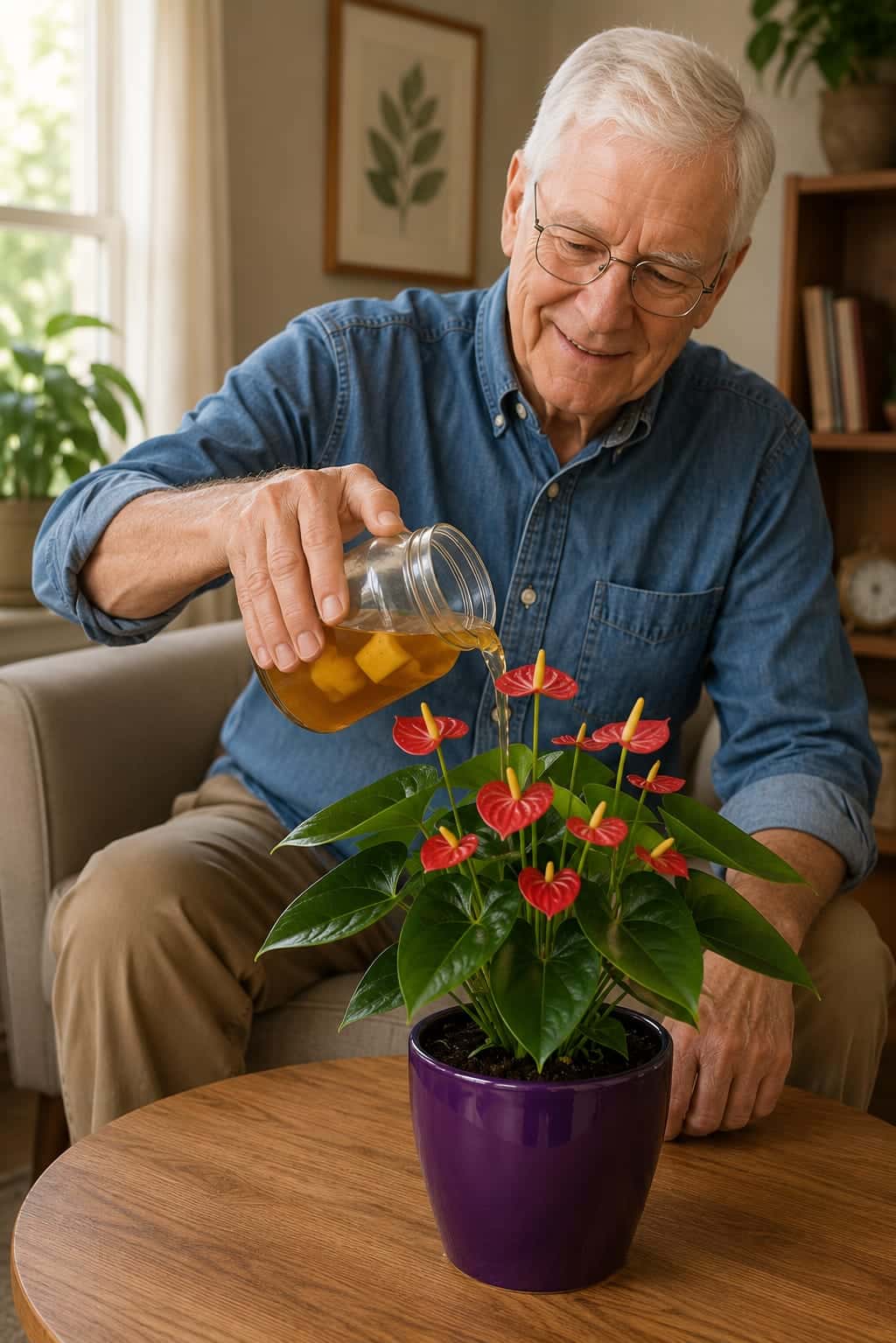
Quick Recipe Card: Golden Potato Water for Anthurium – Homemade Tonic
Ingredients:
- Peels from 1 clean potato or 3 to 4 small potato chunks
- 3 cups water
Steps:
- Wash the potato well.
- Soak peels or chunks in water for 12 to 24 hours.
- Strain completely.
- Dilute 1 part potato water with 3 parts plain water.
- Pour gently around the soil when the top inch is lightly dry.
- Let the pot drain fully.
- Use once every 4 to 6 weeks during active growth.
Quick Anthurium Care Checklist – Essential Tips
- Bright indirect light
- Warm room temperature
- Moderate humidity
- Chunky airy soil
- Pot with drainage
- Water when top inch dries slightly
- Feed lightly during active growth
- Never leave food scraps in the pot
- Remove old flowers
- Clean leaves regularly
Short Caption for This Trick
“To make a gentle golden fertilizer for anthurium, soak clean potato peels or a few small potato chunks in 3 cups of water for 12 to 24 hours. Strain very well, then dilute 1 part potato water with 3 parts plain water. Pour a small amount around the soil when the top inch feels lightly dry, let the pot drain completely, and repeat only once every 4 to 6 weeks during spring and summer. Never leave potato pieces in the pot – this natural anthurium bloom booster supports glossy leaves, stronger roots, and more vibrant red flowers.”
Frequently Asked Questions – Anthurium Potato Water Q&A
Can I use potato water on anthurium?
Yes, but it must be fresh, strained, diluted, and used only occasionally. Do not use thick, sour, or fermented potato water.
Can potato water make anthurium bloom?
It may support plant health, but blooming depends mostly on bright indirect light, warm temperatures, healthy roots, and balanced care.
How often should I use homemade fertilizer on anthurium?
Once every 4 to 6 weeks during active growth is enough. Do not use it weekly.
Can I put potato peels directly in the pot?
No. Potato peels can rot and attract pests. Use only strained liquid.
Why are my anthurium leaves turning yellow?
Yellow leaves are often caused by overwatering, poor drainage, low light, cold stress, root rot, or too much fertilizer.
Why are my anthurium flowers turning green?
Flowers often turn green naturally as they age. If new blooms are pale, the plant may need brighter indirect light.
Should I spray this fertilizer on the leaves?
No. Apply it to the soil only. Spraying homemade fertilizer on leaves can leave residue.
Can I use this after repotting?
Wait 4 to 6 weeks after repotting before fertilizing. Fresh potting mix and disturbed roots need time to settle.
What is the best fertilizer for anthurium?
A diluted balanced houseplant or orchid-style fertilizer is the most reliable. Potato water can be an occasional natural supplement.
What should I do if the soil smells bad after using it?
Stop using homemade fertilizer. Remove any contaminated topsoil if needed, let the mix dry slightly, and consider repotting if the smell continues.
Final Thoughts – The Best Natural Anthurium Fertilizer Routine
The golden homemade fertilizer trick can be a gentle way to support an anthurium, but only when used carefully. Potato peel water may provide a mild natural boost, especially for plants that are already healthy and actively growing. The secret is to keep it weak, fresh, strained, and occasional. This natural anthurium care method is best used as an occasional supplement, not a primary treatment.
Do not pour strong kitchen mixtures into the pot. Do not leave potato chunks, banana peels, or food scraps in the soil. Do not fertilize a plant with root rot. Do not expect homemade fertilizer to replace light, drainage, and proper soil. Anthuriums are beautiful because their roots, leaves, and flowers work together. If one part of the care routine is wrong, no golden liquid can fix everything. Following this complete anthurium care guide will keep your plant thriving.
For the best results, give your anthurium bright indirect light, warm temperatures, a chunky airy potting mix, and careful watering. Let the top of the mix dry slightly before watering again. Feed lightly during the growing season. Remove old flowers, clean the leaves, and keep the plant in a pot with drainage. These professional indoor plant care secrets will help you succeed.
Used this way, the golden potato water trick becomes a small natural helper. It can support stronger roots, glossier leaves, and better bloom energy over time. With patience and balanced care, your anthurium can continue producing those stunning red heart-shaped flowers that make it one of the most elegant houseplants in the home.