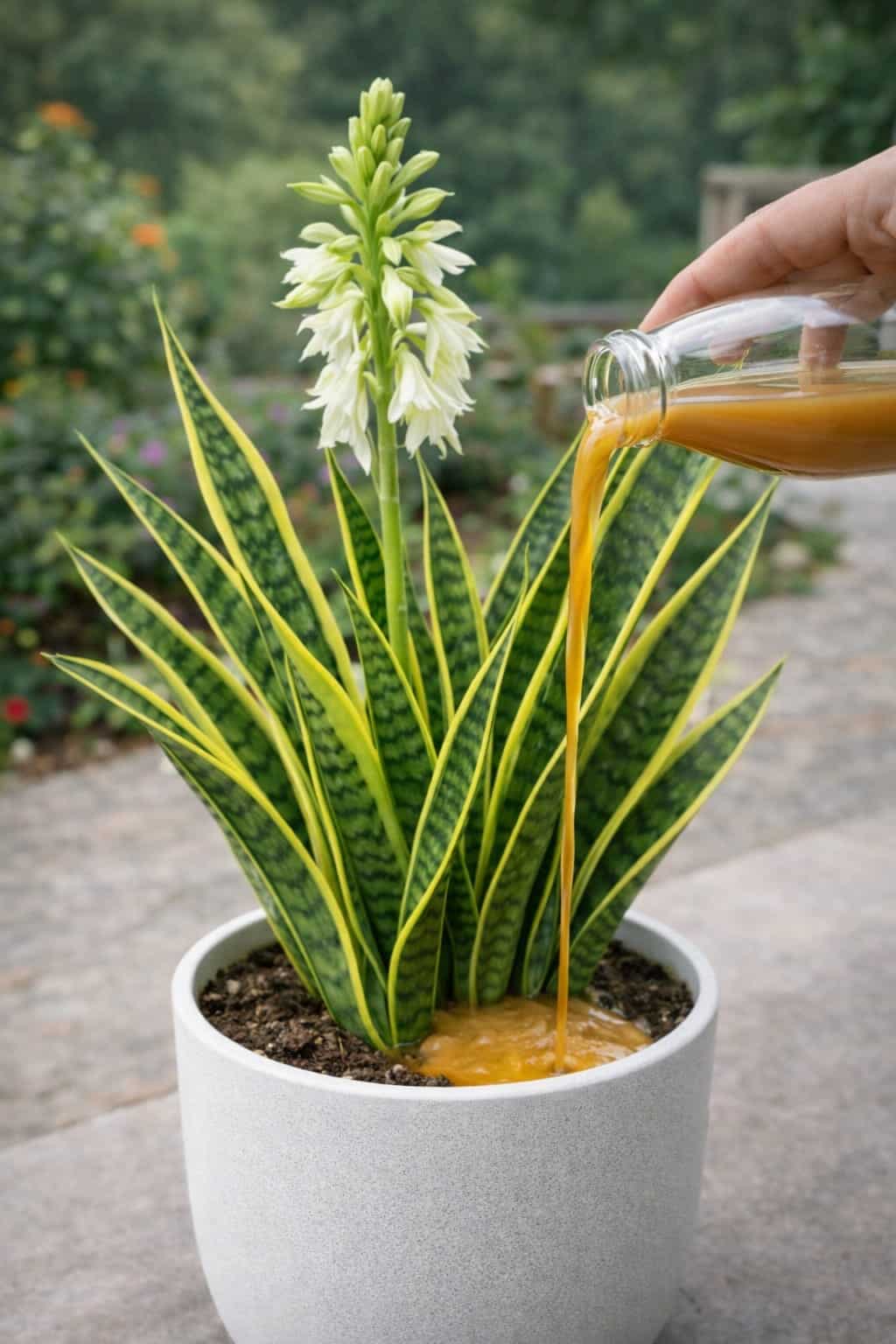
⚠️ Why Controlled Feeding Supports Upright Growth
Snake plants thrive in stable environments. When soil is overloaded with nutrients:
· Oxygen flow decreases – heavy salt buildup compacts soil, suffocating roots.
· Roots weaken – excess nutrients burn tender root hairs, reducing water absorption.
· Leaves soften or lean – weakened roots cannot support upright growth.
· Salt buildup occurs – white crust on soil surface and brown leaf tips.
But when soil conditions remain balanced:
· Roots expand naturally – they grow strong and spread evenly.
· Leaves grow firm and vertical – the plant maintains its architectural shape.
· Growth remains consistent – slow but steady, without stress signals.
· The plant resists pests and diseases – healthy snake plants are naturally resilient.
Healthy root systems depend on:
· Fast‑draining soil – prevents waterlogging.
· Proper airflow – roots need oxygen.
· Bright indirect light – energy for photosynthesis.
· Limited feeding – avoid nutrient overload.
· Controlled watering cycles – let soil dry completely between waterings.
When roots remain stable, leaves grow firm and vertical – a feature that makes snake plants ideal for modern decor and luxury home staging.
🪴 The Essential Conditions for a Thriving Snake Plant (Before Any Elixir)
The plant elixir is a supplement, not a substitute. Focus on these fundamentals first.
- Bright Indirect Light – The #1 Driver of Growth
Snake plants can survive in low light, but they thrive in bright, indirect light. More light = stronger leaves, faster growth, and more pups.
· Ideal spot: East or west‑facing window.
· Acceptable: A few feet back from a south window with a sheer curtain.
· Avoid: Dark corners (slow growth, weak leaves) and direct afternoon sun (leaf scorch).
- Fast‑Draining Soil Mix
Snake plants need soil that dries quickly. Heavy, moisture‑retentive soil leads to root rot.
· Best mix: Cactus/succulent soil + 30% perlite.
· Avoid: Regular potting soil alone.
- Infrequent, Deep Watering
· When to water: Only when the top 2–3 inches of soil are completely dry.
· How to water: Water deeply until it runs out the drainage holes. Empty the saucer.
· Frequency: Every 2–4 weeks, depending on light and temperature.
- A Pot with Drainage Holes
· Terracotta pots are excellent – they wick away excess moisture.
· Plastic pots can work but require more careful watering.
- Stable Indoor Temperatures
· Ideal range: 65–85°F (18–29°C).
· Avoid: Cold drafts below 50°F and sudden temperature swings.
Snake Plant Care Table – Balanced Soil Conditions
Factor Ideal Setup Why It Helps
Light Bright, indirect (east/west window) Encourages upright growth and firm leaves
Soil Fast‑draining cactus/succulent mix Promotes airflow, prevents rot
Watering Only when soil is completely dry Prevents root rot
Feeding Diluted soil support (once a month, spring/summer) Reduces nutrient shock, avoids salt buildup
Drainage Pot with holes (terracotta preferred) Protects root health and soil structure
Troubleshooting – Common Snake Plant Problems & Solutions
Problem Likely Cause Solution
Brown leaf tips Over‑fertilizing or mineral buildup Flush soil; reduce feeding; use filtered water.
Soft, floppy leaves Overwatering or root rot Let soil dry completely; check roots.
Leaves bending or leaning Low light or root stress Move to brighter light; support with gentle elixir.
White crust on soil Salt buildup from fertilizer or tap water Flush soil with plain water; reduce feeding.
No new growth Insufficient light or cold temperatures Move to brighter spot; keep above 65°F.
Yellow leaves Overwatering Let soil dry; improve drainage.
🌿 Design, Decor & Real Estate Value Connection
Modern home buyers and renters respond strongly to curated, visually balanced spaces. Even simple interior upgrades like structured greenery can elevate listing photos and increase engagement on luxury real estate platforms.
Clean plant placement supports:
· Modern interior design – snake plants add architectural height without clutter.
· Luxury home staging aesthetics – healthy, upright plants signal care and attention to detail.
· High‑end residential branding – a well‑placed snake plant in a designer pot looks expensive and intentional.
· Premium property photography – plants add life and scale to rooms.
· Contemporary living presentation – minimal greenery enhances, not overwhelms.
Vertical plants like snake plants create height contrast, frame entryways, and soften architectural lines without cluttering the environment. A thriving snake plant with firm, upright leaves is not just a plant – it’s a design statement.
Frequently Asked Questions (FAQs)
Q: Can this elixir replace fertilizer completely?
A: It supports soil balance but does not permanently replace full plant nutrition. For long‑term health, use a diluted balanced fertilizer once or twice a year, or rely on the elixir as a gentle supplement.
Q: How often should I use the plant elixir?
A: Occasionally – once a month at most, and only during spring and summer (active growing season). Do not use in fall and winter.
Q: What if the solution is too strong?
A: Roots may burn, and you may see brown tips or white crust on the soil. Flush with plain water and reduce strength next time.
Q: Should I spray the leaves with the elixir?
A: No – apply only to soil. Liquid on leaves can cause spots or attract pests.
Q: Why are my snake plant leaves leaning?
A: Low light or root stress. Move to brighter light and ensure the soil is not waterlogged.
Q: Is drainage critical for snake plants?
A: Yes – it is essential. Without drainage holes, roots sit in water and rot.
Q: Can overfeeding slow down snake plant growth?
A: Yes – excess nutrients cause salt buildup, root burn, and weak growth. Less is more.
Q: Why is my soil crusty?
A: Mineral buildup from tap water or fertilizer. Flush with plain water and consider using filtered water.
Q: Can this elixir be used outdoors?
A: Yes, with proper drainage. Outdoor snake plants may need more frequent watering, but the same dilution rules apply.
Q: What is the biggest mistake people make with snake plants?
A: Overwatering combined with feeding. Let the soil dry completely, and feed very lightly – or not at all.
Printable Snake Plant Care Checklist
☐ Place in bright, indirect light (east/west window)
☐ Use a pot with drainage holes (terracotta preferred)
☐ Fill with fast‑draining cactus/succulent soil (add perlite)
☐ Water only when soil is completely dry (check with finger)
☐ Water deeply, then empty saucer
☐ Do not water again for 2–4 weeks (depending on light)
☐ Optional: apply diluted plant elixir (seaweed or weak fertilizer) once a month in spring/summer
☐ Apply to soil only – avoid crown and leaves
☐ Do not use in fall/winter
☐ Wipe leaves with damp cloth monthly
☐ Remove dead or yellow leaves at base
☐ Repot every 2–3 years when root‑bound
Final Thoughts – Gentle Support, Strong Growth, and Smart Design
The affordable plant elixir that helped my snake plant thrive wasn’t a magic potion. It was a diluted, gentle root‑support solution used sparingly, alongside proper light, watering, and soil. The real secret wasn’t the elixir itself – it was the shift from aggressive feeding to balanced, low‑intervention care.
If your snake plant is struggling, don’t reach for a strong fertilizer first. Check the light, the soil, and your watering routine. Once those basics are right, a little diluted elixir once a month can give it a gentle nudge – but it’s never the cure.
With patience and the right care, your snake plant will reward you with strong, upright leaves and that architectural beauty that makes it a favorite in modern homes – and a smart choice for staging and design.
Now it’s your turn! Have you tried a gentle plant elixir on your snake plant? What results did you see? Drop a comment below – I’d love to hear your experience.
And if you found this guide helpful, share it with a friend who loves snake plants. Pin it for later, and subscribe to our newsletter for more honest, evidence‑based plant care.
Stay dry, stay bright, and watch your snake plant thrive. 🌿✨