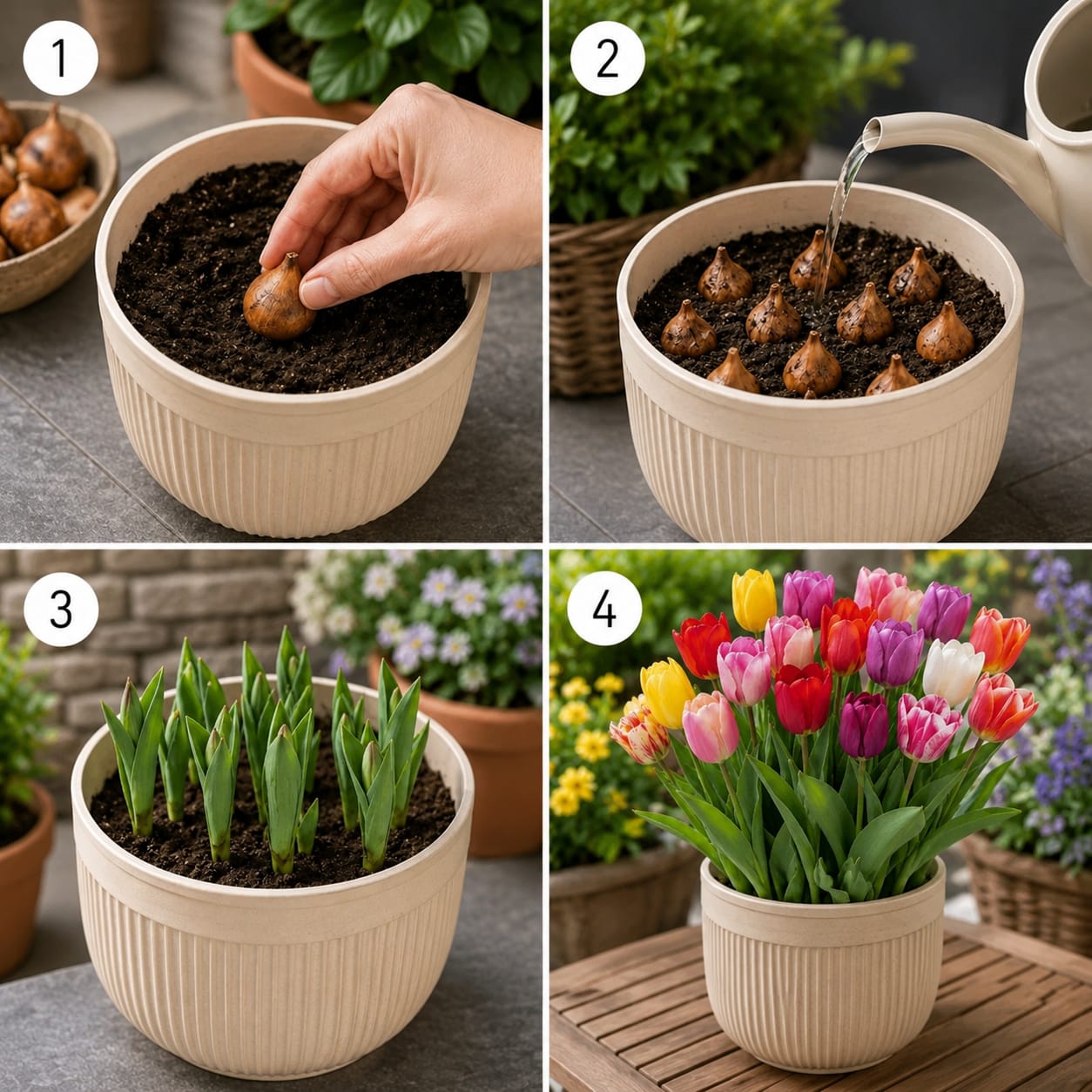
Tulips have a special way of making a home feel fresh, bright, and full of life. Their clean green leaves, upright stems, and smooth cup-shaped flowers create a look that feels both classic and modern. Many people think tulips only belong in outdoor gardens, but tulip bulbs can also be grown in decorative bowls and containers for a beautiful indoor display. With the right setup, a simple bowl of soil and bulbs can turn into a colorful arrangement that looks like a professional spring centerpiece.
The trick is very simple: place tulip bulbs into a wide container, keep the pointed tips facing upward, water them carefully, and give them a cool, bright place to wake up. Over time, the bulbs send up green shoots, then strong leaves, and finally colorful flowers. This method is perfect for anyone who wants a natural floral display without buying cut flowers every week.
Unlike many houseplant tricks that use powders, sprays, or complicated mixtures, this one is based on timing, bulb placement, moisture control, and decor styling. Tulip bulbs already contain stored energy inside them. They do not need heavy fertilizer at the beginning. What they need most is the right planting depth, gentle watering, cool conditions, and enough light once growth begins.
This indoor tulip bowl idea works beautifully on a dining table, kitchen counter, balcony shelf, windowsill, entryway console, coffee table, or covered patio. It also creates a lovely seasonal decoration for spring, Easter, Ramadan gatherings, family dinners, birthdays, and simple everyday home styling.
What Makes This Tulip Bowl Trick So Beautiful?
The beauty of this trick is that the whole process feels decorative from the beginning. Even before flowers appear, the planted bulbs create a neat garden look. When the green shoots begin to rise, the arrangement becomes fresh and lively. When the tulips bloom, the bowl turns into a colorful indoor garden.
This method is loved because it combines plant care and home decor in one simple project. You do not need a large garden. You do not need expensive floral arrangements. You only need a wide container, quality soil, healthy bulbs, water, and patience.
The result can look elegant, soft, cheerful, and natural. A cream or white bowl gives the tulips a clean modern look. A terracotta pot gives a rustic garden feel. A glass bowl creates a more decorative layered display. A woven basket around the pot gives a warm farmhouse style.
Why Tulip Bulbs Are Perfect for Container Growing
Tulips grow from bulbs, which are natural storage organs. Inside each bulb is the energy needed to produce roots, leaves, and flowers. This is why tulips can grow strongly once the conditions are right. The bulb is like a small package of future growth.
Tulip bulbs are perfect for containers because:
- They already contain stored energy.
- They grow upright and neat.
- They do not need much space between plants.
- They create a dense floral display.
- They are easy to arrange in bowls.
- They look beautiful before and after blooming.
- They can be styled indoors or on balconies.
A group of tulips in one bowl often looks more impressive than a single bulb. Planting several bulbs together creates a full bouquet effect once they bloom.
The Best Container for an Indoor Tulip Bowl
The container is important because tulip bulbs need enough room for roots, moisture control, and stable growth. A wide shallow bowl can work beautifully if it has drainage or if watering is carefully controlled. A deeper pot is safer for beginners because it gives the roots more space and reduces the risk of water sitting around the bulbs.
Good container choices include:
- Wide ceramic bowls
- Low indoor planters
- Terracotta pots
- Decorative plastic containers
- Window boxes
- Basket-covered nursery pots
- Drainage pots placed inside decorative cachepots
The most important detail is drainage. Tulip bulbs can rot if they sit in soggy soil. If the container has drainage holes, excess water can escape. If the container has no drainage holes, watering must be very light and careful.
How to Choose Healthy Tulip Bulbs
Healthy bulbs make a big difference. A good tulip bulb should feel firm, heavy for its size, and dry on the outside. It should not feel soft, moldy, hollow, or wet. The outer papery skin may be loose, and that is normal, but the bulb itself should be solid.
Choose bulbs that are:
- Firm to the touch
- Free from soft spots
- Not moldy
- Not shriveled
- Large and heavy
- Dry but not cracked deeply
- Pointed at the top and rounded at the bottom
Larger bulbs usually produce stronger flowers. Smaller bulbs may still grow, but the blooms can be weaker or smaller.
How to Place Tulip Bulbs Correctly
Bulb placement is one of the most important parts of this trick. The pointed side should face upward because that is where the shoot grows. The wider, flatter side should face downward because that is where the roots form.
Place the bulbs into the soil with their pointed tips slightly above or just below the surface, depending on the style you want. For a decorative indoor bowl, many people leave the tips visible. This makes the arrangement look clean and intentional while allowing you to monitor growth.
For a fuller display, plant the bulbs close together but not tightly smashed. They can almost touch, but leave a little space for roots and airflow.
Simple Step-by-Step Tulip Bowl Method
- Choose a wide container with drainage if possible.
- Add a layer of light, well-draining potting mix.
- Place tulip bulbs with the pointed side upward.
- Arrange the bulbs evenly across the bowl.
- Add soil around the bulbs to hold them steady.
- Keep the top tips visible or lightly covered.
- Water gently until the soil is evenly moist.
- Place the bowl in a cool bright area.
- Wait for shoots to appear.
- Move to brighter indirect light as growth develops.
The first watering helps settle the soil around the bulbs. After that, the goal is to keep the soil lightly moist, not wet.
How Often Should You Water Tulip Bulbs?
Tulip bulbs need moisture to start rooting, but they hate soggy soil. The soil should feel slightly moist, never swampy. If the surface feels dry, check a little deeper before watering again. The top can dry faster than the root zone.
A safe watering routine is:
- Water lightly after planting.
- Check the soil every few days.
- Water only when the upper soil begins to dry.
- Never let the container sit in standing water.
- Use less water in cool rooms.
- Use slightly more water once leaves are actively growing.
If the bulbs are kept too wet, they may rot before blooming. If they are kept completely dry for too long, root growth may slow down.
Why Cool Conditions Help Tulips Grow Better
Tulips naturally grow after a cold period. Cool temperatures help the bulbs wake up properly and produce stronger stems. If they are kept too warm from the beginning, they may grow weak, tall, or floppy.
A cool place is ideal during the early stage. This could be a cool windowsill, balcony, bright hallway, unheated room, or protected patio. Once green shoots appear and grow several centimeters tall, the bowl can be moved to a brighter decorative spot.
Good early conditions include:
- Cool air
- Gentle light
- Even moisture
- Good airflow
- No harsh heat
- No direct hot sun
How Much Light Do Tulips Need Indoors?
Once tulip shoots appear, light becomes very important. Tulips need bright light to grow strong and upright. Without enough light, the stems may stretch toward the window and become weak.
Best light options include:
- Bright windowsill
- East-facing window
- Sunny balcony with soft morning light
- Bright indoor table near a window
- Covered patio with indirect sun
Avoid placing tulips in a dark corner once they begin growing. They may survive, but the display will be weaker and less elegant.
How Long Does It Take for Tulips to Grow?
The timing depends on bulb variety, temperature, and whether the bulbs were pre-chilled. Some bulbs sprout quickly, while others take longer. In general, once conditions are right, green shoots begin to appear first, then leaves develop, and flowers follow after stronger growth.
The usual stages are:
- Rooting stage below the soil
- Small green shoots breaking the surface
- Leaves opening and lengthening
- Flower buds forming
- Color appearing in the buds
- Full bloom display
Patience is important. Tulips are not instant flowers, but the transformation is part of the charm.
How to Make the Tulip Bowl Look Fuller
A full tulip bowl looks more luxurious than a sparse one. The secret is planting enough bulbs close together. In outdoor gardens, bulbs are often spaced wider apart, but in decorative containers, tighter spacing creates a bouquet effect.
To make the bowl look fuller:
- Use several bulbs in one container.
- Choose bulbs of similar size.
- Plant them evenly across the surface.
- Use a wide bowl instead of a narrow pot.
- Rotate the container as shoots grow.
- Keep it in bright light to prevent leaning.
You can also mix tulip colors for a cheerful display or use one color for a more elegant designer look.
Best Tulip Colors for Home Decor
Tulips come in many colors, and each color creates a different mood in home styling.
- White tulips: clean, calm, minimalist, elegant.
- Pink tulips: soft, romantic, feminine, warm.
- Red tulips: bold, classic, dramatic.
- Yellow tulips: cheerful, sunny, fresh.
- Purple tulips: luxurious, artistic, rich.
- Orange tulips: warm, energetic, cozy.
- Mixed tulips: playful, garden-like, festive.
For modern interiors, white and pale pink tulips look beautiful in neutral pots. For bright spring decor, mix red, yellow, pink, purple, and white together in one bowl.
Indoor Decor Ideas for Tulip Bowls
Dining Table Centerpiece
A wide bowl of tulips makes a beautiful dining table centerpiece. Use a low container so people can still see across the table. Choose tulips in one color for a refined look or mixed colors for a festive spring feeling.
Kitchen Counter Freshness
Tulips on a kitchen counter bring instant freshness. A cream bowl, wooden tray, and small watering can create a cozy garden-inspired corner.
Entryway Welcome Display
Place a tulip bowl on an entryway console to welcome guests with color. Add a small mirror, candle, or woven basket beside it for a warm home-styling effect.
Balcony Garden Bowl
A tulip bowl on a balcony table looks beautiful in morning light. Keep it protected from strong wind and heavy rain.
Bedroom Spring Accent
Soft pink or white tulips can make a bedroom feel calm and elegant. Place them near a bright window, away from hot radiators.
Why a White Container Works So Well
A white container makes tulip colors look brighter. It also gives the arrangement a clean, elegant, and modern appearance. The contrast between dark soil, green leaves, and colorful flowers becomes more noticeable.
A ribbed white bowl adds texture without making the display look busy. This style works especially well with Scandinavian, farmhouse, minimalist, and modern home decor.
White containers pair beautifully with:
- Natural wood tables
- Woven baskets
- Neutral curtains
- Light ceramic accessories
- Soft beige walls
- Marble counters
- Spring table settings
Should You Add Fertilizer?
At the beginning, tulip bulbs do not need much fertilizer because the bulb already stores energy. Adding too much fertilizer can damage roots or encourage weak growth. If you want to feed, use a very gentle bulb fertilizer or balanced liquid fertilizer at low strength after shoots appear.
Do not fertilize heavily. The most important things are moisture, cool conditions, and light.
A safe feeding approach:
- No heavy fertilizer at planting.
- Use quality potting mix.
- Feed lightly only after green growth appears.
- Avoid fertilizing soggy soil.
- Stop feeding once flowers fade.
Common Mistakes to Avoid
Tulip bowls are simple, but a few mistakes can ruin the display.
- Planting bulbs upside down
- Using soft or moldy bulbs
- Keeping the soil too wet
- Using a pot without careful drainage
- Placing the bowl in a hot room too early
- Keeping sprouted tulips in low light
- Planting too few bulbs for the container size
- Letting the pot sit in water
- Using heavy clay soil
- Moving the container too often once shoots grow
The most common problem is overwatering. Bulbs like moisture, but they do not like being soaked.
How to Keep Tulip Stems From Falling Over
Indoor tulips sometimes lean if they do not get enough light or if the room is too warm. To keep them stronger, give them bright light and rotate the bowl regularly.
Helpful tips include:
- Keep tulips in a cool room.
- Place them near bright natural light.
- Rotate the bowl every few days.
- Avoid placing them near heaters.
- Water evenly but not too much.
- Use enough soil depth to support the bulbs.
If stems become tall and heavy, you can support them gently with decorative twigs or a low plant ring.
Continue to Page 2
Continue to page 2 for more details about this article and the key points many readers miss on the first page.