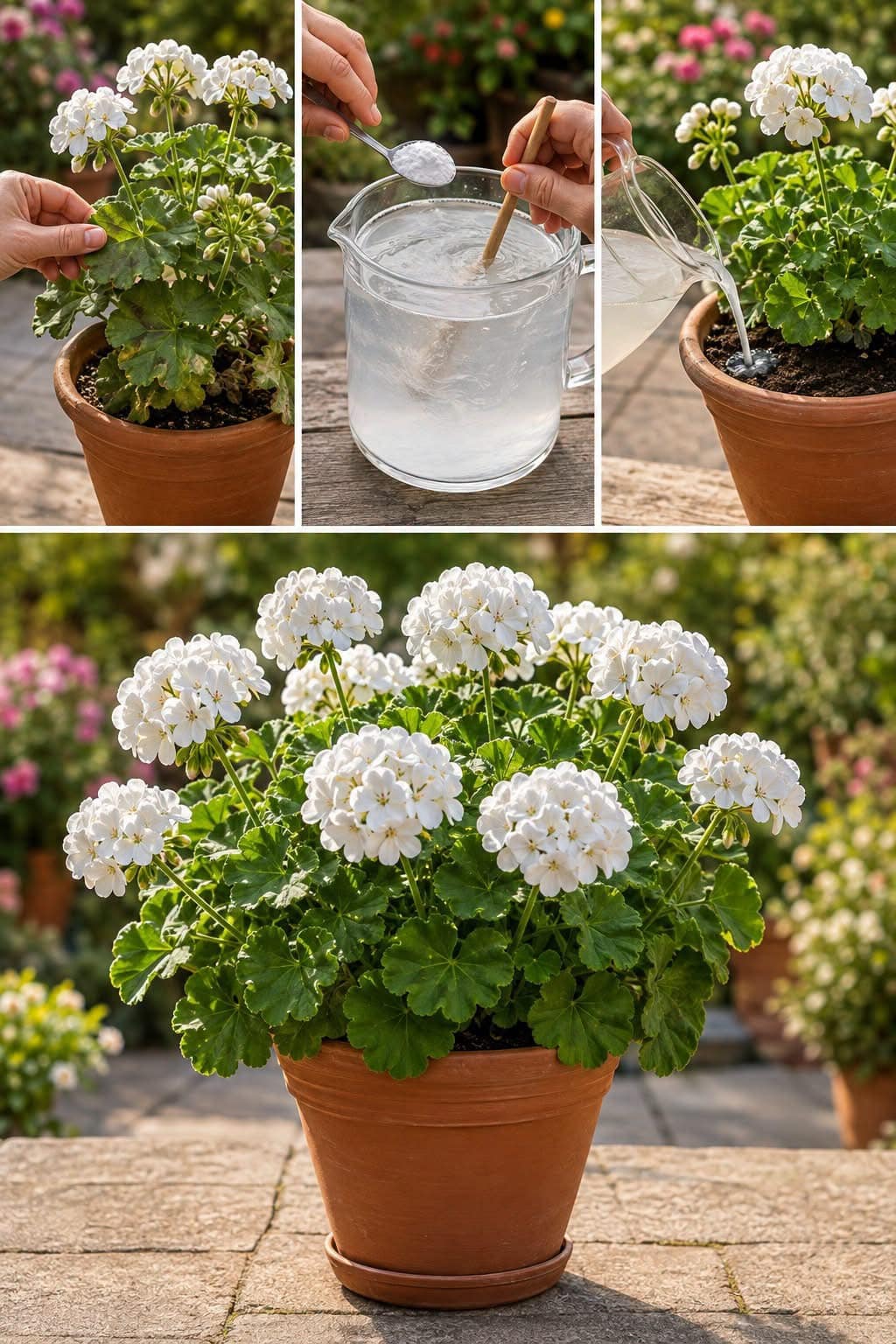
Geraniums are classic flowering plants loved for their round clusters of blooms, fragrant leaves, and cheerful colors. Whether they are growing on a sunny balcony, patio, windowsill, or garden table, a healthy geranium can bloom for months with the right routine.
Online images sometimes show baking soda mixed into water and poured into a geranium pot. Baking soda is not a plant fertilizer, and it should not be used as a regular soil treatment. It can raise the soil pH and create salt buildup, which may stress roots rather than improve flowers. The safest way to encourage fuller growth and more blooms is to give geraniums enough sunlight, fast-draining soil, careful watering, deadheading, and a balanced fertilizer made for flowering plants.
This guide explains how to care for potted geraniums safely so they stay bushy, green, and covered in flowers through the growing season.
Why Geraniums Stop Blooming
Geraniums need a good balance of light, water, nutrients, and airflow. When one of these conditions is missing, they may produce leaves but few flowers, or their blooms may fade quickly.
The most common reason is insufficient sunlight. Geraniums are flowering plants that need several hours of bright light each day. A plant kept in deep shade may survive, but it will not bloom as generously.
Overwatering is another common problem. Geranium roots need air around them, and soil that remains wet for too long can lead to yellow leaves, weak stems, and root problems.
Old flowers also need to be removed regularly. When spent blooms remain on the plant, geraniums can direct energy toward seed production instead of fresh flowers.
Why Baking Soda Is Not a Geranium Fertilizer
Baking soda, also called sodium bicarbonate, is commonly used in the kitchen. It is not a complete fertilizer and does not provide the balanced nutrients geraniums need for steady growth.
Adding baking soda to potting soil can change the soil’s pH and add sodium. Over time, sodium may build up in containers and interfere with the roots’ ability to take up water and nutrients.
It also will not fix the real causes of weak flowering, such as low light, poor drainage, exhausted soil, pests, or incorrect watering.
For reliable nutrition, use a fertilizer labeled for flowering container plants. It provides measured nutrients and clear instructions for dilution. A proper fertilizer, applied lightly during active growth, is much safer than kitchen powders or homemade mixtures.
Give Geraniums Enough Sunlight
Geraniums grow and bloom best with plenty of light. Outdoors, they often prefer at least four to six hours of direct sun each day. Morning sun is especially gentle and useful.
In very hot climates, a little protection from intense late-afternoon sun can prevent stress and leaf scorch. A location with morning sun and light afternoon shade is often ideal.
Indoor geraniums should be placed at the brightest available window. A south-facing or west-facing window can work well, as long as the plant is gradually adjusted to strong light.
Turn the pot every week so all sides receive light. This helps the plant grow evenly and prevents it from leaning toward the window.
Use a Pot with Drainage Holes
A pot with drainage holes is essential for healthy geranium roots. Water must be able to escape after watering, or the soil can become soggy.
Terracotta pots are especially good for geraniums because the clay allows moisture to evaporate through the sides. They can help the potting mix dry more evenly between waterings.
Choose a pot only slightly larger than the current root ball. A very large container holds excess soil and moisture, increasing the chance of overwatering.
If you use a decorative pot with no drainage hole, keep the geranium in a smaller nursery pot inside it. Remove the inner pot for watering and allow it to drain fully before placing it back.
Choose Fast-Draining Potting Soil
Geraniums need a light potting mix that drains well. Use a quality container mix designed for flowering plants, or mix regular potting soil with perlite to improve airflow.
Do not use dense garden soil in pots. It becomes compacted easily and may hold too much water around the roots.
If the potting mix is old, very dense, or staying wet for several days, refresh it. Repotting with fresh soil can make a major difference in a plant’s health and flowering ability.
Water Geraniums the Right Way
Check the top inch of soil before watering. If it feels dry, water slowly and thoroughly until a little water runs through the drainage holes.
Let the pot drain completely. Never leave the plant sitting in a saucer full of water.
Geraniums prefer regular watering, but they do not like constantly wet soil. In warm sunny weather, a container may need water more often. In cooler, cloudy weather, it may need much less.
Watch the plant and the soil rather than following an exact daily schedule. Yellow leaves, soft stems, and wet soil often suggest too much water. Drooping leaves and very dry soil may mean the plant needs a drink.
Water close to the soil surface instead of repeatedly soaking the leaves and flowers. This helps keep the plant tidy and reduces the chance of leaf issues.
Fertilize Safely for Better Blooms
Use a liquid fertilizer labeled for flowering plants or containers. Apply it according to the label, usually every two to four weeks during active spring and summer growth.
Choose a formula that includes nitrogen, phosphorus, and potassium. Nitrogen supports green leaves, phosphorus supports roots and flowering, and potassium helps overall plant strength.
Do not use too much fertilizer. Overfeeding can produce lots of leaves with fewer flowers, and it may burn the roots or create brown leaf tips.
Always fertilize moist soil. If the potting mix is dry, water the plant first and fertilize later. Never apply concentrated fertilizer directly to dry roots.
Reduce or stop feeding when the plant is growing slowly in cooler months.
Deadhead Old Flowers Regularly
Deadheading is one of the easiest ways to keep geraniums blooming. When a flower cluster fades, remove the entire flower stem near its base.
Use clean fingers, scissors, or pruners. Gently follow the flower stem down to where it joins the main plant and snip it off.
This encourages the geranium to focus energy on new buds rather than seeds. It also keeps the plant looking clean and colorful.
Check for faded blooms every few days during the flowering season. This small habit can make a noticeable difference in how full the plant looks.
Pinch Back Leggy Growth
Geraniums can become tall and thin if they do not receive enough light or if they are never pruned. Pinching back the growing tips encourages more side branches.
Use clean scissors to cut a long stem just above a leaf node. New growth usually develops below the cut, helping the plant become bushier.
Do not remove too much at one time. Light pruning every few weeks is better than cutting the entire plant back severely during peak blooming season.
If your geranium becomes very leggy, prune it back gradually, move it to a brighter place, and keep up with regular watering and light feeding.
Common Geranium Problems
Yellow Leaves
Yellow leaves often result from overwatering, poor drainage, or older leaves naturally aging. Check the soil before watering again.
Remove yellow leaves and make sure water is draining from the pot. If the soil remains wet for a long time, repot into a lighter mix.
Brown Leaf Edges
Brown edges may happen from underwatering, heat stress, salt buildup, or inconsistent watering. Check whether the pot dries out too quickly or whether fertilizer has been used too often.
Flush the pot with plain water if you suspect excess fertilizer salts, then let it drain well.
Few Flowers
If your geranium has lots of green leaves but few blooms, increase its sunlight if possible. Remove faded flowers, avoid too much nitrogen-heavy fertilizer, and make sure the plant is not in an oversized pot.
Soft Stems or Dark Areas
Soft stems can be a warning sign of rot. Stop watering, inspect the soil, and move the plant to a brighter, better-ventilated location.
If roots are soft, dark, or smell unpleasant, repot into fresh dry potting mix after removing damaged roots with clean scissors.
Best Places to Display Geraniums
Geraniums look beautiful on a sunny patio table, balcony railing, front porch, or outdoor windowsill. Their flowers add instant color to neutral pots, terracotta planters, and wooden garden furniture.
A cluster of geraniums in matching pots creates a polished display beside a front door or along a garden path. White geraniums look especially elegant with terracotta or dark green pots.
Indoors, choose the brightest windowsill available. Keep the plant away from cold drafts, strong air-conditioning, and heat vents.
For a fuller display, combine geraniums with trailing plants in a larger container, but make sure all plants have similar sunlight and watering needs.
Preparing Geraniums for Cooler Weather
Geraniums are sensitive to frost. If temperatures are expected to drop close to freezing, move potted plants indoors or to a protected location.
Before bringing them inside, inspect leaves for pests and remove faded flowers. Place them in a bright window and water less frequently than you would outdoors.
During winter, geraniums usually grow more slowly. Do not expect heavy flowering without strong light. Focus on keeping the roots healthy until spring returns.
Frequently Asked Questions
Can I put baking soda in geranium soil?
It is not recommended. Baking soda is not a balanced fertilizer and can alter the soil pH or cause salt buildup. Use a labeled flowering-plant fertilizer instead.
How often should I water a potted geranium?
Water when the top inch of soil feels dry. The exact schedule depends on sun, temperature, pot size, and weather.
Why are my geranium leaves yellow?
The most common causes are overwatering, poor drainage, older leaves, or low light. Check the soil and drainage first.
How can I make geraniums bloom more?
Give them enough sunlight, deadhead spent flowers, use fast-draining soil, water correctly, and feed lightly with a fertilizer designed for flowering plants.
Should I remove old flowers?
Yes. Removing faded flowers encourages the plant to produce fresh buds and keeps it looking neat.
Final Thoughts
Beautiful geraniums do not need baking soda or kitchen remedies to bloom well. Their best care is simple: sunshine, drainage, light potting soil, careful watering, deadheading, and gentle feeding with a proper flowering-plant fertilizer.
With a steady routine, your geranium can grow fuller, stay greener, and produce colorful flower clusters for a long season. Focus on healthy roots first, and the blooms will have the best chance to follow.