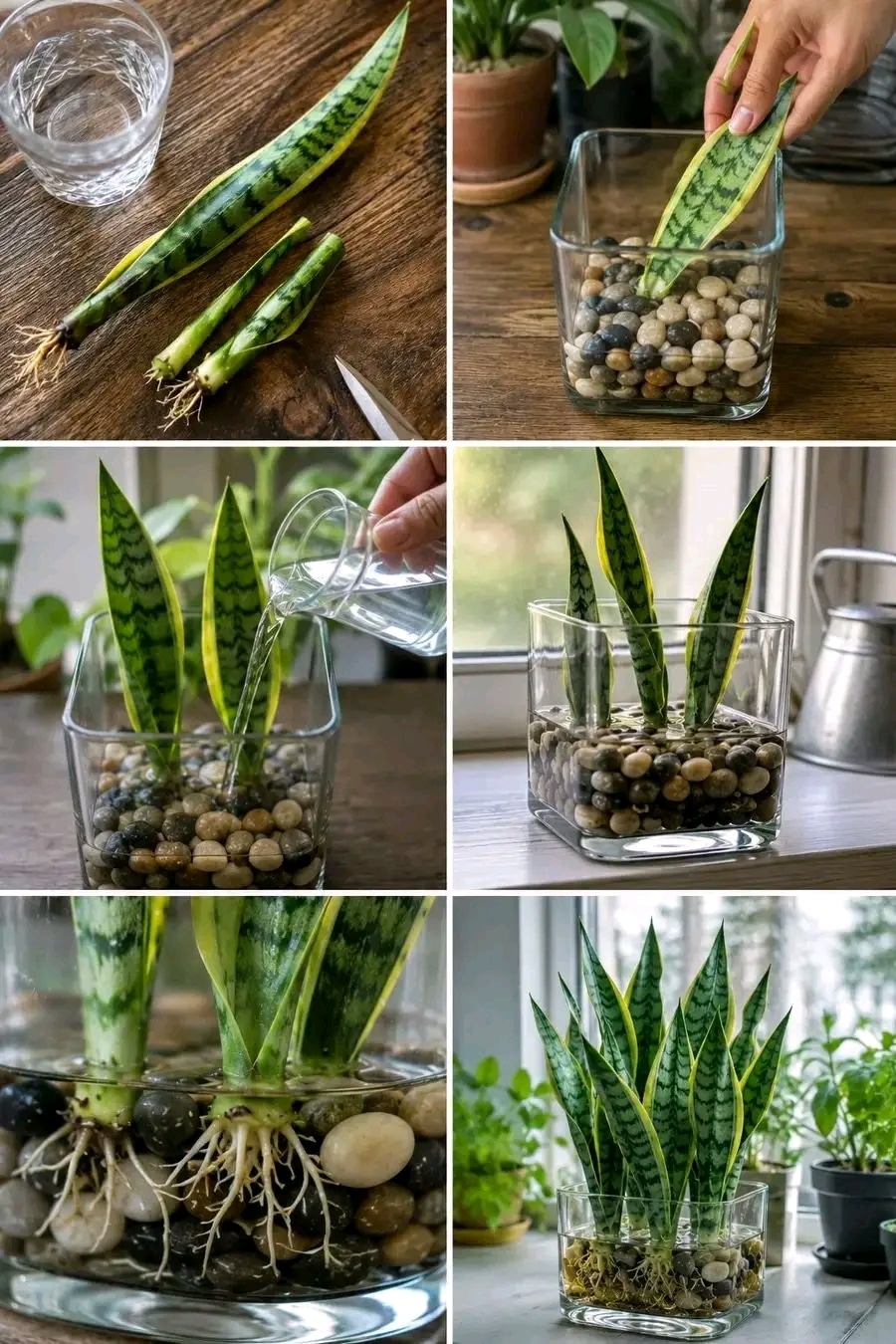
Can Snake Plant Live in Water Permanently?
Snake plant can survive in water for an extended period when the water is kept clean and the plant receives enough light. However, it is not naturally a water plant. Long-term water culture requires careful maintenance. Roots must stay clean, the crown must remain above water, and nutrients may eventually be needed in very weak amounts.
If keeping snake plant in water permanently, change the water regularly and clean the container. Use a very weak liquid fertilizer occasionally during active growth if the plant is established and producing new leaves. Avoid strong fertilizer because there is no soil to buffer the roots.
Some snake plants do better when moved back into fast-draining soil after rooting. If the goal is long-term vigorous growth and more pups, a gritty soil mix may be more reliable than water culture. If the goal is decorative display, water culture can be maintained carefully.
Moving Water-Rooted Snake Plant Into Soil
Once roots are several inches long, the cutting can be moved into soil if desired. Use a fast-draining cactus or succulent mix with added perlite, pumice, or coarse material. The pot should have drainage holes. Water roots are delicate, so plant gently and avoid pressing soil too tightly around them.
After transferring, keep the soil slightly more consistent for a short adjustment period, but do not keep it soggy. The plant needs time to adapt from water roots to soil roots. After it settles, return to normal snake plant care by allowing the soil to dry well between waterings.
Some leaf cuttings may take a long time to produce new shoots after rooting. Root growth is only the first stage. New pups may appear later from the base. Patience is normal with snake plant propagation.
Why Pebbles Can Be Both Helpful and Risky
Pebbles help with stability and style, but they must be kept clean. Dirty stones can introduce bacteria or algae. Heavy stones can bruise the cuttings if packed too tightly. Pebbles can also trap decaying material if old roots or leaf pieces fall between them.
To use pebbles safely, rinse them before setup and during water changes when needed. Do not bury soft tissue deep under the stones. Leave enough space for water to move around the roots. If the water smells bad, clean both the container and the stones.
Decorative pebbles should support the plant without hiding problems. The clear glass should still allow you to inspect the waterline and roots.
Preventing Algae
Algae can grow in clear glass containers, especially near bright windows. A little algae is not always dangerous, but it can make the display look dirty and may reduce the clean decorative effect. Algae appears more often when the water receives strong light or when nutrients are present.
To prevent algae, keep the jar out of harsh direct sun, change water regularly, and clean the glass. If algae keeps returning, use a slightly tinted container or move the display to bright indirect light instead of direct window sun.
Do not add household chemicals to kill algae while the plant is inside. Cleaning and water changes are safer.
Cleaning the Leaves
Snake plant leaves can collect dust, especially near windows. Dust dulls the green pattern and yellow edges. Wipe the leaves gently with a soft damp cloth. Support the leaf while wiping so it does not bend or snap. Clean leaves absorb light better and improve the whole display.
If water splashes onto the leaves during changes, dry the leaf bases if moisture collects in tight spaces. Snake plants do not like wet crowns. Keeping the upper plant dry reduces the chance of rot.
Avoid oily leaf shine products. Snake plant leaves look naturally polished when clean. Plain water and a soft cloth are enough.
Indoor Styling With Glass and Pebbles
A snake plant in a glass container with pebbles can look modern, minimal, and fresh. It works well on a bright windowsill, kitchen counter, bathroom shelf with natural light, home office desk, bedroom dresser, plant shelf, or living room side table. The upright leaves create height, while the visible stones and roots add texture.
Choose pebbles that match your decor. Smooth river stones create a natural spa-like look. White pebbles feel clean and bright. Dark stones create contrast with variegated leaves. Mixed stones create a relaxed garden style. The container shape also changes the mood. Square glass feels modern. Round glass feels softer. Tall glass feels elegant.
For a premium display, keep the water clear, the glass clean, and the stones free from algae. The beauty of this method depends on clarity. Cloudy water or dirty stones can make the display look neglected.
Common Mistakes With Snake Plant Water Propagation
One common mistake is placing fresh cuttings in water before they callus. This increases the risk of rot. Another mistake is submerging too much of the leaf. Only the lower base needs water. A third mistake is using a dirty container or unwashed pebbles.
A fourth mistake is leaving old water unchanged. Stagnant water can cause bad smells and rot. A fifth mistake is placing the jar in harsh sun until the water heats up. A sixth mistake is expecting roots in a few days. Snake plants are slow.
A seventh mistake is adding sugar, fertilizer, or homemade liquids to force rooting. These additions often make water dirty. Clean water and patience are safer.
Better Alternatives to Rooting Tricks
If the goal is faster rooting, use healthy cuttings, let them callus, place them in bright indirect light, keep them warm, and change the water regularly. If the goal is a more stable display, use clean pebbles and a container that supports the leaves. If the goal is more plants with the same variegation, divide pups instead of using leaf cuttings.
If a cutting rots, trim it, dry it, and restart. If the water clouds, change it. If algae grows, clean the container and reduce direct sun. If roots are forming slowly but the cutting is firm, wait. These steps solve real propagation problems more safely than complicated additives.
Snake plant propagation rewards patience more than constant intervention. The less you disturb a clean healthy setup, the better the cutting can focus on root growth.
Final Thoughts
Growing snake plant cuttings in water with decorative pebbles can create a beautiful indoor display that feels modern, clean, and easy to style. It is a useful method for propagation, plant decor, windowsill displays, apartment greenery, home office styling, and premium indoor plant design. The clear container makes the roots visible, while the pebbles support the leaves and add a polished decorative finish.
The real foundation of success is not a special powder or secret liquid. It is a healthy cutting, a clean cut, proper callusing, fresh water, clean pebbles, bright indirect light, stable warmth, and regular maintenance. Keep the waterline low, keep the crown dry, change the water before it becomes cloudy, and remove any rotting tissue immediately. If the plant roots well, you can keep it in water for display or transfer it into fast-draining soil later.
With careful setup and patient care, snake plant cuttings can become beautiful rooted displays for living rooms, bedrooms, kitchens, home offices, apartments, windowsills, plant shelves, commercial interiors, luxury home staging, and premium plant styling. Strong leaves, clean water, visible roots, tidy pebbles, and balanced maintenance will always create a safer and more elegant result than relying on risky shortcuts.