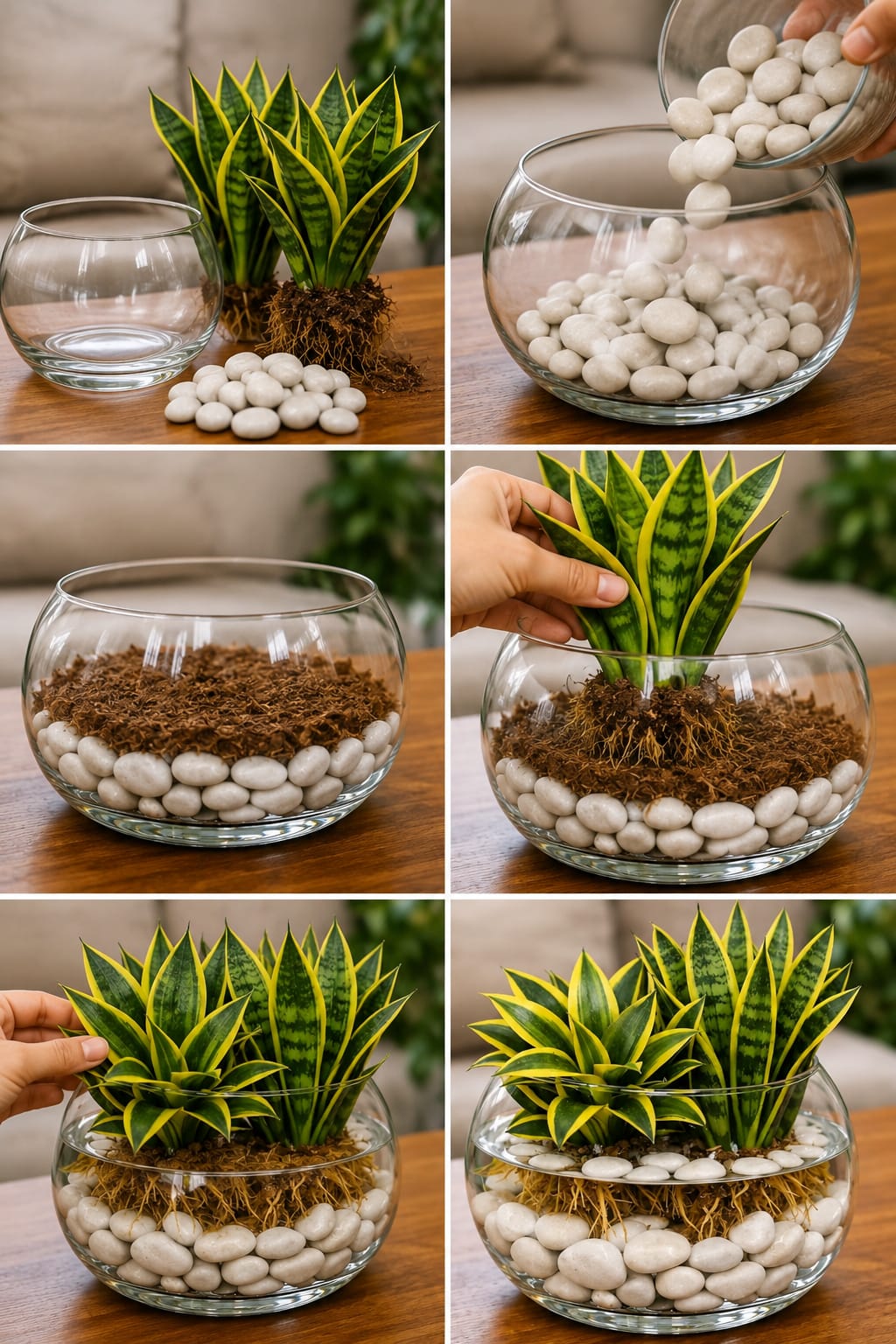
Snake plants are among the most stylish indoor plants because they look bold, clean, and architectural without needing complicated care. Their upright sword-shaped leaves, deep green patterns, and bright yellow edges make them perfect for modern homes, cozy corners, office desks, shelves, coffee tables, and sunny indoor displays. When snake plants are arranged inside a clear glass bowl with white stones and a light natural base, they become more than simple houseplants. They become a living decor piece.
A snake plant glass bowl display is a beautiful way to create a small indoor garden with a clean, decorative look. The clear glass shows the layers inside the arrangement, while the white stones add contrast and brightness. The snake plants bring height, shape, and color. This kind of display works well for people who want a plant arrangement that looks polished and decorative, but still stays simple to maintain.
The most important part is building the bowl correctly. Snake plants do not like soggy soil. A glass bowl often has no drainage holes, so the arrangement must be made with extra care. The white stones and soil layers should help with structure and decoration, but watering must stay light and controlled. A glass bowl can look beautiful, but it can also trap moisture if you water too much.
Why Snake Plants Work Well in Glass Bowls
Snake plants have a strong upright shape, so they look beautiful in low, wide containers. Their leaves rise above the rim of the bowl and create a sculptural display. The contrast between the sharp leaves and the round glass bowl makes the arrangement feel balanced and modern.
Snake plants also grow slowly, which makes them useful for decorative bowls. Fast-growing plants may outgrow a bowl quickly, but snake plants can stay compact for a long time if cared for properly.
Small snake plant pups are especially good for this project. They fit easily into a glass bowl and create a mini indoor landscape.
What Makes This Display Special?
This display combines three decorative elements: clear glass, white stones, and bold foliage. The glass gives a clean, airy look. The white stones brighten the base and make the arrangement feel neat. The snake plants add life, color, and vertical structure.
The finished bowl can look beautiful on a wooden table, bright windowsill, office shelf, kitchen counter, or entryway console. It feels natural but also styled. It works with modern, rustic, minimalist, boho, farmhouse, and indoor jungle decor.
It is also a great way to use small snake plant divisions or pups from a larger plant.
Important Warning About Glass Bowls
Many glass bowls do not have drainage holes. This means water cannot escape from the bottom. Snake plants can rot if their roots sit in wet soil. Because of that, a glass bowl display must be watered less often than a normal potted snake plant.
This project works best as a decorative dry-style arrangement. The soil should be fast-draining, and water should be added in small amounts only when the soil is dry.
If you are a beginner and tend to overwater, choose a glass bowl only if you are ready to water carefully.
Best Snake Plant Varieties for a Bowl Display
Small and compact snake plants work best. Tall varieties can become top-heavy in a shallow bowl. Choose young plants, pups, or dwarf varieties.
Good choices include:
- Bird’s nest snake plant: Compact rosette shape, perfect for bowls.
- Sansevieria Laurentii pups: Green leaves with yellow edges.
- Golden hahnii: Small, bright, and decorative.
- Jade hahnii: Dark green and compact.
- Small divisions from a mature snake plant: Great for filling space.
Mixing one rosette-style snake plant with a few upright pups creates a balanced look.
Materials You Need
You do not need many materials to create this arrangement. The most important thing is choosing clean materials that support drainage and keep the plant stable.
- A wide clear glass bowl
- Small white decorative stones
- Fast-draining cactus or succulent soil
- Snake plant pups or small snake plants
- Optional coco fiber or bark layer
- Small trowel or spoon
- Clean scissors
- Dry brush or cloth for cleaning the glass
- Optional activated charcoal
Use clean stones and clean soil. Dirty materials can make the glass look messy and may introduce pests.
Choosing the Right Glass Bowl
A low, wide glass bowl works best. It gives enough surface area for several small plants and makes the arrangement stable. A bowl that is too deep can trap moisture. A bowl that is too narrow may not give the roots enough space.
Choose a bowl with thick glass and a stable base. The bowl should not tip easily when the plants are added.
A clear bowl is best because it shows the decorative layers. Frosted glass can also work, but clear glass gives the cleanest look.
Clean the Bowl First
Before building the arrangement, wash the glass bowl well. Remove dust, fingerprints, labels, or any residue. Rinse thoroughly and dry it.
A clean bowl makes the finished display look more professional. It also helps prevent smells or residue from old use.
After planting, wipe the outside glass with a soft cloth to remove soil marks.
Why White Stones Are Used
White stones add a decorative base layer and make the arrangement look bright and clean. They also create a visual contrast with the dark soil and green leaves.
In a bowl without drainage, stones do not replace drainage holes. They can create a small space at the bottom, but water can still collect there. This is why careful watering is still necessary.
Think of white stones as decoration and structure, not as permission to overwater.
Should You Add Activated Charcoal?
Activated charcoal can be useful in closed or low-drainage containers because it may help reduce odors and keep the layer fresher. It is optional, but it can be helpful in glass bowl arrangements.
If using it, add a thin layer above the white stones before adding soil. Do not use too much. A thin sprinkle is enough.
Charcoal helps, but it still does not replace proper watering.
Best Soil for Snake Plants in a Bowl
Snake plants need fast-draining soil. For a glass bowl display, this is even more important because excess water cannot drain away easily.
A good mix can include:
- 2 parts cactus or succulent soil
- 1 part perlite
- 1 part pumice or coarse sand
- A small amount of orchid bark, optional
The soil should feel loose, airy, and gritty. Avoid heavy garden soil or dense potting soil. Heavy soil holds too much moisture and can cause root rot.
Step 1: Add the White Stones
Start by placing a layer of white stones at the bottom of the glass bowl. Spread them evenly. This layer creates the clean decorative base that will be visible through the glass.
The stone layer can be about one to two inches deep, depending on the bowl size. Do not fill the bowl halfway with stones because the plants still need space for soil and roots.
Choose smooth stones to avoid damaging roots or scratching the glass.
Step 2: Add a Thin Charcoal Layer
If you are using activated charcoal, sprinkle a thin layer over the stones. This step is optional but helpful for keeping the arrangement fresher.
Do not add a thick layer. Too much charcoal can make the bowl look dark and may take up space needed for soil.
A light layer is enough.
Step 3: Add Fast-Draining Soil
Add your succulent soil mix above the stones. Spread it evenly and create a shallow planting area. The soil layer should be deep enough to cover the roots but not so deep that the leaves sit too low in the bowl.
Keep the soil slightly mounded in the center if you want a natural landscape look. This helps the plants appear lifted and makes the display more attractive.
Do not pack the soil too tightly. Snake plant roots need air.
Step 4: Prepare the Snake Plants
Remove the snake plant pups from their old pot gently. Shake off extra soil from the roots. Inspect the roots before planting.
Healthy roots are firm and light-colored. Remove any black, mushy, or rotten roots with clean scissors.
If a pup has a cut rhizome, let it dry for a few hours before planting. This helps reduce rot risk.
Step 5: Place the Tall Plants First
Start with the tallest snake plant pups. Place them toward the back or center of the bowl. This gives the arrangement height and structure.
Hold the plant upright and gently tuck soil around the roots. Do not bury the leaves too deeply. The base should sit just at the soil surface.
If the plant leans, add more soil around the base and press lightly.
Step 6: Add the Compact Rosette Plant
Next, place the compact rosette-style snake plant near the front or side. This creates a layered look. The rosette shape softens the display and fills the lower area of the bowl.
Arrange it so the leaves face outward and can be seen clearly through the glass rim.
A mix of upright and rosette forms makes the bowl look fuller and more natural.
Step 7: Finish With Decorative Stones
After planting, add a few white stones on top of the soil if desired. This creates a clean finished look and connects the top layer with the bottom stone layer.
Do not cover the entire soil surface too thickly. A heavy stone layer can trap moisture. Leave some soil exposed so it can dry properly.
A light decorative topping is enough.
Step 8: Wait Before Watering
If the roots were disturbed or cut, wait a few days before watering. This gives small root injuries time to dry and reduces the risk of rot.
If the plants were already dry and not damaged, you can add a very small amount of water around the roots. Do not soak the bowl.
With glass bowls, less water is safer.
How to Water a Snake Plant Glass Bowl
Water carefully. Because the bowl has no drainage, you should add only small amounts of water. Use a small cup, spoon, or squeeze bottle to control the amount.
Water around the base of each plant, not across the whole bowl. Let the soil dry completely before watering again.
If you see water collecting at the bottom near the stones, wait much longer before watering again.
How Often to Water
There is no fixed schedule. In many homes, a snake plant glass bowl may need water only every 3 to 5 weeks, sometimes even less. It depends on light, temperature, humidity, bowl size, and soil depth.
Check the soil before watering. If it feels even slightly damp, wait.
Snake plants prefer dryness over constant moisture.
Signs the Bowl Has Too Much Water
A clear bowl helps you see moisture problems early. Watch for signs that water is sitting at the bottom or the soil is staying wet too long.
- Foggy glass near the soil layer
- Water pooling near the stones
- Green algae on the glass
- Bad smell
- Soft leaves
- Yellowing leaves
- Fungus gnats
- Dark mushy roots
If these signs appear, stop watering and move the bowl to brighter indirect light with better airflow.
What to Do If You Overwater
If the bowl becomes too wet, carefully remove the plants. Let the roots dry. Replace wet soil with fresh dry succulent mix. Clean the glass bowl and rebuild the arrangement.
Do not wait until the plants collapse. Snake plants can rot quickly in trapped moisture.
Overwatering is easier to prevent than fix, so water lightly from the start.
Best Light for a Snake Plant Bowl
Snake plants can tolerate low light, but they look better in bright indirect light. Good light keeps the leaves upright, colorful, and strong. Variegated yellow edges stay brighter with more light.
Place the bowl near a bright window, but avoid harsh direct afternoon sun. Strong sun through glass can heat the bowl and damage roots or leaves.
Morning light or filtered bright light is ideal.
Can This Bowl Sit on a Coffee Table?
Yes, it can sit on a coffee table if the room has enough light. A snake plant bowl makes a beautiful centerpiece. However, if the table is far from a window, the plant may grow slowly and lose strength over time.
For best results, place the bowl near bright indirect light for most of the week. You can move it to the table for decoration when guests visit, then return it to a brighter spot.
Temperature Needs
Snake plants like warm indoor temperatures. Keep the bowl away from cold drafts, open winter windows, air conditioners, and heaters.
Glass can become cold near windows in winter, which can stress roots. If the windowsill gets very cold, move the bowl back from the glass.
Stable warmth keeps the arrangement healthy.
Humidity Needs
Snake plants do not need high humidity. Normal indoor humidity is fine. In very humid rooms, water even less often because the soil will dry more slowly.
Avoid placing the bowl in a damp bathroom unless the room has bright light and good airflow.
Dry, bright conditions are usually better for this arrangement.
Feeding a Snake Plant Bowl
Snake plants are light feeders. In a glass bowl, fertilizer should be used very carefully because there is no drainage to flush extra salts.
Use a diluted cactus or succulent fertilizer at one-quarter strength once or twice during spring and summer. Do not fertilize in winter.
If you are unsure, skip fertilizer. Snake plants can grow well with very little feeding.
Why Too Much Fertilizer Is Risky
In a normal pot, extra fertilizer can wash out through drainage holes. In a glass bowl, it stays in the soil. This can burn roots or cause white crust on the soil.
Use very weak fertilizer only during active growth. Plain water is safer most of the time.
Healthy light and dry soil matter more than feeding.
Cleaning the Glass Bowl
Clear glass shows dust, water spots, and soil smudges. Wipe the outside regularly with a soft cloth. If algae grows inside, the bowl may be getting too much direct light or too much moisture.
For small spots inside the glass, use a dry brush or cotton swab carefully. If the bowl becomes very dirty, remove the plants and rebuild the display.
A clean glass bowl makes the arrangement look fresh and polished.
Cleaning Snake Plant Leaves
Snake plant leaves collect dust. Wipe them gently with a damp cloth. Hold each leaf with one hand and clean with the other.
Do not use heavy leaf shine products. They can leave residue and block the leaf surface.
Clean leaves look brighter and absorb light better.
How to Keep the Display Balanced
Rotate the bowl every couple of weeks so all sides receive light. This helps the plants grow evenly and prevents leaning.
If one plant grows taller than the others, you can reposition the bowl or move that plant to the back for a layered look.
A balanced arrangement looks natural and intentional.
When to Repot the Arrangement
Repot the glass bowl when the plants become crowded, the soil breaks down, or the roots fill the bowl. Snake plants grow slowly, so this may not be needed often.
When repotting, remove each plant gently and refresh the soil. You can divide pups and create more bowls or move larger plants into regular pots with drainage holes.
Spring or early summer is the best time to refresh the arrangement.
Can You Keep It Long-Term?
Yes, but only with careful watering. A glass bowl without drainage requires more attention than a normal pot. If you prefer easier long-term care, use a glass bowl only as an outer decorative container and place a small nursery pot with drainage inside it.
For a true planted bowl, keep watering minimal and monitor moisture closely.
Snake plants can live a long time when their roots stay dry and healthy.
Decor Ideas for a Snake Plant Glass Bowl
This display is very versatile. It can look modern, rustic, elegant, or natural depending on where you place it.
- Place it on a wooden coffee table for warm contrast.
- Use it as a centerpiece on a dining table.
- Set it on an office desk for clean greenery.
- Place it on a shelf with books and candles.
- Use it near a bright window for a fresh indoor garden look.
- Pair it with white ceramic pots for a clean modern style.
- Place it on an entryway console for a welcoming display.
The white stones and glass make the arrangement feel bright and tidy.
Continue to Page 2
Continue to page 2 for more details about this article and the key points many readers miss on the first page.