How Often to Water
Watering frequency depends on light, temperature, pot size, and soil type. In bright warm conditions, the plant may need water every 10 to 14 days. In cooler or darker conditions, it may need water every 3 to 4 weeks.
Always check the soil rather than following a strict calendar. Use your finger, a wooden skewer, or the weight of the pot to judge dryness.
A terracotta pot dries faster than plastic or glazed ceramic, so adjust accordingly.
How to Keep the Heart Shape Full
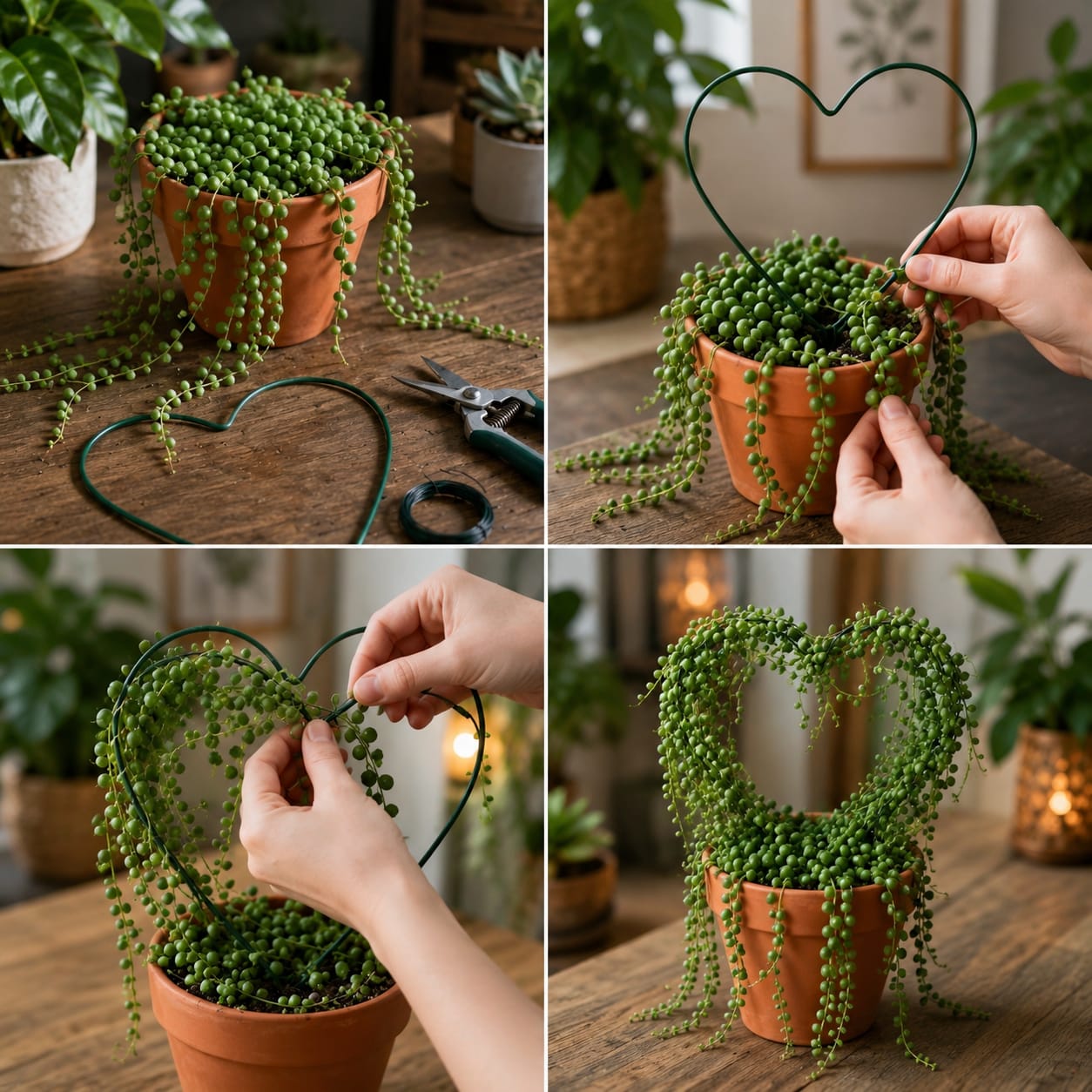
To keep the heart shape full, guide new growth around the frame as it appears. Young vines are usually more flexible, making them easier to place. Add them loosely with soft ties if needed.
If one side becomes heavier, move a few vines to the lighter side. If the top looks bare, train new strands upward. If the bottom looks too crowded, let some vines trail downward.
The display will improve over time as the plant grows into the frame. Do not expect perfection on the first day.
Pruning for a Neater Look
Pruning helps keep string of pearls fuller. If some strands become too long, thin, or uneven, trim them with clean scissors. Cut just above a node. The trimmed pieces can often be propagated.
Do not remove too much at once. Light trimming encourages branching and keeps the plant tidy. Heavy pruning can reduce the lush look of the heart.
Use trimmed healthy strands to fill bare areas or start new plants.
How to Propagate Extra Strands
String of pearls propagates easily from cuttings. Take a healthy strand, remove a few pearls from the section that will touch the soil, and lay the stem on top of moist succulent mix. Pin it lightly so the nodes contact the soil.
Keep the soil lightly moist but not wet until roots form. Bright indirect light helps the cuttings establish.
Once the cuttings root, they can be planted back into the main pot to make the heart display fuller.
Common Mistakes to Avoid
Do not bend vines sharply around the wire. This can break the stems. Do not tie the vines tightly. Do not water immediately just because the plant was styled. Do not place the plant in a dark corner after making the display.
Do not use a heavy wire frame that wobbles or pulls the plant. Do not overfill the pot with decorative stones that keep moisture trapped. Do not mist the pearls heavily because excess moisture can encourage rot.
Simple, gentle handling gives the best result.
Signs Your String of Pearls Is Happy
A healthy plant has firm green pearls, steady new growth, flexible stems, and no sour smell from the soil. The vines should not feel mushy or overly dry. New pearls should form along the stems, and the plant should gradually fill the heart frame.
If pearls are shrinking, check for underwatering or too much harsh sun. If pearls are mushy, check for overwatering. If vines are long and sparse, increase light.
Healthy string of pearls grows slowly but beautifully when conditions are right.
Decor Styling Ideas
A string of pearls heart trellis looks beautiful on a bright windowsill where the vines can glow in soft natural light. It also works well on a wooden shelf, bedside table, plant bench, or small greenhouse station.
For a romantic look, use terracotta, cream ceramics, soft linen curtains, and natural wood. For a modern look, use a white pot and a simple black or green trellis. For a cottage look, pair it with small clay pots, vintage scissors, and a weathered wooden surface.
This plant also makes a thoughtful handmade gift for birthdays, housewarmings, Valentine’s Day, Mother’s Day, or anyone who loves unique plant decor.
Final Thoughts
A string of pearls heart trellis is a simple way to turn a trailing succulent into a living piece of decor. With a small wire frame, soft ties, careful handling, and bright indirect light, the plant can grow into a charming heart shape while still keeping its natural cascading beauty.
The secret is patience. Do not force the vines. Guide them gently, let some strands trail, and allow new growth to fill the frame over time. Keep the soil fast-draining, water only when dry, and place the plant where it receives plenty of bright light.
With the right care, this small project can make an ordinary pot look artistic, romantic, and expensive-looking. It brings softness to a windowsill, personality to a shelf, and a handmade botanical touch to any indoor plant collection.