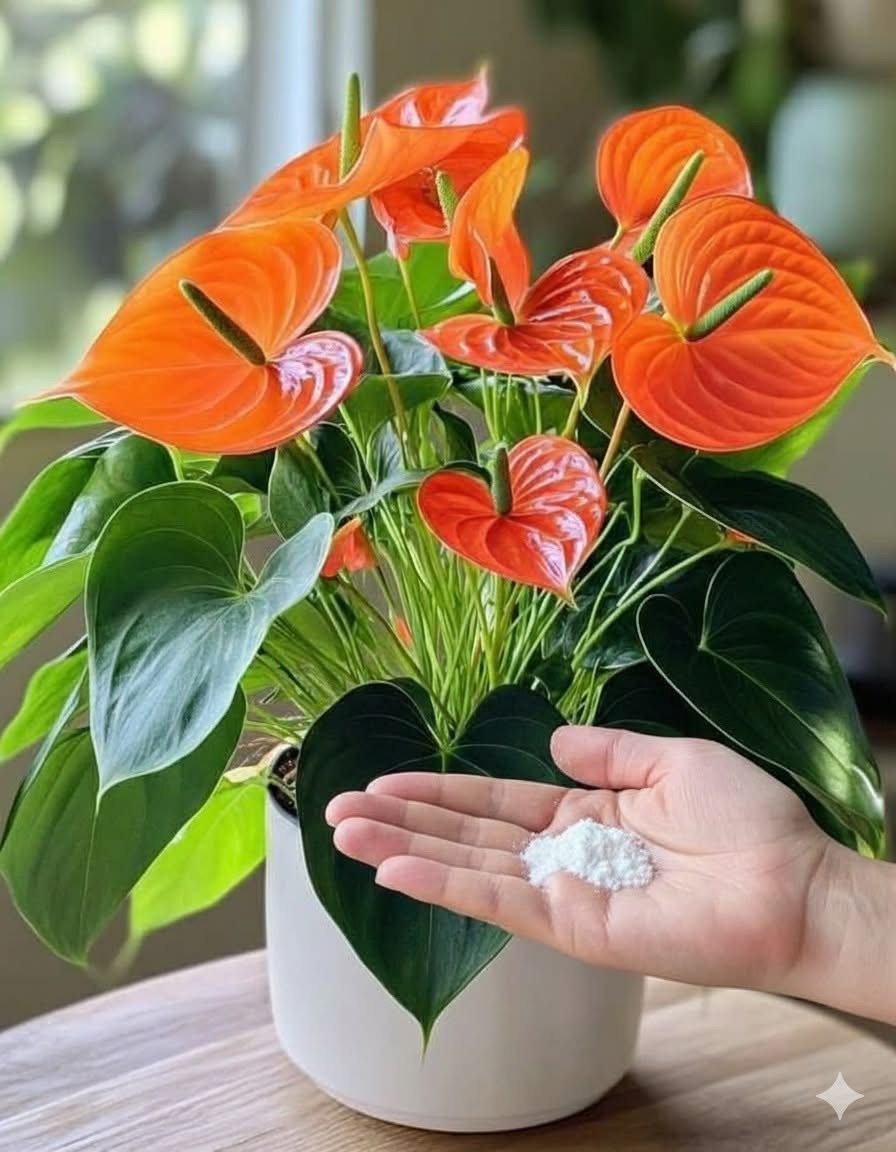
How to Make Anthuriums Bloom Beautifully With Just One Simple Kitchen Ingredient 🌺✨
If your Anthurium (also known as the Anthurium andraeanum) has healthy green leaves but refuses to bloom… don’t worry.
You don’t need expensive fertilizer.
You don’t need complicated plant food.
You just need one simple ingredient from your kitchen.
And the secret is… banana peel 🍌🌿
Yes — the same banana peel you usually throw away can help your anthurium produce brighter, longer-lasting blooms when used correctly.
Let’s break down exactly how it works and how to use it safely.
Why Banana Peel Helps Anthuriums Bloom
Anthuriums are tropical flowering plants. To bloom beautifully, they need:
✔ Potassium (for flower development)
✔ Phosphorus (for strong roots & buds)
✔ Small amounts of magnesium
Banana peels are naturally rich in potassium and phosphorus, two key nutrients that support flowering.
Potassium helps:
Improve flower color intensity 🌺
Strengthen stems
Increase bloom longevity
Phosphorus helps:
Stimulate bud formation
Support root health
Improve overall plant energy
That’s why this simple kitchen waste can become a powerful natural bloom booster.
Method 1: Banana Peel Water (Safest & Most Effective)
This is the best way to use banana peel for anthuriums.
🌿 What You Need:
1 fresh banana peel
1 liter of water
A jar or bottle
🌿 Steps:
Cut the banana peel into small pieces.
Place them in a jar.
Add 1 liter of water.
Let it soak for 24–48 hours.
Strain the liquid.
Dilute with equal amount of water (1:1 ratio).
Water your anthurium with this solution once every 3–4 weeks.
That’s it.
Important: Do NOT Put Banana Peel Directly in Soil
Many people bury banana peels directly in the pot.
🚫 This can:
Attract fungus gnats
Cause mold growth
Lead to root rot
Create bad odor
Always use it as filtered liquid fertilizer, not solid waste.
When Will You See Results?
If your plant is healthy and getting proper light:
Buds may start forming in 4–8 weeks
Flowers may appear brighter
Leaves may look shinier
Remember: Anthuriums bloom best in bright indirect light, not direct sun.
Extra Tips to Boost Blooming
Banana peel works best when combined with proper care:
☀ Light
Place near a bright window with filtered light.
💧 Watering
Water only when the top 2–3 cm of soil feels dry.
Overwatering is the #1 reason anthuriums stop blooming.
🌡 Humidity
Anthuriums love humidity (50–70%).
You can mist lightly or use a pebble tray.
🌱 Soil
Use well-draining mix (orchid bark + peat + perlite works great).
How Often Should You Feed It?
Natural fertilizers are gentle.
✔ Once every 3–4 weeks is enough.
✔ Do not overfeed.
✔ Stop feeding during winter if growth slows down.
Too much potassium can actually reduce blooming.
Balance is key.
Signs Your Anthurium Is Ready to Bloom
Look for:
- Thick healthy leaves
- Strong upright stems
- New leaf growth
- Small swelling at the base (early bud stage)
If leaves are yellowing, fix watering first before fertilizing.
Bonus: Add Eggshell Powder (Optional Boost)
If you want an extra bloom push:
- Dry eggshells
- Grind into fine powder
- Sprinkle a tiny amount on soil once every 2 months
This adds calcium for stronger cell structure.
But use lightly — too much can raise soil pH.
Why Natural Feeding Works Better Sometimes
Chemical fertilizers force rapid growth.
Natural feeding:
Releases nutrients slowly
Reduces salt buildup
Improves soil life
Supports long-term flowering
Your anthurium prefers steady care — not sudden heavy feeding.
Common Mistakes That Stop Blooming
❌ Too much direct sun
❌ Overwatering
❌ Cold drafts
❌ Large pot (roots need slight tightness)
❌ Too much nitrogen fertilizer
If leaves grow big but no flowers appear, nitrogen is likely too high.
Final Thoughts 🌺
You don’t need expensive products to make your anthurium bloom beautifully.
With just one simple kitchen ingredient — banana peel — plus proper light and watering, your plant can reward you with stunning, long-lasting flowers.
Simple care.
Natural feeding.
Beautiful blooms.
Would you like another natural bloom trick using milk or coffee? 🌿✨
-

Why Some Homeowners Are Using Onion Water Around Orchids and What Usually Helps More for Strong Roots, Healthy Leaves, and Long-Lasting Blooms
Orchids are among the most elegant indoor flowering plants for homeowners who want graceful stems, glossy green leaves, long-lasting blooms, and a refined decorative display that fits beautifully in living rooms, bedrooms, apartments, home offices, bright kitchens, windowsills, covered patios, commercial interiors, luxury home staging, and premium indoor plant styling. A healthy orchid can turn…
-

Why Some Homeowners Are Pouring Aloe Water Around Orchids and What Usually Helps More for Strong Roots, Healthy Leaves, and Long-Lasting Blooms
Orchids are among the most elegant indoor flowering plants for homeowners who want graceful blooms, sculptural roots, glossy leaves, and a premium decorative display that fits beautifully in living rooms, bedrooms, apartments, home offices, bright kitchens, balcony gardens, covered patios, commercial interiors, luxury home staging, and refined indoor plant styling. A healthy orchid can make…
-
Why Some Homeowners Are Adding Brown Powder Around Snake Plants and What Usually Helps More for Strong Roots, Fuller Growth, and Healthy Indoor Leaves
Snake plant is one of the most dependable indoor plants for homeowners who want strong upright leaves, bold green patterning, yellow-edged variegation, easy maintenance, and a clean decorative display that fits beautifully in living rooms, bedrooms, apartments, home offices, bright kitchens, entry corners, sunny windowsills, plant shelves, commercial interiors, luxury home staging, and premium indoor…