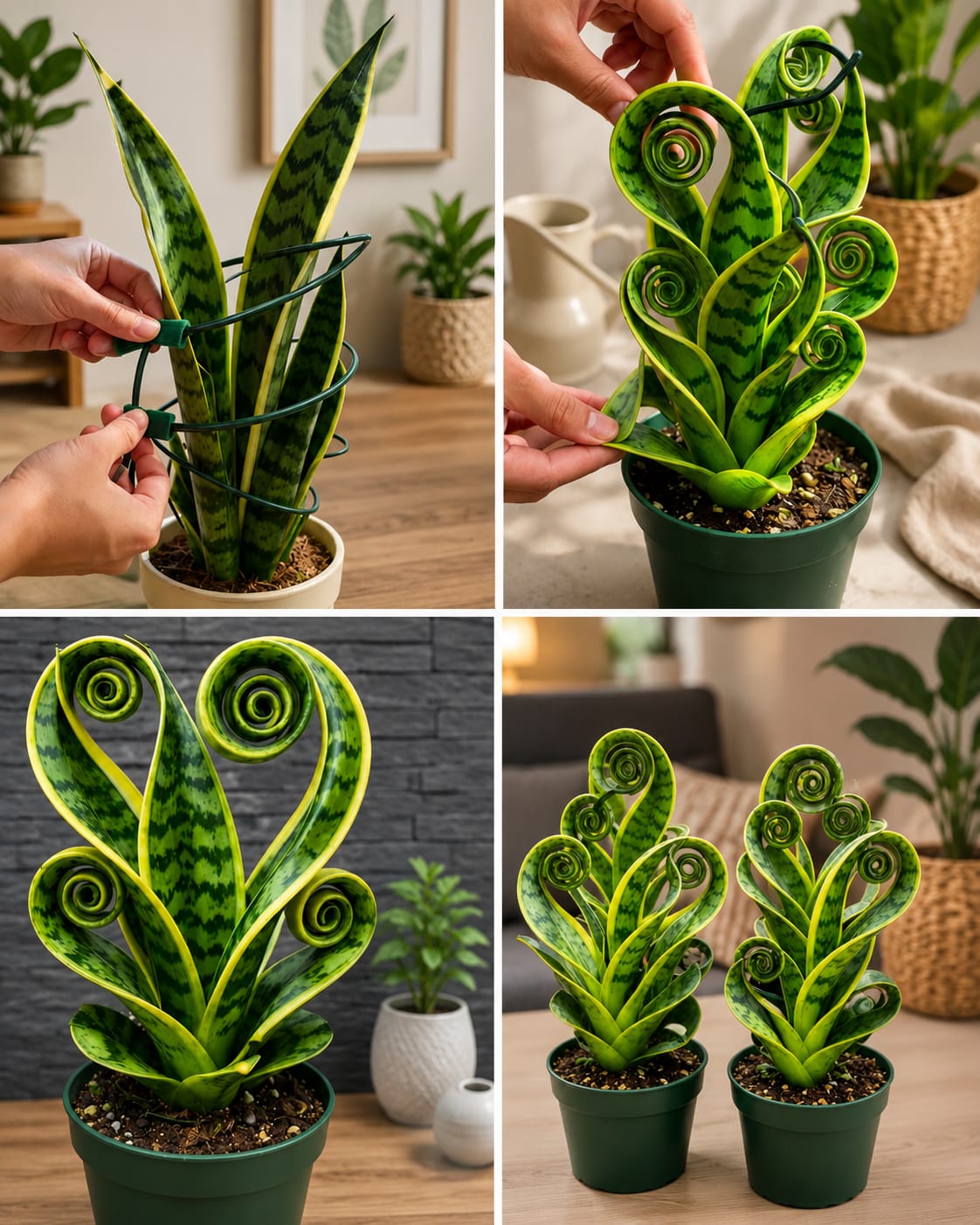
How to Make It Look More Luxury
The styling materials matter. A shaped snake plant looks more expensive when the pot, soil surface, and support system look clean. Choose a pot that matches the plant’s sculptural shape. Matte black, deep green, cream ceramic, stone-textured, or terracotta pots all work well.
For a modern look, use a simple black or white pot and keep the design minimal. For a natural look, use terracotta or clay. For a high-end indoor decor style, place the plant in a ceramic pot with a smooth finish and add a neat top layer of small stones, pumice, or bark chips.
Avoid clutter around the plant. Let the curved leaves be the main feature. Place it on a clean table, shelf, plant stand, or windowsill where the shape can be seen clearly.
Where to Place a Curled Snake Plant
A curled snake plant works beautifully in living rooms, bedrooms, home offices, and entryways. On a coffee table, it becomes a conversation piece. On a shelf, it adds movement among books and decor objects. On a desk, it brings greenery without taking too much space. Near a bright window, it looks fresh and artistic.
For a small apartment, this trick is useful because it turns one plant into a decorative feature without requiring many extra plants. A compact snake plant with curled leaves can create the feeling of a designed indoor garden in a very small space.
If you have a group of plants, place the shaped snake plant in front of softer trailing plants or round-leaf plants. The contrast between the curled upright leaves and trailing greenery makes the arrangement more dynamic.
How to Care for the Plant Long-Term
Long-term care is simple. Keep the plant in bright indirect light, water only when the soil is dry, avoid cold drafts, and clean the leaves occasionally. Dust can collect on snake plant leaves, especially when they are curled. Use a soft damp cloth to wipe them gently.
Do not use oily leaf shine products. They can clog the leaf surface and attract dust. Plain water is enough for a clean natural shine.
Fertilize lightly during spring and summer with a diluted balanced houseplant fertilizer or cactus fertilizer. Once a month at half strength is usually enough. Do not overfeed. Snake plants are not heavy feeders.
What to Do If a Leaf Cracks
If a leaf cracks during shaping, remove the tie immediately and let the plant rest. A small crack may dry and remain as a scar. Keep water away from the damaged area and avoid further bending. If the leaf becomes mushy or starts rotting, remove it with clean scissors near the base.
This is why gradual shaping is important. A slow curve is safer than a dramatic bend. The plant should always look healthy first and decorative second.
Can New Leaves Be Trained?
Yes, new leaves can sometimes be trained more easily than old leaves because they are softer. However, very young leaves should not be bent too soon. Let them grow and strengthen first. Once they have some length and firmness, they can be guided gently.
New leaves also help refresh the design. As the plant grows, you can adjust the older shaped leaves and allow fresh upright leaves to fill the center. This keeps the display full and natural.
A Simple Styling Plan for Beginners
For your first attempt, choose two outer leaves and create a soft heart shape. Use a flexible support ring around the plant. Gently guide the left leaf inward and secure it loosely. Then guide the right leaf inward and secure it in the opposite direction. Leave the center leaves upright. After two weeks, adjust the ties slightly if the plant looks healthy.
Once you are comfortable, try curling one or two leaf tips. Keep the curls loose and open. The goal is elegance, not extreme bending.
Final Thoughts
A curled snake plant display is a beautiful way to turn a common houseplant into a living piece of decor. The key is to avoid cutting, avoid force, and use only soft support. When done gently, the plant keeps its natural health while gaining a more artistic shape.
This trick works best when the plant is healthy, the leaves are flexible, and the care routine is stable. Bright indirect light, dry-between-watering soil, good drainage, and occasional cleaning will keep the display looking fresh. With the right pot and placement, a simple snake plant can become a creative, luxury-looking indoor accent that feels unique and personal.
The best result comes from patience. Let the plant guide the design. Shape slowly, check the ties often, and keep the look natural. A healthy snake plant with graceful curves can bring structure, greenery, and sculptural beauty into any home.