Method 2: Propagating Snake Plant Cuttings in Water – Visual Root Development
Water propagation is popular because you can see roots developing. It is satisfying and easy to monitor, but the cuttings can rot if the water is dirty or too deep. This water propagation for snake plants method is great for beginners who love watching growth.
Water Propagation Steps
- Let the cuttings dry and callus for 1 to 2 days.
- Place the bottom end of each cutting in a glass or jar.
- Add enough water to cover only the bottom inch.
- Keep the top of the cutting above water.
- Place in bright indirect light.
- Change the water every 5 to 7 days.
- Wait for roots to form.
- Transfer to soil once roots are about 1 to 2 inches long.
Do not submerge the whole cutting. Only the bottom end should sit in water.
Soil vs Water Propagation: Which Is Better? – Comparison Table
| Method | Pros | Cons |
|---|---|---|
| Soil propagation | Lower transplant shock, natural root growth | You cannot see roots forming |
| Water propagation | Easy to watch roots grow | Higher rot risk, roots must adjust to soil later |
| Division | Fastest, keeps variegation | Requires a plant with pups or rhizomes |
For beginners, soil propagation is often more forgiving if you avoid overwatering. For people who love watching progress, water propagation is fun and visual. This best snake plant propagation method for beginners depends on your preference.
How Long Does Snake Plant Propagation Take? – Realistic Timeline
Snake plant propagation is slow. Do not expect roots in a few days. This snake plant rooting timeline sets realistic expectations.
Typical Timeline
- Callus formation: 1 to 3 days
- First roots: 3 to 8 weeks
- Stronger roots: 2 to 3 months
- New pups: 3 to 6 months or longer
Some cuttings take longer depending on temperature, light, moisture, and plant variety.
How to Know If the Cutting Is Rooting – Signs of Success
In soil, you cannot see roots immediately. The best sign is resistance when you gently tug the cutting. This how to check snake plant cutting roots guide helps you monitor progress without damaging them.
Signs of successful rooting:
- Cutting stays firm
- No mushy base
- Cutting resists gentle pulling
- New pup eventually appears near the base
- Leaf section remains upright
Do not tug too often. Checking repeatedly can damage baby roots.
How to Avoid Rot in Snake Plant Cuttings – Prevention Tips
Rot is the most common propagation failure. It usually happens from too much moisture, poor drainage, or planting before callusing. This snake plant cutting rot prevention guide will save your cuttings.
Rot Prevention Tips
- Let cuttings dry before planting
- Use fast-draining soil
- Use pots with drainage holes
- Do not water too often
- Keep cuttings in bright indirect light
- Avoid cold rooms
- Do not use oversized pots
- Do not bury cuttings too deeply
If a cutting becomes mushy, remove it immediately so it does not affect nearby cuttings.
Can You Use Rooting Hormone? – Optional Booster
Yes, rooting hormone can be used, but it is optional. Snake plants can root without it. If you use rooting hormone, apply only a light dusting to the bottom cut end after it has callused slightly. This rooting hormone for snake plant cuttings tip can speed up the process.
Do not use too much. Excess powder can clump and hold moisture.
Can You Use Cinnamon on Snake Plant Cuttings? – Natural Antifungal
Some gardeners use a tiny amount of cinnamon on fresh cuts because cinnamon is often used as a natural drying and antifungal support. If you use it, apply only a light dusting to the cut end and still let the cutting callus before planting. This cinnamon for snake plant propagation trick is popular among organic gardeners.
Cinnamon is not required. Clean tools and proper drying are more important.
Can You Use Aloe Vera Gel for Propagation? – Natural Root Stimulant
Aloe vera gel is sometimes used as a natural rooting support. For snake plant cuttings, use it carefully. Thick aloe gel can stay wet and sticky, which may increase rot risk if overused. This aloe vera for snake plant cuttings method requires caution.
A safer method is:
- Use a very thin coating of fresh clear aloe gel
- Let the cutting dry slightly
- Plant in fast-draining soil
- Water lightly and rarely
Do not cover the cutting in thick gel.
How to Multiply Snake Plant by Division – Faster Results
If you want faster results or want to keep the yellow edges, division is the better method. This snake plant division propagation guide is perfect for preserving variegation.
Division Steps
- Remove the snake plant from its pot.
- Shake away some soil so you can see the rhizomes.
- Look for natural clumps or pups.
- Separate a section with roots attached.
- Use a clean knife if needed.
- Let any cut rhizome dry for a few hours.
- Plant each section in fast-draining soil.
- Wait several days before watering if the soil is already slightly moist.
Division creates a new plant much faster than leaf cuttings because the new plant already has roots and growing points.
Why Division Keeps the Yellow Edges – Preserving Variegation
Yellow-edged snake plants keep their variegation best when propagated by division because the new plant is a piece of the original plant. It carries the same growth pattern. This snake plant variegation preservation tip is essential for collectors.
Leaf cuttings, however, often produce green pups because the variegation may not carry through the leaf-cutting process.
So remember:
- Want many plants? Use leaf cuttings.
- Want yellow edges? Use division.
Best Pot for Snake Plant Cuttings – Size and Material
Use small pots for cuttings. A large pot holds too much moisture and increases rot risk. This best pot for snake plant propagation guide helps you choose correctly.
Best pot features:
- Drainage holes
- Small size
- Fast drying
- Stable enough to hold upright cuttings
- Terracotta or nursery pot preferred
Do not plant tiny cuttings in a huge decorative pot.
Best Light for Snake Plant Cuttings – Bright Indirect Light
Snake plant cuttings need light but not harsh direct sun. Bright indirect light helps them root without burning. Providing optimal light for snake plant propagation accelerates rooting.
Best locations:
- Near a bright window
- East-facing window
- Filtered south or west light
- Under a gentle grow light
- Warm indoor shelf with indirect light
Avoid dark corners during propagation. Low light slows rooting and increases the chance of rot because soil dries slowly.
Best Temperature for Propagation – Warmth Matters
Snake plant cuttings root best in warm conditions. Maintaining the ideal temperature for snake plant cuttings improves success rates.
Ideal temperature:
- 65°F to 85°F
- 18°C to 29°C
Avoid cold windowsills, cold floors, drafty rooms, and outdoor night chills. Cold wet soil is one of the fastest ways to rot snake plant cuttings.
How Often to Water Snake Plant Cuttings – The Dry Rule
Water carefully. Cuttings without roots cannot drink much water, so wet soil only increases rot risk. This snake plant cutting watering schedule prevents overwatering.
For soil propagation:
- Wait several days after planting before first light watering
- Water only when soil is completely dry
- Use small amounts
- Do not soak repeatedly
- Never leave water in the saucer
Once the cutting has roots and new pups, you can slowly move toward normal snake plant watering.
What to Do After Roots Grow – Aftercare for New Plants
Once roots form and the cutting is stable, continue gentle care. Do not rush to repot immediately unless the cutting is crowded or unstable. This snake plant aftercare for cuttings guide ensures strong growth.
Aftercare Steps
- Keep in bright indirect light.
- Water only when soil dries completely.
- Wait for pups to appear.
- Do not fertilize too early.
- Repot only when the new plant has a stronger root system.
Snake plant pups may appear slowly, but once they emerge, they usually grow stronger over time.
When to Fertilize New Snake Plants – Gentle Feeding
Do not fertilize fresh cuttings immediately. They need roots first. This best fertilizer for new snake plants guide will help you time it right.
Wait until:
- The cutting has rooted
- New pup growth appears
- The plant is stable in soil
- It is spring or summer
Use a weak balanced houseplant fertilizer or cactus fertilizer at half strength. Snake plants do not need heavy feeding.
Common Snake Plant Propagation Mistakes – What to Avoid
- Planting cuttings upside down
- Not letting cut ends callus
- Using heavy wet soil
- Watering too often
- Keeping cuttings in low light
- Using a pot with no drainage
- Expecting roots too quickly
- Trying to keep yellow edges through leaf cuttings
- Using a rotting leaf
- Pulling cuttings up repeatedly to check roots
Avoid these snake plant propagation mistakes and your success rate will be much higher.
Snake Plant Propagation Table – Method Comparison
| Method | Best For | Time Needed | Variegation Result |
|---|---|---|---|
| Leaf cuttings in soil | Easy, low-maintenance propagation | Roots in weeks, pups in months | May lose yellow edges |
| Leaf cuttings in water | Watching roots grow | Roots in weeks | May lose yellow edges |
| Division | Fast new plants | Immediate plant, short recovery | Keeps yellow edges |
Simple Step-by-Step Method – Quick Reference
Leaf Cutting Method
- Choose a healthy snake plant leaf.
- Cut the leaf near the base with clean shears.
- Divide the leaf into 3 to 5 inch sections.
- Mark the bottom end of each cutting.
- Let cuttings dry for 1 to 3 days.
- Plant the bottom end 1 inch deep in fast-draining soil.
- Place in bright indirect light.
- Water lightly only when the soil is dry.
- Wait for roots and pups.
Division Method
- Remove the plant from the pot.
- Find pups or separate rhizome sections.
- Separate a piece with roots attached.
- Let cut areas dry briefly.
- Repot in cactus mix.
- Water lightly after the plant settles.
Short Caption for This Trick
“To multiply snake plant, cut a healthy leaf near the base, divide it into sections, let the cut ends dry for 1 to 3 days, then plant the bottom ends in fast-draining soil. Keep cuttings warm, bright, and barely watered until roots and new pups form. For yellow-edged varieties, use division if you want to keep the variegation – this easy snake plant propagation method works every time.”
Frequently Asked Questions – Snake Plant Propagation Q&A
Can you multiply snake plant from one leaf?
Yes. One healthy snake plant leaf can be cut into several sections, and each section can root and eventually grow new pups.
How long does snake plant propagation take?
Roots may appear in 3 to 8 weeks, but new pups can take 3 to 6 months or longer.
Should snake plant cuttings dry before planting?
Yes. Let the cut ends dry and callus for 1 to 3 days before planting to reduce rot risk.
Can snake plant cuttings root in water?
Yes. Place only the bottom inch in water and change the water regularly. Transfer to soil once roots are 1 to 2 inches long.
Can snake plant cuttings root in soil?
Yes. Soil propagation is reliable when you use fast-draining soil and avoid overwatering.
Why did my snake plant cutting rot?
Common causes include wet soil, no callus, cold temperatures, low light, or planting the cutting upside down.
Will yellow-edged snake plant cuttings keep yellow edges?
Usually not. Leaf cuttings from yellow-edged snake plants often produce green pups. Use division to keep the yellow border.
Which end of a snake plant cutting goes into soil?
The bottom end, the end that was closest to the roots, must go into the soil. Mark it when cutting.
Do snake plant cuttings need fertilizer?
No. Wait until roots and new growth form before using weak fertilizer during the growing season.
What is the fastest way to multiply snake plant?
Division is the fastest method because each new section already has roots and rhizomes.
Final Thoughts – Multiply Your Snake Plant Collection for Free
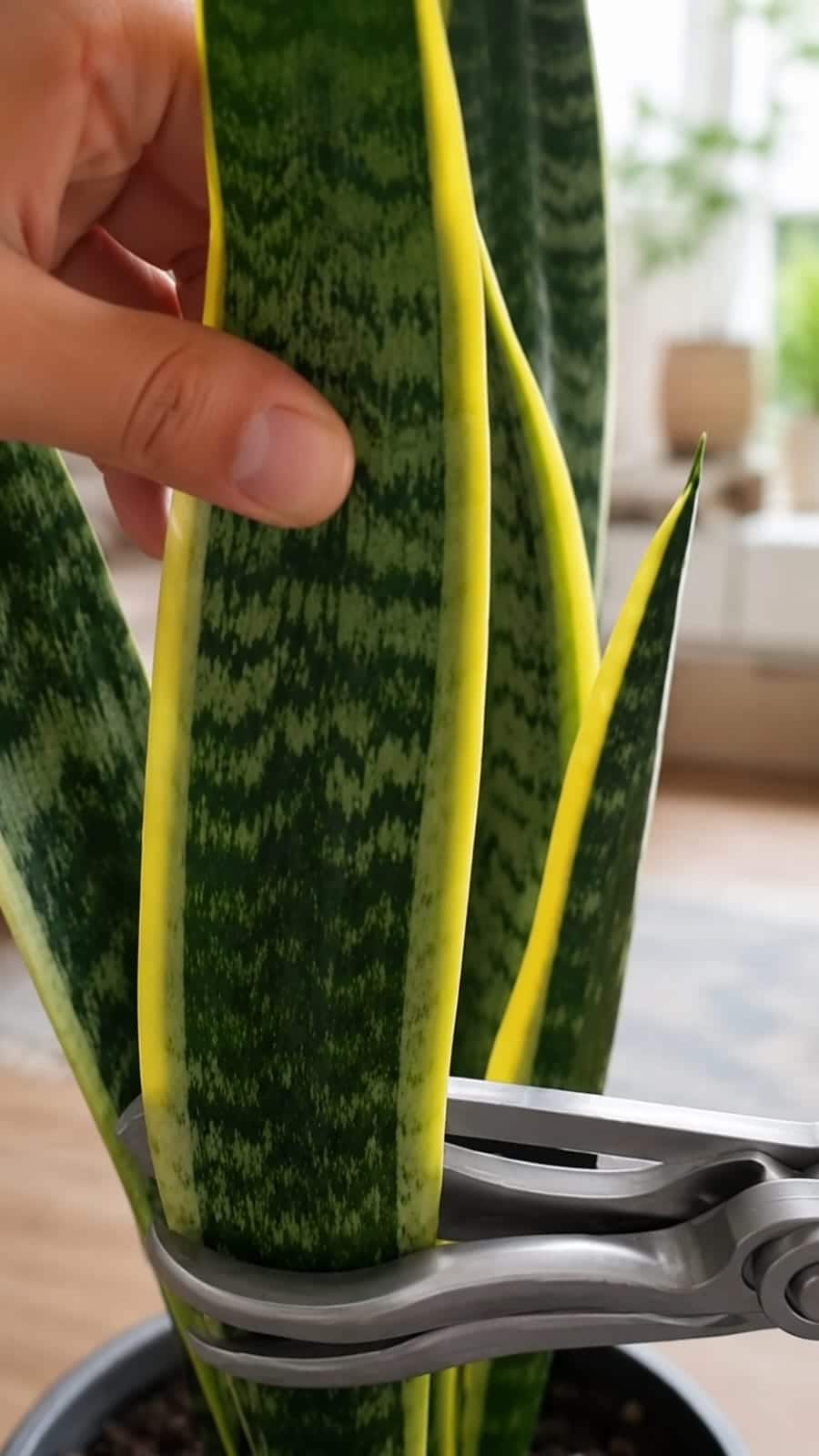
Multiplying snake plant is one of the easiest and most rewarding indoor plant projects. The image shows the first step: cutting a healthy leaf near the base. From there, you can divide the leaf into sections, let the cut ends dry, and root them in soil or water. This free snake plant propagation method allows you to grow your collection without spending money.
For best results, keep the cuttings warm, bright, and lightly watered. Use fast-draining soil, small pots with drainage holes, and patience. Snake plant cuttings are slow, but they are strong when handled correctly. This complete snake plant propagation guide gives you everything you need to succeed.
If your plant has yellow edges, remember that leaf cuttings may not keep that variegation. To produce new snake plants with the same yellow border, divide the mother plant instead. This snake plant care and propagation tip preserves the beauty of variegated varieties.
Whether you choose leaf cuttings or division, snake plant propagation is a simple way to grow more houseplants for free. With one healthy leaf and a little patience, you can turn a single snake plant into a full collection. Start your snake plant propagation journey today and enjoy watching new life grow.