Snake plants are usually strong, upright, and almost impossible-looking to kill. Their sword-shaped leaves, bold patterns, and low-maintenance nature make them one of the best indoor plants for beginners, apartments, offices, bedrooms, living rooms, and modern home decor. If you are searching for a natural snake plant rescue method or how to save a dying snake plant, this guide will show you exactly what to avoid and how to revive your plant safely.
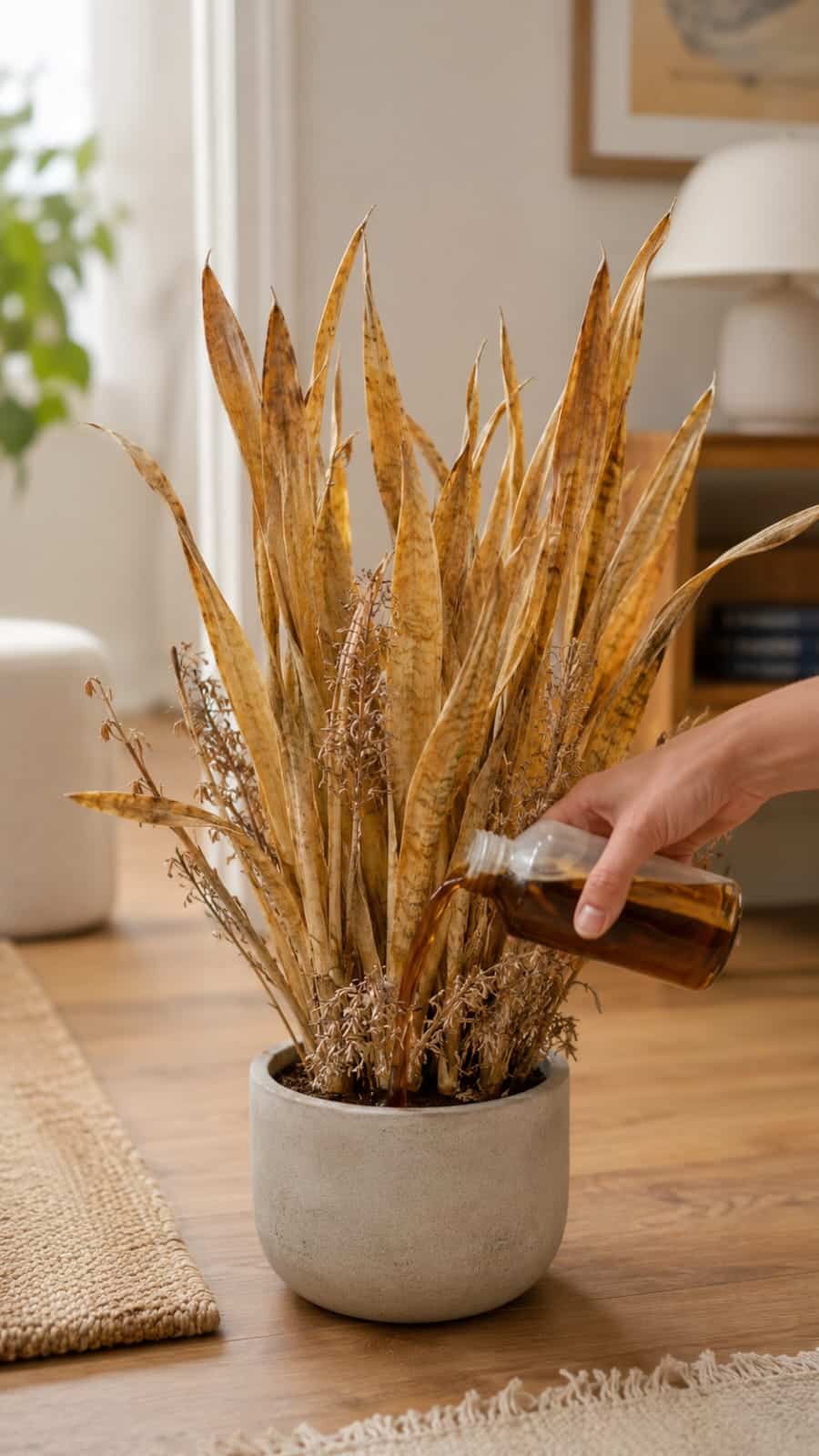
But the image shows a snake plant that is already in severe decline. The leaves are dry, pale brown, curled, crispy, and almost completely dead. A hand is pouring a dark brown liquid directly into the pot. This kind of image is dramatic, but it also teaches a very important plant care lesson:
A dying snake plant should not be given strong homemade liquid fertilizer before the roots are checked.
When a snake plant is this dry and brown, many people assume it needs a “boost.” They may pour compost tea, coffee water, banana peel water, tea, molasses water, or another dark homemade plant tonic into the soil. But if the plant’s roots and rhizomes are already dead, rotten, or severely dehydrated, a strong brown liquid will not revive it. In some cases, it can make the soil sour, attract fungus gnats, increase mold, and finish off any remaining healthy roots. This common snake plant care mistake is often fatal.
This guide explains what the brown liquid might be, why it can be risky, how to tell whether the snake plant is still alive, and the safest way to rescue or propagate what remains. Follow this step-by-step snake plant emergency rescue plan to give your plant the best chance.
What Plant Is in the Image? – Understanding Snake Plant Decline
The plant appears to be a snake plant, also known as Sansevieria or Dracaena trifasciata. Snake plants are drought-tolerant houseplants that store water in thick leaves and underground rhizomes. This popular low-maintenance succulent is a top choice for beginner plant parents, but it still has specific needs.
A healthy snake plant usually has:
- Firm upright leaves
- Green patterned foliage
- Strong rhizomes under the soil
- Dry soil between waterings
- No mushy leaf bases
- No sour smell from the pot
- No standing water in the saucer
- Fast-draining soil
The plant in the image is far from healthy. Most leaves look fully dried, brown, and lifeless. This suggests severe dehydration, root death, old rot damage, long-term neglect, extreme heat, sunburn, or a combination of problems. Understanding why snake plants turn brown and crispy is the first step to effective rescue.
What Is the Brown Liquid? – Identifying Common Homemade Plant Tonics
The brown liquid in the image could represent several homemade plant care mixtures, including:
- Compost tea
- Coffee water
- Black tea
- Banana peel water
- Molasses water
- Fermented plant extract
- Liquid organic fertilizer
- Worm casting tea
- Old soaked kitchen-scrap water
Some of these liquids can be useful for healthy plants when diluted correctly. But for a dying snake plant, they can be risky. Snake plants do not need rich, wet, organic soil. They need dry periods, oxygen around the roots, and firm living rhizomes. This is why best organic fertilizer for snake plants should never be applied to a plant in severe decline.
The Biggest Warning: Do Not Feed a Dead Root System – Critical Snake Plant Care Mistake
A snake plant that looks like the one in the image should be inspected before any liquid is added. If the roots are dead or rotten, fertilizer will not help. It may only feed bacteria, fungi, and gnats in the soil. Avoiding this deadly snake plant feeding error is essential for survival.
Strong brown liquids can cause:
- Sour soil smell
- Fungus gnats
- Mold on the soil surface
- Root rot
- Soft rhizomes
- Sticky residue in soil
- Fermentation around roots
- More leaf collapse
- Fertilizer burn
- Delayed recovery
With snake plants, rescue begins with the roots, not with fertilizer. This natural snake plant revival method prioritizes root health over feeding.
Can a Snake Plant This Brown Come Back? – Signs of Life in Dying Snake Plants
Sometimes yes, but only if the underground rhizomes are still alive. Snake plant leaves can look terrible while the rhizome still has life. But if the rhizomes are dry, hollow, mushy, black, or rotten, the plant may not recover. This snake plant survival checklist will help you decide.
The leaves in the image look almost completely dead. That means the plant needs an emergency inspection.
Signs There Is Still Hope
- Some leaf bases are firm
- Rhizomes are firm under the soil
- Roots are not mushy
- No rotten smell
- There are small green shoots near the base
- Some leaves still have green tissue
Signs the Plant Is Probably Dead
- All leaves are dry and hollow
- Leaves pull out easily
- Rhizomes are mushy or black
- Soil smells rotten
- No firm roots remain
- Base is soft and collapsing
- Everything is brittle and brown
Before using any homemade brown liquid, check these signs first.
First Step: Stop Pouring Brown Liquid – Emergency Plant Care
If you already poured a dark homemade liquid into the pot, stop immediately. Do not keep adding more. Do not fertilize. Do not add rice water, coffee, compost tea, banana peel water, orange peel water, milk, sugar water, or more “rescue” liquids. This snake plant emergency care protocol is your first priority.
The plant needs a clean inspection.
Immediate Steps
- Stop adding liquid.
- Move the plant to bright indirect light.
- Do not place it in harsh direct sun.
- Remove the plant from the pot.
- Inspect roots and rhizomes.
- Cut away dead or rotten tissue.
- Save only firm living pieces.
- Repot in dry, fast-draining soil if anything is still alive.
How to Check Snake Plant Roots and Rhizomes – Root Health Inspection Guide
This is the most important step. Snake plants grow from thick underground rhizomes. If those rhizomes are alive, the plant may regrow even after losing many leaves. This snake plant root rot diagnosis guide is essential.
How to Inspect
- Gently remove the plant from the pot.
- Shake away old soil.
- Look at the roots and rhizomes.
- Touch them gently.
- Smell the soil and root area.
Healthy Rhizomes Look Like This
- Firm
- Solid
- Pale tan, orange, cream, or light brown
- Not slimy
- Not foul-smelling
- Connected to firm roots or leaf bases
Dead or Rotten Rhizomes Look Like This
- Black
- Mushy
- Hollow
- Slimy
- Bad-smelling
- Collapsed when pressed
- Soft at the leaf base
Only firm pieces are worth saving.
If the Plant Is Dehydrated, Not Rotten – Underwatered Snake Plant Rescue
If the leaves are dry but the rhizomes are still firm, the plant may be severely dehydrated. In that case, do not shock it with strong fertilizer. Rehydrate slowly with plain water. This how to save an underwatered snake plant guide will help.
Safe Dehydration Rescue
- Remove fully dead leaves.
- Keep any firm green or partly green leaves.
- Repot in fast-draining soil if the old soil is compacted.
- Water lightly with plain room-temperature water.
- Let excess water drain completely.
- Place in bright indirect light.
- Wait until soil dries fully before watering again.
Do not add brown liquid fertilizer until new growth appears.
If the Plant Has Root Rot – Overwatered Snake Plant Treatment
If the rhizomes are soft, black, or rotten, the plant needs surgery, not feeding. This snake plant root rot recovery method can save your plant.
Root Rot Rescue Steps
- Remove the plant from the pot.
- Throw away wet or sour old soil.
- Cut off all mushy roots and rhizomes.
- Keep only firm healthy sections.
- Let cut pieces dry for 24 hours.
- Repot in dry cactus mix.
- Do not water immediately if the soil is slightly moist.
- Wait several days before the first light watering.
Do not use compost tea, coffee water, banana peel water, or liquid fertilizer during root rot recovery.
If All Leaves Are Dead but Rhizomes Are Firm – Propagating from Rhizomes
If the leaves are fully dead but the underground rhizome is firm, cut away the dead leaves and repot the rhizome. It may eventually send up new shoots. This snake plant rhizome propagation technique is your last resort.
Steps
- Remove all dry dead leaves.
- Keep firm rhizome sections.
- Let cut surfaces dry.
- Place rhizomes in dry, fast-draining soil.
- Keep warm and bright.
- Water very lightly after several days.
- Wait patiently for new pups.
This can take weeks or months. Snake plants are slow growers.
Can You Propagate From Dead Brown Leaves? – Leaf Cutting Viability
Usually no. Leaf propagation requires firm, living tissue. Fully dry brown leaves will not root. If any part of a leaf is still firm and green, you may be able to cut that section and propagate it. This snake plant leaf propagation from damaged leaves guide explains when it’s possible.
Good Leaf Cutting Material
- Firm leaf section
- Green or mostly green tissue
- No mushy rot
- No hollow dryness
- No foul smell
Bad Leaf Cutting Material
- Fully brown leaf
- Dry and papery leaf
- Mushy leaf base
- Rotten smell
- Collapsed tissue
If the plant in the image has no firm green tissue left, propagation from leaves may not work.
Why Brown Liquid Can Be Dangerous for Snake Plants – Soil and Root Risks
Many homemade brown liquids contain organic matter. Organic matter can be helpful in compost piles, but inside a slow-drying indoor pot, it can create problems. This natural snake plant care warning is often overlooked.
Possible Problems
- It keeps the soil wet longer
- It can ferment in the pot
- It may attract insects
- It can cause mold
- It can worsen root rot
- It may be too acidic or too strong
- It can leave sticky residue
Snake plants prefer a lean, airy, dry soil environment. Rich wet soil is often the enemy.
If the Brown Liquid Was Coffee – Coffee Water for Snake Plants
Coffee water is often promoted as a homemade fertilizer, but it is not ideal for snake plants, especially dying ones. Coffee can affect soil acidity and may encourage mold if used too often. For safe organic plant food for snake plants, coffee is not recommended during crisis.
If coffee was poured into the pot:
- Stop using it
- Check the soil smell
- Repot if the soil smells sour
- Use plain water only after recovery
- Do not use coffee on stressed snake plants
Continue to Page 2
Continue to page 2 for more details about this article and the key points many readers miss on the first page.