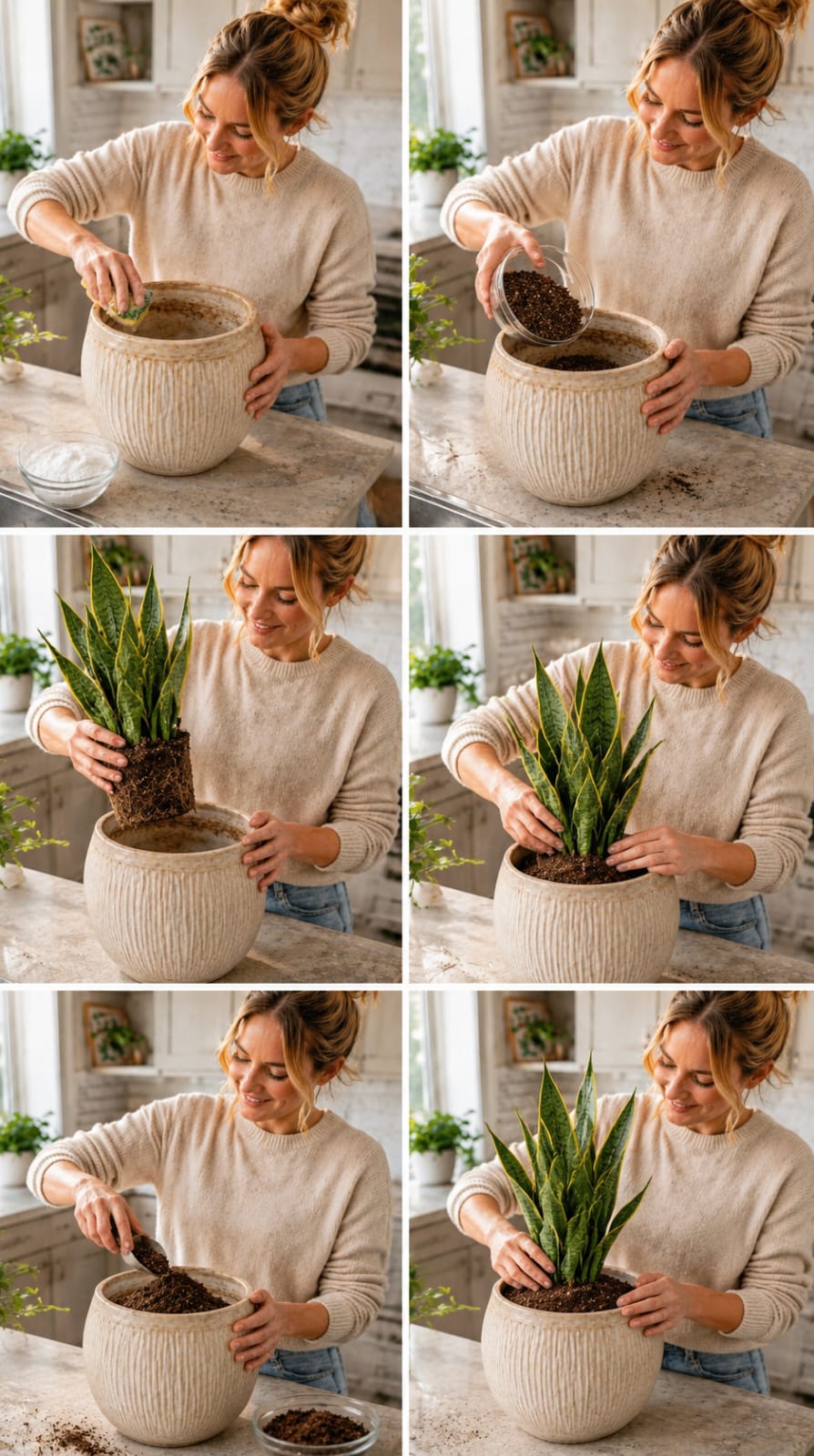
How to Keep Snake Plant Leaves Clean
Dust can collect on snake plant leaves. Wipe each leaf with a soft damp cloth every few weeks. Hold the leaf gently with one hand and wipe upward with the other.
Do not use oily leaf shine products. Clean water is enough to restore a natural shine.
Indoor Styling Ideas for Snake Plants
Snake plants are excellent decor plants because they have a strong vertical shape. They add height without spreading too wide. This makes them ideal for small rooms and narrow spaces.
- Use a cream ceramic pot for soft modern decor.
- Use terracotta for warm natural style.
- Place beside a sofa for height.
- Use in an entryway for a clean welcome.
- Style on a wooden bench with books and candles.
- Place in a bedroom corner for calm greenery.
- Use several snake plants in matching pots for a bold look.
- Group with pothos, ZZ plant, and peace lily for texture contrast.
Best Rooms for Snake Plants
- Living room
- Bedroom
- Home office
- Entryway
- Dining room
- Kitchen corner away from heat
- Bright bathroom
- Hallway with indirect light
Snake plants tolerate many indoor conditions, but they look best with bright indirect light and careful watering.
Outdoor Styling in Warm Weather
Snake plants can spend warm months outdoors in a shaded patio, covered balcony, or bright porch. Avoid harsh direct sun at first because indoor-grown leaves can burn quickly. Also protect the plant from heavy rain because wet soil can cause rot.
Bring the plant indoors before temperatures become cold. Snake plants prefer warm conditions.
Seasonal Snake Plant Care
Spring
Spring is the best season for repotting, dividing, and propagation. Growth begins to increase as light improves.
Summer
Water when dry and keep in bright indirect light. Protect from harsh sun if moved outdoors.
Fall
Reduce watering as growth slows. Move the plant closer to light if the room becomes darker.
Winter
Water very sparingly. Keep away from cold drafts and windows. Do not fertilize during slow growth.
Weekly Care Routine After Repotting
- Check if the plant is stable.
- Check soil dryness.
- Look for yellow or soft leaves.
- Keep the pot in bright indirect light.
- Do not water if soil is damp.
- Rotate the pot slightly for even growth.
- Empty any water from the saucer.
Monthly Care Routine
- Clean leaves with a damp cloth.
- Check if the soil is draining well.
- Inspect the base of leaves for softness.
- Review watering frequency.
- Check for pests.
- Feed lightly only during active growth.
- Adjust light as seasons change.
Frequently Asked Questions
How often should I repot a snake plant?
Repot every 2 to 4 years, or when the plant becomes root-bound, the soil is compacted, or the pot is cracking.
Should I water immediately after repotting?
If roots were disturbed or trimmed, wait 3 to 7 days before watering. This helps prevent rot.
What soil is best for snake plants?
A fast-draining cactus or succulent mix with added perlite, pumice, coarse sand, or orchid bark is best.
Do snake plants like big pots?
No. A pot that is too large holds too much wet soil. Choose a pot only slightly larger than the root ball.
Can I divide a snake plant while repotting?
Yes. Repotting is the best time to divide a crowded snake plant into smaller sections.
Why is my snake plant falling over after repotting?
It may not be stable yet, or the roots may be stressed. Add soil support, give bright indirect light, and avoid overwatering.
Can snake plants grow in low light?
They can tolerate low light, but they grow better and stay healthier in bright indirect light.
Final Thoughts
Repotting a snake plant is one of the best ways to refresh its growth and protect its roots. The process is simple when you use the right pot, the right soil, and the right watering routine. Choose a container with drainage holes, use a loose gritty mix, inspect the roots, remove rot, and avoid watering too soon after root disturbance.
Snake plants are strong, but they do not like soggy soil. The main secret is drainage. A small amount of fresh soil, a slightly larger pot, and careful watering can help the plant settle in beautifully.
With proper repotting and steady care, your snake plant can grow tall, firm, and elegant for many years. Whether you place it in a modern ceramic pot, a rustic terracotta planter, or a cozy indoor corner, this plant will continue to bring clean green style into your home with very little effort.