Product and Tool Guide
A successful fuchsia care routine is easier when the right materials are used. A quality container potting mix, perlite, a pot with drainage holes, clean pruning snips, a watering can with a gentle spout, and a balanced liquid fertilizer can make a major difference. A moisture meter can help beginners avoid extreme dryness or overwatering, especially in larger pots where the top soil does not always show what is happening near the roots.
For indoor or shaded balcony growing, a grow light may help when natural light is weak. A decorative cachepot can improve the final look, but it should be used carefully so water does not collect at the bottom. A plant stand or hanging hook can help display the flowers at eye level. Clean scissors or pruning shears are useful for regular deadheading and shaping.
These tools support a cleaner and more predictable care routine. Fuchsia is not difficult when its basic needs are respected, but it does respond poorly to neglect, heat stress, poor drainage, and rough handling. Good tools help keep the plant healthy while also improving the decorative presentation.
Care Timeline After Repotting
During the first day after repotting, the fuchsia should be placed in bright indirect light and protected from harsh sun. The soil should be watered enough to settle around the roots, but the pot should be allowed to drain fully. The plant may look slightly tired at first, especially if the roots were disturbed.
During the first week, the plant should be monitored closely. The soil should stay lightly moist but not soggy. Strong sun, dry wind, and heavy fertilizer should be avoided while the plant adjusts. If a few buds drop, it may be a normal stress response. The plant should not be moved repeatedly from place to place because constant changes can slow recovery.
After two to four weeks, a healthy fuchsia may begin showing fresh growth. This is a good sign that the roots are settling into the new pot. Light pruning or pinching can be continued carefully if the plant is growing well. After several weeks of stable growth, the plant can be fed lightly during the active season to support more flowers.
Professional Styling Note
In high-end patio design, balcony gardening, boutique garden styling, and premium home plant presentation, fuchsia is valued because it offers color, movement, and elegance. Its hanging flowers look more delicate than many common container plants, and the plant can turn a shaded corner into a bright floral feature. It is especially useful where strong sun is limited but decorative flowers are still desired.
For a polished look, the plant should be kept neat. Old blooms should be removed, dead leaves should not be allowed to collect on the soil surface, and the pot should look clean. A healthy fuchsia in a simple dark planter can look modern, while a fuchsia in a soft ceramic pot can look romantic and classic. The plant’s style can change depending on the container, which makes it useful for many decor themes.
In commercial interiors, covered terraces, cafe patios, and property presentation spaces, fuchsia should be used where the care routine can be maintained. It needs more attention than a drought-tolerant plant, but the floral reward is much higher. When watered correctly and protected from heat, it can become a standout decorative feature.
Final Thoughts
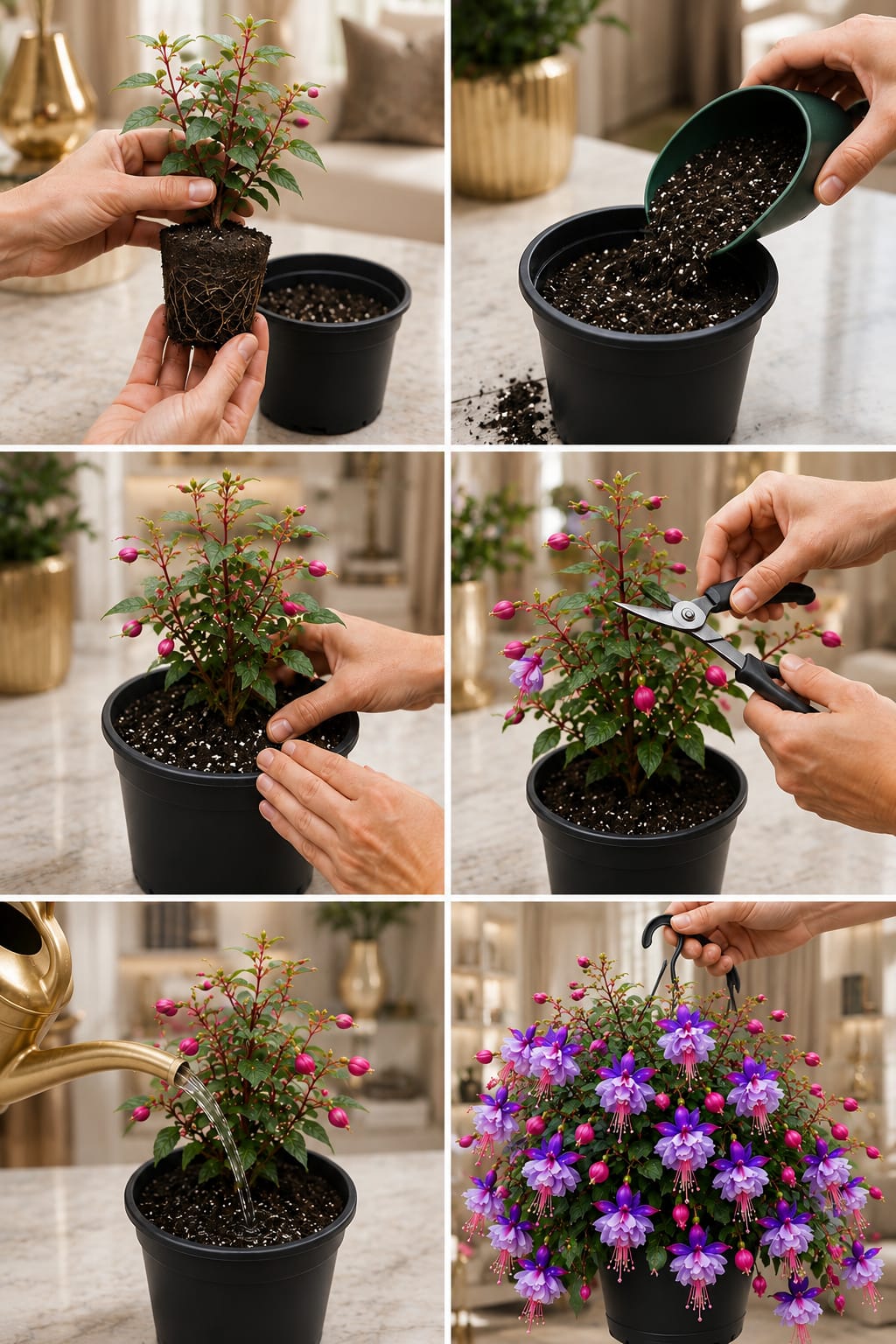
Fuchsia is a beautiful flowering plant that can become fuller, healthier, and more decorative when repotting and pruning are done correctly. Fresh potting mix gives the roots a better environment, while gentle pruning encourages branching and helps the plant carry more blooms. The key is to handle the plant carefully, avoid heavy soil, choose a pot with drainage, water consistently without soaking the roots, and place the plant in bright indirect light or partial shade.
The best fuchsia care routine is balanced. The plant needs enough moisture to support soft growth and flower production, but it also needs oxygen around the roots. It needs pruning to stay full, but it should not be cut so heavily that it loses energy. It benefits from fertilizer during active growth, but it should not be overfed. When each part of the routine is gentle and controlled, the plant can reward you with rich color and graceful hanging flowers.
With proper care, fuchsia can become a stunning accent for shaded patios, balcony gardens, hanging baskets, bright indoor corners, home office decor, entryway styling, cottage garden containers, premium ceramic planters, and polished property presentation. A clean pot, healthy roots, steady watering, and thoughtful pruning can turn a small fuchsia into a lush flowering display that brings charm, color, and elegance to the space.