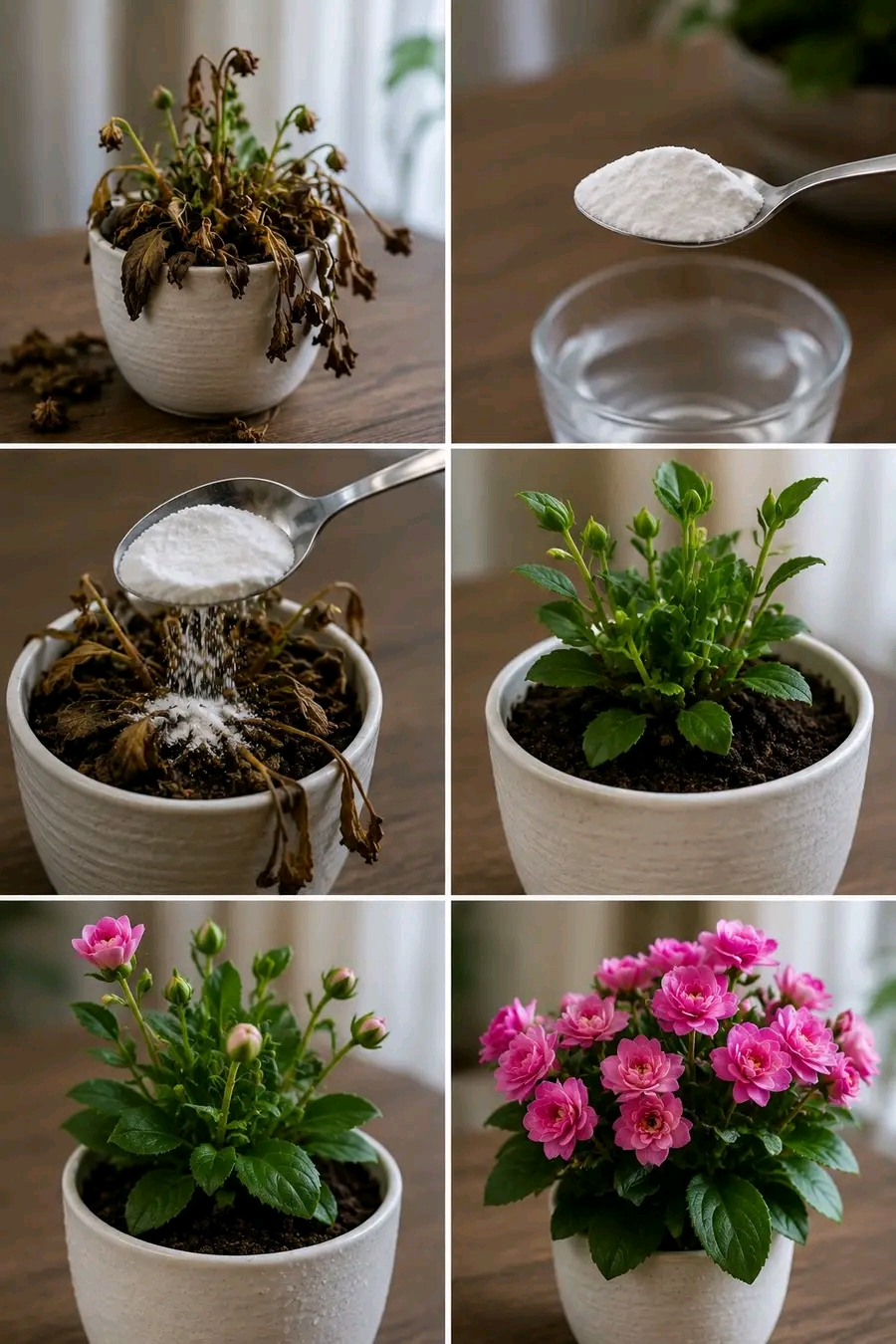
A dying flowering plant can make any home gardener feel disappointed. One week the plant looks full and green, and the next week the leaves are drooping, stems are dry, flowers are gone, and the pot looks lifeless. Many people throw the plant away too early, but some plants can recover when the roots are still alive and the care routine is corrected quickly.
One popular home-gardening trick uses a small amount of white powder mixed with water or sprinkled lightly around the soil. Many gardeners use baking soda, Epsom salt, crushed eggshell powder, or another mild household ingredient to refresh the plant. But this type of trick must be handled carefully. A dying plant does not need a heavy dose of powder. It needs the right diagnosis, clean pruning, proper watering, fresh air around the roots, better light, and only a very gentle support treatment.
This guide explains how to rescue a weak flowering plant safely, how to use a white powder method without damaging the roots, what powders to avoid, how to know whether the plant can still recover, how to encourage new leaves, and how to support fresh pink blooms after the plant regains strength.
Can a Dying Flowering Plant Really Come Back?
Yes, a flowering plant can sometimes come back if the crown, roots, or lower stems are still alive. Many plants look dead above the soil but still have living tissue below. If the roots are firm and the base of the plant is not mushy, recovery may be possible.
The first step is not fertilizer. The first step is checking the plant. A weak plant may be suffering from underwatering, overwatering, root rot, low light, heat stress, cold damage, compacted soil, pests, or old exhausted blooms. If you add powder without fixing the real problem, the plant may continue to decline.
What Is the White Powder Trick?
The white powder trick usually refers to a small amount of a common plant-safe ingredient used to refresh the soil or support recovery. The safest options are mild and used in tiny amounts. For flowering plants, the most common white powders are:
- Baking soda: Used very lightly, mostly for surface fungal issues, never as a heavy soil fertilizer.
- Epsom salt: Used diluted in water for magnesium support, only rarely.
- Crushed eggshell powder: Used lightly for slow calcium support.
- Balanced dry fertilizer: Used only according to label directions.
The image idea looks like a “one spoon miracle,” but in real plant care, less is safer. Too much white powder can burn roots, change soil pH, attract pests, or create salt buildup.
Important Safety Warning
Never sprinkle an unknown white powder on a plant. Many white powders are not safe for roots. Some can kill the plant faster. Avoid table salt, laundry powder, cleaning powder, borax, bleach powder, sugar, flour, or strong fertilizer used without measuring.
If you are using baking soda, use it only in a very small amount and preferably diluted. Baking soda is alkaline, and too much can change soil balance. It is not a complete fertilizer. It should never be used weekly as a growth booster.
Best Safe Version of This Trick
For a weak flowering plant, the safest version is a mild rescue routine:
- Trim dead flowers and dry stems.
- Check soil moisture.
- Remove rotten roots if needed.
- Refresh the top layer of soil.
- Use a very weak baking soda solution only if fungal odor or surface mold is present.
- Use plain water afterward and focus on good light.
Gentle Baking Soda Mix
- 1 liter clean water
- 1/4 teaspoon baking soda
Stir well. Use only a small amount around the soil surface or as a light spray on affected areas. Do not soak the pot with it. Do not repeat often. Use plain water for future watering.
Step 1: Remove Dead Flowers and Dry Leaves
Start by cleaning the plant. Dead flowers, brown leaves, and dry stems take energy away from recovery and can invite mold. Use clean scissors and cut away fully dead parts. Do not rip stems by hand because you may damage healthy tissue.
If a stem is completely brown and crispy, remove it. If a stem is green inside, leave part of it because it may produce new shoots.
Step 2: Check the Roots
A plant can only recover if the roots are healthy enough to support new growth. Remove the plant gently from the pot if it looks very weak. Check the roots.
- Healthy roots are firm and light-colored or tan.
- Rotten roots are black, mushy, slimy, or smelly.
- Dry dead roots are brittle and snap easily.
Trim rotten roots with clean scissors. If most roots are gone, recovery may be slow, but small living roots can still regrow if the plant is given proper care.
Step 3: Fix the Soil
Many dying plants are not hungry. They are suffocating in poor soil. If the soil is compacted, sour-smelling, or always wet, replace it with fresh well-draining potting mix.
Good Recovery Soil Mix
- 2 parts indoor potting mix
- 1 part perlite
- 1 part coco coir or peat moss
- A small amount of compost or bark, optional
The soil should hold light moisture but still let extra water drain away. Heavy wet soil can rot roots quickly.
Step 4: Use the White Powder Carefully
If using baking soda, do not dump a full spoon directly into the pot. That can shock the roots. Use a very small amount diluted in water. The goal is not to feed heavily. The goal is to gently refresh the soil surface and reduce mild fungal issues.
For flowering plants, Epsom salt can also be used rarely, but only when diluted. Use 1/4 teaspoon in 1 liter of water and apply only once every 6 to 8 weeks during active growth. Do not combine baking soda and Epsom salt at the same time.
Step 5: Water Correctly
Watering is the biggest part of plant rescue. If the plant died back from dryness, water slowly until the soil is evenly moist. If the plant died back from overwatering, do not water again until the soil begins to dry.
Always use a pot with drainage holes. Let extra water drain away. Empty the saucer after watering. Roots need oxygen as much as moisture.
Step 6: Move to Bright Indirect Light
After the rescue treatment, place the plant in bright indirect light. Avoid harsh direct sun while the plant is recovering. Weak leaves can burn quickly.
Bright indirect light helps the plant produce energy for new shoots and buds. A dark corner will slow recovery.
How Long Does Recovery Take?
Some plants show new green growth in 1 to 2 weeks. Others may need 4 to 8 weeks. Flowering takes longer because the plant must first rebuild roots and leaves before it can produce buds.
Do not expect instant flowers. First look for firm stems, fresh green leaves, and new buds. Flowers come after the plant regains strength.
Signs the Plant Is Recovering
- New green shoots appear.
- Leaves become firmer.
- Soil smells fresh, not sour.
- Stems stop collapsing.
- New buds begin forming.
- The plant uses water normally again.
Signs the Plant May Not Recover
- All roots are black and mushy.
- The crown is soft and rotten.
- Stems are hollow and fully dry.
- The soil smells rotten even after repotting.
- No green tissue remains.
- New growth never appears after several weeks.
If the plant is fully dead, no powder can revive it. But if there is still living tissue, careful care can help.
How to Encourage Pink Blooms Again
Once the plant has fresh leaves, you can begin bloom support. Flowers need energy. That energy comes from light, roots, and mild feeding.
- Give bright indirect light.
- Keep soil lightly moist, not soggy.
- Use a pot with drainage holes.
- Feed lightly during active growth.
- Remove faded flowers.
- Avoid strong fertilizer on weak roots.
- Keep temperature stable.
- Protect from cold drafts.
Best Fertilizer After Recovery
After the plant starts producing new leaves, use a diluted balanced fertilizer. Do not fertilize while the plant is still wilted and stressed. Wait until recovery is visible.
Use half-strength fertilizer once every 4 to 6 weeks during active growth. If the plant is small or recently rescued, use quarter strength.
Common Mistakes to Avoid
- Adding too much white powder
- Using unknown powder
- Watering daily after rescue
- Keeping the pot in a dark corner
- Using a pot without drainage
- Fertilizing rotten roots
- Leaving dead leaves on the soil
- Using baking soda every week
- Spraying flowers heavily
- Expecting instant blooms
Continue to Page 2
Continue to page 2 for more details about this article and the key points many readers miss on the first page.