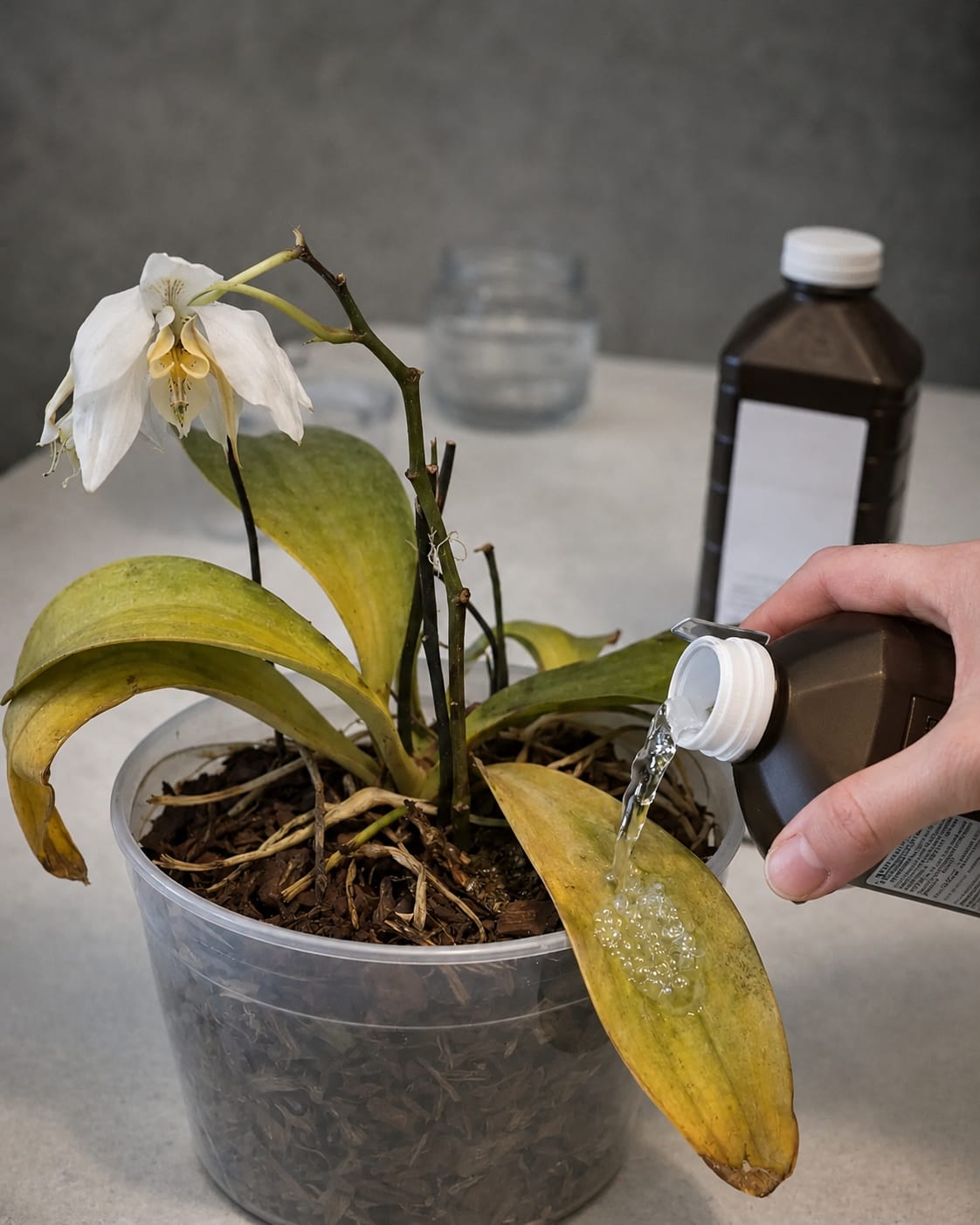
Common Orchid Rescue Mistakes
- Watering more because leaves are wrinkled without checking roots
- Keeping the orchid in a pot without drainage
- Using regular potting soil
- Leaving old decomposed bark around roots
- Keeping decorative plastic sleeves around the pot
- Letting water sit in the crown
- Fertilizing a sick plant too strongly
- Cutting healthy roots by mistake
- Placing the plant in harsh sun after repotting
How to Prevent Orchid Root Rot in the Future
Prevention is easier than rescue. Use a pot with drainage and fresh orchid bark. Water only when the mix is nearly dry. Let water drain fully. Keep the crown dry. Provide bright indirect light and airflow.
Repot orchids every 1 to 2 years, or sooner if the bark breaks down. Old bark holds too much moisture and reduces airflow.
Healthy roots are the key to long-term orchid blooms.
How to Know When to Repot an Orchid
Repot when the bark is decomposed, roots are crowded, the plant is unstable, or the pot smells sour. Repot after blooming if the plant is healthy. If the plant is rotting, repot immediately even if it has flowers.
Do not wait for the perfect season if roots are dying. Saving the plant comes first.
Decor Tips for a Recovering Orchid
A recovering orchid may not look perfect, but it can still be styled neatly. Use a clean clear pot inside a simple ceramic cover pot. Place it on a bright shelf, bathroom windowsill, kitchen counter, or plant table with indirect light.
- Use a white ceramic cover pot for a clean look.
- Place it near a bright window with filtered light.
- Add a humidity tray with pebbles.
- Keep it away from fruit bowls because ripening fruit can shorten blooms.
- Use a simple stake for support.
- Remove dead spikes and yellow leaves for a tidy look.
Best Rooms for Orchid Recovery
- Bright bathroom with airflow
- Kitchen window with indirect light
- Living room near an east window
- Bedroom with filtered light
- Plant shelf with grow light
- Sunroom with shaded light
Avoid dark corners, cold windowsills, and hot direct afternoon sun.
Weekly Orchid Recovery Routine
- Check root color through the clear pot.
- Check if the bark is nearly dry.
- Look for water trapped in the crown.
- Inspect leaves for yellowing or soft spots.
- Check for pests.
- Make sure the plant is stable in the pot.
- Water only when needed.
Monthly Orchid Recovery Routine
- Look for new root tips.
- Check if the bark is breaking down.
- Clean leaves gently with a damp cloth.
- Remove dead spike sections.
- Check pot drainage.
- Adjust light if leaves are too dark or too yellow.
- Feed weakly only if the plant is actively recovering.
Step-by-Step Rescue Summary
- Inspect the orchid carefully.
- Check whether yellowing is natural aging or serious decline.
- Remove the orchid from the pot.
- Clear away old bark and moss.
- Identify healthy and rotten roots.
- Trim rotten roots with clean scissors.
- Apply 3% hydrogen peroxide to damaged cut areas.
- Let the orchid air-dry briefly.
- Repot in fresh orchid bark mix.
- Use a pot with drainage and airflow.
- Keep the crown above the mix.
- Wait before heavy watering if many roots were cut.
- Place in bright indirect light.
- Water only when the bark is nearly dry.
- Be patient and watch for new roots.
Frequently Asked Questions
Can hydrogen peroxide save every dying orchid?
No. It can help clean damaged areas, but it cannot save an orchid if the crown is completely rotten or no living tissue remains.
Can I pour hydrogen peroxide into the orchid pot?
It is better to use it only on damaged areas during rescue. Pouring it into the pot repeatedly can stress healthy roots.
Should I cut yellow orchid leaves?
If a leaf is fully yellow and loose, it can be removed gently. If it is partly green, let the plant absorb remaining energy first unless the leaf is diseased.
Should I cut the flower spike on a sick orchid?
Yes, if the plant is weak. Removing the spike helps the orchid focus on roots and leaves.
How long does orchid recovery take?
It can take weeks or months. Orchids grow slowly, especially after root loss.
Final Thoughts
Saving a dying orchid with one ingredient is possible only when that ingredient is used wisely. 3% hydrogen peroxide can help clean damaged roots and small rot areas, but it is not a complete cure. The real rescue comes from removing rotten roots, replacing old potting mix, improving drainage, keeping the crown dry, and giving the orchid bright indirect light with good airflow.
Do not pour strong liquids on the orchid and hope for instant results. Work slowly. Inspect the roots. Trim rot. Clean the damaged areas. Repot in fresh orchid bark. Water carefully. Then give the plant time.
Orchids are patient plants. A weak orchid may look sad for a while before new roots appear. But if the crown is firm and some living tissue remains, careful rescue can bring it back. With the right balance of cleanliness, airflow, light, and moisture, your orchid can recover and eventually reward you with healthy leaves and beautiful blooms again.