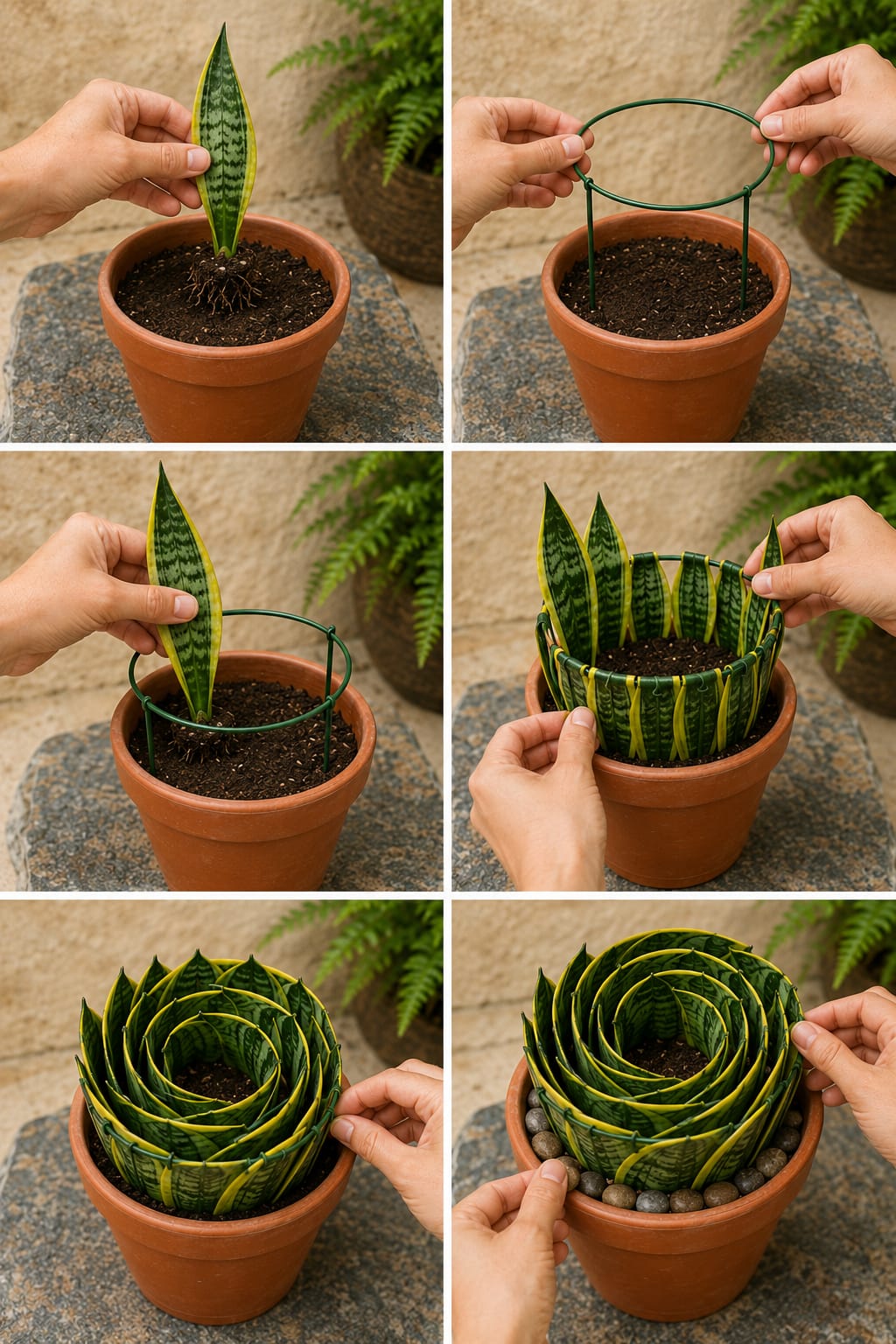
Office and Commercial Styling
A spiral snake plant can be useful in commercial interior landscaping because it offers a more artistic version of a dependable plant. It can work in reception areas, boutique displays, hotel-style interiors, wellness spaces, office corners, and staged properties. Its structured look makes it suitable for modern and natural design themes.
For professional spaces, the support system must look neat. Visible ties should be minimal, the pot surface should be clean, and the plant should not look forced. A messy support ring or broken leaves can reduce the premium effect. Professional styling depends on both plant health and clean presentation.
Maintenance should be simple. The plant should be easy to water without disturbing the spiral. The support should be stable. Leaves should be wiped regularly. Old damaged sections should be removed. A shaped plant display must be maintained more carefully than a standard pot, but it can create a stronger visual impression.
Product and Tool Guide
Helpful materials for this method include healthy snake plant divisions, a terracotta pot with drainage holes, cactus and succulent mix, perlite, pumice, a round plant support ring, soft garden ties if needed, clean scissors, a narrow-spout watering can, smooth decorative pebbles, a soft cloth for leaf cleaning, and a diluted cactus and succulent fertilizer for later use. A grow light can help if the plant is kept indoors in a darker space.
The support ring should be smooth, stable, and correctly sized. The pebbles should be clean before use. The soil should be dry-friendly and fresh. The tools should be clean so the plant is not exposed to disease during shaping or trimming.
These materials help create a safer and cleaner display. The plant does not need complicated products, but it does need careful handling. The best tools are the ones that protect the leaves, roots, and crown while helping the final shape look polished.
Care Timeline After Shaping
During the first 24 hours, the plant should be checked for cracked leaves, tight support pressure, crown depth, and pot stability. The plant should be placed in bright indirect light. Watering should happen only if the soil is dry enough. The support ring should sit securely without pressing sharply into the foliage.
During the first week, the plant should be watched for leaning, soft bases, soil that stays wet, or leaves slipping out of position. Small adjustments can be made gently. The plant should not be moved repeatedly or watered heavily. Stability helps it settle into the new arrangement.
After two to four weeks, the arrangement should look more stable. Some leaves may need light repositioning. After one to two months, the plant may begin producing new growth if conditions are good. New leaves can be guided into the circle while still young. Long-term success depends on patience, light, dry-friendly soil, and gentle corrections.
Professional Styling Note
In high-end indoor horticulture, snake plant is valued because it offers strong shape, clean lines, and low-maintenance structure. A spiral or circle display adds a creative design element that can make the plant feel more customized and premium. It works well in luxury home staging, patio design, modern apartment decor, boutique interiors, and polished property presentation.
However, the display only looks premium when it is healthy and neat. Cracked leaves, tight ties, soggy soil, and messy pebbles reduce the effect. The support should look intentional, not like a rescue device. The pot should be clean, the leaves should be dust-free, and the spiral should appear natural rather than forced.
A beautiful shaped snake plant depends on healthy divisions, careful placement, bright indirect light, controlled watering, and a stable planter. The goal is to create a living sculpture while respecting the plant’s natural limits. Simple, patient training creates the best result.
Final Thoughts
Training a snake plant into a spiral or circle shape can create a striking decorative display, but it must be done gently. The safest method is to use healthy young divisions, arrange them around a round support ring, keep the crown clean, and allow the pattern to develop gradually. Mature stiff leaves should not be forced into sharp curves because they can crack or scar permanently.
The real foundation of success is proper snake plant care. The pot should have drainage holes, the soil should be fast-draining, watering should happen only when the soil dries, and the plant should receive bright indirect light. Decorative pebbles and support rings can improve the look, but they should never trap moisture or damage the leaves.
With clean care and patient shaping, a snake plant can become a beautiful spiral accent for living rooms, bedrooms, home offices, balconies, patios, entryways, modern apartments, commercial interior landscaping, luxury home staging, premium terracotta planters, and polished property presentation. Healthy roots, firm leaves, a tidy pot, and gentle training will always create a stronger display than forcing the plant into shape too quickly.