How Often Should You Use This Routine?
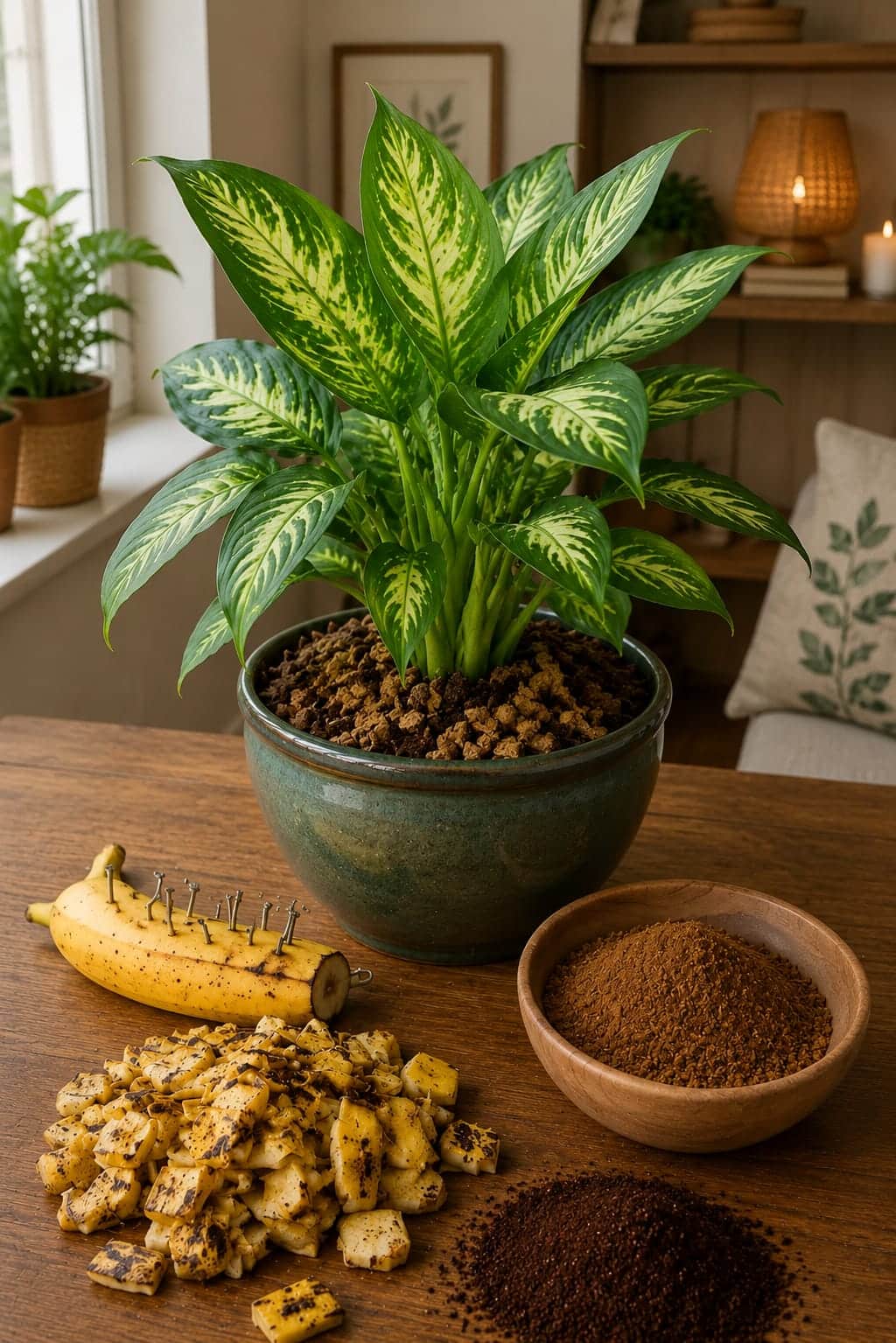
For Dieffenbachia, homemade organic amendments should be occasional. During active growth in spring and summer, once every four to six weeks is enough for a light top dressing. During fall and winter, use less or stop completely if the plant is not actively growing.
Do not apply banana peel powder or coffee grounds every few days. Indoor plants do not need constant feeding, and the potting mix can become overloaded. More frequent applications can create buildup and pest problems.
If you also use a commercial houseplant fertilizer, be extra careful. Do not combine strong fertilizer with frequent homemade amendments. Overfeeding can lead to leaf burn, weak growth, or salt buildup in the soil. A simple routine is better than a complicated one.
Watering Dieffenbachia After Applying Organic Amendments
Watering is one of the most important parts of this routine. Dieffenbachia likes soil that becomes slightly dry on top before the next watering. It does not want to stay constantly wet. After adding banana or coffee-based amendments, be even more careful because organic materials can hold moisture near the surface.
Before watering, touch the soil. If the top inch feels damp, wait. If it feels lightly dry, water thoroughly until water drains from the bottom of the pot. Then empty any saucer or decorative container so the plant is not sitting in water.
Do not water just because you added homemade fertilizer. Feeding and watering should follow the plant’s actual needs, not a rigid habit. Overwatering after adding organic matter is one of the fastest ways to create root problems.
Light Matters More Than Banana Peels
A Dieffenbachia with poor light will not grow strongly, even if you add natural fertilizer. Light is the plant’s energy source. Nutrients support growth, but they cannot replace light.
Place Dieffenbachia in bright indirect light. Near a window with filtered sunlight is often ideal. Avoid harsh direct afternoon sun, which can scorch the leaves. If the plant is in a dark corner, it may survive but grow slowly and produce smaller leaves.
If your plant is not growing, check the light before increasing fertilizer. A healthy Dieffenbachia should have enough brightness to maintain its variegation and produce new leaves. If the room is too dim, move the plant gradually to a brighter spot.
Temperature and Humidity for Better Growth
Dieffenbachia is a tropical plant, so it prefers warmth. Cold drafts can damage it quickly. Keep it away from open windows during cold weather, air conditioning vents, and sudden temperature changes.
Average indoor humidity is usually acceptable, but the plant may look better with moderate humidity. Dry air can contribute to crispy leaf edges. You can help by grouping plants together, using a humidity tray, or placing the plant in a naturally more humid room with good light.
Humidity does not mean wet soil. This is an important distinction. A plant can enjoy humid air while still needing a well-drained potting mix. Do not compensate for dry air by overwatering the soil.
What Results Can You Realistically Expect?
If your Dieffenbachia is healthy, a careful banana peel and coffee ground routine may support steady growth. You might notice new leaves emerging over time, stronger color, or a plant that continues growing well during the active season. But the results will be gradual.
You should not expect a weak plant to become full overnight. You should not expect yellow leaves to turn green again. Once a leaf has yellowed significantly, it usually will not return to its original color. The goal is to support new healthy growth, not reverse every old leaf.
Healthy improvement often appears as new leaves, firmer stems, and stable soil conditions. If the plant continues to decline, the issue is likely not a lack of banana or coffee. It may be watering, roots, light, pests, or soil quality.
When to Avoid This Method Completely
Do not use banana peels or coffee grounds if your Dieffenbachia has fungus gnats. Organic scraps can make gnat problems worse because larvae feed on moist organic matter in the soil. First, reduce moisture, remove decaying material, and treat the gnat issue.
Avoid this method if the pot smells sour or rotten. That smell can indicate anaerobic soil conditions or root rot. Adding more organic matter will not help. The plant may need repotting and root inspection.
Do not use this method if the plant was recently overwatered or if the soil has stayed wet for more than a week. Wait until the plant is stable and the soil dries normally.
Also avoid it for newly repotted plants. Freshly disturbed roots need time to adjust. Wait several weeks before adding homemade amendments, especially if you trimmed roots during repotting.
How to Fix a Dieffenbachia That Was Overfed With Kitchen Scraps
If you already added too many banana pieces or coffee grounds, do not panic. Start by removing visible scraps from the soil surface. If there is a thick layer of organic material, gently scrape it away without damaging the roots.
Check the soil moisture. If it is very wet, allow the plant to dry more before watering again. Make sure the pot has drainage holes and that water is not trapped in a saucer or decorative pot.
If the soil smells bad, has heavy mold, or the plant is wilting despite wet soil, consider repotting. Remove the plant, inspect the roots, trim any rotten parts with clean scissors, and repot into fresh, airy potting mix.
After repotting, do not fertilize immediately. Give the plant time to recover. Keep it in bright indirect light and water carefully.
A Simple Monthly Care Routine
For a healthy Dieffenbachia, a simple routine is usually enough. Once a week, check the soil moisture and inspect the leaves. Water only when the top layer has dried enough. Rotate the pot occasionally so the plant grows evenly toward the light.
Once a month during active growth, clean the leaves with a damp cloth. Dusty leaves cannot absorb light as efficiently. While cleaning, check for pests such as spider mites, mealybugs, or scale.
If you want to use the banana peel and coffee routine, apply it lightly once every four to six weeks during growth season. Keep it off the stems, avoid thick layers, and monitor the soil afterward.
This kind of steady routine is more useful than dramatic plant hacks. Dieffenbachia responds well to consistency.
Safety Note: Dieffenbachia Is Toxic
Dieffenbachia contains irritating compounds that can cause discomfort if chewed or handled carelessly. Keep it away from pets and small children. If you prune the plant or handle damaged stems, wash your hands afterward. Some people prefer to wear gloves when working with Dieffenbachia.
This safety note is important because homemade plant-care videos often focus only on the fertilizer trick and forget the plant itself. Dieffenbachia is beautiful, but it should be handled respectfully.
Frequently Asked Questions
Can I put fresh banana peels directly in my Dieffenbachia pot?
It is better not to place large fresh banana peels directly in the pot. They can attract pests, grow mold, and hold too much moisture. Drying, grinding, composting, or making a mild banana peel water is safer.
Are coffee grounds good for Dieffenbachia?
Coffee grounds can be used only in very small amounts, preferably dried or composted. Too much can compact the soil and keep it too wet.
Will banana peels make Dieffenbachia leaves bigger?
Banana peels alone will not guarantee bigger leaves. Leaf size depends on light, root health, watering, humidity, and overall care. A mild banana peel routine may support growth if the plant is already healthy.
How often should I use banana peel water?
Use it occasionally, such as once a month during active growth, and only when the plant is already due for watering. Keep it diluted and fresh.
Why are my Dieffenbachia leaves turning yellow?
Yellow leaves can be caused by overwatering, old age, low light, cold stress, root problems, or nutrient issues. Check watering and roots before adding fertilizer.
Can coffee grounds attract bugs?
Yes, especially if they are wet or used in thick layers. Fungus gnats are more likely when soil stays moist and rich in decaying organic matter.
Should I use this method in winter?
Use less or stop in winter if the plant is not actively growing. Plants need fewer nutrients when growth slows down.
Final Thoughts
Banana peels and coffee grounds can be part of a natural Dieffenbachia care routine, but they should be used carefully. They are not magic ingredients, and they should not be treated as an instant cure for yellow leaves, weak stems, or poor growth. Their best role is as a mild, occasional soil support for a plant that is already healthy enough to grow.
The safest approach is simple: do not dump fresh scraps into the pot, do not cover the soil with coffee grounds, and do not feed a plant that is already stressed from overwatering or root damage. Prepare banana peels by drying, grinding, composting, or making a mild diluted water. Use coffee grounds sparingly, preferably dried or composted. Keep the soil airy, water carefully, and give the plant bright indirect light.
A healthy Dieffenbachia does not need dramatic treatment. It needs balance. When the roots are healthy, the light is right, and the soil drains well, gentle organic feeding can support beautiful new leaves over time. The best results come from patience, observation, and small adjustments, not from heavy applications or miracle claims.
If you want your Dieffenbachia to stay full, green, and strong, start with the basics. Then, if the plant is actively growing, use banana peels and coffee grounds as a careful supplement rather than a rescue treatment. That is the safest and most realistic way to turn kitchen leftovers into useful plant care.