Office and Commercial Styling
Snake plants are widely used in commercial interior landscaping because they are durable, structured, and visually clean. They work well in reception areas, office corners, meeting rooms, hotel-style interiors, boutique displays, wellness spaces, and staged properties. Their upright foliage creates a polished professional look.
For commercial spaces, fresh garlic cloves are usually not recommended. Professional plant care should be predictable, odor-free, and visually clean. Sticky traps, soil drying, proper watering, repotting, and labeled plant-safe pest products are better for consistent displays.
A premium commercial snake plant should have firm leaves, tidy soil, no odor, no standing water, no food scraps, and a planter that matches the interior. The care routine should be invisible. The plant should look naturally healthy rather than treated with kitchen materials.
Product and Tool Guide
Helpful materials for snake plant care include a pot with drainage holes, cactus and succulent mix, perlite, pumice, a narrow-spout watering can, room-temperature water, a soft cloth, clean scissors, and a moisture meter if watering decisions are difficult. For pest issues, yellow sticky traps and labeled houseplant pest products can be useful.
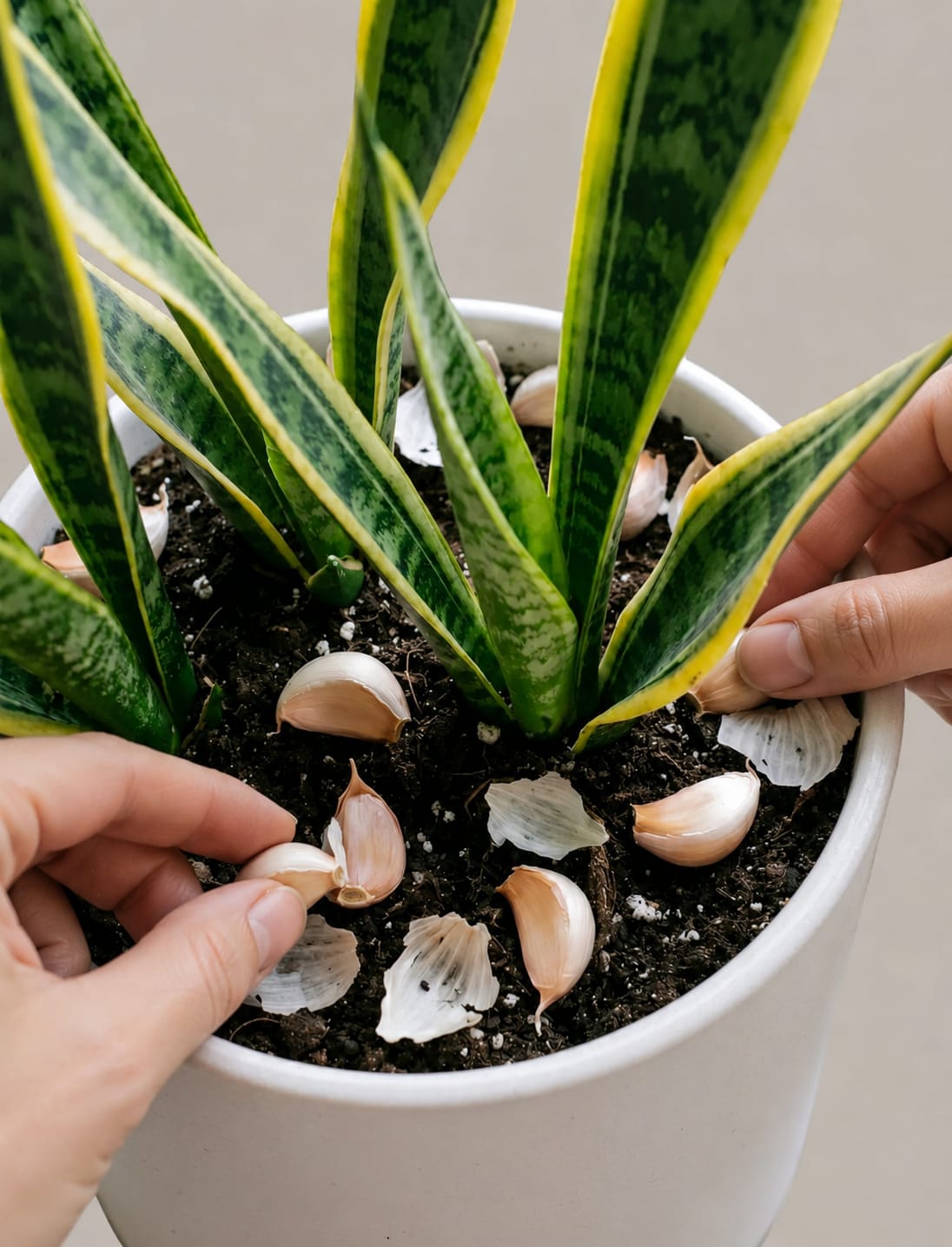
If garlic is used, helpful materials include fresh clean garlic cloves, a small spoon for placement, a clean container for removal, and fresh dry top mix if the surface needs replacement. Garlic should be used lightly and temporarily. It should not be buried deeply or left to rot.
The best toolkit is still simple. Good soil, drainage, light, clean leaves, and controlled watering prevent more problems than garlic can fix. Homemade methods should support proper care, not replace it.
Care Timeline After Using Garlic
During the first 24 hours, make sure the garlic is not touching the leaf bases or crown. Check that the soil is not wet or sour. Do not water unless the soil is dry enough. Keep the plant in bright indirect light with good airflow.
During the first week, check the cloves for softness, mold, sprouting, or odor. Remove them if they begin to change. Watch for fungus gnats, yellowing leaves, or soil that stays wet too long. Do not add more garlic quickly.
After two to four weeks, the plant should remain firm and stable if the method did not create problems. Garlic should not be left indefinitely. Long-term snake plant health depends on soil, water, light, and drainage rather than repeated garlic use.
Professional Styling Note
In high-end indoor horticulture, snake plant is valued because it offers bold architectural foliage with very little visual clutter. It works beautifully in modern apartment decor, bedroom styling, office plant design, commercial plant displays, luxury home staging, and polished property presentation.
However, the luxury look depends on restraint and cleanliness. Garlic cloves should never create odor, mold, pests, or a messy soil surface. A premium snake plant display should look dry, clean, firm, and fresh. Any homemade treatment should be controlled and temporary.
A beautiful snake plant display depends on healthy rhizomes, bright indirect light, fast-draining soil, drainage holes, controlled watering, and clean leaves. Simple proper care creates a stronger decorative result than visible kitchen scraps or frequent homemade treatments.
Final Thoughts
Garlic cloves can be used around a snake plant only with caution. They may help discourage some surface pests because of their strong odor and natural sulfur compounds, but they should not be buried deeply, placed against the crown, or left to rot in the pot. Fresh garlic can mold, smell sour, attract pests, and keep the soil too damp if misused.
The real foundation of snake plant care is bright indirect light, fast-draining cactus or succulent mix, a pot with drainage holes, room-temperature water, long dry-down periods, and simple grooming. Garlic is optional and should never replace proper watering, pest identification, soil correction, or drainage. If the plant is stressed, garlic should be avoided and the root zone should be checked first.
With clean care and the right presentation, snake plant can remain a beautiful accent for living rooms, bedrooms, home offices, windowsills, modern apartments, commercial interior landscaping, luxury home staging, decorative ceramic planters, and polished property presentation. Healthy roots, firm upright leaves, tidy soil, and controlled watering will always create a stronger display than heavy garlic use or risky plant-care shortcuts.