Cleaning the Leaves
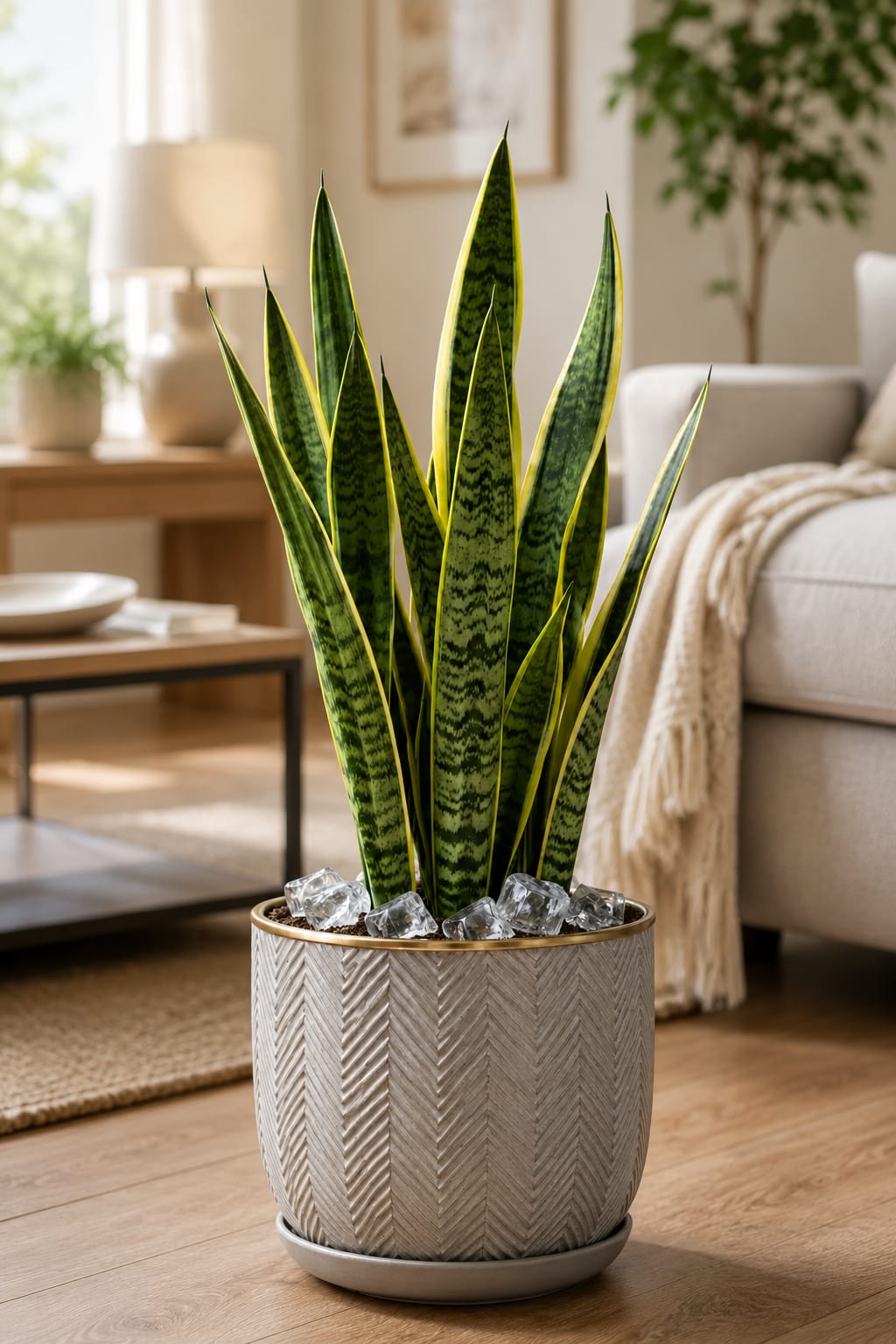
Snake plant leaves should be kept clean because their patterned surface and yellow margins are part of their decorative value. Dust can be wiped away with a soft damp cloth. Clean leaves help the plant receive light and look more polished.
Ice water should not be used to wipe the leaves. Plain room-temperature water is safer. If condensation or meltwater splashes onto the leaves, dry it gently. Moisture should not sit in the center of the plant.
Leaf shine products are usually unnecessary. A healthy snake plant already has a strong visual presence. Simple cleaning and correct care create a natural premium look.
Indoor Decor Value
Snake plant has strong indoor decor value because it grows upright and looks structured. It can add height and greenery without creating clutter. A textured ceramic planter gives it a refined modern look, while the yellow-edged leaves add contrast and brightness.
The decorative ice cube idea can look clean in a styled image, but the long-term display depends on plant health. Firm leaves, tidy soil, and a dry saucer make the plant look premium. Soft leaves, mold, or wet soil reduce the effect.
Snake plant works well with neutral interiors, modern shelves, warm lamps, wood flooring, soft curtains, and minimalist decor. Its architectural shape makes it useful for corners, plant stands, entryways, and office backgrounds.
Room-by-Room Styling
In the living room, snake plant can stand beside a sofa, near a window, on a plant stand, or next to a shelf. Its vertical form adds structure. Watering should be controlled so the pot and floor remain clean.
In the bedroom, snake plant creates a calm and minimal look. It should not be overwatered, especially if the bedroom has lower light. A dry, odor-free pot surface is important in sleeping spaces. Ice cubes are usually unnecessary there.
In a home office, snake plant works well because it looks professional and low-maintenance. It can improve a video-call background or brighten a desk area. Bright indirect light helps the plant stay firm and attractive.
Near a bright window, snake plant can thrive if protected from sudden harsh sun and cold drafts. A decorative planter can make the display feel finished. Check soil moisture before watering because window conditions change with the season.
Office and Commercial Styling
Snake plants are widely used in commercial interior landscaping because they are durable, structured, and easy to style. They work well in reception areas, office corners, meeting rooms, hotel-style interiors, wellness spaces, boutique displays, and staged properties. Their clean vertical leaves create a professional look.
For commercial spaces, ice cube watering is usually not the best routine. Different people may add cubes too often, and the plant may become overwatered. A simple soil-check watering schedule with room-temperature water is more reliable.
A premium commercial snake plant should have firm leaves, tidy soil, no standing water, and a planter that matches the interior. The watering routine should be controlled and invisible. The plant should look naturally strong, not overtreated with decorative shortcuts.
Product and Tool Guide
Helpful materials for snake plant care include a pot with drainage holes, cactus and succulent mix, perlite or pumice, a matching saucer, a narrow-spout watering can, room-temperature water, a wooden stick or moisture meter, clean scissors, and a soft cloth for leaf cleaning. These tools prevent the most common watering mistakes.
If ice cubes are used, they should be clean, small, and placed only on dry outer soil. They should never contain flavoring, sugar, lemon, fertilizer, or additives. Plain ice made from clean water is the only type that should ever be considered.
The plant does not need complicated watering tricks. It needs dry-friendly soil, drainage, bright indirect light, and patience. These basics create stronger results than frequent ice cube watering or fixed calendar care.
Care Timeline After Using Ice Cubes
During the first 24 hours, check that the ice has melted away from the crown and that no water is sitting in the saucer. The soil should be lightly moistened, not soaked. The plant should remain in bright indirect light with good airflow.
During the first week, watch whether the soil dries normally. If it stays damp too long, do not add more ice or water. Check for soft bases, yellowing, mold, or fungus gnats. The plant should remain firm and upright.
After two to four weeks, the soil can be checked again. Some plants may need water, while others may not. In winter or low light, the plant may go much longer without water. Long-term success depends on checking the soil rather than repeating ice cubes by habit.
Professional Styling Note
In high-end indoor horticulture, snake plant is valued because it offers bold architectural foliage with very little visual clutter. It works well in modern apartments, offices, bedrooms, entryways, commercial plant displays, luxury home staging, and polished property presentation. The plant looks especially refined when paired with a clean textured planter.
However, the premium look depends on correct watering. A snake plant with yellow soft leaves, moldy soil, or water sitting in a saucer will not look elegant. Ice cubes may look decorative, but they should never compromise the root zone. The care routine should protect the plant while keeping the display clean.
A beautiful snake plant display depends on firm leaves, healthy rhizomes, fast-draining soil, drainage holes, bright indirect light, and watering only when the soil has dried well. Simple controlled care creates a stronger result than relying on cold water tricks.
Final Thoughts
Ice cubes can be used around a snake plant only with caution. They should be small, clean, and placed on the outer soil surface away from the crown and leaf bases. The soil should already be dry, the room should be warm, and the pot should have drainage holes. Ice should not be used as a frequent watering routine or a miracle growth hack.
The safest regular method is to water with room-temperature water only when the soil has dried well, then let the pot drain completely and empty the saucer. Snake plants prefer dry-down periods, fast-draining soil, bright indirect light, and restrained care. Cold water around the roots is not necessary for healthy growth.
With clean care and the right presentation, snake plant can remain a beautiful accent for living rooms, bedrooms, home offices, windowsills, modern apartments, commercial interior landscaping, luxury home staging, textured ceramic planters, and polished property presentation. Healthy rhizomes, firm upright leaves, tidy soil, and controlled watering will always create a stronger display than frequent ice cube watering or decorative plant-care shortcuts.