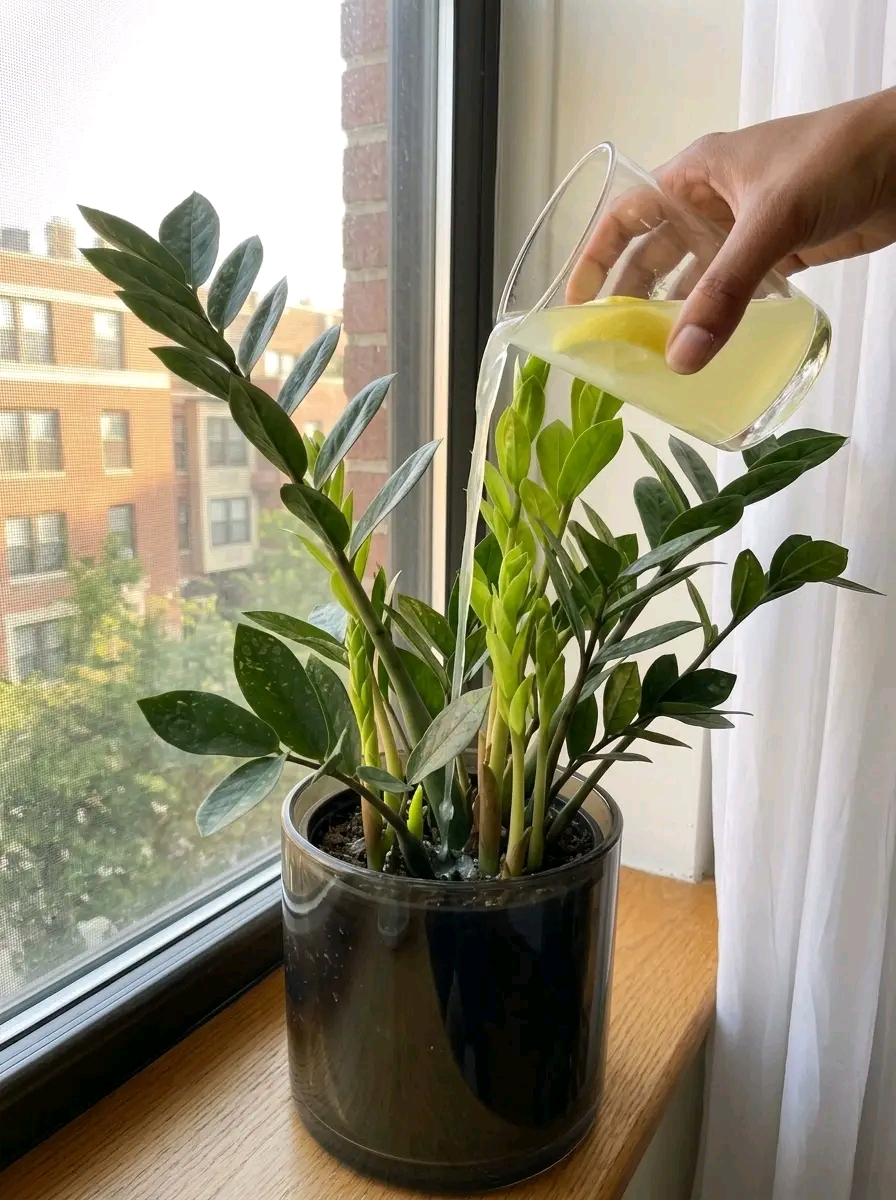
What to Do If Too Much Lemon Water Was Added
If too much lemon water was added, remove any standing liquid from the saucer or decorative outer pot immediately. If the pot has drainage and the soil is not already soggy, a careful flush with plain room-temperature water may help dilute the acidity. The pot must drain fully afterward.
If the pot has no drainage, flushing is not safe because water will stay trapped. In that case, repotting may be better. The plant should be removed from the container, the old soil should be discarded, and the rhizomes should be inspected for softness or rot.
If lemon water splashed on the leaves, wipe them gently with a clean damp cloth. The plant should then return to bright indirect light and stable care. Do not repeat lemon water soon. Let the plant recover with plain water and dry-down periods.
Repotting After Lemon Water Problems
Repotting may be needed if the soil becomes sour, compacted, moldy, or overloaded with residue. The ZZ plant should be removed gently by supporting the base. The rhizomes and roots should be inspected carefully. Healthy rhizomes are firm and solid. Rotten rhizomes are soft, mushy, dark, or smelly.
Damaged roots or rhizome sections should be removed with clean tools. The plant should be placed into fresh fast-draining mix in a pot with drainage holes. The rhizomes should not be packed into wet soil. The soil should support the plant while allowing air movement.
After repotting, do not fertilize or use lemon water immediately. The plant needs time to stabilize. Keep it in bright indirect light and water carefully only when the mix dries well. Recovery can be slow, but ZZ plants can rebound if healthy rhizomes remain.
How to Encourage New ZZ Plant Shoots
New ZZ plant shoots come from healthy rhizomes. The best way to encourage new growth is to provide bright indirect light, correct watering, a warm stable room, and a well-draining soil mix. Mild fertilizer during active growth can help, but only if the plant is already healthy.
New shoots often appear lighter green at first. They may look soft and fresh before they mature into darker glossy stems. During this stage, stable care is important. Do not overwater just because new growth appears. The rhizomes still need dry-down periods.
If the plant has not grown for a long time, check light first. ZZ plants in low light can stay alive but grow very slowly. Moving the plant closer to brightness may help more than adding lemon water or fertilizer. Growth starts with energy, and energy comes from light.
Cleaning the Leaves
ZZ plant leaves should be kept clean because their natural gloss is part of their beauty. Dust can dull the surface and make the plant look tired. A soft damp cloth can be used to wipe each leaflet gently. Clean leaves also help the plant receive light more efficiently.
Lemon water should not be used to wipe the leaves. Acidic liquid can leave residue or marks. Plain water is safer. If extra shine is desired, the best method is healthy care and regular cleaning. The plant already has a waxy surface naturally.
Leaf shine sprays are usually unnecessary. They can attract dust or block the natural surface. A clean cloth and correct light create a more natural premium look. The plant should appear glossy because it is healthy, not because it is coated.
Indoor Decor Value
ZZ plant has strong indoor decor value because it looks structured, glossy, and modern. The upright stems create height, while the dark green leaves provide a rich polished look. It fits many interiors because it is simple, architectural, and not visually messy.
A stylish planter near a window can make the plant look more refined. Cream, black, clear, ribbed, stone-effect, or ceramic pots can all work well with ZZ plant foliage. The pot should match the room, but it should also support drainage. Beauty and plant health should work together.
The display looks best when the leaves are clean, the soil surface is tidy, and the pot has no standing water. Lemon water should never create smell, residue, or soil problems. A premium ZZ plant display should look fresh, glossy, and effortless.
Room-by-Room Styling
In the living room, a ZZ plant can stand near a bright window, beside a sofa, next to a console, or in a calm corner that needs greenery. Its upright stems add structure without taking up too much visual space. A decorative planter can make it feel intentional.
In the bedroom, ZZ plant creates a quiet green accent. It should be kept clean and odor-free. Strong homemade liquids should be avoided in bedroom plants because any sour smell or fungus gnats can become unpleasant. Plain water is often best.
In a home office, ZZ plant works well because it looks professional and tolerates indoor conditions. It can improve a video-call background, desk corner, or shelf. Bright indirect light helps it stay glossy and strong.
On a windowsill, ZZ plant can enjoy bright filtered light, but it should be protected from hot direct sun and cold drafts. A pot near glass may dry differently depending on the season. Check soil before watering rather than following a fixed schedule.
Office and Commercial Styling
ZZ plants are excellent for commercial interior landscaping because they are durable, structured, and easy to style. They work well in reception areas, hotel-style interiors, office corners, meeting rooms, wellness spaces, boutique displays, and staged properties. Their glossy leaves create a clean professional look.
For commercial spaces, lemon water should usually be avoided unless one trained person manages the routine carefully. Plain water and labeled fertilizer are more predictable. Homemade mixtures can be inconsistent and may create odor or residue if misused.
A premium commercial ZZ display should have firm stems, clean leaves, tidy soil, and no standing water. The care routine should be invisible. The plant should look naturally strong, not overtreated with visible or risky plant hacks.
Product and Tool Guide
Helpful materials for ZZ plant care include a pot with drainage holes, fast-draining indoor potting mix, perlite, pumice, a narrow-spout watering can, room-temperature water, a soft cloth, clean pruning scissors, and a diluted balanced houseplant fertilizer for active growth. A decorative outer pot can improve styling if drainage is managed correctly.
If lemon water is used, helpful materials include fresh lemon, a strainer, a measuring spoon, and plenty of clean water for extreme dilution. The mixture should be fresh, weak, and applied rarely. It should never include sugar, pulp, peel, salt, or bottled drinks.
These tools support a safe routine. ZZ plants do not need complicated tricks. They need drainage, bright indirect light, restrained watering, clean leaves, and patience. These basics create stronger results than frequent acidic treatments.
Care Timeline After Using Lemon Water
During the first 24 hours, check that the pot drained fully and that no lemon water remains in the saucer or outer pot. Wipe any splashes from leaves or stems. Keep the plant in bright indirect light and do not add more water.
During the first week, watch for yellowing, soft stems, sour smell, fungus gnats, or soil that stays wet too long. Do not repeat lemon water quickly. Return to plain water care and allow the soil to dry properly before the next watering.
After two to four weeks, a healthy ZZ plant should remain firm and glossy. Do not expect instant new shoots from lemon water. After one to two months, better light, correct watering, and gentle seasonal feeding may support new growth if the rhizomes are healthy. Long-term success depends on stable care.
Professional Styling Note
In high-end indoor horticulture, ZZ plant is valued because it offers glossy foliage, upright structure, and strong visual impact with low maintenance. It fits modern apartments, bedrooms, offices, entryways, commercial plant displays, hotel-style interiors, and polished property presentation. Its clean form makes it one of the best plants for refined indoor styling.
However, the premium look depends on restraint. Overwatering, sour soil, residue, yellow stems, or risky homemade liquids will reduce the effect. Lemon water should remain optional, extremely diluted, and rare. The plant should look naturally healthy rather than treated with messy shortcuts.
A beautiful ZZ plant display depends on firm rhizomes, glossy leaves, bright indirect light, fast-draining soil, drainage holes, and a watering routine that respects the plant’s dry-tolerant nature. Simple controlled care creates a stronger decorative result than strong lemon water or repeated plant-care experiments.
Final Thoughts
Lemon water can be used around a ZZ plant only with caution, and it is not necessary for healthy growth. If used at all, it should be extremely diluted, fresh, unsweetened, strained, and applied rarely to the soil only. It should never be poured over the leaves, stems, crown, or new shoots. Strong lemon mixtures can irritate roots, disturb the soil, and stress the rhizomes.
The real foundation of ZZ plant care is bright indirect light, fast-draining soil, a pot with drainage holes, room-temperature water, careful dry-down periods, clean leaves, and light feeding during active growth. If the plant is not growing, improving light and root health is usually more effective than using lemon water. If the plant is stressed, lemon water should be avoided completely.
With clean care and the right presentation, ZZ plant can remain a beautiful accent for living rooms, bedrooms, home offices, windowsills, modern apartments, commercial interior landscaping, luxury home staging, decorative planters, and polished property presentation. Healthy rhizomes, glossy leaves, tidy soil, and controlled watering will always create a stronger display than strong acidic watering or risky homemade growth hacks.