Repotting After Milk Water Problems
Repotting may be needed if the soil becomes sour, moldy, compacted, or too wet. The jade plant should be removed gently from the pot. The roots should be inspected carefully. Healthy roots are firm, while rotten roots are soft, dark, or smelly.
Old damaged soil should be removed. Rotten roots should be trimmed with clean scissors. The plant should be placed into fresh cactus or succulent mix in a pot with drainage holes. The stem base should not be buried deeply.
After repotting, avoid milk water and fertilizer for a while. Let the plant settle in bright indirect light. Water only when the soil is dry and the plant shows it needs moisture. Recovery is usually better with dryness and patience.
How to Encourage Fuller Jade Growth Safely
Fuller jade growth comes from bright light, careful watering, correct pruning, and healthy roots. If the plant grows leggy, it usually needs more light. Moving it gradually to a brighter location can help it grow more compact over time.
Pruning can encourage branching when done carefully. Stems can be trimmed above a leaf node with clean scissors. The cut pieces can often be propagated after the cut end dries. This is a more reliable way to shape a jade plant than using milk water.
Light feeding during active growth can support new leaves. It should be mild and occasional. Jade plants grow slowly, and that is normal. Stronger growth comes from patience and stable care rather than heavy homemade treatments.
Cleaning the Leaves
Jade plant leaves should be kept clean because their smooth rounded surface is part of their decorative value. Dust can be wiped away with a soft dry or slightly damp cloth. Clean leaves receive light better and look more polished.
Milk water should not be used to clean the leaves. It can leave residue and attract dust. Plain water on a cloth is safer. The leaves should not stay wet for long, especially in cool rooms.
Leaf shine products are usually unnecessary. A healthy jade plant has a natural soft gloss. Good light, clean leaves, and correct watering create the best appearance.
Indoor Decor Value
Jade plant has strong indoor decor value because it looks compact, sculptural, and long-lasting. Its thick leaves and woody stems create a calm natural accent. It works well on windowsills, desks, kitchen counters, shelves, side tables, and bright plant corners.
A rustic ceramic pot gives the plant a warm handmade look. Terracotta creates a classic succulent style. White ceramic makes it modern and clean. A stone-effect planter gives a grounded natural feel. The pot should match the room while still supporting drainage.
The decorative value depends on clean care. Sour soil, fungus gnats, residue, leaf drop, or soft stems reduce the premium effect. A jade plant should look firm, dry, tidy, and stable. Homemade treatments should never make the display messy.
Room-by-Room Styling
In the kitchen, jade plant can sit near a bright window where it receives strong indirect light or gentle morning sun. It adds a fresh green accent without taking much space. Watering should be controlled so counters stay clean.
In the living room, it can sit on a side table, shelf, or plant stand. Its tree-like form pairs well with books, pottery, wood furniture, and natural textiles. The plant should not be placed in a dark corner if compact growth is desired.
In a home office, jade plant works well because it looks calm and low-maintenance. It can brighten a desk or windowsill. A firm healthy jade plant gives a clean professional look without needing frequent care.
In the bedroom, it can be used as a small decorative accent if the room has enough light. Strong homemade liquids should be avoided in sleeping spaces because odor or fungus gnats can become unpleasant. Plain water and bright light are better.
Office and Commercial Styling
Jade plants can work well in commercial interior landscaping when placed in bright spaces. They look especially good in reception areas, office windowsills, boutique displays, wellness spaces, hotel-style interiors, and staged homes. Their compact tree-like shape gives a refined natural impression.
For commercial spaces, milk water is usually not recommended. Professional plant care should be predictable, clean, and odor-free. Plain water, proper drainage, measured fertilizer, and regular grooming are safer for consistent displays.
A premium commercial jade plant should have firm leaves, tidy soil, no standing water, and no residue. The care routine should be invisible. The plant should look naturally healthy rather than treated with risky organic shortcuts.
Product and Tool Guide
Helpful materials for jade plant care include a pot with drainage holes, cactus and succulent mix, perlite, pumice, a narrow-spout watering can, room-temperature water, clean pruning scissors, a soft cloth, and diluted cactus fertilizer for active growth. A terracotta pot or breathable ceramic planter can help with moisture control.
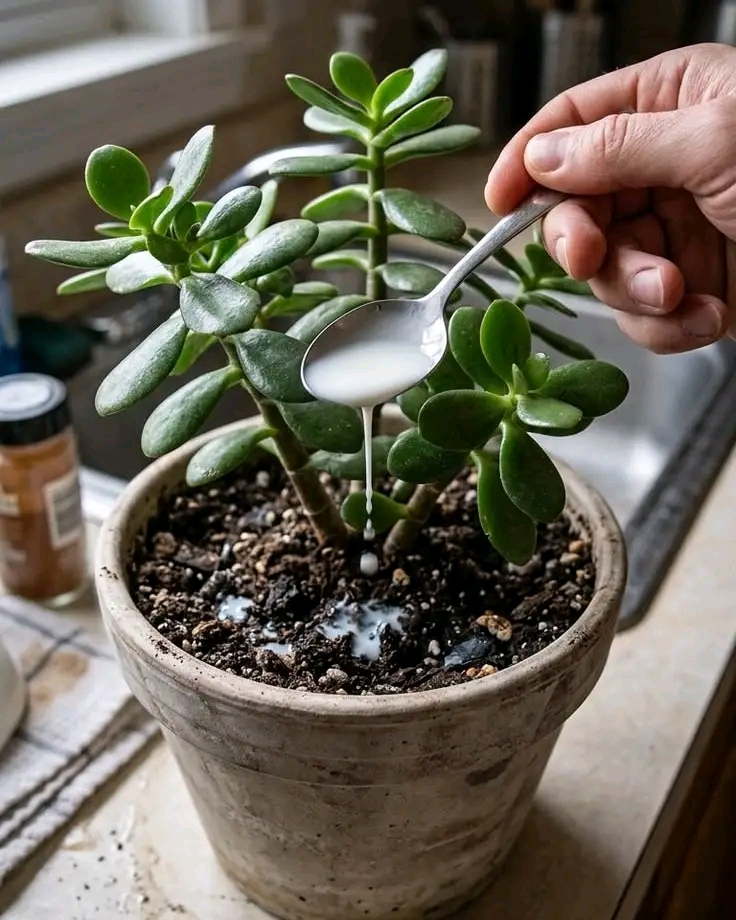
If milk water is used, helpful materials include plain milk, clean water, a measuring spoon, and a small spoon or pitcher for controlled soil application. The mixture should be extremely weak, fresh, and unsweetened. It should be applied only to dry soil and only rarely.
These tools support a stable routine. Jade plants do not need complicated tricks. They need bright light, fast-draining soil, drainage, long dry-down periods, and careful handling. Good basics create better results than risky dairy mixtures.
Care Timeline After Using Milk Water
During the first 24 hours, check that the pot drained fully and that no liquid remains in the saucer. Wipe any splashes from leaves, stems, pot, or shelf. Keep the plant in bright light with good airflow.
During the first week, watch for sour smell, fungus gnats, mold, soft leaves, yellowing, or soil that stays wet too long. Do not repeat milk water quickly. Return to plain water and wait until the soil dries fully before watering again.
After two to four weeks, a healthy jade plant should remain firm and stable. Do not expect instant growth from milk water. After one to two months during active growth, better light, correct watering, and mild fertilizer may support new leaves if the roots are healthy. Long-term success depends on routine care.
Professional Styling Note
In high-end indoor horticulture, jade plant is valued because it offers compact structure, thick glossy leaves, and a long-lasting sculptural form. It works beautifully in modern apartment decor, office plant design, kitchen styling, windowsill displays, commercial plant displays, and polished property presentation.
However, the luxury look depends on restraint. Milk water should never create stains, odor, pests, mold, or root stress. A premium jade plant display should look dry, clean, firm, and stable. The care routine should support the display without becoming visible or messy.
A beautiful jade plant display depends on healthy roots, bright light, fast-draining soil, drainage holes, clean leaves, and careful watering. Simple proper succulent care creates a stronger decorative result than strong milk water or frequent homemade treatments.
Final Thoughts
Milk water can be used around a jade plant only with caution, and it is not necessary for healthy growth. If used at all, it should be extremely diluted, fresh, unsweetened, and applied rarely to dry soil only. It should never be poured over the leaves, stems, trunk, or crown. Strong milk mixtures can sour in the pot, attract pests, create mold, and stress the roots.
The real foundation of jade plant care is bright light, fast-draining cactus or succulent mix, a pot with drainage holes, room-temperature water, long dry-down periods, and gentle fertilizer only during active growth. If the plant is weak, improving light and root conditions is usually more effective than using milk water. If the plant is stressed, milk water should be avoided completely.
With clean care and the right presentation, jade plant can remain a beautiful accent for kitchens, windowsills, desks, living rooms, bedrooms, modern apartments, commercial interior landscaping, luxury home staging, rustic planters, and polished property presentation. Healthy roots, firm leaves, tidy soil, and controlled watering will always create a stronger display than strong dairy mixtures or risky homemade plant-care shortcuts.