Common Mistakes
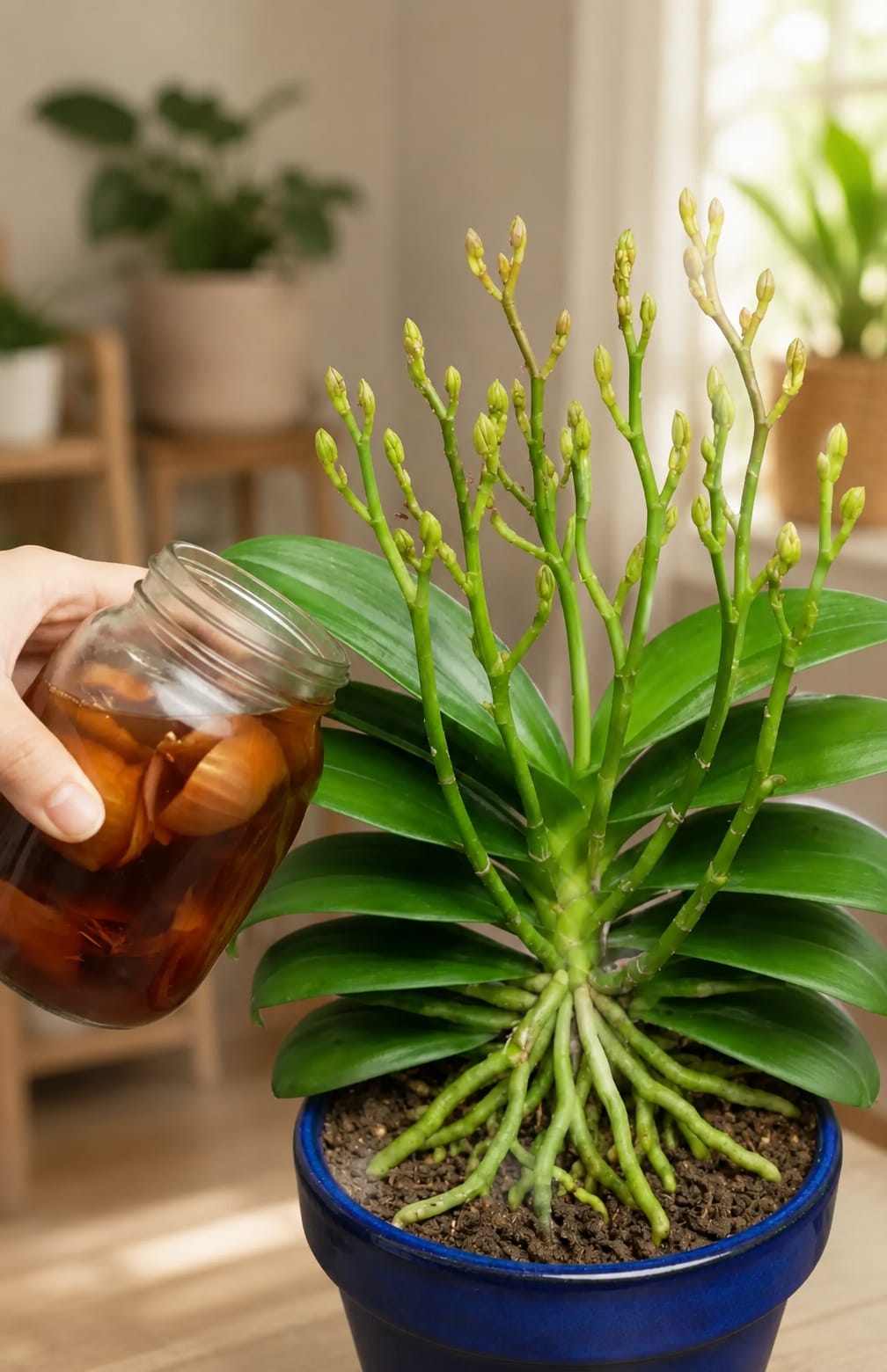
One common mistake is using a strong dark onion peel liquid and assuming stronger means better. For orchids, stronger often means riskier. A weak, diluted liquid is safer. Another mistake is leaving onion pieces in the potting medium. Pieces can rot and attract pests.
Another mistake is pouring the liquid into the crown. The crown should remain dry. Homemade liquid should be directed to the medium only. If liquid touches the crown, it should be removed immediately. Crown protection is more important than any tonic.
Using onion peel water too often is also a common mistake. Orchids do not need frequent organic liquid feeding. Overuse can make the potting medium sour and dirty. Occasional use, or skipping the method entirely, is safer than turning it into a routine.
What to Do If Too Much Was Added
If too much onion peel water was added, the orchid should be allowed to drain immediately. Any liquid in the saucer or decorative pot should be emptied. If onion pieces entered the bark, they should be removed. The crown and leaves should be checked and wiped dry if needed.
If the medium smells strong or sour, repotting may be necessary. The orchid should be removed from the pot, old contaminated bark discarded, and roots inspected. Healthy roots should be kept, while rotten roots should be trimmed with clean tools. Fresh orchid bark gives the plant a cleaner start.
After overuse, the orchid should be watered with plain water only when needed. Fertilizer and homemade liquids should be paused until the plant stabilizes. Bright indirect light and airflow will help the root zone recover. The goal is to restore clean conditions.
Repotting After Onion Peel Water Problems
Repotting may be needed if the orchid medium becomes sour, moldy, broken down, or contaminated with organic residue. The plant should be removed gently from the pot. The roots should be examined carefully. Firm green or silver roots are healthy, while mushy roots should be removed.
The orchid should be placed into fresh chunky orchid mix. The crown should sit above the medium, not buried. A clear pot with drainage can make future root monitoring easier. After repotting, the plant should be watered carefully and allowed to drain completely. It should not be soaked in any homemade liquid during recovery.
Repotted orchids may need time to adjust. Some flowers or buds may fade if roots were disturbed. This is normal. The long-term goal is healthy roots and future blooms. Clean bark, correct watering, and good light are the best recovery tools.
How to Encourage More Orchid Blooms
More orchid blooms come from mature plant health, good light, strong roots, proper feeding, and stable temperature patterns. Onion peel water alone will not create flowers. If the orchid has healthy roots and leaves but no bloom spike, improving light is often the first step. A bright indirect location can make a major difference.
Some orchids also respond to a slight nighttime temperature drop when they are mature and healthy. This natural rhythm can help trigger bloom spikes in many Phalaenopsis orchids. The drop should be gentle, not cold shock. The plant should never be exposed to freezing conditions or harsh drafts.
After blooming, old spikes can be trimmed depending on their condition and the orchid type. A green spike may sometimes rebloom, while a dry brown spike can be removed. The plant should continue receiving root care after flowers fade because the next bloom cycle depends on stored energy and healthy growth.
Indoor Decor Value
Orchids have strong indoor decor value because they combine glossy leaves, sculptural roots, and elegant flower spikes. Even when not blooming, a healthy orchid can look refined in a ceramic pot. When buds or flowers appear, the plant becomes a premium focal point for tables, shelves, entryways, desks, and bright corners.
A blue ceramic pot can create a beautiful contrast with green leaves and pale bloom spikes. Neutral pots create a softer luxury look. Clear inner pots help with root monitoring, while decorative outer pots improve style. The best display combines practical drainage with polished presentation.
The pot surface should remain clean. Onion peel pieces, sour liquid, mold, or standing water can ruin the premium effect. A refined orchid display should look fresh, odor-free, and carefully maintained. Homemade methods should never make the plant look messy.
Room-by-Room Styling
In the living room, an orchid can sit on a side table, console, plant stand, or near a bright window. Bloom spikes add height and elegance without needing a large plant. The pot should match the room style, and the leaves should be clean. Any homemade liquid should be used away from fabric or delicate surfaces.
In the bedroom, orchids create a calm and refined look. They should be kept in bright indirect light and watered carefully so there is no standing water or odor. Onion peel water is not ideal for bedroom use if it has any smell. Plain water and clean orchid fertilizer are safer for a peaceful space.
In a home office, an orchid can improve a desk, shelf, or video-call background. Bloom spikes look professional and polished. The plant should be placed where it receives enough light without being bumped. A decorative pot should not hide standing water.
In an entryway, an orchid can create an elegant first impression if the space is bright enough. If the entryway is dim, the orchid may decline or stop blooming. A rotating placement or grow light may be needed. A healthy orchid looks much better than one forced into a dark decorative corner.
Office and Commercial Styling
Orchids are widely used in commercial interior styling because they look refined, luxurious, and clean. They work well in reception areas, hotel lobbies, wellness spaces, salons, offices, boutique displays, and staged properties. Their bloom spikes create a high-end floral effect without needing cut flowers.
For commercial displays, onion peel water is usually not the best choice because it can create odor or maintenance issues if misused. Professional orchid care should be clean, predictable, and low-risk. Proper watering, fresh bark, measured fertilizer, and regular inspection are safer than kitchen-based liquids.
A premium orchid display depends on clean leaves, healthy roots, upright spikes, fresh buds, and a pot that suits the interior. Any method that creates residue, smell, or pests reduces the professional effect. Orchid styling should feel polished from every angle.
Product and Tool Guide
Helpful materials for orchid care include a clear orchid pot with drainage, chunky orchid bark mix, clean pruning scissors, a narrow-spout watering can, a soft cloth, a diluted orchid fertilizer, a decorative ceramic cachepot, a humidity tray if needed, and a grow light for darker rooms. If onion peel water is used, a fine strainer and clean container are important.
The onion peel liquid should be made fresh and discarded after use. It should not be stored for long periods indoors. Stored organic liquid can ferment and become unsafe for orchids. A clean jar may look natural, but the liquid inside must remain mild and fresh.
These tools create a safer routine. Orchids do not need complicated care. They need light, drainage, airflow, clean water, and measured feeding. Homemade methods should remain secondary and optional.
Care Timeline After Using Onion Peel Water
During the first 24 hours, the orchid should be checked to make sure the crown is dry and no liquid remains in the saucer or cachepot. The roots should be allowed to drain. If any onion pieces entered the pot, they should be removed. The plant should stay in bright indirect light.
During the first week, the bark should be watched for smell, mold, gnats, or unusual residue. The orchid should not be watered again until the roots and medium indicate it is ready. If buds are present, the plant should remain stable and should not be moved repeatedly.
After two to four weeks, a healthy orchid should remain firm, with clean roots and stable leaves. Do not expect instant blooms from one treatment. After one to two months, good light and proper care may support root growth and bloom spike development if the plant is mature and in the right season. Long-term success depends on basics, not one homemade liquid.
Professional Styling Note
In high-end indoor horticulture, orchids are valued because they offer elegant flowers, clean leaves, and a luxury plant profile. They are common in premium home staging, office reception styling, hotel interiors, wellness spaces, modern apartments, and polished property presentation. A healthy orchid can make a space feel refined immediately.
However, the care routine must match the premium look. Organic liquids, visible scraps, stained leaves, sour bark, or standing water can make the display look unprofessional. If onion peel water is used, it should be invisible, mild, and clean. The plant should never smell like kitchen waste.
A beautiful orchid display depends on healthy roots, a dry crown, bright indirect light, fresh orchid medium, and a planter that fits the room. Simple controlled care creates a stronger luxury effect than dramatic homemade treatments. The orchid should look calm, clean, and naturally healthy.
Final Thoughts
Onion peel water can be used around an orchid only with caution. It should be mild, fresh, strained, diluted, and applied rarely to the root medium only. It should not be poured into the crown, sprayed on buds, stored until fermented, or used as a replacement for orchid fertilizer. If it smells sour or strong, it should be discarded.
The real foundation of orchid health is bright indirect light, clean airy orchid mix, a pot with drainage and airflow, careful watering, and gentle measured feeding during active growth. Onion peel water may be an optional homemade support method, but it cannot fix root rot, poor light, old bark, or incorrect watering. Healthy roots and a dry crown matter far more.
With clean care and the right presentation, an orchid can remain a beautiful accent for living rooms, bedrooms, home offices, entryways, modern apartments, commercial interior landscaping, luxury home staging, premium ceramic planters, and polished property presentation. Strong roots, glossy leaves, clean bloom spikes, and a fresh odor-free pot will always create a better display than heavy homemade liquids or risky kitchen-based plant-care shortcuts.