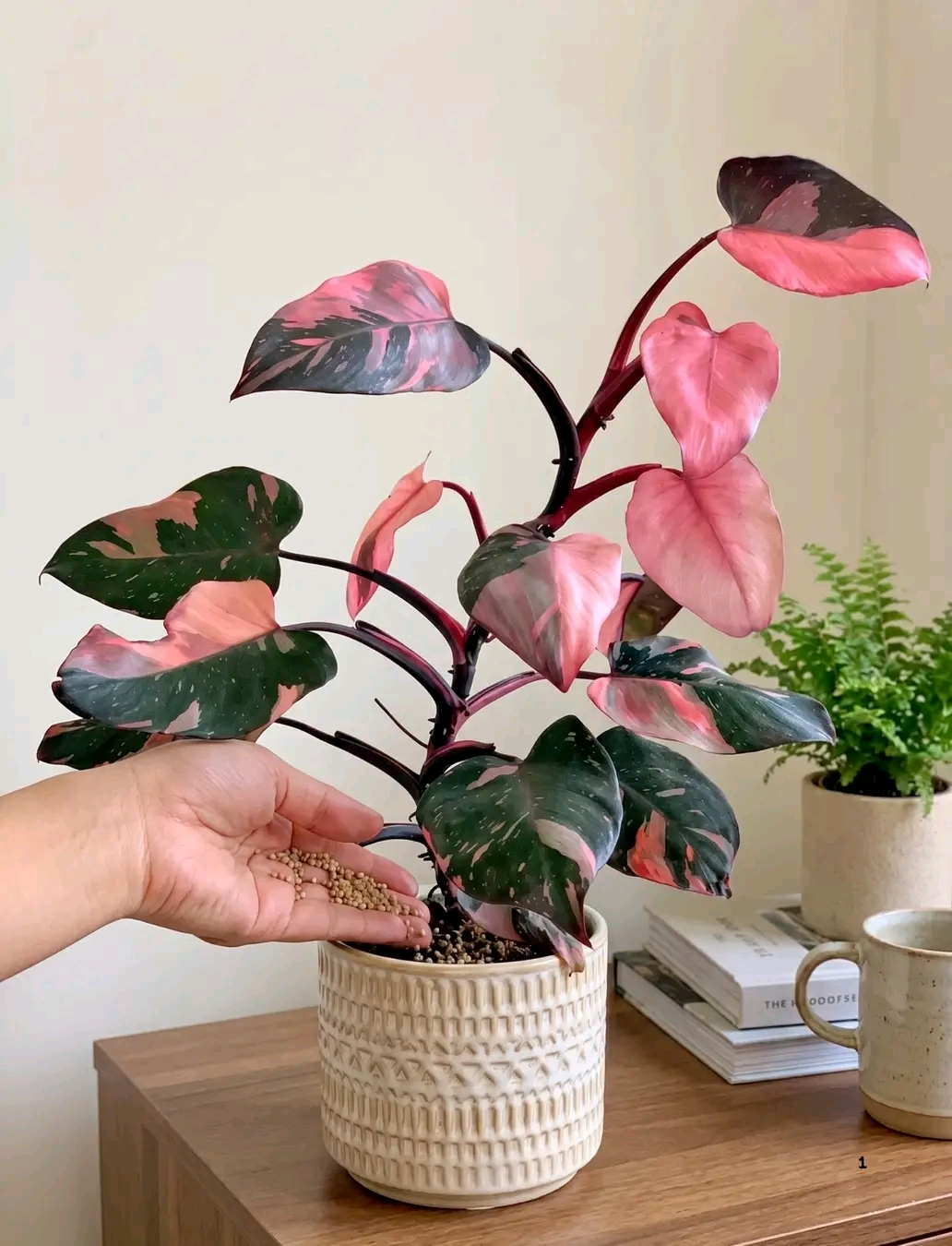
Pink Princess Philodendron is one of the most eye-catching indoor plants for people who want dramatic dark foliage, soft pink variegation, burgundy stems, and a premium decorative look that immediately stands out in living rooms, bedrooms, home offices, plant shelves, modern apartments, and rare houseplant collections. Its heart-shaped leaves, deep green to almost black surface, blush pink patches, speckled variegation, and elegant upright growth make it a favorite for indoor plant styling, luxury houseplant decor, modern apartment interiors, collector plant displays, commercial interior landscaping, and polished property presentation. When this plant is healthy, it can look like a living piece of botanical art.
Because Pink Princess Philodendron is valued for its color and rarity, many plant owners look for simple ways to keep it growing stronger and producing beautiful leaves. Tiny fertilizer pellets are one common option because they look easy to use and can provide slow-release nutrition over time. These pellets may support steady growth when the plant is healthy, actively growing, and planted in a proper airy potting mix. However, they must be used with care. Too many pellets can burn roots, create fertilizer buildup, cause brown leaf tips, and stress the plant instead of helping it.
Pink Princess Philodendron is not a plant that should be pushed with heavy feeding. It needs bright indirect light, a breathable aroid mix, controlled watering, good drainage, moderate humidity, and gentle nutrition. Fertilizer pellets can help only when those foundations are already correct. If the plant is sitting in soggy soil, low light, or a pot with no drainage, fertilizer will not solve the problem. It may make the root zone worse.
This guide explains how to use tiny fertilizer pellets around a Pink Princess Philodendron safely, when they may help, when they should be avoided, how to protect the roots, how to maintain pink variegation, what mistakes can damage the plant, and how to keep the display clean, healthy, and suitable for rare plant styling, indoor decor, luxury home staging, commercial plant displays, and premium houseplant presentation.
Quick Answer
Tiny fertilizer pellets can be used around a Pink Princess Philodendron only if they are labeled for houseplants or indoor foliage plants and applied at the correct dose. They should be sprinkled lightly on the soil surface or mixed into the top layer according to the product instructions, away from the stem base and crown. They should not be piled against the stems, used too often, or combined with strong liquid fertilizer at the same time. Pink Princess Philodendron grows best with bright indirect light, airy aroid potting mix, a pot with drainage holes, moderate humidity, and careful watering. Fertilizer pellets can support stronger growth, but they will not guarantee pink leaves if the plant does not receive enough light or if the variegation pattern is unstable.
What Plant This Is
The plant is Pink Princess Philodendron, a variegated form of Philodendron erubescens. It is loved for its dark leaves marked with pink, rose, blush, or marbled variegation. Some leaves may show small pink speckles, while others may develop larger pink sections. The stems are often burgundy or deep red, which adds to the plant’s dramatic appearance.
This plant grows as a climbing or upright philodendron. It produces leaves along a stem, and each node can create new roots or new growth under the right conditions. Indoors, it often benefits from a moss pole, coco pole, or support stake as it matures. With support and bright indirect light, the plant can produce larger leaves and a cleaner upright shape.
Pink Princess Philodendron is decorative, but it is not difficult when its needs are understood. It prefers a chunky potting mix, stable warmth, humidity, bright indirect light, and careful feeding. It should not sit in dense wet soil, harsh direct sun, or dark corners. The pink variegation makes it beautiful, but also means the plant needs enough green tissue to stay strong.
Why Tiny Fertilizer Pellets Are Used
Tiny fertilizer pellets are used because they release nutrients gradually into the soil. Instead of feeding the plant with liquid fertilizer every time, slow-release pellets can provide a light nutrient supply over several weeks or months, depending on the product. This can be convenient for people who want a simple plant-care routine.
For Pink Princess Philodendron, fertilizer pellets may support leaf production, stronger stems, healthier roots, and more consistent growth during the active growing season. They may help the plant maintain energy when it is receiving good light and growing new leaves. However, fertilizer is only support. It is not the main reason the plant becomes beautiful.
The most important factor for attractive Pink Princess growth is balance. Light supports color and energy. Soil supports roots. Watering prevents stress. Humidity helps leaves unfurl cleanly. Fertilizer supports growth after those basics are in place. Pellets should be used as part of a complete care routine, not as a shortcut.
What Fertilizer Pellets Should Not Be Misunderstood As
Fertilizer pellets should not be misunderstood as a magic variegation booster. They do not force pink leaves. Pink variegation depends on the plant’s genetics, the growth point, and light conditions. A fertilizer pellet can support healthy growth, but it cannot turn a fully green stem into a perfectly pink plant by itself.
They should not be misunderstood as a cure for root rot. If the plant is yellowing because the roots are damaged, adding pellets can increase stress. Fertilizer should not be used on a plant with soggy soil, mushy roots, soft stems, or a sour smell from the pot. Root recovery must come first.
They should also not be treated as harmless because they are small. Concentrated fertilizer in a tiny pellet can still burn roots if too many are added. A small pot does not need a large amount. More fertilizer can create more problems, not more growth.
When Fertilizer Pellets May Be Helpful
Fertilizer pellets may be helpful when the Pink Princess Philodendron is healthy, rooted, actively growing, and placed in bright indirect light. If the plant is producing new leaves and the soil drains well, a small dose of slow-release fertilizer can support steady growth. This is especially useful during spring and summer when indoor plants usually grow more actively.
They may also be helpful after a plant has been in the same potting mix for a while and nutrients have been used up. A fresh aroid mix may contain some nutrients at first, but over time the plant may benefit from light feeding. Pellets can provide gentle support without needing frequent liquid fertilizer.
They are most useful when the plant is already stable. Fertilizer should enhance healthy growth, not force a weak plant. A plant with firm leaves, clean roots, and steady new growth is a better candidate than a plant that is already stressed.
When Fertilizer Pellets Should Be Avoided
Fertilizer pellets should be avoided when the plant is newly repotted, root damaged, overwatered, or sitting in heavy wet soil. Newly disturbed roots can be sensitive, and fertilizer can burn them if applied too soon. A recently repotted Pink Princess should be allowed to settle before feeding unless the potting mix or product directions clearly support gentle use.
They should also be avoided in low light. A plant in low light grows slowly and uses fewer nutrients. Fertilizer can build up in the soil faster than the plant can use it. This may cause brown tips, yellowing, or root irritation. If the plant is in a dark corner, improve light before feeding.
Fertilizer pellets should also be avoided if the product is unknown. Small brown or beige pellets may look like plant food, but not every pellet is safe. Only use fertilizer that is labeled for houseplants, indoor foliage plants, or aroids. Unknown garden chemicals, pest pellets, or decorative granules should never be placed in the pot.
How to Apply Fertilizer Pellets Safely
The safest method is to follow the product label and use less rather than more when unsure. The dose should match the pot size. A small indoor pot needs only a small amount. The pellets can usually be placed on the soil surface or lightly mixed into the top layer, depending on the fertilizer type. They should not be buried deeply near the roots or concentrated in one spot.
The pellets should be kept away from the main stem and crown. Concentrated fertilizer touching the stem base can irritate tissue when it dissolves. A small gap around the stem keeps the base cleaner and safer. The goal is to feed the soil evenly, not create a strong fertilizer pocket.
After applying pellets, water normally when the plant needs moisture. Do not overwater just to activate the fertilizer. Slow-release pellets are meant to work gradually. The pot should drain fully after watering, and any extra water in the saucer or cachepot should be removed.
Best Soil Mix for Pink Princess Philodendron
Pink Princess Philodendron grows best in an airy aroid mix. A good mix should hold some moisture while still allowing oxygen around the roots. Dense potting soil alone can stay too wet and increase the risk of root rot. A chunky mix creates a better root environment and makes fertilizing safer.
A suitable mix may contain indoor potting soil, orchid bark, perlite, pumice, coco chips, charcoal, or coarse amendments that improve structure. The mix should feel loose and breathable. Water should pass through it easily instead of sitting in the pot for many days.
If fertilizer pellets are used in dense soil, nutrients may concentrate in wet pockets. This can stress roots. In a proper aroid mix, water and nutrients move more evenly. Good soil helps the plant use fertilizer more safely.
Choosing the Right Pot
The pot should have drainage holes. This is essential for Pink Princess Philodendron because the roots like moisture but also need oxygen. A decorative ceramic pot can look beautiful, especially one that complements the pink foliage, but drainage must be managed correctly.
If the outer pot has no drainage, the plant should remain inside a draining nursery pot placed inside the decorative planter. After watering, the inner pot should be allowed to drain fully. Water should not sit at the bottom of the cachepot. Fertilizer dissolved in trapped water can become too concentrated and damage roots.
The pot should not be too large for the root system. A large pot holds more soil, and more soil can stay wet longer. A moderate pot size helps the plant dry at a healthy pace. Pink Princess Philodendron appreciates moisture, but it does not want a swampy root zone.
Watering After Using Pellets
Watering should remain controlled after fertilizer pellets are added. The plant should be watered when the top part of the potting mix begins to dry, while the deeper mix still has some light moisture. The exact timing depends on light, temperature, pot size, soil mix, and humidity.
Water should be applied evenly until it drains from the bottom. This helps distribute nutrients gently through the root zone. The saucer should be emptied after watering. Standing water can lead to root stress, especially when fertilizer is present in the soil.
If the soil stays wet for too long after watering, the potting mix may be too dense or the pot may be too large. In that case, adding fertilizer is not the solution. The root environment should be corrected first. Healthy roots are more important than feeding.
Light for Brighter Variegation
Bright indirect light is one of the most important factors for Pink Princess Philodendron. The plant needs enough light to support strong growth and maintain attractive variegation. Too little light can lead to smaller leaves, stretched stems, and more green growth. Too much direct sun can burn the pink sections and damage the leaves.
The best location is bright but filtered. A spot near a window with sheer curtains, a bright room away from harsh direct sun, or a grow light can work well. The plant should not be placed in a dark corner if strong color is the goal. Fertilizer pellets cannot replace light.
Pink variegation contains less chlorophyll than green tissue. This means very pink leaves may be beautiful but less efficient at making energy. Good light helps the green parts support the whole plant. Balanced variegation is usually healthier than leaves that are almost entirely pink.
Humidity and Leaf Quality
Pink Princess Philodendron appreciates moderate humidity. Higher humidity can help new leaves unfurl more smoothly and reduce tearing or deformity. Dry air may cause leaf edges to crisp or new leaves to stick. A humidifier, grouping plants together, or placing the plant in a naturally more humid bright room can help.
Humidity should not mean wet leaves all day. Constantly wet foliage can encourage fungal spots. Misting is not always necessary and may leave marks on dark leaves. Stable room humidity is better than repeated spraying. Clean air movement also helps.
Fertilizer supports growth, but humidity supports leaf quality. A plant can receive nutrients and still produce damaged leaves if humidity is too low or watering is inconsistent. A premium Pink Princess display depends on all care factors working together.
Feeding Schedule
Fertilizer pellets should usually be applied during the active growing season. Spring and summer are often the best times because the plant is using more energy and producing new leaves. In fall and winter, feeding should usually be reduced, especially if light is weak and growth slows.
The schedule depends on the product. Some pellets last a few weeks, while others last several months. The label should be followed carefully. Adding new pellets before the old dose has finished can lead to buildup. Slow-release fertilizer requires patience.
If liquid fertilizer is also used, reduce one of the methods. Using pellets and liquid fertilizer together can be too much unless done very carefully. A simple routine is safer. Pink Princess Philodendron does not need heavy feeding to look beautiful.
Possible Damage If Pellets Are Used Incorrectly
Too many fertilizer pellets can cause root burn. The plant may show brown leaf tips, yellowing leaves, crispy edges, stalled growth, or sudden stress. The roots may become irritated by concentrated salts. Once roots are damaged, the plant may struggle to absorb water correctly.
Pellets placed too close to the stem can also cause localized damage. As they dissolve, they may create a strong nutrient pocket near delicate tissue. This can irritate the stem base or nearby roots. Spreading them lightly and keeping them away from the crown is safer.
Fertilizer buildup can also appear as crust on the soil surface or pot rim. This is a sign that minerals or salts are accumulating. If buildup appears, feeding should be reduced and the soil may need flushing or replacement. The plant should not be repeatedly fed without checking the soil condition.
Warning Signs to Watch For
After using fertilizer pellets, watch for brown tips, yellow leaves, curling leaves, drooping while soil is wet, white crust on the soil, fungus gnats, sour smell, or sudden leaf decline. These signs may indicate overfeeding, overwatering, poor drainage, or root stress. The routine should be adjusted quickly.
If the plant droops while the soil is dry, it may need water. If it droops while the soil is wet, roots may be struggling. This difference matters. Adding more water or more fertilizer to a plant with wet stressed roots can make the problem worse.
If new leaves become smaller, pale, or less variegated, light may be the issue rather than fertilizer. If leaves become crispy or burned, the plant may be receiving too much direct sun or too much fertilizer. Careful observation helps identify the real cause.
Common Mistakes
One common mistake is using too many pellets because the plant is rare and expensive. Rare plants do not need extra-heavy feeding. They need careful balanced care. More fertilizer can damage the plant faster than underfeeding.
Another mistake is feeding in low light. A Pink Princess in weak light cannot use nutrients efficiently. The result may be buildup in the soil rather than stronger growth. Improving light should come before increasing fertilizer.
A third mistake is using pellets on a newly rooted cutting too soon. Young roots are delicate. A newly propagated Pink Princess should establish first in airy mix before receiving stronger feeding. Gentle care is better than rushing growth.
What to Do If Too Many Pellets Were Added
If too many pellets were added, remove any visible pellets from the soil surface or top layer. If the pot has drainage holes and the soil is not already soggy, the mix can be flushed carefully with room-temperature water to reduce excess fertilizer. The pot must drain completely afterward, and the saucer should be emptied.
If the plant is in a pot without drainage, flushing is not safe because dissolved fertilizer will collect at the bottom. In that case, repotting may be better. The plant should be moved into fresh airy mix and a pot with proper drainage. The roots should be checked for damage during repotting.
If roots are brown, mushy, or rotten, damaged sections should be trimmed with clean scissors. The plant should recover in bright indirect light with controlled watering. Fertilizer should be paused until new healthy growth appears.
Repotting After Fertilizer Problems
Repotting may be needed if the soil has heavy fertilizer buildup, poor drainage, mold, sour smell, or root damage. The plant should be removed carefully from the pot. The roots should be inspected. Healthy roots are usually firm and pale or tan, while rotten roots are mushy, dark, or smelly.
Old overloaded soil should be removed gently. The plant should be placed into fresh airy aroid mix. The pot should have drainage holes and should fit the root system. The stem base should remain above the soil line and should not be buried deeply.
After repotting, the plant should not be fertilized immediately. It needs time to settle. Water carefully, provide bright indirect light, and maintain moderate humidity. Once the plant is stable and producing new growth, gentle feeding can resume if needed.
Maintaining Pink Variegation
Pink variegation is maintained mostly through genetics and light. Fertilizer can support growth, but it does not directly paint leaves pink. A plant with good variegation should receive bright indirect light so it has enough energy to keep producing strong leaves. Low light may encourage more green growth and weaker stems.
If a stem begins producing all-green leaves repeatedly, pruning back to a more variegated node may help. If the plant produces nearly all-pink leaves, it may become weaker because pink tissue has less chlorophyll. A balance of green and pink is usually healthiest.
Fertilizer should support the plant’s overall strength. Strong roots and healthy stems can support better leaf production, but the pattern itself is not controlled by feeding alone. Good light and careful pruning are more important for managing variegation.
Continue to Page 2
Continue to page 2 for more details about this article and the key points many readers miss on the first page.