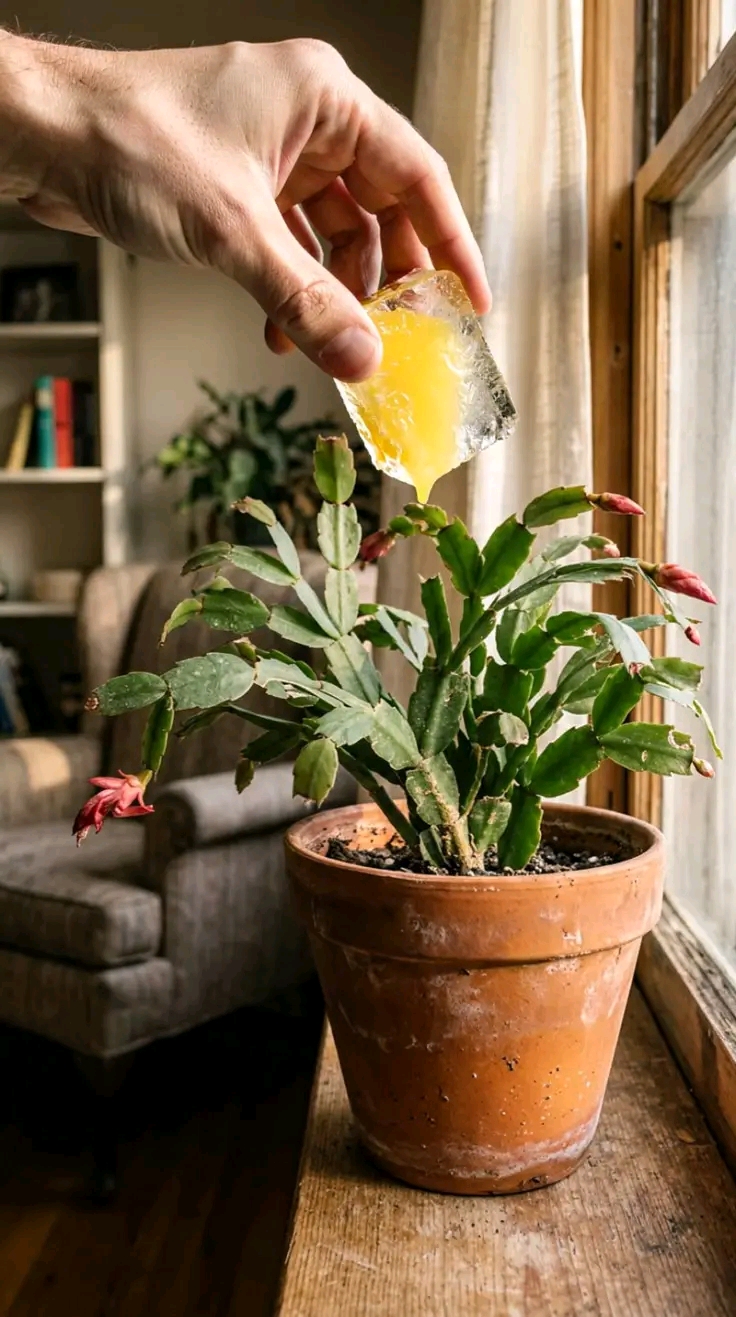
Christmas cactus is one of the most loved indoor flowering plants because it brings bright color into the home when many other plants are resting. Its flat green segments, arching stems, and pink, red, white, orange, or purple blooms make it perfect for windowsills, shelves, side tables, and cozy winter corners. When the plant is healthy, it can bloom heavily and return every year with even more flowers.
One simple plant-care idea that often gets attention is using an ice cube or frozen plant tonic near a Christmas cactus. The idea is to release moisture slowly instead of flooding the soil at once. This can be helpful in some situations, but it must be done with care. Christmas cactus is not a desert cactus. It is a tropical forest cactus, so it likes slightly more moisture than desert cacti, but it still dislikes soggy soil.
The safe version of this trick is not about freezing the plant or shocking the roots. It is about using a small amount of slow-melting water only when the soil actually needs moisture. If the ice is made from plain water or a very weak plant-safe tea, it should be used sparingly and placed on the soil surface away from the main stem base.
Why Christmas Cactus Needs Careful Watering
Christmas cactus stores moisture in its thick green stem segments, but it is not built for bone-dry desert conditions. In nature, related holiday cacti grow in humid forest environments where roots receive air, light moisture, and organic matter.
Indoors, the biggest mistake is letting the pot stay wet for too long. Wet soil can damage roots and cause limp stems, yellowing, dropped buds, or root rot. On the other hand, letting the plant dry too much during bud formation can also cause buds to fall before opening.
This is why a slow watering method can be useful if done correctly.
What the Ice Cube Trick Can Do
A small ice cube can melt slowly and release a controlled amount of water into the soil. This may help people who often overwater their plants. Instead of pouring too much water into the pot, the ice cube gives only a small amount.
But there is a warning. Ice is cold, and tropical plants do not love cold roots. Do not press ice directly against the plant base or use many cubes at once. Use this method only occasionally and only with a small cube.
If your room is already cold, skip the ice cube method and use room-temperature water instead.
Safe Way to Use an Ice Cube on Christmas Cactus
- Use only one small ice cube for a small to medium pot.
- Place it on the soil surface, away from the crown and stems.
- Do not let ice touch the green plant segments.
- Use it only when the top inch of soil feels dry.
- Do not use ice every day.
- Skip this method in cold rooms or winter drafts.
The goal is slow moisture, not cold shock.
Can You Use Frozen Plant Tea?
Some plant lovers freeze weak natural plant teas into small cubes. This may include very diluted compost tea, banana peel water, rice water, or worm casting tea. For Christmas cactus, any tonic must be extremely weak.
Strong homemade mixtures can smell, attract gnats, or overload the soil. If you use a frozen tonic, make it mild and occasional. Plain water is safer for beginners.
A good rule is this: if you would not safely water the plant with it at room temperature, do not freeze it into a cube.
Best Watering Routine for Christmas Cactus
Water when the top inch of soil feels dry. Use room-temperature water and let extra water drain from the bottom of the pot. Never leave the pot sitting in water.
During active growth and blooming, the plant may need slightly more moisture. During rest periods, it needs less. Always check the soil instead of following a strict schedule.
If the stems look wrinkled and the soil is dry, the plant is thirsty. If the stems look limp and the soil is wet, the roots may be struggling.
Best Soil for Christmas Cactus
Christmas cactus needs soil that holds light moisture but drains well. A heavy, compact mix can keep roots too wet.
- 2 parts indoor potting mix
- 1 part orchid bark
- 1 part perlite
- 1 part coco coir
- A small amount of worm castings
This mix gives the roots moisture and oxygen at the same time.
Best Light for More Blooms
Christmas cactus grows best in bright indirect light. A bright windowsill with filtered light is ideal. Morning sun can be helpful, but harsh afternoon sun may burn the stems.
If the plant does not bloom, it may need brighter light during the growing season and longer dark nights before bloom time.
To encourage buds, give the plant about 12 to 14 hours of darkness each night for several weeks in fall. Keep it away from bright lamps at night during bud formation.
How to Keep Buds From Falling
Bud drop is common when the plant is stressed. Christmas cactus buds may fall if the plant is moved too much, watered unevenly, exposed to drafts, or kept in very dry air.
- Keep watering consistent.
- Avoid moving the plant once buds appear.
- Keep away from heaters and cold windows.
- Provide bright indirect light.
- Do not overfertilize during blooming.
- Keep humidity moderate.
When Not to Use Ice Cubes
Avoid ice cubes if the plant is already stressed, newly repotted, sitting in cold conditions, or showing signs of root rot. Also avoid ice if your windowsill gets very cold at night.
For weak plants, room-temperature water is safer. Cold moisture can make stress worse if roots are already damaged.
Signs Your Christmas Cactus Is Healthy
- Stem segments are firm and green
- New growth appears during the growing season
- Buds form in fall or winter
- Flowers open fully
- Soil dries slightly between waterings
- No sour smell comes from the pot
Signs of Overwatering
- Limp stems while soil is wet
- Yellowing segments
- Black or mushy roots
- Bad smell from soil
- Segments dropping suddenly
- Fungus gnats around the pot
If these signs appear, stop watering. Check the roots and repot into fresh airy soil if needed.
Indoor Decor Ideas
Christmas cactus looks beautiful in terracotta pots, ceramic planters, woven basket covers, and vintage windowsill displays. Its arching stems soften shelves and tables, while its blooms add seasonal color.
- Place it on a bright wooden windowsill.
- Use a terracotta pot for a warm natural look.
- Style it with candles and small winter decor.
- Place it in a hanging basket so stems can cascade.
- Use a white ceramic pot to highlight pink flowers.
- Group it with pothos, peace lily, and spider plant for a lush corner.
Continue to Page 2
Continue to page 2 for more details about this article and the key points many readers miss on the first page.