Signs You Should Not Use the Tonic – When to Avoid
Do not use fermented tonic if your snake plant has:
- Soft leaves
- Yellowing leaf bases
- Mushy stems near the soil
- Sour-smelling soil
- Wet soil that will not dry
- No drainage holes
- Fungus gnats
- Recently cut or damaged roots
- Cold room conditions
- Very low light
In these cases, the tonic can make the problem worse. Fix the environment first.
How to Tell If a Snake Plant Has Root Rot – Diagnosis Guide
Root rot is the biggest danger for snake plants. It often starts quietly below the soil. By the time leaves show symptoms, roots may already be damaged. This snake plant root rot symptoms guide will help you identify the problem.
Common Signs of Root Rot
- Leaves becoming soft or floppy
- Yellowing at the base
- Bad smell from the pot
- Soil staying wet for too long
- Black or brown mushy roots
- Leaves pulling out easily
- Soft rhizomes under the soil
If you suspect root rot, remove the plant from the pot, cut away rotten roots and rhizomes, let healthy sections dry, and repot in fresh fast-draining soil. Do not use fermented tonic during this process.
Best Soil for Snake Plants – Fast-Draining Potting Mix
Snake plants need soil that drains quickly. A regular houseplant mix may hold too much moisture, especially in large pots. A better mix is gritty, airy, and light. Choosing the best potting mix for snake plants is half the battle.
Simple Snake Plant Soil Mix
- 2 parts cactus or succulent mix
- 1 part perlite or pumice
- Optional: 1 part orchid bark for extra airflow
This kind of mix helps roots breathe and reduces rot risk. If your snake plant has been sleeping in dense soil for years, repotting into a better mix may wake it up more effectively than any tonic.
Best Pot for Snake Plants – Drainage and Size
A pot with drainage holes is essential. Terracotta pots are excellent because they allow moisture to evaporate through the sides. Plastic pots can work too, but they hold moisture longer, so you must water less often. Using a pot with drainage for snake plants is non-negotiable.
A pot that is too large can slow growth and increase rot risk because excess soil stays wet. Snake plants often grow best when slightly snug in their pot. If you want pups, do not move the plant into a huge container.
Should Snake Plants Be Root-Bound? – The Right Pot Size
Snake plants tolerate being root-bound and often produce pups when they are somewhat snug. However, severely crowded roots can eventually slow water absorption and growth. If the pot is bulging, cracking, or packed solid with roots and rhizomes, it may be time to divide or repot. This how to repot snake plants for more growth guide will help.
Choose a pot only one size larger, not dramatically bigger.
How to Repot a Sleeping Snake Plant – Gentle Transplanting
- Wait until spring or summer if possible.
- Choose a pot with drainage holes.
- Prepare fast-draining soil.
- Remove the plant gently from its pot.
- Check roots and rhizomes for rot.
- Cut away any mushy parts with clean tools.
- Let cut areas dry for a few hours if needed.
- Repot at the same depth.
- Do not water immediately if roots were cut.
- Place in bright indirect light.
After repotting, give the plant time. It may pause before growing again.
How Light Wakes Up Snake Plants – The Most Important Factor
Light is one of the biggest factors in snake plant growth. Snake plants can survive in low light, but survival is not the same as active growth. If your plant has not produced new leaves in months, move it closer to a bright window. Providing optimal light for snake plant health is essential.
Bright indirect light is ideal. Some gentle morning sun is usually fine. Harsh afternoon sun can scorch leaves, especially if the plant was previously in shade.
Good Light Locations
- Near an east-facing window
- A few feet from a south-facing window
- Near a west-facing window with filtered light
- Bright room with indirect light all day
- Under a grow light if natural light is weak
When light improves, roots become more active, and the plant can use water and nutrients better.
How to Water Snake Plants Correctly – The Most Important Skill
Snake plants should dry between waterings. The thicker the pot, the cooler the room, and the lower the light, the longer you should wait. This snake plant watering guide for beginners will prevent common problems.
Basic Watering Rule
Water only when the soil is dry at least halfway down the pot. In many homes, this may mean every 2 to 4 weeks. In winter, it may be even less.
When you water, water thoroughly until it drains out, then empty the saucer. Do not give tiny sips every few days. Frequent small watering keeps the top layer damp and encourages shallow problems.
Should You Water From the Top or Bottom? – Best Method for Snake Plants
Top watering is fine if the soil drains well. Pour around the soil, not into the center of the leaf cluster. Bottom watering can also work, but do not leave the pot sitting in water for too long. About 15 to 20 minutes is usually enough, then drain completely.
If using fermented tonic, top watering around the soil edge is better because you control where the liquid goes.
How Temperature Affects Growth – Warmth Matters
Snake plants like warmth. They grow best in comfortable indoor temperatures. Cold conditions slow them down. If the plant is near a drafty window, cold floor, or air-conditioning vent, it may stop growing. Maintaining the ideal temperature for snake plant growth improves growth rates.
Keep snake plants away from cold drafts. Warmth plus bright light is a strong growth signal.
Can a Snake Plant Flower Indoors? – Yes, Under the Right Conditions
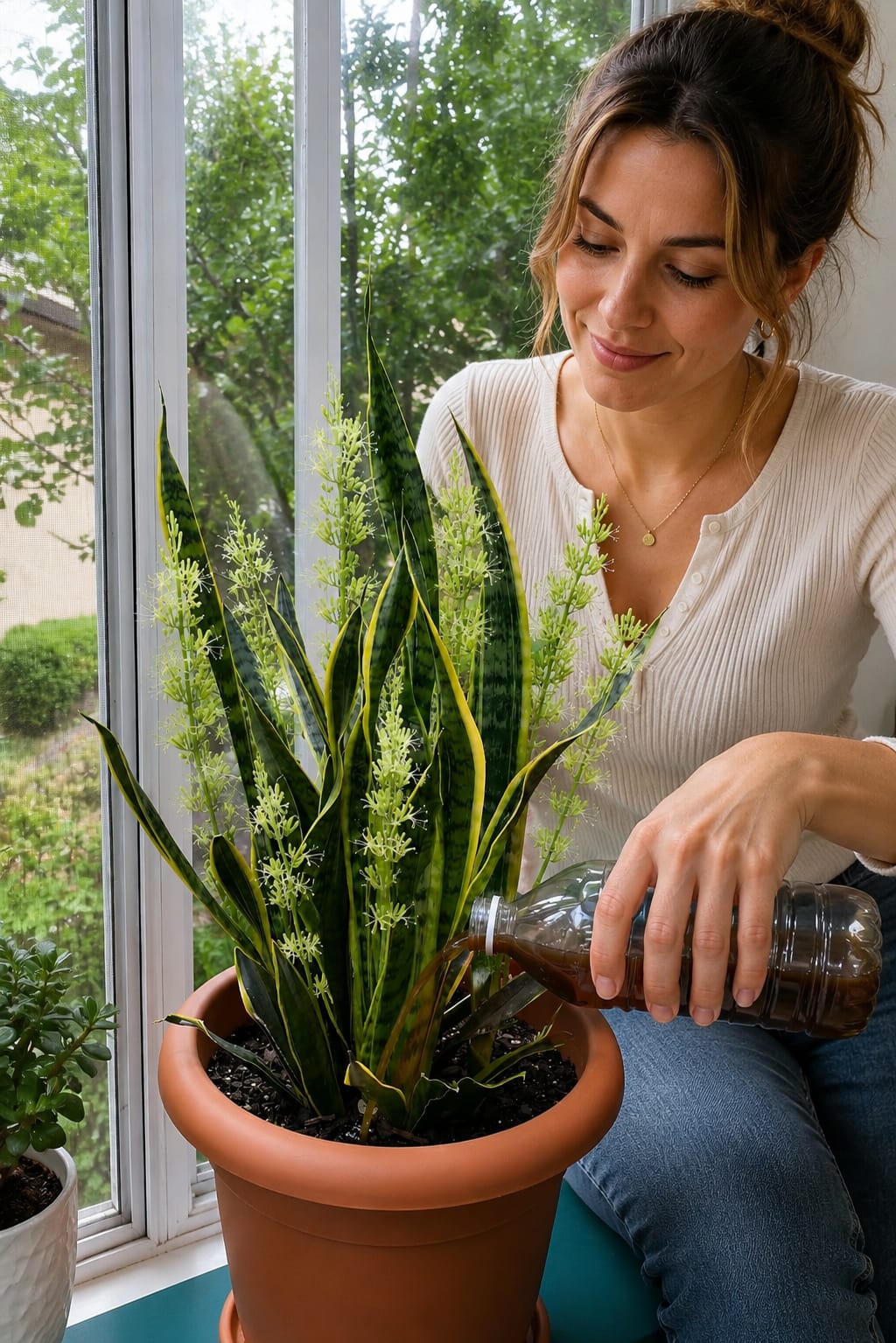
Yes. The plant in the image shows tall flower spikes. Snake plant flowers are usually small, pale, fragrant, and arranged along tall stems. Indoor flowering is not extremely common, but it can happen when the plant is mature, slightly stressed in the right way, root-bound, and receiving strong light.
Flowering does not always mean the plant needs tonic. It may simply be mature and happy. If your snake plant flowers, enjoy it, but continue normal care.
Should You Cut Snake Plant Flowers? – Pruning After Blooming
You can leave the flowers until they fade. Once the flower stalk begins to dry, cut it near the base with clean scissors. Do not cut healthy leaves. The plant may not flower every year, and that is normal. This how to prune snake plant flowers guide will help.
Will the Tonic Make a Snake Plant Flower? – No, Focus on Basics
No tonic can guarantee flowers. Snake plant flowering depends on maturity, light, root condition, and environmental cues. A mild tonic may support general health, but it is not a bloom trigger by itself.
How to Encourage Snake Plant Pups – Getting New Shoots Naturally
New snake plant shoots, often called pups, emerge from underground rhizomes. To encourage pups, give the plant the conditions it needs to grow actively. This how to get snake plant pups fast guide will help.
- Bright indirect light
- Warm temperatures
- Fast-draining soil
- A pot that is slightly snug
- Correct watering
- Light feeding during active growth
- Patience
If the plant is in a huge pot, it may focus on roots instead of visible pups. If it is in low light, it may not have enough energy to push out new growth.
How Long Before You See Results? – Realistic Timeline
Snake plants are slow. After improving light, soil, watering, and applying a mild tonic, you may still need to wait several weeks. New pups often start below the soil before you see them. This snake plant growth timeline sets realistic expectations.
Possible Timeline
- First 1 to 2 weeks: no visible change
- Weeks 3 to 6: roots may become more active
- Weeks 6 to 12: new shoots may appear if conditions are right
- Several months: visible fuller growth
Do not keep adding more tonic because you do not see instant results. Overfeeding can damage the plant.
Signs the Tonic Is Causing Problems – Troubleshooting Guide
Stop using the tonic if you notice:
- Sour smell from the soil
- White fuzzy mold
- Fungus gnats
- Leaves becoming soft
- Yellowing near the base
- Soil staying wet longer than usual
- Sticky or slimy soil surface
- Brown liquid pooling in the saucer with odor
If these signs appear, flush lightly with plain water only if drainage is good, let the soil dry, and consider replacing the top layer of soil. If rot symptoms appear, repot.
What to Do If You Used Too Much Tonic – Emergency Fix
If you accidentally poured strong fermented tonic into the pot, act quickly. This how to fix over-fertilized snake plant guide will help.
- Move the plant to a bright, airy spot.
- Check that the pot is draining.
- Flush the soil once with plain water if the pot drains well.
- Empty all runoff from the saucer.
- Let the soil dry completely.
- Watch for odor, gnats, or soft leaves.
- Repot if the soil turns sour or remains wet.
Do not add more ingredients to “balance” the mistake. Keep the care simple until the plant stabilizes.
Can You Use Store-Bought Fertilizer Instead? – Reliable Alternative
Yes. In many cases, a balanced cactus or houseplant fertilizer diluted to half or quarter strength is more predictable than homemade tonic. Use it during spring and summer only, and apply lightly. The best fertilizer for snake plants is used sparingly.
Snake plants do not need heavy fertilizer. Too much fertilizer can burn roots or create weak growth. Once every 6 to 8 weeks during active growth is often enough.
Fermented Tonic vs. Fertilizer – Which Is Better?
A fermented kitchen tonic is unpredictable because the nutrient content depends on ingredients, time, temperature, and dilution. A commercial fertilizer is more controlled because the nutrient ratio is listed. Homemade tonic feels natural and affordable, but it should be treated as an occasional supplement, not a complete feeding plan. This natural vs synthetic snake plant fertilizer comparison helps you choose.
For the safest routine, you can choose one approach. Do not use tonic and fertilizer at the same time. If you use a fermented tonic this month, skip fertilizer until the next feeding cycle.
Best Long-Term Care Routine for a Sleeping Snake Plant – Complete Action Plan
Here is a simple routine to wake up a slow snake plant safely. This how to revive a snake plant that won’t grow method works every time.
- Move it to brighter indirect light.
- Check that the pot has drainage.
- Let the soil dry well between waterings.
- Use fast-draining soil.
- Keep it warm.
- Feed lightly only during spring and summer.
- Use fermented tonic rarely and diluted heavily.
- Do not disturb the roots too often.
- Watch for new pups near the soil line.
- Be patient.
This routine supports real growth. The tonic is only one small part of it.
Quick Fermented Kitchen Tonic Recipe Card – Homemade Snake Plant Booster
Ingredients:
- 1 small piece banana peel
- 1 cup fresh rice-rinse water
- 1 cup clean water
Directions:
- Place banana peel and liquids in a clean jar.
- Cover loosely.
- Ferment for 24 hours only.
- Strain completely.
- Dilute 1 part tonic with 5 parts water.
- Use only on dry soil.
- Pour around the soil edge.
- Let the pot drain fully.
- Use no more than once every 6 to 8 weeks.
Short Caption for This Trick
“If your snake plant has not grown in months, use a very mild fermented kitchen tonic only during spring or summer. Soak a small piece of banana peel in fresh rice water and plain water for 24 hours, strain completely, then dilute 1 part tonic with 5 parts water. Apply only when the soil is dry and the pot drains well. Use rarely, about once every 6 to 8 weeks. Never use strong, smelly, unstrained, or sugary tonic, because snake plants can rot easily in wet organic soil – this natural snake plant growth booster supports stronger roots and steadier growth when used correctly.”
Frequently Asked Questions – Snake Plant Fermented Tonic Q&A
Can fermented kitchen tonic wake up a snake plant?
It may support growth if the plant is already healthy and receiving enough light, warmth, drainage, and proper watering. It will not wake up a plant that is in poor conditions.
How often should I use fermented tonic on a snake plant?
No more than once every 6 to 8 weeks during spring and summer. Do not use it weekly.
Can I use banana peel water on snake plants?
Yes, but only if it is mild, strained, diluted, and used rarely. Never bury banana peels in the pot.
Can I use rice water on snake plants?
Fresh diluted rice water can be used occasionally, but it should not be thick, fermented too long, or applied to wet soil.
Why is my snake plant not growing?
The most common reasons are low light, cold temperatures, overwatering, old soil, a pot that is too large, or natural seasonal dormancy.
Does a snake plant need fertilizer?
Snake plants need very little fertilizer. Light feeding during active growth is enough. Overfeeding can harm them.
Can fermented tonic cause root rot?
Yes, if it is too strong, used too often, not strained, or applied when the soil is already wet. Snake plants are sensitive to soggy soil.
Should I pour tonic into the center of the plant?
No. Pour around the soil edge and avoid wetting the leaf bases.
Can this tonic make my snake plant flower?
No tonic can guarantee flowers. Flowering depends on maturity, bright light, root condition, and overall plant health.
What should I do if the soil smells bad after using tonic?
Stop using the tonic. Let the soil dry, improve airflow, and consider replacing the top layer. If the smell continues or leaves soften, repot and check for rot.
Final Thoughts – The Best Natural Snake Plant Growth Booster
A snake plant that has not grown in months may not be dead. It may simply be resting, waiting, or lacking the right growth signals. Before assuming something is wrong, remember that snake plants are naturally slow. They do not behave like fast-growing pothos or spider plants. They grow when light, warmth, roots, and moisture all line up. This natural snake plant care method is best used as an occasional supplement, not a primary treatment.
A fermented kitchen tonic can be an interesting natural way to support a slow snake plant, but it must be used carefully. The safest version is mild, short-fermented, strained, diluted, and rare. A small piece of banana peel soaked with rice water for 24 hours, then diluted heavily, is far safer than a strong, smelly brew poured straight into the pot. Apply it only when the soil is dry, only when the plant is actively growing, and only if the pot drains well. Following this complete snake plant care guide will keep your plant thriving for years.
But the real secret is not the tonic. The real secret is the complete care routine. Give your snake plant bright indirect light. Keep it warm. Use fast-draining soil. Choose a pot with drainage. Let the soil dry well between waterings. Feed lightly during spring and summer. Avoid heavy organic liquids. Do not chase fast results from a plant that naturally grows slowly. These professional indoor plant care secrets will help you succeed.
Smart homeowners understand that “waking up” a snake plant is not about shocking it into growth. It is about creating the conditions where the roots feel safe enough to move again. When the roots are healthy, the soil is airy, and the light is strong, the plant can begin sending energy into new leaves and pups. The process may take weeks or months, but when that first new spear appears from the soil, it is worth the wait.
Use the fermented kitchen tonic as a small optional boost, not as a miracle cure. Respect the plant’s slow rhythm, avoid overwatering, and give it steady care. With patience, your sleeping snake plant may finally wake up and reward you with fresh upright leaves, stronger roots, and a fuller pot that looks alive again. Start your snake plant growth journey today with the right fundamentals.