Why the Plastic Bottle Humidity Cover Is Used
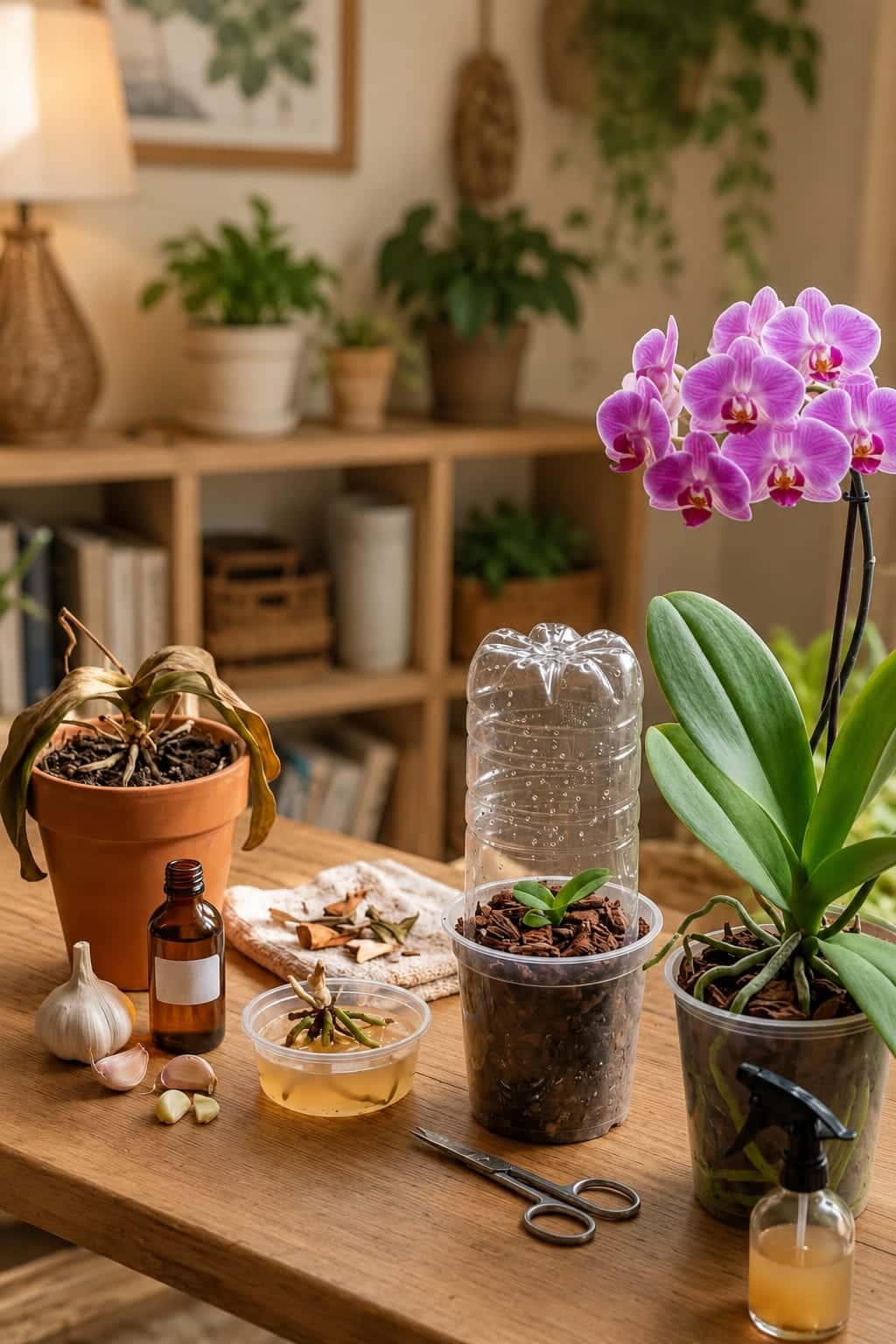
The image shows a cut plastic bottle placed over a small orchid. This creates a mini greenhouse effect, increasing humidity around the plant. This can help a weak orchid or small orchid division recover, but it must be used carefully.
A humidity cover may help:
- Prevent rapid drying
- Support weak roots
- Encourage new growth
- Protect a small plantlet
But it can also trap too much moisture. If there is no airflow, mold and rot can develop.
How to Use a Humidity Cover Safely
- Use it only for weak or small orchids.
- Make air holes in the plastic cover.
- Remove the cover daily for fresh air.
- Keep the orchid in bright indirect light, not direct sun.
- Do not let condensation drip into the crown.
- Stop using it if mold appears.
A humidity cover is a support tool, not a permanent orchid home.
Why Fresh Bark Matters More Than Any Tonic
Orchids need airy bark. If the bark is old, compacted, or sour, garlic water will not solve the problem. Fresh bark gives roots oxygen and allows water to drain properly.
Signs bark needs replacing:
- It smells sour
- It looks broken down and crumbly
- It stays wet for too long
- Fungus gnats appear
- Roots are rotting
- The plant wobbles in the pot
Repotting into fresh bark is often the biggest “recovery hack” for orchids.
Best Pot for Orchid Recovery
A clear plastic orchid pot is often best because it lets you see the roots. It also makes watering easier because you can watch the roots change color.
A good orchid recovery pot should have:
- Drainage holes
- Side ventilation if possible
- Enough room for roots
- Not too much extra space
- Clear sides for monitoring
A pot that is too large can hold too much wet bark. Choose a pot that fits the roots comfortably.
Best Light for Orchids to Bloom Again
Light is one of the biggest reasons orchids fail to rebloom. The blooming orchid in the image is near a bright window, which is ideal if the light is filtered.
Orchids usually prefer:
- Bright indirect light
- Morning sun if gentle
- Filtered window light
- No harsh midday sun on leaves
If leaves are very dark green and the orchid never blooms, it may need more light. If leaves are yellowish or scorched, it may be getting too much direct sun.
Best Watering Method for Orchids
Orchids should not be watered like ordinary soil plants. Their bark should become wet, then drain and dry gradually.
Simple Orchid Watering Routine
- Check the roots and bark.
- Water when roots are silvery and bark is nearly dry.
- Pour water through the bark until it drains out.
- Let the pot drain completely.
- Keep water out of the crown.
- Do not let the pot sit in standing water.
If the roots are still green, wait. If the bark is damp, wait. Overwatering kills more orchids than underwatering.
Should You Cut the Flower Spike?
After an orchid stops blooming, the flower spike may stay green or turn brown. What you do depends on its condition.
If the spike is brown and dry, cut it near the base with clean scissors. If the spike is green, you can leave it or cut above a node to encourage a possible side spike. However, if the plant is weak, it is often better to cut the spike so the orchid can focus on roots and leaves.
A weak orchid should prioritize recovery before reblooming.
Signs Your Orchid Is Recovering
Recovery is gradual. Garlic water will not create instant flowers, but a good routine can help the plant rebuild.
Good signs include:
- New root tips appearing
- Leaves becoming firmer
- No sour smell from the pot
- Bark drying normally
- New leaf growth
- Roots turning green when watered
- The plant sitting firmly in the pot
Once the orchid grows strong roots and leaves, blooms become more likely.
Signs You Should Stop Using Garlic Water
Stop immediately if you notice:
- Strong garlic smell lingering in the bark
- Roots turning soft after treatment
- Leaves yellowing after treatment
- Mold on the bark
- Fungus gnats
- Crown moisture or rot
- Flowers spotting or dropping after spray contact
If problems appear, flush the pot with plain water during the next correct watering and return to basic care.
Can You Use Garlic Water on Blooming Orchids?
You can, but it is usually better to be cautious. A blooming orchid should not be disturbed too much. If it is healthy and blooming, it does not need garlic water. If it is blooming but has pests or root concerns, use only a root-zone application and keep the flowers dry.
Never spray garlic water on orchid blooms. The flowers may spot, wilt, or smell unpleasant.
Can Garlic Water Replace Fertilizer?
No. Garlic water is not a complete orchid fertilizer. It does not provide balanced nutrition. Orchids still benefit from weak orchid fertilizer during active growth.
A simple orchid feeding routine:
- Plain water most of the time
- Weak orchid fertilizer every few weeks during active growth
- Garlic water only occasionally as a recovery support
- Plain water flush between treatments
Do not use fertilizer and garlic water together in the same watering.
Can Garlic Water Help All Plants?
The phrase “it gives life to any plant” is an exaggeration. Different plants have different needs. A treatment that a tropical orchid tolerates may not be right for succulents, cacti, seedlings, or sensitive plants.
Garlic water may be used cautiously on some houseplants, but it should always be diluted and tested first. It is not a universal cure.
Common Orchid Recovery Mistakes
Using Too Much Garlic
More garlic does not mean better recovery. It can irritate roots and create odor.
Leaving Garlic Pieces in the Pot
Garlic pieces can rot and smell. Always strain the mixture.
Watering Too Often
Weak orchids are often overwatered because owners panic. Let the bark dry properly.
Keeping the Orchid Too Dark
An orchid cannot bloom without enough light. Bright indirect light is essential.
Ignoring Root Rot
No tonic can fix mushy roots. Rotten roots must be trimmed and the plant repotted.
Using a Closed Humidity Dome Without Air
Humidity helps, but stale trapped moisture can create mold and rot.
Quick Recipe Card
One-Drop Garlic Orchid Recovery Tonic
Ingredients
- 1 small garlic clove
- 1 cup clean water for infusion
- 1 cup clean water for final dilution
Instructions
- Crush one small garlic clove.
- Soak it in 1 cup water for 30 minutes to 1 hour.
- Strain through a fine filter.
- Add only 1 drop of the garlic infusion to 1 cup clean water.
- Use the diluted solution fresh.
- Apply as a 5 to 10 minute root soak or light root-zone watering.
- Keep away from flowers, buds, leaves, and the crown.
- Let the orchid drain fully.
- Use no more than once every 4 to 6 weeks.
Short Caption for Social Media
Orchid Recovery Trick 🌿🧄: If your orchid did not bloom and looks weak, try the safe “1 drop” garlic water method. Crush 1 small garlic clove in 1 cup water for 30 minutes, strain completely, then add only 1 drop of that infusion to 1 cup clean water. Use it as a short root soak or light root-zone watering, never on the flowers or crown. This can support recovery, but real orchid reblooming comes from healthy roots, fresh bark, bright indirect light, and careful watering.
Frequently Asked Questions
Can garlic water help orchids recover?
Very diluted garlic water may support a weak orchid as part of a recovery routine, but it will not fix rotten roots or poor care by itself.
Can one drop really revive an orchid immediately?
No plant truly recovers instantly. The “one drop” phrase means the treatment is very concentrated before dilution, so only a tiny amount is used. Real recovery takes time.
Can I put garlic cloves in orchid bark?
No. Garlic cloves can rot, smell, and irritate roots. Always strain garlic water and remove all solids.
How often should I use garlic water on orchids?
Use it rarely, no more than once every 4 to 6 weeks, and only if needed.
Can I spray garlic water on orchid flowers?
No. Keep garlic water away from flowers and buds because it may cause spotting and odor.
Can garlic water make orchids bloom?
Not directly. Reblooming depends on healthy roots, enough bright indirect light, proper watering, and plant maturity.
What should I do if orchid roots are rotten?
Remove the orchid from the pot, trim mushy roots, discard old bark, and repot in fresh orchid bark.
Should I use a plastic bottle over a weak orchid?
A plastic humidity cover can help weak orchids, but it needs air holes and daily ventilation. Do not let moisture collect in the crown.
Can garlic water replace fertilizer?
No. Garlic water is not a complete fertilizer. Use weak orchid fertilizer during active growth if the roots are healthy.
Why did my orchid stop blooming?
Common reasons include low light, weak roots, old bark, stress, or the plant resting after a bloom cycle.
Final Thoughts
The one-drop garlic water trick can be a useful support method for weak orchids when it is done carefully. It should be extremely diluted, freshly made, fully strained, and used only occasionally. It should never be poured strong into the pot, sprayed on flowers, or used as a replacement for proper orchid care.
If your orchid did not bloom, first check the roots, bark, light, and watering routine. Healthy roots are the foundation of future flowers. Fresh bark keeps the plant breathing. Bright indirect light gives the orchid energy. Careful watering prevents rot. Only after these basics are correct should a gentle tonic be considered.
Use garlic water as a small recovery helper, not a miracle. One drop may sound powerful, but the real power comes from patient, balanced care. With clean roots, fresh bark, filtered light, and a steady routine, even a tired orchid can begin to grow again, rebuild strength, and eventually reward you with new blooms.