Anthuriums are some of the most beautiful flowering houseplants you can grow indoors. Their glossy heart-shaped leaves and bright red, pink, white, or coral spathes make them look tropical, elegant, and expensive. A healthy anthurium can brighten a living room, bedroom, office, kitchen corner, plant shelf, or sunny window area with very little space.
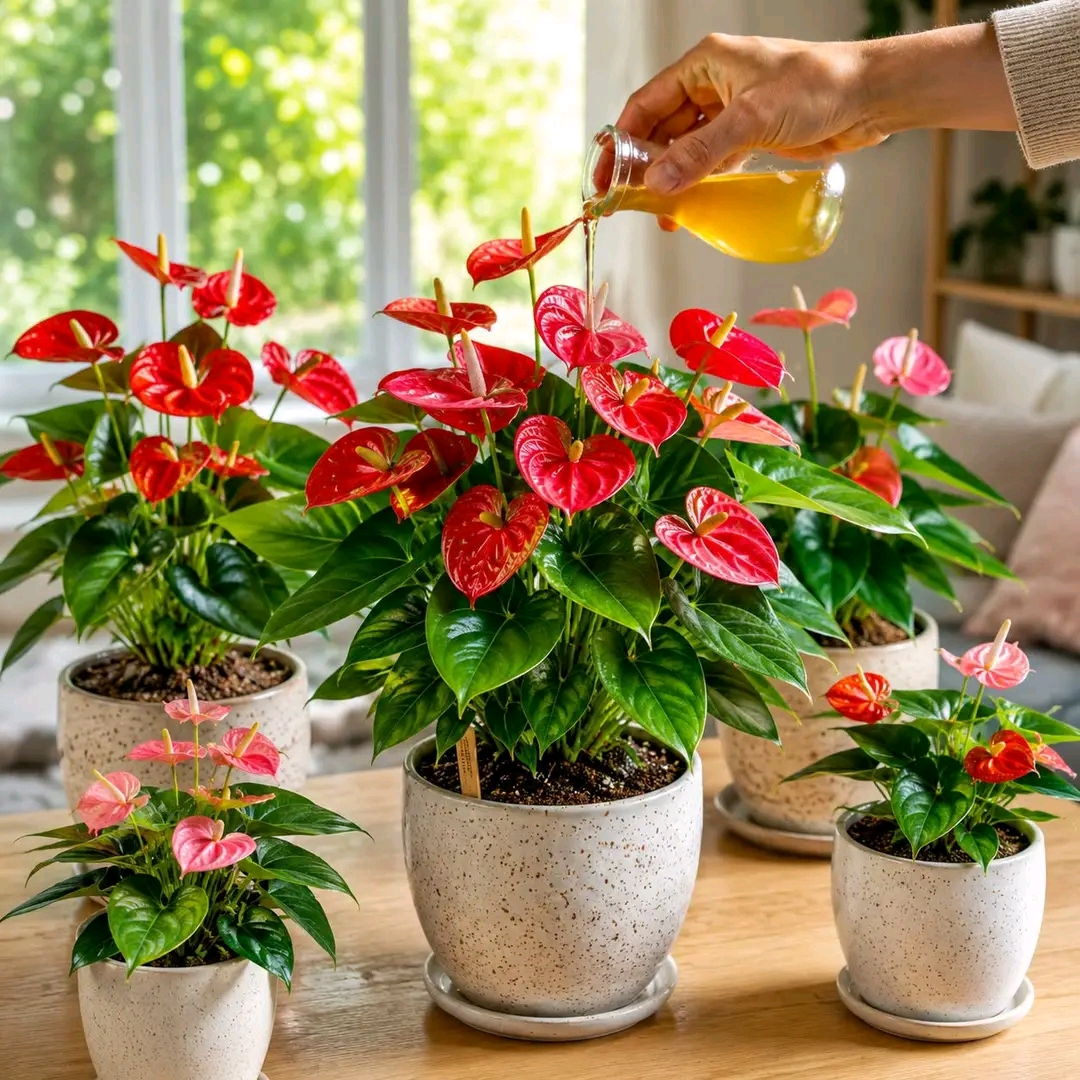
The image shows a beautiful anthurium collection being watered with a golden homemade liquid. This type of plant-care idea is very popular because many home gardeners want a simple natural way to encourage more blooms and richer green leaves. The liquid may look like banana peel water, compost tea, diluted organic fertilizer, or another gentle homemade plant tonic. These natural liquids can support plant growth when used correctly, but they must be handled carefully.
The real secret to anthurium blooms is not one magic liquid. Anthuriums need bright indirect light, airy soil, healthy roots, warm temperatures, humidity, careful watering, and gentle feeding. A natural liquid fertilizer can help only when the plant already has good growing conditions. If the plant is sitting in soggy soil, low light, or a pot without drainage, no homemade liquid will fix it.
This complete guide explains how to use natural liquid fertilizer safely on anthuriums, how to make a mild banana peel water or organic plant tea, how often to apply it, how to avoid root rot, how to get more red blooms, and how to keep your anthurium looking glossy, colorful, and healthy indoors.
Why Anthuriums Need Gentle Feeding
Anthuriums are tropical plants, but they are not heavy feeders. They grow best when they receive mild nutrients over time instead of strong fertilizer all at once. Their roots are thick, fleshy, and sensitive. If the fertilizer is too strong, the roots can burn. If homemade liquid is too old or fermented, it can attract fungus gnats, mold, and bad smells.
Gentle feeding helps support fresh leaves, stronger stems, and more colorful spathes. But feeding must be balanced with light and drainage. A plant cannot bloom well if it does not receive enough light. It also cannot use nutrients properly if the roots are damaged by wet soil.
What Is the Golden Liquid in the Image?
The golden liquid could represent a natural fertilizer tea. Many gardeners make similar liquids from banana peels, compost, worm castings, rice water, or diluted organic plant food. These liquids are usually used to water the soil around the plant.
For anthuriums, the safest natural option is a mild, fresh, diluted liquid. The liquid should never smell rotten, sour, or alcoholic. If it smells bad, do not use it on indoor plants.
Best Natural Liquid Options for Anthuriums
- Fresh diluted banana peel water
- Very mild worm casting tea
- Diluted compost tea
- Diluted seaweed extract
- Diluted balanced organic houseplant fertilizer
- Fresh plain water between feeding days
Natural does not always mean safe. Even organic liquids can damage roots if they are too strong or used too often.
Banana Peel Water for Anthuriums
Banana peel water is one of the most popular homemade plant fertilizers. It is made by soaking banana peels in water for a short time. The idea is that small amounts of minerals move into the water. Banana peels are often associated with potassium, which is connected with flowering and plant strength.
However, banana peel water is not a complete fertilizer. It should not replace a balanced plant food forever. It is better used as a light occasional supplement.
Safe Banana Peel Water Recipe
- 1 clean banana peel
- 1 liter clean water
- Clean jar
- Wash the banana peel well.
- Cut it into small pieces.
- Place the pieces in a clean jar.
- Add 1 liter of water.
- Soak for 6 to 12 hours.
- Strain the liquid.
- Dilute with equal parts fresh water.
- Use the same day.
Do not leave banana peels soaking for several days indoors. Long soaking can cause fermentation, odor, and pest problems.
How to Use Natural Liquid Fertilizer on Anthuriums
Use natural liquid fertilizer only when the soil is partly dry and the plant actually needs watering. Do not pour it into already wet soil. Anthuriums do not like soggy roots.
- Check the soil with your finger.
- Use the liquid only if the top inch feels slightly dry.
- Dilute the liquid before applying.
- Pour slowly around the soil, not over the flowers.
- Let extra liquid drain from the pot.
- Empty the saucer after watering.
- Use plain water for the next several waterings.
This method gives the roots a mild nutrient boost without overwhelming them.
How Often Should You Use It?
Use natural liquid fertilizer once every 4 to 6 weeks during spring and summer. If your anthurium is in lower light, use it even less often. During winter, avoid feeding unless the plant is actively growing in a warm, bright room.
Do not use homemade liquid every week. Too much organic material in indoor soil can cause mold, fungus gnats, salt buildup, and root stress.
When Not to Use Natural Liquid Fertilizer
- When soil is already wet
- When the plant has yellow leaves from overwatering
- When roots are rotten
- When fungus gnats are present
- When mold is growing on the soil
- Right after repotting
- During cold winter conditions
- When the liquid smells bad
- When the plant is stressed or drooping in wet soil
If your anthurium looks weak, fix the growing conditions first. Feeding a stressed plant can make the problem worse.
Best Light for Anthurium Blooms
Anthuriums bloom best in bright indirect light. They can survive in medium light, but they usually produce fewer flowers. If your anthurium has healthy green leaves but no red blooms, the plant may need more light.
Place it near a bright window with filtered light. An east-facing window is often excellent. A south or west window can work if a sheer curtain softens the sun. Harsh direct sunlight can burn the leaves and flowers.
Signs Your Anthurium Needs More Light
- No flowers for months
- Long weak stems
- Small leaves
- Slow growth
- Dark green leaves but no blooms
- Plant leaning toward the window
Move the plant slowly into brighter indirect light. Do not suddenly place it in hot sun.
Best Soil for Anthuriums
Anthuriums need a chunky, airy soil mix. Regular potting soil alone is often too dense and wet. Their roots need oxygen. Heavy soil can suffocate roots and cause rot.
Simple Anthurium Soil Mix
- 1 part indoor potting mix
- 1 part orchid bark
- 1 part perlite
- 1 part coco coir or peat moss
- A small amount of horticultural charcoal, optional
This mix holds enough moisture while allowing air to move around the roots. A chunky mix is one of the biggest secrets to strong anthurium growth.
Best Pot for Anthuriums
Use a pot with drainage holes. This is essential. Anthuriums do not like standing water. A decorative outer pot is fine, but the inner pot must drain freely.
Choose a pot only slightly larger than the root ball. A huge pot holds too much wet soil and increases the risk of root rot.
How to Water Anthuriums Correctly
Water when the top inch of the potting mix begins to dry. Pour slowly until water drains from the bottom. Empty the saucer after watering. The soil should be lightly moist, not wet and heavy.
If the plant is in bright light and warm temperatures, it may need water more often. If it is in low light or winter conditions, it will need less water.
Signs Your Anthurium Needs Water
- Top inch of soil feels dry
- Pot feels lighter than usual
- Leaves look slightly less firm
- Soil pulls slightly from the pot edge
- Plant droops mildly
Signs of Overwatering
- Yellow leaves
- Soft stems
- Sour soil smell
- Mold on soil
- Fungus gnats
- Black mushy roots
- Drooping while soil is wet
If your anthurium droops while the soil is wet, do not add more water or fertilizer. Check the roots first.
How to Make Anthuriums Produce More Red Blooms
Bright red anthurium blooms come from strong light, healthy roots, and balanced care. A natural liquid fertilizer may support blooming, but only if the plant has enough energy from light.
- Place the plant in bright indirect light.
- Use a chunky airy soil mix.
- Water only when the top layer begins to dry.
- Feed lightly during active growth.
- Keep humidity moderate to high.
- Remove old faded flowers.
- Keep leaves clean.
- Protect from cold drafts.
Do not force blooms with too much fertilizer. Overfeeding can damage the roots and reduce flowering.
How to Remove Old Anthurium Flowers
Anthurium flowers eventually fade, turn green, brown, or dry. Cut old flower stems near the base with clean scissors. Removing old flowers helps the plant focus on new growth and future blooms.
Do not pull flower stems by hand. Pulling can damage the crown.
Humidity for Anthuriums
Anthuriums enjoy humidity. Dry air can cause brown tips, curled edges, and slower growth. A humidity level around 50 percent or higher is helpful.
Easy Humidity Tips
- Group plants together.
- Use a pebble tray.
- Place the plant in a bright bathroom.
- Use a small humidifier.
- Keep away from heaters.
- Maintain gentle airflow.
Humidity helps, but wet soggy soil does not. Keep the air comfortable and the roots well-drained.
How to Clean Anthurium Leaves
Anthurium leaves are naturally glossy, but dust can make them look dull. Wipe leaves gently with a soft damp cloth. Support each leaf with one hand while wiping with the other.
Clean leaves absorb light better. Better light absorption supports better growth and flowering.
Can You Spray Natural Liquid on Anthurium Leaves?
It is safer to apply natural liquid fertilizer to the soil instead of spraying the leaves. Homemade liquids can leave residue on glossy leaves or cause spots if they are too strong.
For leaves, use clean water and a soft cloth. Avoid oily shine products and sugary liquids.
Common Anthurium Problems
Yellow Leaves
Yellow leaves often come from overwatering, poor drainage, low light, or root stress. Check the soil before adding more fertilizer.
Brown Tips
Brown tips can come from dry air, fertilizer buildup, hard water, or inconsistent watering.
No Flowers
No flowers usually means not enough bright indirect light. Move the plant closer to a filtered window.
Drooping Leaves
Drooping can happen from thirst or root rot. Check soil moisture first.
Mold on Soil
Mold often appears when soil stays wet and organic liquids are used too often. Remove the top layer, improve airflow, and water less.
How to Fix Fungus Gnats
Fungus gnats love moist organic soil. Natural liquids can attract them if used too often. Let the top layer dry slightly between waterings and avoid leaving organic material on the soil surface.
- Stop using homemade liquid for a while.
- Let the top inch dry before watering.
- Use yellow sticky traps.
- Remove old leaves from the soil.
- Improve airflow.
- Repot if the soil smells sour.
How to Rescue an Overwatered Anthurium
- Stop watering immediately.
- Remove the plant from the pot.
- Check the roots.
- Trim black or mushy roots.
- Remove old wet soil.
- Repot in fresh chunky mix.
- Use a pot with drainage holes.
- Place in bright indirect light.
- Water only when the top layer starts to dry.
Do not use natural fertilizer while the plant is recovering from root rot. Let the roots heal first.
Repotting Anthuriums
Anthuriums usually need repotting every 2 to 3 years or when the soil breaks down. Spring is the best time to repot because the plant can recover faster during active growth.
Repotting Steps
- Choose a pot with drainage holes.
- Prepare a chunky airy mix.
- Remove the plant gently from the old pot.
- Trim rotten roots if needed.
- Place the plant at the same depth.
- Fill around roots with fresh mix.
- Water lightly and let drain.
- Keep in bright indirect light.
Do not feed immediately after repotting. Wait 4 to 6 weeks before using fertilizer.
How to Divide Anthuriums
If your anthurium has several crowns, you can divide it during repotting. This gives you more plants and refreshes crowded growth.
- Remove the plant from the pot.
- Find natural clumps with roots attached.
- Separate gently with your hands or a clean knife.
- Plant each division in chunky soil.
- Water lightly.
- Keep warm and bright.
Do not divide a weak plant. Wait until it is healthy.
Seasonal Anthurium Feeding
Spring
Spring is the best time to begin light feeding. New growth becomes active as light increases. Use diluted natural liquid once every 4 to 6 weeks if the plant is healthy.
Summer
Continue gentle feeding if the plant is growing. Keep the plant in bright indirect light and maintain humidity.
Fall
Reduce feeding as growth slows. Move the plant closer to light if days become shorter.
Winter
Avoid feeding unless the plant is actively growing in warm bright conditions. Water less often because soil dries slower.
Continue to Page 2
Continue to page 2 for more details about this article and the key points many readers miss on the first page.