How to Clean Leaves Safely
- Support the leaf with one hand.
- Wipe gently with a damp cloth.
- Clean both sides of the leaf.
- Do not use oily leaf shine products.
- Let the leaves dry in good airflow.
Can Onion Water Help With Pests?
Onion water may discourage some light pest activity because of its strong natural smell. However, it is not a guaranteed pest cure. If your Anthurium has a serious pest problem, use proper pest care such as rinsing, wiping, insecticidal soap, or neem-based products used carefully.
Common Anthurium Pests
- Spider mites
- Mealybugs
- Aphids
- Scale insects
- Fungus gnats
- Thrips
Simple Pest Care Routine
- Isolate the plant from others.
- Inspect the underside of leaves.
- Wipe pests away with a damp cloth.
- Rinse the plant gently if possible.
- Use insecticidal soap if needed.
- Repeat treatment weekly until pests disappear.
- Improve airflow and avoid wet soil.
Can Onion Water Help With Fungus?
Some gardeners believe onion water can help reduce mild fungal issues. But if your plant has serious fungal disease, onion water is not enough. You must fix the cause, which is often wet leaves, poor airflow, overwatering, or contaminated soil.
Do not spray onion water on fungal spots and leave the leaves wet all day. Wet leaves can make fungal problems worse.
How to Encourage More Anthurium Flowers
To encourage more flowers, focus on light and roots first. Anthuriums bloom best when they are healthy and have steady energy.
- Give bright indirect light.
- Use airy chunky soil.
- Water only when the top inch begins to dry.
- Keep humidity moderate to high.
- Feed lightly during spring and summer.
- Remove old faded flowers.
- Keep the plant warm.
- Avoid strong direct sun.
- Do not overuse homemade sprays.
- Repot when the soil becomes compacted.
Best Fertilizer for Anthuriums
A balanced liquid houseplant fertilizer is more reliable than onion water for long-term feeding. Use it diluted to half strength or quarter strength during active growth. Anthuriums do not need heavy feeding.
Safe Feeding Schedule
- Spring: feed every 4 to 6 weeks
- Summer: feed every 4 to 6 weeks
- Fall: reduce feeding
- Winter: avoid feeding unless actively growing
Do not fertilize a sick plant with root rot. Fertilizer works best when the roots are healthy.
Onion Water vs Fertilizer
Onion water is not a complete fertilizer. It may offer mild natural compounds, but it does not provide balanced nutrition. Fertilizer provides measured nutrients like nitrogen, phosphorus, potassium, and micronutrients.
Use onion water as an occasional natural spray, not as the main food source.
How to Fix Yellow Leaves
Yellow leaves can happen for many reasons. A few old yellow leaves are normal, but many yellow leaves usually mean stress.
Yellow Leaf Causes
- Overwatering
- Poor drainage
- Low light
- Cold drafts
- Root rot
- Too much fertilizer
- Strong homemade spray
- Old natural leaf aging
Remove fully yellow leaves with clean scissors. They will not turn green again, but the plant can grow new healthy leaves when care improves.
How to Fix Brown Leaf Tips
Brown tips may come from dry air, hard water, fertilizer buildup, underwatering, or strong sprays. Increase humidity, use clean water, avoid overfeeding, and stop onion spray for a while if brown tips appear after use.
How to Repot Anthurium
Repot your Anthurium every 2 to 3 years or when the soil becomes compacted. Spring is the best time.
Repotting Steps
- Choose a pot with drainage holes.
- Prepare chunky Anthurium soil mix.
- Remove the plant gently from the old pot.
- Inspect the roots.
- Trim black or mushy roots.
- Place the plant at the same depth.
- Fill with fresh mix.
- Water lightly and let drain.
Do not use onion water right after repotting. Let the roots settle first.
Root Rot Rescue
If your Anthurium has root rot, onion water will not fix it. Root rot needs fresh soil, root trimming, and better watering habits.
- Remove the plant from the pot.
- Wash away old wet soil.
- Cut off black mushy roots.
- Keep firm healthy roots.
- Repot into fresh chunky mix.
- Use a pot with drainage holes.
- Water lightly.
- Keep in bright indirect light.
Seasonal Anthurium Care
Spring
Spring is a good time for repotting, light feeding, cleaning leaves, and encouraging new growth. Onion water can be tested lightly if the plant is healthy.
Summer
Growth is active. Keep the plant warm, bright, and humid. Water when the top layer dries. Avoid spraying during very hot direct sun.
Fall
Reduce feeding slightly. Keep the plant near bright indirect light as days become shorter.
Winter
Water less often because soil dries slower. Avoid cold drafts. Do not use onion water often in winter.
Weekly Care Routine
- Check soil moisture.
- Look for yellow leaves.
- Inspect for pests.
- Empty saucer water.
- Keep plant in bright indirect light.
- Remove old flowers.
Monthly Care Routine
- Clean leaves with a damp cloth.
- Rotate the pot for even growth.
- Check soil condition.
- Feed lightly during active growth.
- Use onion water only if needed.
- Inspect roots if growth slows.
Common Mistakes to Avoid
- Using onion water too strong
- Spraying flowers heavily
- Leaving onion pieces in the spray bottle
- Pouring onion water into wet soil
- Using old fermented onion water
- Spraying in hot direct sun
- Using it every day
- Ignoring drainage problems
- Keeping the plant in low light
- Expecting instant blooms
Safe Onion Water Summary
- Use a small amount of red onion.
- Soak in clean water for 2 to 4 hours.
- Strain very well through cloth.
- Dilute before spraying.
- Test on one leaf first.
- Spray lightly in the morning.
- Avoid soaking flowers.
- Use no more than once every 3 to 4 weeks.
- Throw away leftover liquid after one day.
- Stop if leaves show spots or stress.
Best Indoor Styling Ideas
Anthuriums are perfect for bright indoor decoration. Their heart-shaped leaves and colorful flowers give a tropical look with very little space.
- Use a terracotta pot for natural warmth.
- Use a white ceramic pot for a clean modern look.
- Place near a bright window with sheer curtains.
- Style on a wooden table or plant stand.
- Group with peace lilies, pothos, and ferns.
- Use red Anthurium as a bold centerpiece.
- Use pink Anthurium for soft romantic decor.
- Use white Anthurium for elegant minimal spaces.
Frequently Asked Questions
Is onion water good for Anthuriums?
It can be used as a mild occasional spray, but it is not necessary. It must be fresh, strained, diluted, and tested first.
Can onion water make Anthurium bloom?
No. Blooms come mainly from bright indirect light, healthy roots, good humidity, and balanced care.
How often should I spray onion water?
No more than once every 3 to 4 weeks. Use plain water and a cloth for regular leaf cleaning.
Can I pour onion water into the soil?
Only very diluted and only when the soil is ready for watering. A light leaf spray is usually safer.
Why did my Anthurium leaves get spots after spraying?
The mixture may have been too strong, used in hot sun, or left on the leaves too long. Stop using it and rinse the leaves with clean water.
Can onion water kill pests?
It may discourage mild pests, but it is not a complete pest treatment. Use proper pest control for serious infestations.
Can I store onion water?
It is better to use it the same day. Stored onion water can ferment and smell bad.
Final Thoughts
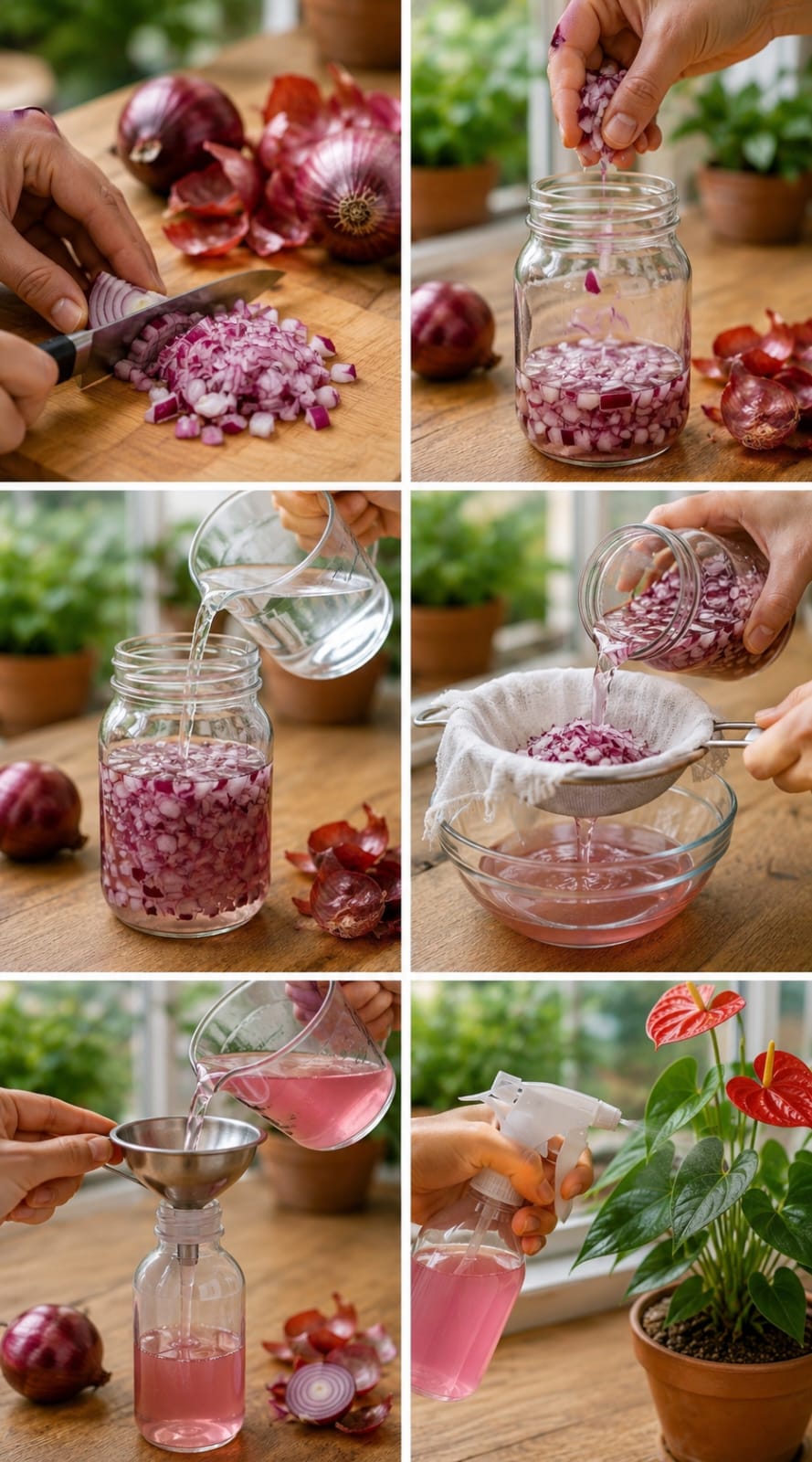
Onion water is a simple homemade plant-care idea that can be used carefully on Anthuriums. The method in the image is easy: chop onion, soak it in water, strain it well, pour it into a spray bottle, and mist lightly. But the key word is lightly. Anthuriums are tropical plants with sensitive leaves and roots, so strong homemade liquids can cause stress.
The safest way to use onion water is to make a weak fresh mixture, strain it completely, dilute it, test one leaf first, and spray only occasionally. Do not spray the flowers heavily. Do not pour strong onion water into the soil. Do not use old fermented liquid.
For real Anthurium success, focus on the basics. Give bright indirect light, chunky airy soil, proper drainage, careful watering, warm temperatures, humidity, clean leaves, and gentle feeding. When these needs are met, your Anthurium can grow glossy leaves, strong roots, and beautiful colorful flowers that brighten your home for a long time.