Peace lilies are among the most loved indoor plants because they look elegant, fresh, and tropical without needing complicated care. Their deep green leaves, graceful white blooms, and soft upright shape can transform a simple room into a calm indoor jungle. A healthy peace lily can make a living room, bedroom, office, hallway, or bright corner look cleaner, greener, and more luxurious.
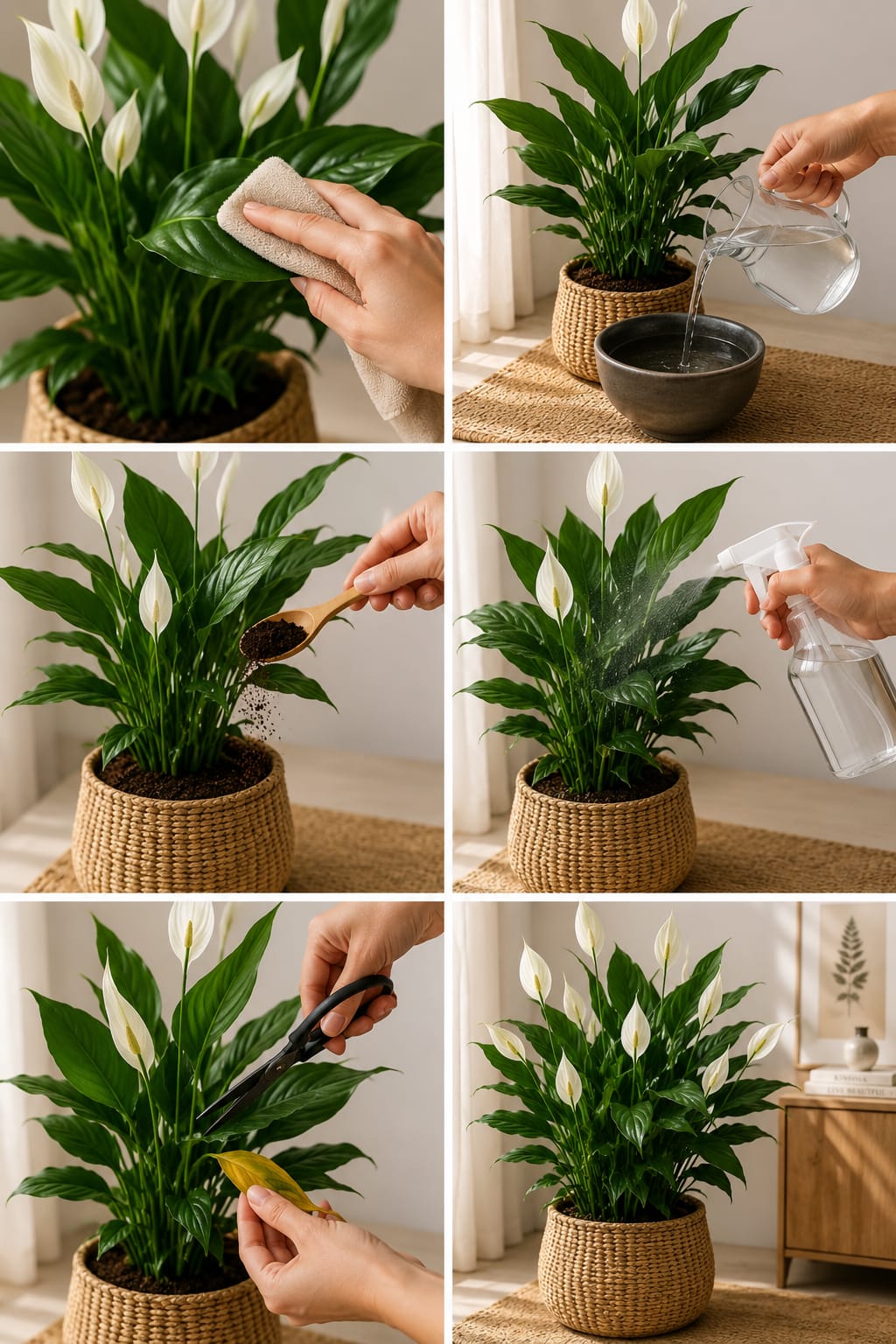
The image shows a beautiful peace lily care routine. The leaves are wiped clean, water is prepared, the soil is refreshed, the leaves are misted, yellow leaves are removed, and the final plant looks full, glossy, and covered with white blooms. This kind of routine is the real secret behind a lush peace lily. It is not just one product or one trick. It is a combination of clean leaves, correct watering, bright indirect light, good humidity, healthy soil, and regular pruning.
Many people buy a peace lily when it is full and beautiful, but after a few months the leaves become dusty, the blooms disappear, the plant droops, or yellow leaves appear. This does not mean the plant is impossible to care for. It simply means the peace lily is asking for better conditions. Once you understand what it needs, it can bounce back beautifully.
This complete guide explains how to make your peace lily look like a lush indoor jungle, how to clean the leaves, how to water correctly, how to feed safely, how to encourage more white blooms, how to remove yellow leaves, how to repot, and how to avoid the most common problems.
Why Peace Lilies Look So Beautiful Indoors
Peace lilies have a naturally tropical look. Their leaves are long, glossy, and deep green. Their white blooms stand above the foliage and create a clean, elegant contrast. They do not need bright direct sun, which makes them useful for indoor spaces where many flowering plants struggle.
They also grow in clumps. When several crowns fill the same pot, the plant becomes fuller and more dramatic. This is why a mature peace lily can look like a small indoor jungle when cared for well.
The Real Trick to a Lush Peace Lily
The real trick is consistency. A peace lily becomes lush when it receives steady care. It needs enough light to create energy, enough moisture to stay hydrated, enough airflow to avoid disease, and enough nutrients to grow new leaves and flowers. The plant also needs clean leaves because dusty leaves cannot absorb light as well.
The routine in the image is powerful because it covers several important needs at once. Cleaning leaves improves shine and light absorption. Watering correctly keeps roots hydrated. Adding a small amount of compost or fresh soil supports growth. Misting can briefly refresh the leaves. Removing yellow leaves helps the plant look clean and redirects energy toward healthy growth.
What Makes Peace Lilies Bloom?
Peace lily blooms depend mostly on maturity, light, and overall plant health. The white part is called a spathe, and the center spike is called a spadix. A peace lily can bloom indoors when it has enough bright indirect light and healthy roots.
If your peace lily has many green leaves but no flowers, it usually needs brighter indirect light. Low light may keep the plant alive, but it often reduces blooming. Moving the plant closer to a bright window with filtered light can make a big difference.
Best Light for Peace Lilies
Peace lilies prefer bright indirect light. They can tolerate medium light, but they bloom better when the room is bright. Direct hot sun can burn the leaves, so filtered light is best.
Best Indoor Locations
- Near an east-facing window
- A few feet from a south-facing window with sheer curtains
- Near a bright north-facing window
- In a bright bathroom with filtered light
- On a plant stand in a bright living room
- Under a grow light if the room is dark
Do not place a peace lily in a dark corner and expect many flowers. It may survive, but it will not look as lush or bloom as often.
Signs Your Peace Lily Needs More Light
- No blooms for many months
- Small new leaves
- Long weak stems
- Slow growth
- Leaves leaning toward the window
- Dark green leaves but no white flowers
Signs of Too Much Light
- Brown scorched patches
- Yellow faded leaves
- Crispy tips
- Drooping in strong sun
- Dry soil too quickly
If you see sunburn, move the plant away from direct rays. Peace lilies like brightness, not harsh heat.
How to Clean Peace Lily Leaves
Cleaning the leaves is one of the easiest ways to make a peace lily look instantly healthier. Dust blocks light and makes leaves look dull. Since peace lily leaves are broad and glossy, dust shows quickly.
Leaf Cleaning Steps
- Use a soft damp cloth.
- Support each leaf with one hand.
- Wipe from the base to the tip.
- Clean the top and underside of the leaf.
- Use plain water only.
- Let leaves dry naturally in good airflow.
Avoid oily leaf shine products. They may make leaves look glossy for a short time, but they can block leaf pores and attract more dust. A clean damp cloth is safer.
How Often Should You Clean the Leaves?
Clean the leaves every 2 to 4 weeks. If your home is dusty, clean them more often. A clean peace lily absorbs light better, looks fresher, and gives the room a more polished indoor jungle style.
How to Water Peace Lilies Correctly
Peace lilies like evenly moist soil, but they do not like soggy roots. This is where many people make mistakes. They either let the plant dry out too much or keep it wet all the time.
Water when the top inch of soil feels slightly dry. Pour slowly until water drains from the bottom of the pot. Let the pot drain fully. Empty the saucer so the roots do not sit in standing water.
Simple Watering Rule
If the top inch feels dry, water. If the soil still feels wet, wait.
Signs Your Peace Lily Needs Water
- Leaves droop slightly
- Top inch of soil feels dry
- Pot feels lighter
- Leaves lose some shine
- Soil pulls away from the pot edge
Peace lilies are famous for dramatic drooping when thirsty. They often perk up after watering. But do not wait until severe drooping every time. Repeated stress can weaken the plant.
Signs of Overwatering
- Yellow leaves
- Soft stems
- Wet soil for many days
- Sour smell from the pot
- Fungus gnats
- Black mushy roots
- Drooping even when soil is wet
If the plant droops while the soil is wet, do not water again. Check the roots and drainage.
Best Water for Peace Lilies
Peace lilies can be sensitive to chemicals and minerals in tap water. If your leaf tips turn brown often, water quality may be part of the issue.
Good Water Options
- Filtered water
- Rainwater
- Distilled water
- Tap water left out overnight
Leaving tap water out overnight may help with chlorine, but it does not remove all minerals. If brown tips continue, try filtered or rainwater.
Should You Mist Peace Lily Leaves?
Misting can briefly refresh the plant and raise humidity for a short time, but it is not a permanent humidity solution. It can make leaves look fresh, especially in dry rooms, but the effect does not last long.
If you mist, do it in the morning so leaves dry during the day. Do not mist heavily at night because wet leaves in low airflow can encourage fungal spots.
Better Ways to Increase Humidity
- Group plants together
- Use a pebble tray
- Place a humidifier nearby
- Keep the plant in a bright bathroom
- Avoid heaters and dry vents
- Use a room humidity meter
Peace lilies enjoy moderate humidity. Higher humidity can help reduce brown tips and keep leaves looking lush.
Best Soil for Peace Lilies
Peace lilies need soil that holds moisture but still drains well. Heavy compact soil can suffocate roots. Very loose dry soil may not hold enough moisture.
Simple Peace Lily Soil Mix
- 2 parts indoor potting mix
- 1 part perlite
- 1 part coco coir or peat moss
- A small amount of orchid bark, optional
This mix keeps the roots lightly moist but allows extra water to drain away. Healthy roots are the foundation of glossy leaves and white blooms.
Adding Compost or Fresh Soil
The image shows a spoon adding dark material to the pot. This can represent compost, worm castings, or fresh potting mix. A small amount of worm castings or finished compost can support growth, but do not add too much.
Safe Top-Dressing Method
- Remove any dead leaves from the soil surface.
- Loosen the top layer gently.
- Add a thin layer of worm castings or fresh mix.
- Keep it away from the crown.
- Water lightly if the soil is dry.
Do not pile compost thickly around the stems. Too much organic material can hold moisture and cause rot.
Best Fertilizer for Peace Lilies
Peace lilies do not need heavy feeding. Too much fertilizer can burn roots and cause brown leaf tips. Use a balanced liquid houseplant fertilizer diluted to half strength or quarter strength.
Safe Feeding Schedule
- Spring: every 4 to 6 weeks
- Summer: every 4 to 6 weeks
- Fall: reduce feeding
- Winter: avoid feeding unless actively growing
Always fertilize moist soil, never bone-dry soil. Fertilizer on dry roots can cause damage.
Can Homemade Liquids Help?
Some gardeners use banana peel water, rice water, compost tea, or eggshell water. These can be used occasionally, but they should be mild, fresh, strained, and diluted. Peace lilies do not like sour soil or strong homemade mixtures.
Never pour homemade liquid into wet soil. Never use liquids that smell bad or fermented. A healthy care routine matters more than any single homemade trick.
How to Encourage More White Blooms
To encourage peace lily blooms, focus on light first. Most non-blooming peace lilies are not getting enough bright indirect light. Then make sure the roots are healthy and the plant is not overwatered.
- Move the plant to bright indirect light.
- Clean the leaves regularly.
- Water when the top inch dries.
- Use a pot with drainage holes.
- Feed lightly in spring and summer.
- Remove old faded blooms.
- Keep humidity moderate.
- Avoid cold drafts.
- Repot if roots are crowded.
- Do not over-fertilize.
Removing Old Blooms
Peace lily blooms eventually fade, turn green, brown, or dry. Remove old blooms by cutting the flower stem near the base with clean scissors. This helps the plant look tidy and focus energy on new growth.
Do not pull old flowers by hand because you may damage the crown.
Removing Yellow Leaves
The image shows yellow leaves being cut away. This is an important step for a clean indoor jungle look. Yellow leaves will not turn green again. Removing them keeps the plant attractive and helps prevent dead material from sitting on the soil.
How to Remove Yellow Leaves
- Use clean scissors.
- Follow the yellow leaf stem down to the base.
- Cut as close to the base as possible.
- Do not damage nearby healthy stems.
- Throw away the yellow leaf.
Why Peace Lily Leaves Turn Yellow
A single yellow old leaf can be normal. Many yellow leaves usually mean stress.
Common Causes
- Overwatering
- Underwatering
- Poor drainage
- Low light
- Too much fertilizer
- Cold drafts
- Root rot
- Natural old leaf aging
Always check the soil and roots before guessing.
Brown Tips on Peace Lily
Brown tips are very common. They can come from low humidity, inconsistent watering, fertilizer buildup, hard water, or dry air. Trim brown tips if you want the plant to look cleaner, but also fix the cause.
How to Reduce Brown Tips
- Use filtered or rainwater
- Avoid over-fertilizing
- Keep humidity moderate
- Water consistently
- Keep away from heaters
- Flush soil occasionally with plain water
How to Repot a Peace Lily
Repotting helps when the plant becomes root-bound or the soil becomes compacted. A crowded peace lily may droop often because roots cannot hold enough moisture.
Repotting Steps
- Choose a pot 1 to 2 inches larger.
- Make sure the pot has drainage holes.
- Prepare fresh well-draining soil.
- Remove the plant gently from the old pot.
- Loosen crowded roots slightly.
- Place the plant at the same depth.
- Fill with fresh soil.
- Water thoroughly and let drain.
Do not choose a huge pot. Too much extra soil can stay wet and cause root rot.
When to Repot
- Roots circle the pot tightly
- Plant dries out very quickly
- Water runs straight through
- Plant droops often
- Soil smells old or sour
- Growth has slowed
Spring is the best time to repot because the plant is entering active growth.
How to Divide Peace Lily
A large peace lily can be divided into smaller plants. This is a great way to make more plants or refresh a crowded pot.
- Remove the plant from the pot.
- Look for natural clumps.
- Separate clumps with roots attached.
- Use a clean knife if needed.
- Plant each division in fresh soil.
- Water lightly.
- Keep in bright indirect light.
Dividing can stress the plant for a short time, so do it only when the plant is healthy.
Root Rot Rescue
If your peace lily has root rot, it may droop even when wet. The soil may smell sour, and roots may be black or mushy.
Rescue Steps
- Remove the plant from the pot.
- Wash away wet soil.
- Cut off black mushy roots.
- Keep firm white or tan roots.
- Repot in fresh soil.
- Use a pot with drainage holes.
- Water lightly.
- Keep in bright indirect light.
Do not fertilize a plant recovering from root rot. Let roots heal first.
Continue to Page 2
Continue to page 2 for more details about this article and the key points many readers miss on the first page.