Fertilizing Young Pink Princess Plants
Do not fertilize a fresh cutting too soon. New roots are delicate and can burn. Wait until the cutting is established in soil and producing new growth. Once it is growing, use a balanced houseplant fertilizer diluted to half strength or less during spring and summer.
Too much fertilizer can cause root burn, brown tips, and weak growth. Pink Princess Philodendron is not a plant that needs heavy feeding. Gentle feeding during active growth is enough. In fall and winter, reduce feeding or stop if growth slows.
If you use organic fertilizer, keep it mild and avoid heavy, smelly mixtures. Indoor pots can become sour if too much organic material is added. Clean, balanced, and gentle feeding is safer.
Common Propagation Problems
One common problem is stem rot in water. This often happens when the cutting was damaged, the water was not changed, the jar was too warm, or too much stem was submerged. If the base becomes mushy, remove the cutting and trim back to healthy firm tissue. Let it dry briefly, then try again in fresh water or a clean medium.
Another problem is no root growth. Some cuttings take a long time. If the stem is firm and the leaf is healthy, wait longer. Improve warmth and light. Make sure the node is underwater if using water propagation. If there is no node, roots and new growth will not form properly.
Leaf yellowing can happen from stress, old leaf age, low light, or root problems. One older leaf yellowing during propagation is not always failure. The cutting may be using energy to form roots. But if the stem softens or all leaves decline quickly, check for rot.
Transplant Shock
When a cutting moves from water to soil, it may experience shock. Leaves may droop slightly, and growth may pause. This is normal if the stem remains firm. Keep the environment stable and avoid moving the plant repeatedly. Do not overwater in panic. Too much water after transplanting is a common reason cuttings fail.
To reduce shock, use a small pot, airy soil, gentle moisture, and bright indirect light. Some growers keep humidity slightly higher for the first week or two. A clear cover can help, but it should be opened regularly for airflow. If condensation stays heavy all day, it may be too humid.
When to Repot
Do not repot too soon. A young Pink Princess cutting likes a small pot while roots develop. Repot only when roots fill the pot, the plant dries too quickly, or growth clearly needs more room. Moving into a large pot too early can cause wet soil problems.
When repotting, choose a pot only slightly larger than the old one. Refresh the aroid mix and handle the roots gently. After repotting, water lightly and avoid fertilizer for a few weeks. Let the plant recover before expecting fast new growth.
Pests to Watch For
Pink Princess Philodendron can attract common houseplant pests such as spider mites, thrips, mealybugs, and scale. Thrips can damage new leaves and leave marks on variegated tissue. Spider mites can cause speckling and fine webbing. Mealybugs look like small white cottony patches near nodes and leaf bases.
Inspect new cuttings and mother plants regularly. Check the underside of leaves and around nodes. Clean leaves gently and isolate any plant that shows pests. Early treatment is much easier than treating a large infestation. Healthy propagation starts with a pest-free cutting.
Cleaning the Leaves
Pink Princess leaves look best when clean. Dust can dull the dark shine and reduce light absorption. Wipe leaves gently with a soft damp cloth. Be careful with pink sections because they can be more delicate. Avoid oily leaf shine products. They may make leaves look glossy for a short time, but they can attract dust and interfere with the leaf surface.
Clean leaves also help you inspect the plant. You can notice pests, damage, or new growth more easily. A clean plant is easier to manage and looks better in decorative displays.
Styling Pink Princess Philodendron Indoors
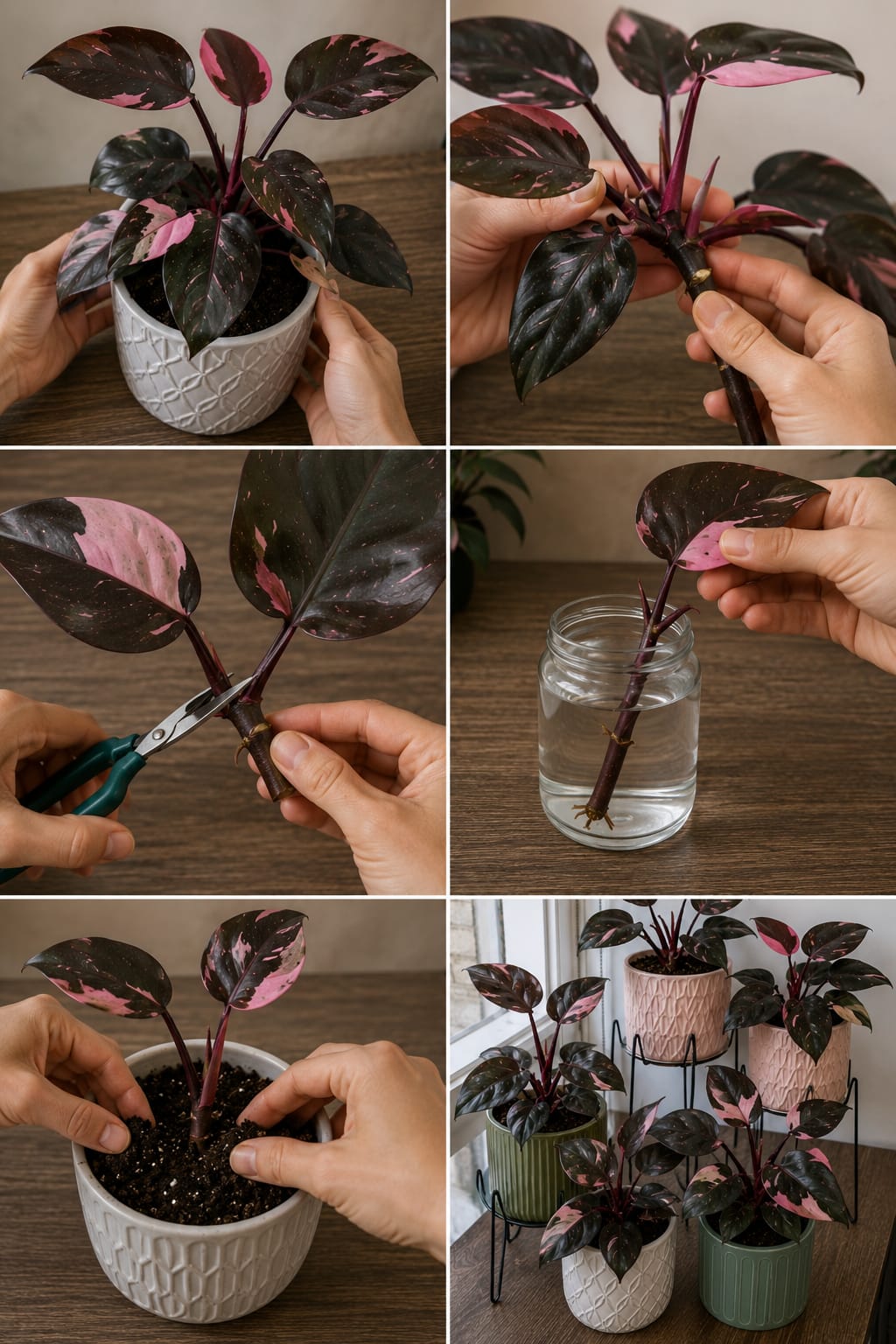
Pink Princess Philodendron is a statement plant. Its colors work beautifully in white ceramic pots, muted green planters, soft pink pots, black modern pots, and textured decorative containers. The final image shows several young plants grouped on stands near a window, which is a beautiful way to display them. Grouping plants creates a lush look and also helps increase local humidity slightly.
Because the leaves are dark with pink markings, they stand out well against light walls, wooden shelves, and neutral rooms. A plant stand can lift the foliage closer to light and make the display more elegant. If the plant grows tall, a moss pole can create a vertical shape that shows each leaf clearly.
Final Thoughts
Propagating Pink Princess Philodendron is a rewarding way to grow more of this beautiful plant, but success depends on taking the right cutting and giving it stable care. The cutting must have a node. It should come from a healthy stem with good variegation and enough green tissue. Clean tools, fresh water, bright indirect light, warmth, and patience are all important.
Water propagation is easy to watch and works well when the node is submerged and the water is kept clean. Soil propagation can also work if the mix is airy and moisture is controlled. Once roots are strong enough, the cutting should be moved into a small pot with well-draining aroid soil. After planting, the new plant needs gentle moisture, bright indirect light, and time to adjust.
The pink color depends on light, genetics, and the growth point. Fertilizer can support healthy growth, but it cannot force pink variegation. Avoid overwatering, oversized pots, strong fertilizer, and cuttings without nodes. With steady care, a single healthy cutting can grow into a beautiful new Pink Princess Philodendron with glossy dark leaves and stunning pink patterns. Over time, you can build a full collection of plants from one mother plant and enjoy the unique beauty of every new leaf.