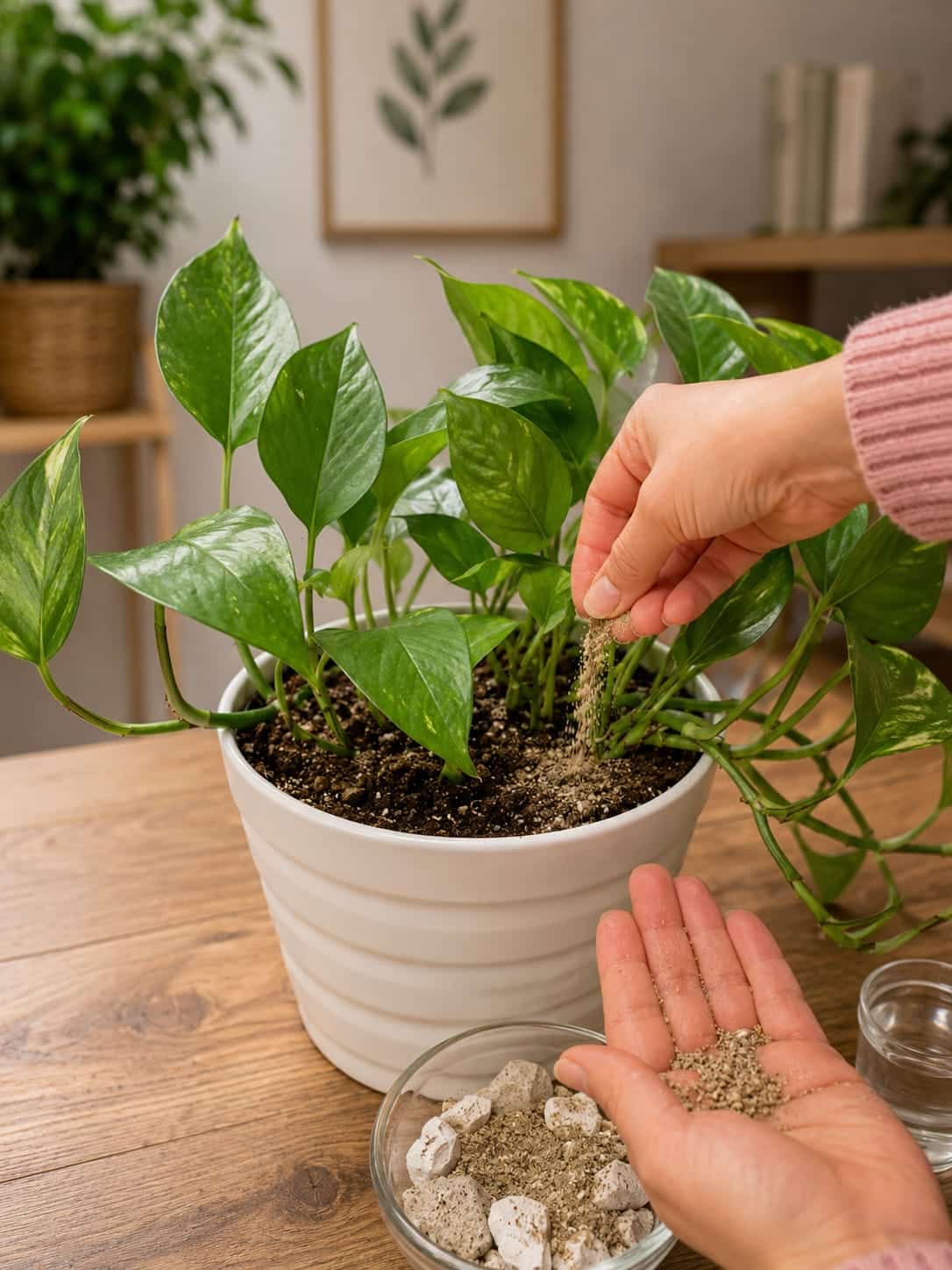
Pruning: The Real Secret to a Fuller Pothos
If you want a fuller pothos, pruning is essential. Many people let pothos vines grow long without trimming them, then wonder why the plant looks thin. Long vines can be beautiful, but pruning encourages branching and fuller growth near the pot.
Cut a vine just above a node. A node is the small bump where a leaf and aerial root may grow. After pruning, new growth can emerge from nearby nodes.
You can place the cuttings back into the pot after rooting them in water or soil. This is one of the easiest ways to make a pothos look fuller.
A soil booster may support the roots, but pruning creates the shape.
For a bushier plant, prune regularly during the growing season.
How to Propagate Pothos Cuttings
Pothos is very easy to propagate. Cut a vine section with at least one node. Remove the lower leaf if needed. Place the node in water or moist potting mix.
If rooting in water, change the water every few days. Once roots are a few inches long, plant the cutting back into the mother pot or a new pot.
If rooting in soil, keep the mix lightly moist until roots establish. Do not let it become soggy.
Adding rooted cuttings back into the original pot is one of the fastest ways to create a fuller plant.
This method is more reliable for fullness than any powder or tonic.
Can Crushed Eggshells Help Pothos?
Crushed eggshells can provide calcium very slowly as they break down. Calcium supports plant structure, but pothos rarely suffers from obvious calcium deficiency indoors if it is grown in a decent potting mix and occasionally fertilized.
Eggshells should be cleaned, dried, and crushed very finely. Large chunks break down extremely slowly and may simply sit in the soil. Fine powder breaks down more easily, but still not quickly.
Use eggshell powder sparingly. Too much can affect the soil surface and may not benefit the plant.
Eggshells are not a complete fertilizer. They do not provide enough nitrogen or other nutrients needed for leafy growth.
They can be a mild mineral support, but they are not a magic pothos food.
Can Coffee Grounds Help Pothos?
Coffee grounds are often recommended online, but they can be risky indoors. Used grounds can compact, mold, hold moisture, and attract gnats if applied too heavily.
Pothos does not need coffee grounds to grow well. If you want to use coffee grounds, it is better to compost them first and use finished compost later in very small amounts.
Do not sprinkle wet coffee grounds directly onto pothos soil. This can create a damp organic layer that encourages fungus gnats.
A clean mineral mix is safer than coffee grounds for indoor pothos.
When in doubt, skip coffee and use a balanced fertilizer instead.
Can Rice Powder Help Pothos?
Rice powder is another common homemade soil trick. It contains starch, which can feed soil microbes, but it can also feed mold and gnats if the soil is damp.
For pothos, rice powder should be used very carefully, if at all. A tiny pinch may be fine for a healthy plant, but it is not necessary. Too much can create problems.
If you want to use rice, fresh diluted rice water may be safer than dry rice powder because it leaves less solid material behind. Even then, use it rarely.
Do not mix rice powder with eggshell powder, coffee grounds, and other homemade ingredients all at once. Too many amendments can overwhelm the pot.
Simple care is safer and more predictable.
Can This Soil Booster Replace Fertilizer?
No. A dry homemade soil booster cannot replace complete fertilizer. Pothos needs nitrogen for leafy growth, along with potassium, phosphorus, and micronutrients. Eggshells or mineral grit do not provide a complete nutrient profile.
During spring and summer, you can feed pothos with a balanced liquid houseplant fertilizer diluted to half strength once a month or every six weeks. This is usually enough for steady growth.
Do not fertilize heavily. Too much fertilizer can burn roots and cause brown tips.
If you use a dry soil booster, do not apply fertilizer on the same day. Keep the routine simple and gentle.
A complete fertilizer feeds the plant. A soil booster lightly supports the medium.
Can It Help With Fungus Gnats?
Some dry mineral amendments can help discourage fungus gnats if they keep the soil surface drier. However, not all powders help. Organic powders may make gnats worse.
If the mix contains diatomaceous earth, it may help only while dry. Once it becomes wet, it loses much of its effect. Also, avoid breathing in fine dust when applying it.
The best way to prevent fungus gnats is to avoid overwatering, let the soil surface dry, improve drainage, and remove decaying organic matter.
Yellow sticky traps can catch adult gnats. If the infestation is severe, you may need a more targeted treatment.
A soil booster should not be your main pest-control plan.
Can It Cause Mold?
Yes, if the mixture contains organic material and the soil stays damp. Mold appears when moisture, organic matter, and low airflow combine.
If mold appears after applying a powder, remove the top layer of soil. Stop using the amendment. Let the soil dry more between waterings and increase airflow.
If the pot smells sour or the plant declines, inspect the roots and consider repotting.
Mold is a sign that the potting environment needs adjustment.
For indoor plants, clean and light is better than rich and heavy.
Signs Your Pothos Needs Repotting Instead
A soil booster is not enough if the pothos is root-bound, sitting in old soil, or suffering from root rot. Signs the plant may need repotting include roots circling tightly around the pot, water running straight through, soil staying wet too long, sour smell, slow growth despite good light, or many yellow leaves.
When repotting, choose a pot only one size larger. Use fresh airy mix. Remove dead roots and old compacted soil gently.
After repotting, water lightly and let the plant adjust. Do not add extra powders immediately. Fresh soil already provides a better environment.
Repotting can refresh a plant more effectively than repeated top-dressing.
If the root zone is old and tired, start there.
How to Apply the Booster Step by Step
First, check the soil. If it is wet, wait. Apply only when the top layer is dry.
Second, use a small amount. For a medium pothos pot, one teaspoon is enough.
Third, sprinkle the mixture evenly around the soil surface, not directly against stems.
Fourth, gently scratch it into the top layer with a small stick, spoon, or your fingers.
Fifth, water only if the plant is due for watering. If not, leave it dry until the normal watering time.
Sixth, watch the plant for the next two weeks. If you see mold, gnats, or odor, remove the top layer and stop using the mix.
How to Keep Pothos Leaves Shiny and Fresh
Pothos leaves collect dust indoors. Dust blocks light and makes leaves look dull. Wipe leaves with a soft damp cloth every few weeks.
Do not use oily leaf shine products. They can clog the leaf surface and attract dust. Plain water is enough.
If leaves are very dirty, use a gentle shower with lukewarm water, then let the plant drain completely.
Clean leaves look brighter and help the plant photosynthesize better.
Fresh green leaves come from clean surfaces, good light, and healthy roots.
Why Stems Should Stay Clear
When applying any powder or soil booster, keep it away from the base of the stems. Pothos stems can rot if they are buried too deeply or kept damp with organic material around them.
The nodes and stems near the soil should have airflow. Do not pile powder, compost, eggshell, or mulch against them.
If you are adding rooted cuttings back into the pot, plant the nodes gently in the soil but do not bury large sections of vine under wet mix.
Healthy stems should be firm and green. Soft or black stems mean rot may be developing.
Good airflow at the base helps prevent disease.
Common Mistakes to Avoid
The first mistake is using too much soil booster. A thick layer can cause crusting, mold, or watering problems.
The second mistake is applying it to wet soil. This increases the chance of mold and gnats.
The third mistake is using food scraps directly in the pot. Fresh scraps rot indoors.
The fourth mistake is expecting powder to replace light. Pothos needs brightness to grow full.
The fifth mistake is skipping pruning. Pruning is one of the best ways to make pothos bushier.
The sixth mistake is using a pot without drainage.
The seventh mistake is adding too many homemade ingredients at once.
The eighth mistake is treating yellow leaves with amendments instead of checking watering and roots.
A Simple Indoor Pothos Growth Routine
Place your pothos in bright indirect light. Water when the top inch or two of soil dries. Use a pot with drainage holes. Grow it in an airy mix with perlite or bark. Prune long vines to encourage branching. Propagate cuttings and replant them into the pot for a fuller look.
During spring and summer, feed lightly with a balanced liquid fertilizer. If you want to use a natural dry soil booster, apply a tiny amount once every two to three months.
Keep the leaves clean. Rotate the pot every few weeks. Remove yellow leaves and dead stems.
This routine is simple, realistic, and much more effective than relying on one ingredient.
Frequently Asked Questions
What is the powder being added to pothos soil?
It may be a natural dry soil booster such as crushed eggshell powder, mineral grit, rice powder, or a homemade soil amendment. The safest version is a small amount of clean crushed eggshell mixed with pumice or perlite.
Is crushed eggshell good for pothos?
Crushed eggshell can provide slow calcium support, but it is not a complete fertilizer. It should be cleaned, dried, finely crushed, and used sparingly.
Can this make pothos grow faster?
It may support the soil slightly, but faster growth mainly comes from bright indirect light, healthy roots, pruning, and proper watering.
How often should I add a soil booster?
Use it once every two to three months during active growth. Do not apply it weekly.
Can I use coffee grounds on pothos?
It is better not to apply wet coffee grounds directly to indoor pothos soil. They can mold, compact, and attract gnats.
Can I use rice powder?
A tiny pinch may be used occasionally, but it can mold if soil stays damp. Use with caution.
Can this replace fertilizer?
No. A dry soil booster is not complete fertilizer. Use a diluted balanced houseplant fertilizer during active growth if the plant needs feeding.
What if mold appears after applying it?
Remove the top layer of soil, stop using the amendment, improve airflow, and let the soil dry more between waterings.
Why is my pothos not full?
Common reasons include low light, no pruning, old soil, weak roots, or vines that have not been propagated back into the pot.
How do I make pothos fuller naturally?
Give bright indirect light, prune long vines, root cuttings, plant them back into the pot, and maintain healthy soil and watering.
Final Thoughts
A dry natural soil booster can be a gentle support for pothos, especially when it contains clean mineral ingredients like finely crushed eggshells, pumice, perlite, or light grit. Used sparingly, it may help refresh the soil surface and support a healthy root environment.
But it is not a miracle growth trick. Fuller pothos plants come from bright indirect light, pruning, propagation, healthy roots, good drainage, and correct watering. A powder on the soil cannot replace those basics.
Use only a small amount. Keep it away from stems. Do not apply it to wet soil. Do not use food scraps or thick organic layers. Stop immediately if you notice mold, gnats, sour smells, yellowing, or soft stems.
If your pothos is already weak, check the roots, light, and watering before adding anything. If the soil is old or compacted, repotting may be the better solution.
With simple care, a light airy mix, and gentle support, your pothos can grow fuller vines, fresh green leaves, and a lush indoor look that brings life and softness to your home.