Snake plants are some of the easiest and most stylish indoor plants you can grow. Their upright leaves, bold green patterns, and golden edges make them look clean, modern, and elegant in almost any room. They fit beautifully on wooden tables, bright shelves, bedroom corners, office desks, and sunny windowsills. They are also famous for being forgiving, which is why many people choose them as their first houseplant.
But even a tough snake plant can slow down. Sometimes it stops producing new shoots. Sometimes the leaves lose their fresh color. Sometimes the plant stays the same size for months, looking alive but not really growing. Other times the leaves begin leaning, wrinkling, or developing dry brown tips. When this happens, many plant lovers start looking for a gentle natural way to support stronger roots and fuller growth.
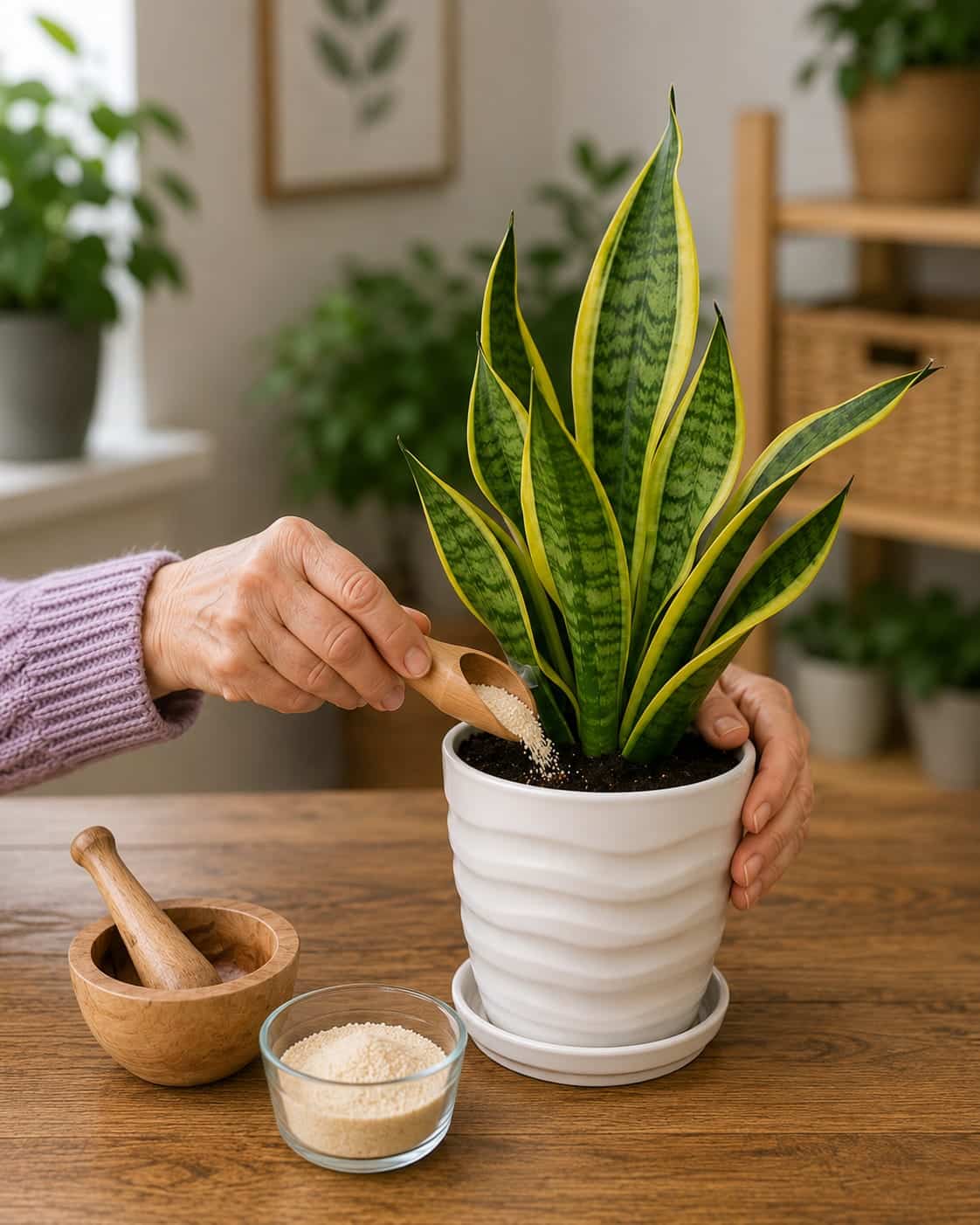
The image shows a healthy snake plant in a white pot while a small wooden scoop sprinkles a pale grainy ingredient onto the soil. The bowl beside it looks like rice powder, ground rice, or fine rice grains. This suggests a popular natural plant-care idea: using rice as a mild homemade soil booster.
Rice is often used in plant-care tricks because it contains starches and tiny traces of minerals. Rice water is especially popular, but some people also sprinkle rice powder or crushed rice near the soil. The idea is that rice can gently support soil life and provide a slow organic boost as it breaks down.
However, this method must be used carefully. Snake plants do not like rich, wet, heavy soil. They are dry-tolerant plants with thick rhizomes that can rot if the pot stays damp for too long. Too much rice powder can attract fungus gnats, encourage mold, create sour soil, and make the root zone unhealthy. The safest approach is to use only a tiny amount, keep the soil dry-friendly, and never treat rice powder as a miracle fertilizer.
This guide explains how rice powder may help snake plants, how to use it safely, when to avoid it, what mistakes to watch for, and what truly makes snake plants grow fuller, greener, and stronger indoors.
Why Snake Plants Grow Slowly Indoors
Snake plants naturally grow slower than many tropical houseplants. Unlike pothos, monstera, or philodendron, they do not constantly push out long vines or big leaves every week. Their growth comes from underground rhizomes that slowly produce new upright shoots. These baby shoots, often called pups, appear from the soil when the plant has enough stored energy.
Because snake plants are slow, it is easy to think something is wrong when they do not change much for months. In many cases, the plant is simply waiting for better conditions. It may need more light, warmer temperatures, a smaller pot, better soil, or a better watering rhythm before it decides to push new growth.
The biggest growth factor is light. Snake plants can survive in low light, but survival is not the same as active growth. In a dark corner, a snake plant may stay alive for a long time, but it may produce very few new leaves. In bright indirect light, it has more energy and is more likely to grow fuller.
Another major factor is root health. If the soil is too dense, too wet, or too compacted, the roots and rhizomes cannot breathe properly. A snake plant with stressed roots will not focus on new growth. It will focus on survival.
This is why rice powder should be seen as a small support, not the main secret. Fuller snake plants come from light, healthy roots, drainage, and correct watering first.
What Rice Powder Can Do for Snake Plants
Rice powder is simply rice ground into a fine or slightly grainy form. When added to soil in tiny amounts, it can slowly break down as organic material. Some plant lovers use it because rice contains starches and small traces of nutrients that may support soil microbes.
Soil microbes are tiny living organisms in the potting mix. In a healthy amount, they help organic material break down and may support a more active root environment. A gentle organic addition can sometimes make the soil feel more alive, especially in a pot that has been sitting for a long time.
For snake plants, rice powder may offer a very mild natural support if the plant is already healthy. It may help slightly improve the soil environment over time. It may also be used as part of a natural indoor care routine for people who prefer gentle kitchen-based methods.
But rice powder is not complete fertilizer. It does not provide a reliable balance of nitrogen, phosphorus, potassium, calcium, magnesium, and trace minerals. It cannot replace cactus fertilizer or succulent fertilizer. It cannot rescue a plant with rotten roots. It cannot instantly produce baby shoots.
Rice powder is best used as an occasional tiny soil supplement for stable plants, not as a cure for problems.
Why Rice Powder Can Be Risky
Rice powder can cause problems if too much is used. Because it contains starch, it can feed mold and fungus gnats when the soil is damp. In a dry outdoor garden bed, small organic particles may break down naturally. In a small indoor pot, they can become concentrated and cause trouble.
Snake plants are especially sensitive to wet, stale conditions. Their underground rhizomes store water, which helps them survive dry periods. But if the soil stays wet and organic material begins to sour, those rhizomes can rot.
Too much rice powder can also form a layer on top of the soil. If this layer becomes damp, it may clump, crust, or grow fuzzy mold. It may also attract insects that enjoy decaying organic matter.
This is why the method shown in the image should be done lightly. A small sprinkle is enough. A thick layer is not safe. The goal is not to cover the soil with rice powder. The goal is to add a tiny amount and let it disappear into the surface over time.
When it comes to snake plants, less is almost always safer.
The Safest Way to Use Rice Powder
The safest way to use rice powder on a snake plant is to apply only a small pinch around the outer soil surface, away from the leaf bases. For a small to medium pot, use no more than one quarter teaspoon. For a larger pot, use no more than half a teaspoon.
Sprinkle it lightly over the soil surface. Do not pile it against the leaves. Do not bury it deeply near the rhizomes. Do not mix large amounts into the potting soil.
After sprinkling, gently loosen the top layer of soil with a small stick or spoon so the powder is lightly blended into the top half inch. This helps prevent clumping on the surface.
Do not water immediately if the soil is already damp. If the plant is due for watering and the soil is completely dry, you can water lightly after applying. Let the pot drain fully.
Use rice powder rarely. Once every two to three months during active growth is enough. Many snake plants do not need it at all.
Use Dry Rice Powder or Rice Water?
Both rice powder and rice water are used in plant-care routines, but they behave differently. Rice powder stays in the soil and breaks down slowly. Rice water is a liquid made by rinsing or soaking rice, then using the cloudy water on plants.
For snake plants, rice water may be safer than rice powder if it is very diluted and used rarely, because it does not leave as much solid material behind. However, rice water can also cause sour soil or gnats if it is too thick or used too often.
If you choose rice water, make it very mild. Rinse one tablespoon of plain uncooked rice in two cups of water. Strain out all rice grains. Dilute the cloudy water with two more cups of plain water. Use only a small amount when the soil is completely dry and the plant needs watering.
If you choose rice powder, use only a tiny dry sprinkle and avoid wet soil.
Do not use rice powder and rice water at the same time. That is too much starch for a snake plant pot.
Never Use Cooked or Seasoned Rice
Only plain uncooked rice or plain rice powder should ever be considered for plant use. Cooked rice is too moist and breaks down quickly. It can rot, smell bad, attract insects, and create mold.
Seasoned rice is even worse. Salt, oil, butter, spices, broth, sauces, and flavorings can damage plant roots and pollute the soil. A snake plant pot is not a compost bin, and it should never receive leftover cooked food.
Do not use rice that has been cooked with salt. Do not use rice from a meal. Do not use rice pudding, rice flour mixed with sugar, or any kitchen product that contains additives.
The only acceptable form is plain, clean, uncooked rice powder used in a tiny amount.
If you are unsure what is in the powder, skip it. Plain water and proper care are safer.
When Rice Powder May Help
Rice powder may be useful when your snake plant is healthy but growing slowly during the active season. It may provide a tiny organic support for the soil and help make your care routine feel more natural.
It may also be used for a plant that has firm leaves, dry-friendly soil, good drainage, and bright indirect light. These are the conditions where a mild supplement is least likely to cause harm.
The plant should not be stressed, yellowing, mushy, or sitting in wet soil. Rice powder works best as a light support for an already stable plant.
It may be especially suitable for a snake plant that is beginning to produce new pups. A tiny soil boost may support the active growth phase, but the main driver will still be light and root health.
Use it as a gentle extra, not as a rescue treatment.
When You Should Avoid Rice Powder
Do not use rice powder if the soil is wet. Damp soil plus starch can create mold and gnats.
Do not use rice powder if fungus gnats are already present. They may become worse.
Do not use rice powder if you see white fuzzy mold on the soil surface. First fix the moisture and airflow problem.
Do not use rice powder if the leaves are yellow, soft, or collapsing. That may mean overwatering or root rot.
Do not use rice powder if the pot has no drainage holes. Drainage is essential for snake plants.
Do not use rice powder during winter if the plant is barely growing and the soil stays damp for long periods.
Do not use it on newly repotted plants with damaged roots. Let them recover first.
The Real Secret to Fuller Snake Plants
The real secret to fuller snake plants is not rice powder. It is bright indirect light and healthy rhizomes.
Snake plants can tolerate low light, but they grow much better in brighter conditions. A plant near a bright window is more likely to produce new shoots than one sitting in a dark hallway. Morning sun can be very helpful. Bright filtered light throughout the day is excellent.
If your snake plant has not grown in a long time, move it gradually to a brighter location. Do not suddenly place it in harsh direct afternoon sun if it has been living in shade. Increase brightness slowly so the leaves do not scorch.
When the leaves receive enough light, they create more energy. That energy moves down into the rhizomes. Strong rhizomes produce pups. More pups create a fuller pot.
Rice powder may support the soil slightly, but light is the true growth engine.
Best Soil for Snake Plant Growth
Snake plants need fast-draining soil. This is one of the most important parts of care. Regular indoor potting mix may hold too much moisture, especially if the plant is in low light or a plastic pot.
A cactus or succulent mix is usually a better starting point. You can improve it with perlite, pumice, coarse sand, lava rock, or small bark chips. The soil should feel loose and airy, not dense and muddy.
When watered, the pot should drain quickly. The soil should not stay wet for many days. If it does, the mix is too heavy, the pot is too large, or the plant is not receiving enough light.
Rice powder should never be used to “improve” heavy wet soil. If the soil is wrong, repotting is the real solution.
A healthy root environment is the best natural growth booster.
The Right Pot Makes a Difference
A snake plant pot must have drainage holes. Without drainage, water collects at the bottom and can rot the roots. A beautiful decorative pot is fine only if the plant is inside a nursery pot with holes and excess water can be removed after watering.
The pot should not be too large. A huge pot holds too much soil, and extra soil holds extra moisture. Snake plants often grow best when slightly snug, because the soil dries faster and the rhizomes can fill the space gradually.
Terracotta pots are helpful because they breathe and dry faster. Ceramic and plastic pots can work too, but watering must be more careful.
If your pot has a saucer, empty it after watering. Never let the plant sit in standing water.
Rice powder should only be used in a pot with good drainage.
Continue to Page 2
Continue to page 2 for more details about this article and the key points many readers miss on the first page.