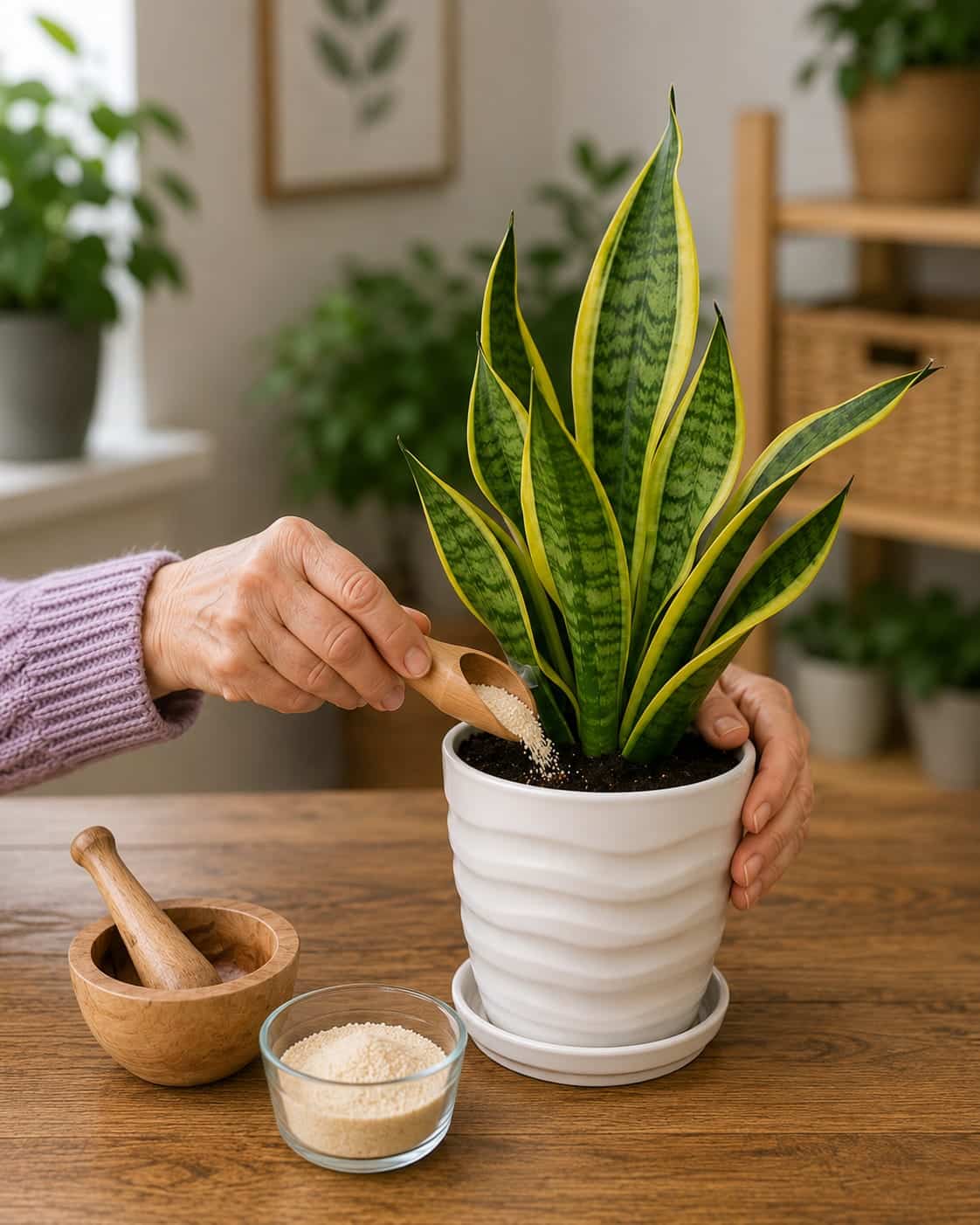
How to Water Snake Plants Correctly
Watering is where many snake plant problems begin. The best rule is to water only when the soil is dry. Do not water on a strict calendar. A snake plant in bright light may dry faster than one in a dark room. A plant in terracotta may dry faster than one in plastic.
Check the soil deeply, not just on the surface. The top may be dry while the lower soil is still damp. Use your finger, a wooden stick, or the weight of the pot to judge moisture.
When it is time to water, water thoroughly until excess drains from the bottom. Then leave the plant alone until the soil dries again.
Do not give small daily sips. This can keep the top layer damp and encourage gnats while failing to hydrate the deeper roots properly.
If you use rice powder, remember that watering too often can make the starch break down in unhealthy ways.
How Rice Powder Can Affect Watering
Rice powder adds organic material to the soil surface. If the plant is watered too often after rice powder is applied, the powder may remain damp and become a food source for mold or gnats.
This is why rice powder should be used only when your watering routine is already under control. If you are still learning how often to water your snake plant, skip rice powder until you are confident.
After applying rice powder, watch the soil surface closely. If you see clumping, mold, or a sour smell, remove the top layer of soil and stop using rice powder.
The soil should continue to dry normally. If it stays damp longer than usual, reduce watering and increase light or airflow.
A good trick should not make care harder. If rice powder causes problems, plain care is better.
Can Rice Powder Encourage Baby Shoots?
Rice powder may support growth indirectly, but baby shoots come from the plant’s rhizomes. The rhizomes produce pups when they are healthy and have enough energy.
To encourage baby shoots, give the plant bright indirect light, warm temperatures, fast-draining soil, and proper watering. Keep the plant slightly snug in its pot. Avoid disturbing the roots too often.
During the growing season, you may feed lightly with a cactus or succulent fertilizer. This is more reliable than rice powder because the nutrient content is measured.
A tiny rice powder sprinkle may be used as a natural supplement, but it should not be expected to force pups quickly.
Patience is important. Snake plants often grow slowly and then suddenly send up new shoots when conditions are right.
Can Rice Powder Make Leaves Greener?
Rice powder will not directly turn leaves greener. Fresh green color comes from proper light, root health, and balanced care.
If the leaves look dull, first clean them. Dust can make snake plant leaves appear faded. Wipe each leaf gently with a damp cloth. Clean leaves absorb light better and look much fresher.
If new leaves are pale, the plant may need more light. If older leaves are yellowing, the plant may be overwatered or stressed. If the edges are fading, check light and general health.
Rice powder cannot reverse yellowing, brown tips, or damage. It may only support the soil gently if the plant is already stable.
For fresh green leaves, focus on light, clean leaves, dry-friendly soil, and careful watering.
Can Rice Powder Strengthen the Upright Shape?
A snake plant’s upright shape depends on firm leaves and strong rhizomes. If the leaves are leaning because the plant is reaching for light, move it to a brighter spot and rotate the pot regularly.
If the leaves are bending from the base and feel soft, the issue may be overwatering or root rot. Rice powder will not fix that. You need to inspect the roots and correct the soil.
If the plant is top-heavy, it may need a heavier pot or slightly more support around the base. But do not bury the leaves deeply because trapped moisture can cause rot.
Rice powder may support future growth mildly, but it cannot straighten weak or damaged leaves.
Strong upright growth comes from light, firm roots, and proper watering.
Can Rice Powder Replace Fertilizer?
No. Rice powder is not a complete fertilizer. It does not contain a balanced or predictable nutrient profile. Snake plants are light feeders, but they still benefit from proper nutrition during the growing season.
If you want to fertilize, use a cactus or succulent fertilizer diluted to half strength. One or two feedings during spring or summer may be enough for many snake plants.
Do not fertilize in winter if the plant is not actively growing. Do not fertilize a sick plant with damaged roots.
Rice powder can be an occasional natural supplement, but it should not be your main feeding plan.
Measured fertilizer is more predictable. Rice powder is more experimental.
Can Rice Powder Cause Fungus Gnats?
Yes. Rice powder can contribute to fungus gnats if the soil stays damp. Fungus gnats are attracted to moist organic material. Since rice powder contains starch, it can become a food source when conditions are wet.
To avoid gnats, use only a tiny amount and let the soil dry between waterings. Do not apply rice powder repeatedly. Do not let it form a damp layer on the soil surface.
If gnats appear, stop using rice powder immediately. Let the soil dry more between waterings, use yellow sticky traps, and remove any organic buildup from the surface.
If the infestation continues, consider replacing the top layer of soil or repotting into a faster-draining mix.
A healthy snake plant pot should not have flying insects around it.
Can Rice Powder Cause Mold?
Yes, especially if too much is used or if the soil is watered too often. Mold may appear as white fuzzy growth on the soil surface. This usually means the pot is too damp or the organic material is too concentrated.
If mold appears, remove the affected top layer of soil. Stop using rice powder. Improve airflow and let the soil dry properly before watering again.
Check the pot drainage. If the plant is in a decorative pot without drainage, move it to a proper container.
A small amount of surface mold may not kill the plant immediately, but it is a warning sign. Snake plants prefer clean, dry-friendly conditions.
Prevent mold by using less rice powder, watering less often, and increasing light.
Can Rice Powder Fix Yellow Leaves?
No. Yellow snake plant leaves will not turn green again with rice powder. Yellow leaves usually mean stress. The most common causes are overwatering, root rot, cold damage, old age, or poor drainage.
If one old outer leaf slowly yellows while the rest of the plant is healthy, it may be natural aging. You can remove it when it becomes unattractive.
If several leaves yellow at once, or if leaves are soft at the base, check the roots immediately. Remove the plant from the pot and inspect the rhizomes. Soft, mushy, dark, or smelly roots need to be cut away.
Do not add rice powder to a yellowing plant without knowing the cause. If the issue is wet soil, rice powder can make it worse.
Fix the roots first. Supplements come later.
Can Rice Powder Fix Brown Tips?
Rice powder does not fix brown tips. Brown tips can happen from underwatering, inconsistent watering, mineral buildup, fertilizer burn, cold drafts, sunburn, or physical damage.
Old brown tissue will not turn green again. You can trim brown tips with clean scissors if you want the plant to look neater.
To prevent new brown tips, keep watering consistent, avoid overfertilizing, protect the plant from cold air, and provide bright indirect light. If your tap water is very hard, occasional flushing with plain water or using filtered water may help.
Rice powder is not a solution for leaf-tip damage.
Look for the cause before adding anything to the soil.
What to Do If You Used Too Much Rice Powder
If you accidentally used too much rice powder, remove the visible excess from the soil surface. Use a spoon to scrape away the top layer if it is heavily coated.
If the soil is dry and there is no smell, you may simply stop using it and monitor the plant. If the soil becomes moldy, sour, or gnat-infested, remove the top layer and replace it with fresh dry mix.
If the plant begins yellowing or softening, inspect the roots. The problem may be moisture and rot, not just the rice powder itself.
Do not flush repeatedly if the soil is already wet. Too much water can cause more stress. Instead, improve drying conditions and consider repotting if needed.
After a mistake, return to simple care: bright light, dry-down, and plain water.
A Safe Rice Powder Routine for Snake Plants
Use rice powder only during the active growing season, ideally spring or summer. Make sure the plant is healthy, the soil is dry-friendly, and the pot has drainage holes.
Sprinkle only a tiny pinch around the outer soil surface. For most indoor pots, one quarter teaspoon is enough. Lightly blend it into the top layer of soil. Keep it away from the leaf bases.
Do not repeat for at least two to three months. Watch the soil surface for mold, gnats, or odor. If any appear, stop immediately.
Continue normal care with bright indirect light, proper watering, and clean leaves.
This routine keeps the rice trick gentle instead of risky.
A Better Alternative: Diluted Rice Water
If you are worried about dry rice powder attracting pests, diluted rice water may be a cleaner option. Use fresh rice rinse water only.
Place one tablespoon of uncooked plain rice in two cups of water. Swirl for a minute. Strain out all rice. Dilute the cloudy water with two more cups of plain water.
Use a small amount only when the snake plant’s soil is fully dry and the plant is due for watering. Let the pot drain completely. Do not use again for at least six to eight weeks.
Do not use thick rice water. Do not use fermented rice water. Do not use cooked rice water with salt or oil.
For snake plants, the weaker the rice water, the safer it is.
Indoor Care Step for a Beautiful Snake Plant
A beautiful snake plant needs a simple routine. Place it in bright indirect light. Use a pot with drainage holes. Grow it in a loose cactus or succulent mix. Water only when the soil dries. Wipe dust from the leaves. Rotate the pot for even growth.
During the growing season, feed lightly once or twice with diluted cactus fertilizer, or use a tiny rice powder sprinkle as an occasional natural supplement. Do not overdo both.
Keep the plant away from cold drafts, freezing windows, and constantly wet soil.
Watch the plant’s signals. Firm upright leaves mean it is doing well. Soft yellow leaves mean something is wrong below the soil.
Simple care produces the strongest results.
Common Mistakes to Avoid
The first mistake is using too much rice powder. A thick layer can mold and attract gnats.
The second mistake is applying rice powder to wet soil. This creates a damp starch layer.
The third mistake is using cooked or seasoned rice. Only plain uncooked rice powder is acceptable.
The fourth mistake is expecting instant growth. Snake plants grow slowly.
The fifth mistake is using rice powder instead of checking roots when leaves are yellow.
The sixth mistake is keeping the plant in low light and expecting pups.
The seventh mistake is using a pot without drainage holes.
The eighth mistake is combining too many homemade tricks at once. Do not use rice powder, banana water, coffee, eggshells, and fertilizer all together.
Frequently Asked Questions
Is rice powder good for snake plants?
Rice powder can be used in a tiny amount as an occasional soil supplement, but it is not necessary. It must be used carefully because too much can cause mold or fungus gnats.
How much rice powder should I use?
Use only a small pinch. For most indoor snake plant pots, one quarter teaspoon is enough. Do not cover the soil surface.
How often can I use rice powder?
Use it no more than once every two to three months during active growth. Many snake plants do not need it at all.
Can rice powder make snake plants grow faster?
It may support the soil mildly, but faster growth mainly comes from bright indirect light, healthy rhizomes, proper watering, and fast-draining soil.
Can rice powder produce more baby shoots?
Not directly. Baby shoots come from strong underground rhizomes. Good light and root health are more important than rice powder.
Can I use cooked rice?
No. Cooked rice can rot, smell, attract pests, and damage the soil environment. Never use cooked, salted, oily, or seasoned rice.
Is rice water safer than rice powder?
Very diluted fresh rice water may be safer because it leaves less solid material, but it can still cause problems if used too often or too thick.
Can rice powder replace fertilizer?
No. Rice powder is not complete fertilizer. A diluted cactus or succulent fertilizer is more reliable during active growth.
What should I do if mold appears?
Remove the moldy top layer, stop using rice powder, improve airflow, and let the soil dry more between waterings.
Can I put rice powder near the leaf base?
No. Keep rice powder away from the leaf bases. Moist organic material near the crown can increase rot risk.
Final Thoughts
Rice powder can be a gentle natural trick for snake plants, but only when it is used lightly and wisely. A tiny sprinkle may support the soil environment around a healthy plant, but it is not a miracle growth booster and it cannot replace proper care.
The real keys to a fuller snake plant are bright indirect light, healthy rhizomes, fast-draining soil, a pot with drainage holes, correct watering, warm temperatures, and patience. Rice powder can only be a small optional support inside that routine.
Use only plain uncooked rice powder. Apply a tiny amount. Keep it away from the leaf bases. Do not use it on wet soil. Do not repeat often. Stop immediately if you notice mold, gnats, sour smells, yellow leaves, or soft growth.
If your snake plant is already stressed, do not start with rice powder. Check the soil, roots, drainage, light, and watering first. Once the plant is stable, gentle natural supplements can be used carefully.
With simple care and the right conditions, your snake plant can stay upright, fresh, green, and elegant—and over time, it may reward you with the fuller growth and new baby shoots every plant lover wants to see.