Plants That Need Extra Caution
Some plants prefer drier conditions and do not need frequent homemade tonics. Be careful using orange peel water on:
- Snake plants
- ZZ plants
- Cacti
- Succulents
- Jade plants
- Aloe vera
These plants can still receive occasional diluted water-based tonics, but they should dry out well between watering. For them, less is always better.
Can Orange Peel Water Make Leaves Shiny?
Orange peel water is mainly for the soil, not for polishing leaves. If you want glossy leaves, wipe them gently with a damp cloth. Dust blocks light and makes plants look dull.
For plants with smooth leaves, a simple leaf wipe can make a big difference. Do not rub orange peel directly onto leaves, especially delicate leaves. Citrus oils can be too strong and may leave marks.
Use orange peel water near the roots, and clean the leaves separately with plain water.
Can Orange Peel Water Keep Pests Away?
The fresh citrus smell may feel like it repels pests, and many plant lovers enjoy it for that reason. However, orange peel water should not be treated as a guaranteed pest treatment.
If your plant has pests, inspect the leaves and stems carefully. Remove visible insects, isolate the plant, and use an appropriate plant-safe treatment. Orange peel water can be part of a fresh-care routine, but it should not replace pest control when there is a real infestation.
Also remember: leaving fruit peels in the pot can attract pests instead of helping. Always strain the liquid and remove the peel pieces.
Can You Put Orange Peels Directly on Soil?
It is better not to leave orange peels directly on indoor soil. They can mold, attract gnats, smell bad, or break down too slowly in a small pot.
For indoor plants, use strained orange peel water instead. This gives you the citrus-water trick without leaving fruit scraps in the pot.
If you compost, add the used peels to compost after straining them. That is a better place for them than the top of an indoor plant pot.
Can You Use Orange Juice on Plants?
No. Do not pour orange juice on houseplants. Orange juice contains sugars and acids that can create sticky soil, attract pests, and damage the root environment.
Use peel-infused water only, and dilute it before applying. The trick should be light and water-based, not sugary.
Fresh peel water is much safer than juice.
Can You Boil Orange Peels for Plant Water?
You can make a boiled orange peel infusion, but for houseplants, a cold soak is usually simpler and gentler. Boiling can create a stronger liquid, and strong mixtures are not always better for indoor plants.
If you do boil peels, let the water cool completely, strain it, and dilute it heavily before using.
For beginners, the cold-soak method is the easiest and safest.
Why Dilution Matters
Dilution is the secret that makes this trick gentle. Orange peels are fragrant and strong. When you dilute the infusion, you reduce the chance of irritating the soil or overwhelming the roots.
A good rule is to mix one part orange peel water with one part plain water. For sensitive plants, dilute even more.
The plant should receive a light refresh, not a strong citrus bath.
How to Use This Trick for a Tired Plant
If your plant looks tired, do not immediately pour orange peel water and hope for magic. First, inspect the plant.
- Remove yellow or dead leaves.
- Check the soil moisture.
- Make sure the pot has drainage.
- Move the plant to bright indirect light.
- Loosen compacted soil gently.
- Use diluted orange peel water only if the soil is ready for watering.
This full routine is what helps the plant recover. The orange water is only one piece of the care plan.
Best Time of Day to Use Orange Peel Water
Morning is the best time to water most indoor plants. It gives the plant the day to absorb moisture while light is available.
Avoid watering late at night if your home is cool or the plant sits in a low-light area. Wet soil overnight can stay damp longer than needed.
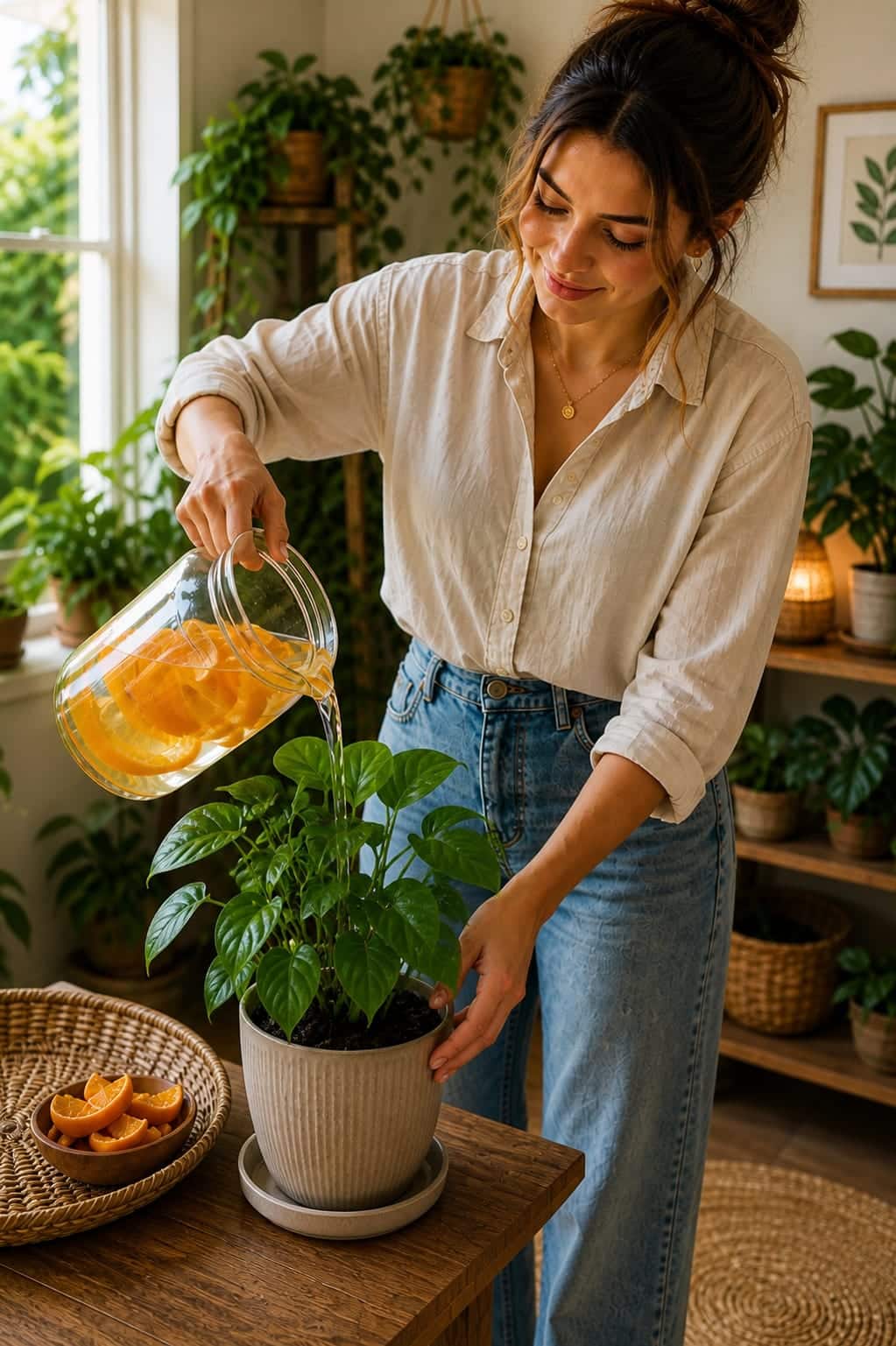
In the image, the room is bright and sunny, which is perfect for a plant-care watering routine.
What If the Plant Starts Drooping?
If the plant droops after using orange peel water, check the soil. It may be too wet, too compacted, or draining poorly. Stop using the tonic and let the soil dry to the proper level.
If the drooping continues, gently check the roots. Healthy roots are usually firm. Rotten roots may be mushy, dark, or smell bad.
Repotting into fresh airy soil may be needed if the root zone is damaged.
What If Small Flies Appear?
Small flies around indoor soil are often fungus gnats. They like moist organic material. If you notice them after using homemade tonics, reduce watering and stop using fruit-based mixtures for a while.
Let the top layer of soil dry more between waterings. Remove any fruit pieces or debris. Use sticky traps if needed.
This is why straining orange peel water is so important. No pulp, no peel pieces, no sticky leftovers.
Best Soil for This Trick
Orange peel water works best in soil that drains well. If your potting mix is too dense, any watering trick can become risky.
A good indoor tropical mix can include:
- Regular potting soil
- Perlite
- Orchid bark
- Coco coir
- A small amount of compost or worm castings
The soil should hold moisture but still allow air to reach the roots.
Why the Pot in the Image Works Well
The plant in the image is in a decorative pot with a saucer. This looks beautiful and practical. The saucer protects the table, while the pot holds enough soil for steady moisture.
However, the pot must have drainage holes. If it does not, water can collect at the bottom and cause root problems.
Always choose beauty and function together. A plant pot should look good, but it should also let the roots breathe.
How to Make the Trick Look Beautiful for Photos
This image works because it tells a clear story. The jar is full of orange peels, the plant is lush, the room is bright, and the action is easy to understand.
To recreate this visual style, use:
- A clear glass jar
- Fresh orange peels
- A green leafy plant
- Warm wooden table
- Natural window light
- Other houseplants in the background
- A slow pouring action
- A bowl of orange slices nearby
The orange color against the green leaves creates a strong visual contrast that makes the trick instantly clickable.
Quick Orange Peel Water Recipe
- Rinse peels from one orange.
- Place them in a jar with two cups of water.
- Soak for 6 to 12 hours.
- Strain completely.
- Dilute with the same amount of plain water.
- Pour a small amount into dry or slightly dry soil.
- Let the pot drain fully.
Use fresh and do not store for long periods.
Common Mistakes to Avoid
- Using orange juice instead of peel water
- Leaving orange peels in the pot
- Using old fermented liquid indoors
- Pouring too much at once
- Using it on already wet soil
- Ignoring poor drainage
- Using it every day
- Putting citrus liquid on delicate leaves
- Expecting instant growth overnight
- Using sweetened drinks or flavored liquids
This trick is best when it stays simple, fresh, diluted, and occasional.
Caption for This Plant Trick
“Don’t throw away orange peels! Soak them in water, strain, dilute, and pour a little around your indoor plants for a fresh citrus soil refresh. Simple, natural, and perfect for glossy green houseplants.”
Frequently Asked Questions
Is orange peel water good for houseplants?
Orange peel water can be used occasionally as a mild soil refresh for many indoor plants. It should be strained, diluted, and used fresh.
How do I make orange peel water for plants?
Soak rinsed orange peels in water for several hours, strain the liquid, dilute it with plain water, and pour a small amount onto the soil.
Can I put orange peels directly in plant soil?
It is better not to leave orange peels on indoor soil because they can mold or attract pests. Use strained peel water instead.
Can I use orange juice on plants?
No. Orange juice is too sugary and acidic for indoor soil. Use diluted orange peel water only.
How often should I use orange peel water?
Use it once every four to six weeks during active growth. Use less often in winter.
Can orange peel water help leaves shine?
Use orange peel water on the soil, not as a leaf polish. For shiny leaves, wipe them gently with a damp cloth.
Can orange peel water attract bugs?
It can if it is too strong, old, or contains peel pieces. Always strain it well and use it fresh.
Can I use it on snake plants?
Use caution. Snake plants prefer drier soil, so only use a very small amount when the soil is dry and the pot drains well.
Can orange peel water revive a dying plant?
It can be part of a rescue routine, but it will not fix root rot, poor light, or bad soil. Check the plant’s real problem first.
Should I dilute orange peel water?
Yes. Diluting makes the tonic gentler and safer for indoor plants.
Final Thoughts
Orange peel water is one of the prettiest natural plant tricks you can try at home. It turns kitchen scraps into a golden citrus tonic that looks beautiful, smells fresh, and makes plant care feel special.
The best way to use it is simple: soak clean orange peels in water, strain the liquid, dilute it, and pour a small amount around the soil when your plant is ready for watering. Keep the pot draining well, avoid using old or sugary mixtures, and never leave peels sitting on indoor soil.
This trick works best for healthy leafy houseplants that enjoy bright indirect light and lightly moist soil. It will not replace good care, but it can become a lovely monthly refresh that helps you pay attention to your plant’s needs.
So the next time you eat an orange, do not throw the peel away immediately. Turn it into a simple citrus plant tonic, pour it gently around your favorite indoor plant, and let your green corner feel fresh, bright, and alive again.