Best Time to Use the Trick
The best time to use this trick is when your Christmas cactus is actively growing, forming buds, or recovering after blooming. Spring and summer are good for growth support. Early fall can be useful before bud formation, depending on your climate and indoor conditions.
During full bloom, use it sparingly. The plant needs stability more than extra treatment.
During rest periods, reduce feeding and keep care simple.
How to Encourage More Buds
To encourage more buds, give your Christmas cactus the right conditions before bloom season. It usually needs bright indirect light, slightly cooler nights, and longer dark periods for several weeks.
Keep watering steady but not excessive. Avoid moving the plant once buds appear. A small dropper tonic can be part of the routine, but stable conditions are what help buds develop.
Once buds form, protect them from drafts and sudden changes.
How to Make the Plant Fuller
If your Christmas cactus looks thin or uneven, prune it lightly after blooming. Twist or snip off a few stem segments to encourage branching. The removed segments can often be propagated.
After pruning, use the dropper trick lightly around the soil and place the plant in bright indirect light. New growth should appear from the joints over time.
A fuller plant usually comes from good light, pruning, and patience.
How to Propagate the Cuttings
Christmas cactus is easy to multiply. Take a cutting with two or three segments. Let it sit for a day so the cut end can dry slightly. Then place it in lightly moist potting mix.
Keep it in bright indirect light and avoid overwatering. In a few weeks, the cutting can begin to root.
This is a wonderful way to turn one blooming plant into several.
Why the Pot Matters
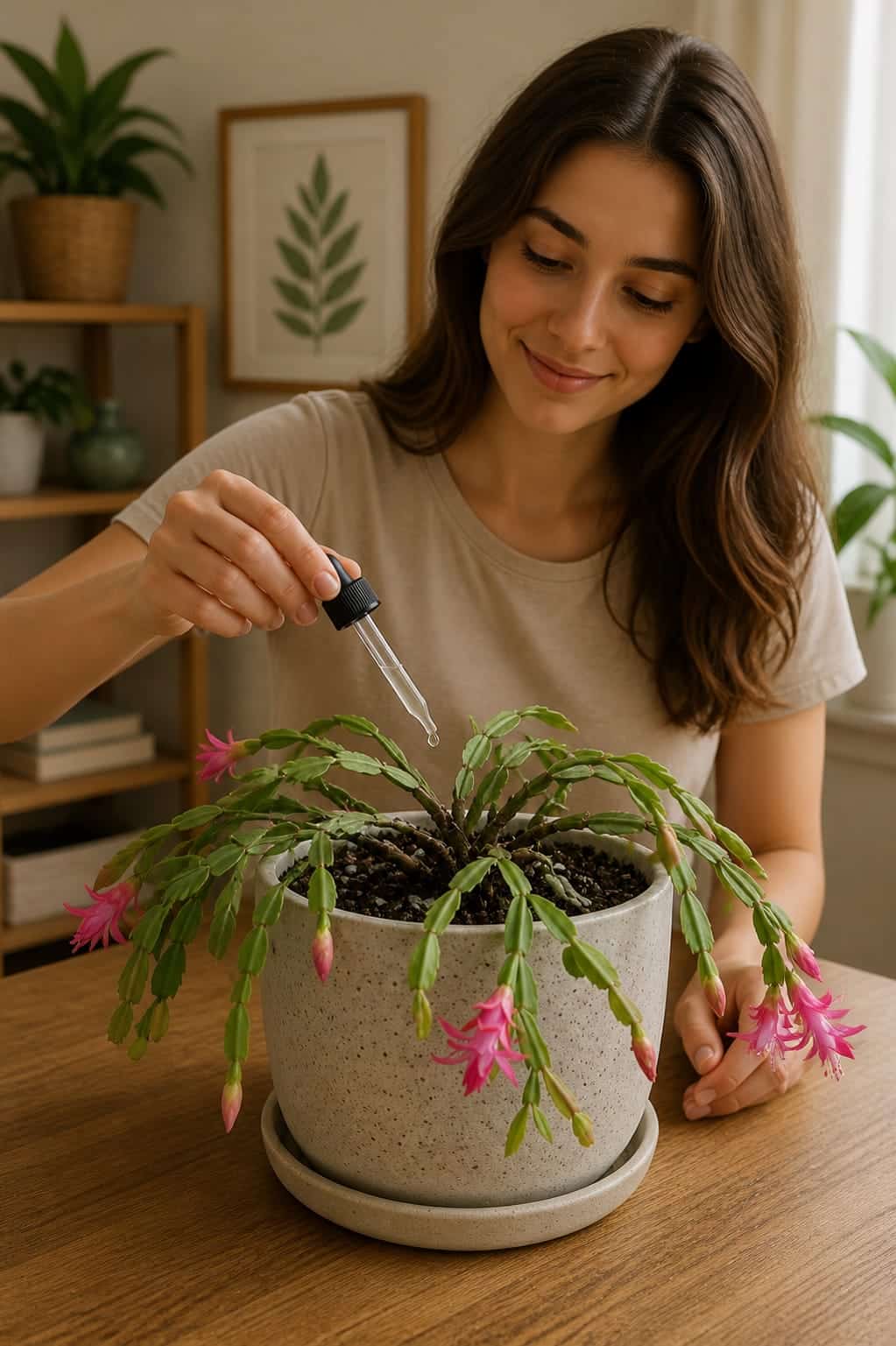
The plant in the image is in a beautiful ceramic pot with a matching saucer. This looks elegant, but drainage matters. Christmas cactus likes moisture, but the roots should not sit in standing water.
Make sure the pot has drainage holes. After watering, empty the saucer if water collects there.
A pretty pot is perfect as long as the roots can breathe.
Best Soil for Christmas Cactus
Christmas cactus grows best in a light, well-draining mix. A good blend can include regular potting mix, perlite, and orchid bark. This keeps the roots moist but airy.
If the soil is too dense, the plant may droop or struggle. If it dries too fast, the stems may wrinkle. The best soil holds light moisture while still draining well.
Fresh, airy soil makes every plant trick work better.
How to Know the Trick Is Working
Do not expect instant flowers overnight. Watch for gentle signs that the plant is happy:
- Stems look firm and plump
- New segments appear
- Buds stay attached
- Flowers open fully
- The plant stops drooping
- The soil dries at a normal pace
- The plant keeps a healthy green color
These small signs show that your care routine is working.
Common Mistakes to Avoid
- Using too much liquid
- Applying the tonic every day
- Dripping liquid onto flowers
- Using strong fertilizer
- Keeping the soil soggy
- Letting water sit in the saucer
- Moving the plant while buds are forming
- Placing it in harsh direct sun
- Using skincare aloe with additives
- Expecting instant results
The dropper trick works best when it is gentle, occasional, and paired with steady care.
Quick Caption for This Trick
“A few drops can make your Christmas cactus care routine feel brand new! Use a gentle aloe tonic near the soil, give it bright indirect light, and let those pink blooms shine.”
Frequently Asked Questions
What liquid is being dropped on the Christmas cactus?
It can be a gentle aloe vera plant tonic made with one teaspoon of pure aloe gel mixed into one cup of water, or a very diluted houseplant fertilizer.
Can this trick help Christmas cactus bloom?
It can be part of a bloom-support routine, especially when combined with bright indirect light, cooler nights before blooming, proper watering, and stable care.
How many drops should I use?
For a medium pot, use around 5 to 10 drops around the soil near the base. Do not soak the plant.
How often should I repeat it?
Use it once every two to four weeks during active growth or before blooming. Do not use it daily.
Can I drip it on the flowers?
No. Apply it only to the soil near the base of the plant.
Can I use regular fertilizer?
Yes, but dilute it heavily. A weak fertilizer solution can be used in tiny amounts during active growth.
Why are my Christmas cactus stems limp?
Limp stems can come from underwatering, overwatering, poor roots, or too much heat. Check the soil and roots before adding any tonic.
Does Christmas cactus like direct sun?
It prefers bright indirect light. Gentle morning sun can be fine, but harsh direct sun may stress the stems.
Should I water after using the drops?
Only water if the plant needs it. Do not water heavily just because you used the dropper trick.
Can I use this after blooming?
Yes. After blooming, the plant can benefit from gentle care, light feeding, and bright indirect light as it rebuilds energy.
Final Thoughts
The dropper trick is a beautiful, simple way to care for a Christmas cactus without overwhelming it. A few drops of gentle aloe tonic or very diluted fertilizer near the soil can become part of a calm bloom-support routine.
The secret is to keep it light. Christmas cactus plants do not need heavy feeding or constant attention. They need steady moisture, bright indirect light, good drainage, and a stable place to grow.
Use the dropper as a gentle boost, not a miracle flood. Apply a few drops near the base, let the plant rest, and continue with normal care. Over time, the stems can look fuller, the buds can hold better, and the flowers can shine beautifully.
So when your Christmas cactus is blooming, budding, or starting to grow again, try this simple few-drop routine. It is clean, easy, and perfect for giving your plant a fresh little push toward brighter, happier growth.