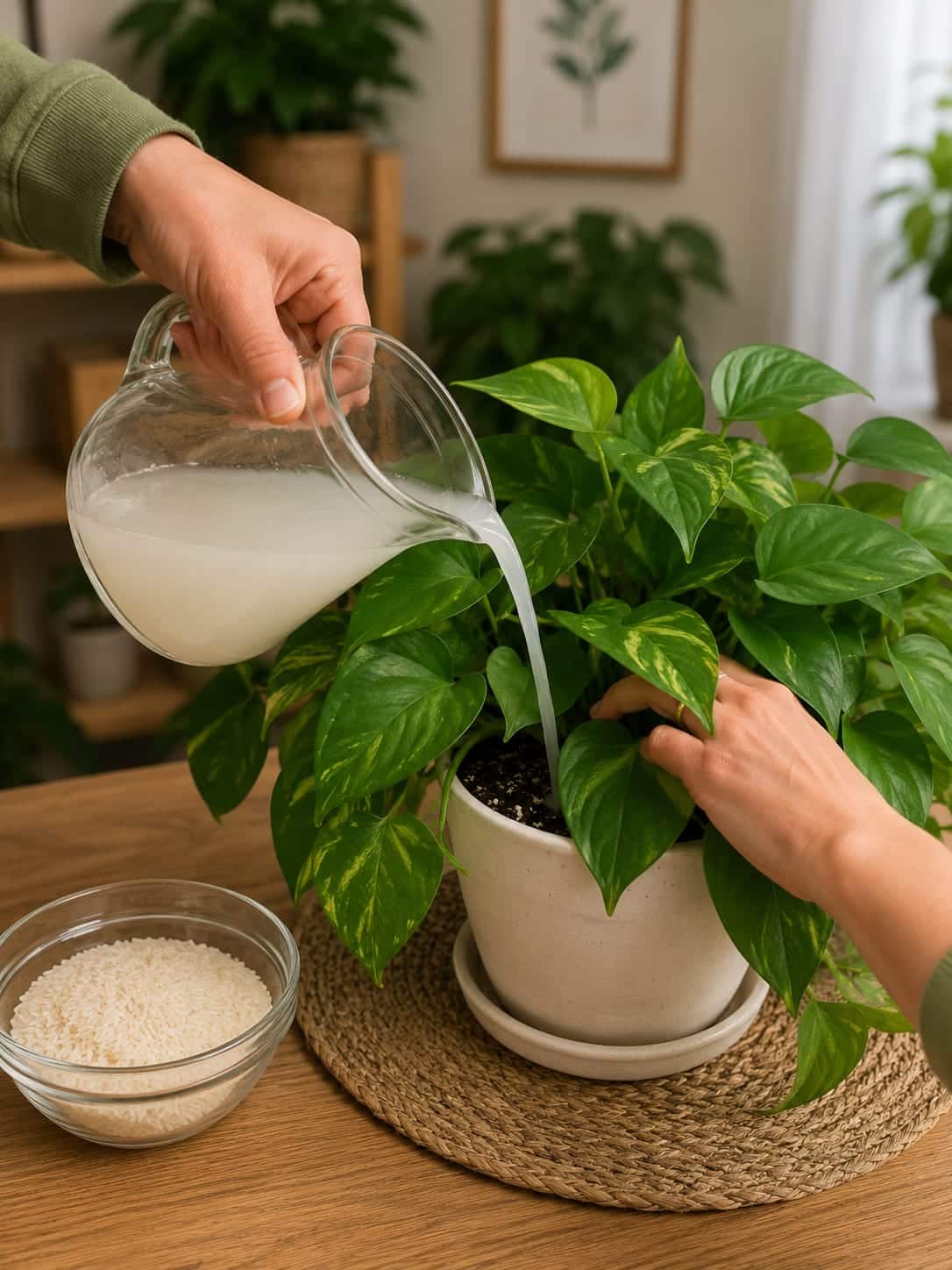
Rice Water and Fungus Gnats
Fungus gnats are tiny flies that often appear around damp indoor plant soil. Their larvae live in moist organic material. Because rice water contains starch, it can make gnat problems worse if the soil stays wet.
If you already have fungus gnats, stop using rice water immediately. Let the top layer of soil dry more between waterings. Use yellow sticky traps to catch adult gnats. Check whether the potting mix is too dense or staying wet too long.
If the problem is severe, you may need to replace the top layer of soil or use a targeted plant-safe treatment.
Rice water is best used only when your plant is pest-free and your watering routine is controlled.
A healthy pothos pot should not smell sour or have flies hovering around it.
Rice Water and Mold
Mold can appear when rice water is used too often, too strong, or on soil that stays damp. It may look like white fuzz on the soil surface.
If mold appears, remove the affected top layer of soil. Stop using rice water. Improve airflow around the plant and allow the soil to dry more between waterings.
Check the pot drainage. If water cannot escape, mold and root problems become more likely.
A small amount of surface mold may not kill the plant immediately, but it is a warning sign that the environment is too moist or too rich in organic residue.
Rice water should never create a sticky or sour soil surface.
Can Rice Water Replace Fertilizer?
No. Rice water cannot replace complete fertilizer. It may contain small amounts of nutrients, but the amount is not balanced or predictable.
Pothos needs nitrogen for leafy growth, along with potassium, phosphorus, and micronutrients. A balanced liquid houseplant fertilizer provides these in a more reliable way.
During the growing season, you can fertilize pothos lightly once a month or every six weeks using a diluted houseplant fertilizer. Rice water can be used separately as an occasional natural supplement, but do not overdo both.
Do not use fertilizer and rice water on the same watering day. Too many inputs can stress the soil and roots.
Rice water is a mild tonic. Fertilizer is actual plant food.
Can Rice Water Fix Yellow Leaves?
No. Rice water will not fix yellow pothos leaves. Yellow leaves are already damaged and will not turn green again.
One or two older yellow leaves can be normal. But many yellow leaves may indicate overwatering, poor drainage, root rot, low light, cold stress, underwatering, or nutrient issues.
Before using rice water, check the soil. If it is wet and the leaves are yellow, do not add more liquid. Inspect the roots if the problem continues.
If the soil is very dry and the plant is drooping, plain water may be the best first step. Rice water is not needed for emergency recovery.
Remove yellow leaves and focus on healthy new growth.
Can Rice Water Fix Small Leaves?
Small pothos leaves are usually caused by low light, long unpruned vines, weak roots, or lack of support. Rice water may provide a small boost, but it will not solve the main cause.
If your pothos has small leaves, move it to brighter indirect light. Prune long bare vines. Root the cuttings and plant them back into the pot. Consider giving the plant a moss pole or support if you want larger leaves, especially for certain pothos varieties.
Check whether the plant is root-bound or in old soil. Repotting into fresh airy mix may help.
Rice water can support active growth, but larger leaves come from light, roots, and growth habit.
Can Rice Water Help Propagation?
Pothos cuttings root very easily in plain water. Some people add rice water to propagation jars, but this is not recommended. Rice water can cloud the jar, feed bacteria, and cause slime around the cutting.
For water propagation, plain clean water is best. Change the water every few days. Once roots are several inches long, plant the cutting in soil.
If you want to use rice water, use it later, after the cutting has been planted and established in soil. Even then, use it diluted and rarely.
Propagation jars need clean water, not starchy water.
Clear water helps you see roots and prevents rot.
Best Light for Pothos Growth
Pothos grows best in bright indirect light. It can tolerate lower light, but growth will be slower and leaves may be smaller. Variegated pothos may lose some of its bright markings if the light is too weak.
Place the plant near a bright window. Morning sun is usually gentle and helpful. Strong afternoon sun can scorch leaves, especially if the plant is close to the glass.
If your pothos is far from a window, consider moving it closer or using a grow light. More light gives the plant more energy, and more energy means stronger vines and fuller growth.
Rice water cannot replace light. A pothos in poor light will not become lush simply because it receives a natural tonic.
For beautiful growth, start with light.
Best Soil for Pothos
Pothos prefers a potting mix that holds moisture but drains well. A basic indoor potting mix can work, but it is often better with added perlite or orchid bark.
A simple pothos mix can include two parts indoor potting soil, one part perlite, and one part orchid bark. This gives the roots moisture and oxygen.
If the soil is compacted, old, or sour-smelling, rice water will not fix it. Repot the plant into fresh airy soil.
If water sits on the surface for a long time or the soil stays wet for many days, the mix may be too dense.
Healthy soil makes rice water safer because it allows excess moisture to drain.
Best Pot for Pothos
A pothos pot should have drainage holes. This is essential. Without drainage, excess water collects at the bottom and can rot the roots.
The pot should be only slightly larger than the root ball. A very large pot holds too much soil, which can stay wet too long.
Decorative pots are fine if they are used as covers. Keep the plant in an inner nursery pot with drainage holes, water it separately, let it drain, and then place it back into the decorative pot.
If you use rice water in a pot without drainage, the risk of sour soil and root rot becomes much higher.
Drainage protects the plant.
How to Prune Pothos for Fuller Growth
Pruning is one of the most effective ways to make pothos fuller. Use clean scissors and cut a vine just above a node. This can encourage the plant to push new growth from nearby nodes.
Do not be afraid to trim long bare vines. Pothos responds well to pruning when it is healthy and growing.
After pruning, place the cuttings in water to root. Each cutting should have at least one node. Once roots develop, plant the cuttings back into the same pot. This creates a fuller, bushier plant.
Rice water can support the plant after pruning, but the pruning itself is what changes the shape.
For a lush pothos, prune and replant cuttings regularly.
How to Use Rice Water After Pruning
After pruning a healthy pothos, wait until the plant is due for watering. Then you can use diluted fresh rice water once as a gentle support.
Do not use rice water immediately if the soil is still moist. Do not overwater after pruning. The plant needs stability, not extra moisture.
If you are rooting cuttings in water, use plain water in the propagation jar. Do not add rice water to the jar.
Once rooted cuttings are planted back into soil and have adjusted, you may use rice water occasionally during active growth.
Keep every step gentle and clean.
How to Know If Rice Water Is Helping
Rice water is not an instant treatment, so results may be subtle. You may notice new leaves forming, vines growing more actively, or the plant looking fresher over time. But these changes may also come from improved light, pruning, or better watering.
The most important thing is that the plant does not show negative signs. If the soil smells fresh, the leaves stay firm, and growth continues, your rice water routine is probably not causing harm.
If you see gnats, mold, sour smell, yellowing, or wet soil that dries slowly, stop using rice water.
A successful rice water routine should be almost invisible: gentle support without problems.
Never force the method if your plant reacts badly.
What to Do If You Used Too Much Rice Water
If you used rice water that was too thick or used it too often, first stop using it. Let the soil dry more than usual before the next watering.
If the soil surface has mold, remove the top layer and replace it with fresh dry potting mix. If the soil smells sour, consider repotting.
If the plant is yellowing and the soil is wet, remove the plant from the pot and inspect the roots. Healthy roots are firm and light-colored. Rotten roots are brown, black, mushy, or smelly.
Trim rotten roots with clean scissors and repot into fresh airy soil if needed.
After correcting the problem, return to plain water for several weeks.
A Simple Rice Water Routine for Pothos
Use fresh rice rinse water only. Mix one tablespoon of uncooked rice with two cups of water. Swirl for one minute. Strain out all rice. Dilute with two more cups of plain water.
Use this diluted rice water once every four to six weeks during active growth. Apply only when the soil is partly dry and the plant is due for watering.
Pour it onto the soil, not the leaves. Let the pot drain completely. Empty the saucer.
Do not store rice water. Do not ferment it. Do not use cooked, salted, sweetened, or thick rice water.
Simple, fresh, and diluted is the safest approach.
Common Mistakes to Avoid
The first mistake is using rice water too often. Weekly use can overload the soil with starch.
The second mistake is using thick rice water. It should be diluted until only lightly cloudy.
The third mistake is using fermented rice water indoors. It can smell and attract pests.
The fourth mistake is pouring rice water onto wet soil. This can create sour conditions.
The fifth mistake is using rice water in a pot without drainage.
The sixth mistake is using rice water to treat yellow leaves without checking the roots.
The seventh mistake is adding rice grains to the soil. Rice grains can rot and attract pests.
The eighth mistake is expecting rice water to replace light, pruning, or fertilizer.
Frequently Asked Questions
Is rice water good for pothos?
Yes, diluted fresh rice water can be used occasionally for healthy pothos plants. It may support soil life and provide a mild natural boost, but it is not a complete fertilizer.
How often should I use rice water on pothos?
Use it once every four to six weeks during active growth. Do not use it every week or every watering.
Should rice water be diluted?
Yes. Rice water should be diluted until it is only lightly cloudy. Thick rice water can cause mold and gnats.
Can I use fermented rice water?
For indoor pothos, fresh diluted rice water is safer. Fermented rice water can smell sour and may attract pests.
Can rice water replace fertilizer?
No. Rice water is not complete fertilizer. Use a balanced houseplant fertilizer during active growth if the plant needs feeding.
Can rice water make pothos grow faster?
It may support growth if the plant already has good light, healthy roots, and proper watering. It will not make a poorly placed or unhealthy plant grow fast by itself.
Can rice water cause fungus gnats?
Yes, if used too often, too thick, or on soil that stays damp. Stop using it if gnats appear.
Can I use rice water for pothos cuttings in a jar?
No. Use plain clean water for propagation jars. Rice water can cloud the jar and encourage bacteria.
Can rice water fix yellow leaves?
No. Yellow leaves will not turn green again. Check watering, roots, drainage, light, and temperature.
What is the best way to make pothos fuller?
Prune long vines, root the cuttings, plant them back into the pot, and give the plant bright indirect light.
Final Thoughts
Rice water can be a gentle natural food for pothos when it is fresh, diluted, and used occasionally. It may support the soil, help the roots during active growth, and fit nicely into a simple natural plant-care routine.
But rice water is not magic. It cannot replace bright indirect light, proper watering, drainage, pruning, fresh soil, or balanced fertilizer. It cannot fix root rot or turn yellow leaves green again. If used too often, it can create mold, fungus gnats, sour soil, and root stress.
The best way to use rice water is simple: rinse plain uncooked rice, dilute the cloudy water, apply it only when the pothos needs watering, let the pot drain fully, and repeat only once every four to six weeks during active growth.
For a fuller pothos, prune the vines and plant rooted cuttings back into the pot. For greener leaves, give bright indirect light and wipe away dust. For stronger roots, use airy soil and avoid overwatering.
When rice water is used as a small support inside a good care routine, it can be a helpful natural trick. With patience and consistency, your pothos can grow lush, fresh, trailing, and beautifully green indoors.