Pothos is one of the most loved indoor plants because it is easy, beautiful, and forgiving. Its heart-shaped leaves, trailing vines, and glossy green color can make any room feel fresher and more peaceful. Whether it grows from a shelf, hangs from a basket, climbs a moss pole, or spills over the side of a pot, pothos brings life into the home with very little effort.
But even a strong pothos can run into problems. Sometimes the soil begins to smell damp. Sometimes cuttings rot before they root. Sometimes the leaves lose their shine. Sometimes the plant looks healthy on top, but the base of the stems feels weak, wet, or unstable. When this happens, many plant lovers look for a simple natural ingredient that can help protect the plant without using harsh chemicals.
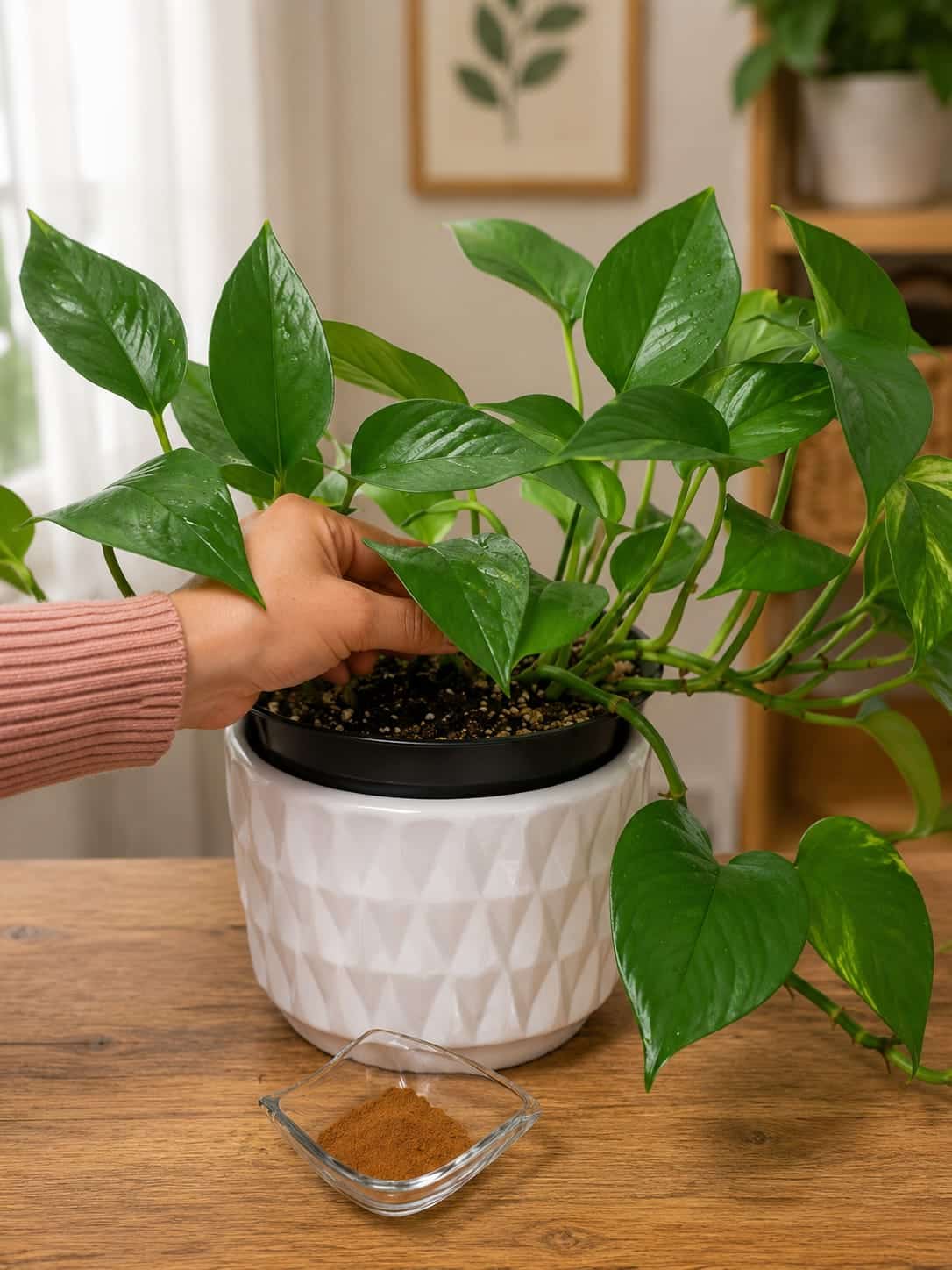
The image shows a lush pothos plant with a small bowl of brown powder nearby. This powder looks like cinnamon, one of the most popular natural ingredients used in houseplant care. Cinnamon is often used by plant owners because it is easy to find, smells pleasant, and is commonly believed to help keep small fungal issues under control when used dry and sparingly.
Cinnamon can be useful for pothos, especially around cuttings, small surface wounds, and slightly damp soil areas. But it must be used correctly. Cinnamon is not fertilizer. It will not make pothos grow instantly. It will not fix root rot. It will not replace light, drainage, pruning, or proper watering. If used too heavily, it can irritate roots, create a dusty crust on the soil, and make people believe they have solved a problem that actually needs repotting.
The safest way to use cinnamon for pothos is as a light dry dusting on cut stems, propagation points, or small soil surface areas—not as a thick layer and not as a liquid treatment. Used carefully, it can become a helpful part of a clean indoor plant routine.
Why Pothos Plants Sometimes Struggle Indoors
Pothos is easy, but it is not indestructible. It still needs the right balance of light, water, air, and soil. When one of these things is wrong, the plant can begin to show signs of stress.
Low light is one of the most common reasons pothos becomes weak. The plant may survive in dim rooms, but it will grow slowly. The leaves may become smaller, the vines may stretch, and variegated types may lose some of their bright patterns.
Overwatering is another common problem. Pothos likes moisture, but it does not like soggy roots. If the soil stays wet for too long, the roots can suffocate and rot. This may cause yellow leaves, limp vines, soft stems, and a sour smell from the pot.
Old soil can also cause problems. Over time, potting mix breaks down and becomes compacted. When this happens, roots receive less oxygen. Water may sit too long in the pot, and the plant may stop growing well.
Cinnamon may help with very small surface issues, but it cannot fix poor care conditions. If the plant is weak because of wet soil, poor drainage, or root rot, cinnamon alone will not solve it.
What Cinnamon Can Do for Pothos
Cinnamon is often used in houseplant care as a dry powder on cut surfaces. Many plant lovers use it after pruning, after taking cuttings, or after removing a damaged stem. The idea is that cinnamon helps keep the cut area dry and clean while it heals.
For pothos, this can be useful because pothos is often pruned and propagated. Every time you cut a vine, you create a small wound. Most healthy pothos stems heal easily, but if the environment is damp or dirty, the cut can sometimes rot.
A tiny dusting of cinnamon on a freshly cut stem may help dry the surface and reduce the chance of minor fungal growth. It can also be used lightly on the soil surface if you notice a small patch of surface mold.
However, cinnamon should not be poured into the pot in large amounts. It should not be mixed heavily into the root zone. It should not be used as a regular fertilizer. It should not be added to water and poured through the soil.
Cinnamon is best used dry, light, and targeted.
What Cinnamon Cannot Do
Cinnamon cannot save a pothos with serious root rot. If the roots are black, mushy, or foul-smelling, the plant needs to be removed from the pot, cleaned, trimmed, and repotted in fresh soil. A sprinkle of cinnamon on top will not repair dead roots.
Cinnamon cannot make yellow leaves green again. Once a pothos leaf turns yellow, it usually stays yellow. The important thing is to find out why it yellowed. The cause may be overwatering, underwatering, low light, cold stress, root damage, or natural aging.
Cinnamon cannot replace fertilizer. It does not provide the balanced nutrients pothos needs for leafy growth. It is not a plant food.
Cinnamon cannot make vines fuller by itself. A fuller pothos comes from pruning, propagation, bright indirect light, and healthy roots.
Cinnamon is useful as a small protective tool, not as a complete growth solution.
How to Use Cinnamon After Pruning Pothos
Pruning is one of the best ways to make pothos fuller. When you cut long vines, the plant can branch from nearby nodes. You can also root the cut pieces and plant them back into the pot to create a thicker plant.
After pruning, use clean scissors and make a neat cut just above a node. If the cut area looks wet, you can let it dry for a few minutes. Then dip a clean fingertip or cotton swab into cinnamon powder and lightly touch the cut surface.
You only need a tiny amount. The cut should look lightly dusted, not coated in a thick layer. Too much powder can clump and look messy.
Do not sprinkle cinnamon all over the leaves. Do not rub it along the entire vine. Only use it on the cut point if needed.
After pruning, keep the plant in bright indirect light and avoid overwatering. The plant will recover best when the soil is not soggy.
Using Cinnamon for Pothos Cuttings
Pothos cuttings are very easy to root. A cutting needs at least one node, because roots grow from nodes. A leaf without a node will not become a new pothos plant.
If you are rooting pothos cuttings in soil, cinnamon may be used lightly on the cut end before planting. Allow the cut end to dry briefly, dust it lightly with cinnamon, and place the node into moist but not soggy potting mix.
If you are rooting pothos in water, cinnamon is usually not needed. Do not pour cinnamon powder into the propagation jar. It can cloud the water, float on the surface, cling to the stem, and make the jar dirty. Clean water is better for water propagation.
For water cuttings, simply place the node in clean water, keep leaves above the waterline, and change the water every few days. Once roots are a few inches long, plant the cutting into soil.
Cinnamon is more useful for soil propagation than water propagation.
Can Cinnamon Help With Mold on Pothos Soil?
Sometimes a white fuzzy layer appears on the soil surface. This is usually caused by damp soil, poor airflow, too much organic material, or low light. A small amount of surface mold is often not deadly, but it is a sign that the potting environment is too wet or stale.
Cinnamon may help with very light surface mold, but it should not be your only response. First, remove the visible moldy layer with a spoon. Then let the soil dry more before watering again. Improve airflow around the plant and move it to brighter indirect light if the room is dim.
After removing the mold, you can dust a tiny amount of cinnamon on the affected surface. Use only a light sprinkle. Do not cover the entire pot with a thick brown layer.
If mold keeps coming back, the real problem is not lack of cinnamon. The soil may be staying too wet, the pot may not drain properly, or the mix may be too dense.
Repeated mold means the care routine needs correction.
Can Cinnamon Stop Fungus Gnats?
Cinnamon is sometimes mentioned as a natural fungus gnat helper, but it is not a complete solution. Fungus gnats appear when soil stays moist and contains organic material that their larvae can feed on.
A light cinnamon dusting may make the soil surface less inviting, but it will not eliminate a serious fungus gnat problem. The most important step is to let the top layer of soil dry more between waterings.
Yellow sticky traps can catch adult gnats. Improving drainage, reducing watering, and removing decaying material from the soil surface are more effective than relying on cinnamon alone.
If the infestation is heavy, you may need a targeted plant-safe treatment.
Cinnamon can be part of prevention, but it should not be treated as a guaranteed pest control cure.
How Much Cinnamon Should You Use?
Use very little. For a cut stem, a tiny dusting on the wound is enough. For a small mold patch on soil, a light pinch is enough. For a medium pot, you should not need more than a small sprinkle across the affected area.
Never pour spoonfuls of cinnamon onto pothos soil. A thick layer can create a crust, interfere with watering, and make it harder to see what is happening in the soil.
Cinnamon should never become a regular top layer like mulch. It is a spot treatment.
If the whole soil surface looks like cinnamon powder, you used too much. Remove the excess and return to normal care.
With cinnamon, less is safer.
Should You Mix Cinnamon Into the Soil?
It is usually better not to mix cinnamon deeply into the soil. Pothos roots need a balanced potting mix with air, moisture, and drainage. Cinnamon is not a soil amendment, and adding too much around the roots may irritate them or change the soil surface behavior.
If you are treating a small surface mold issue, keep cinnamon on the top layer only. If you are treating a cut stem, apply it only to the cut.
If the soil itself smells bad, cinnamon will not fix it. Sour soil means the root zone may be unhealthy. In that case, repotting is better.
A good pothos soil mix should include indoor potting mix with added perlite, bark, or other aerating materials. Cinnamon is not a substitute for proper soil structure.
Continue to Page 2
Continue to page 2 for more details about this article and the key points many readers miss on the first page.