Snake plants are famous for being tough, stylish, and easy to grow. Their upright sword-shaped leaves, bold green patterns, and yellow edges make them one of the most popular indoor plants for homes, offices, bedrooms, shelves, and bright corners. They look clean and modern, and they can survive much more neglect than many other houseplants.
But even a strong snake plant can slow down. The main plant may look fine, but the small pups stop growing. New shoots may appear and then sit at the same size for months. The leaves may stay upright but lose their fresh energy. The soil may look dry on top, but the root zone may not be supporting new growth well. This is when many plant lovers start looking for a gentle home routine that supports the roots without overwhelming the plant.
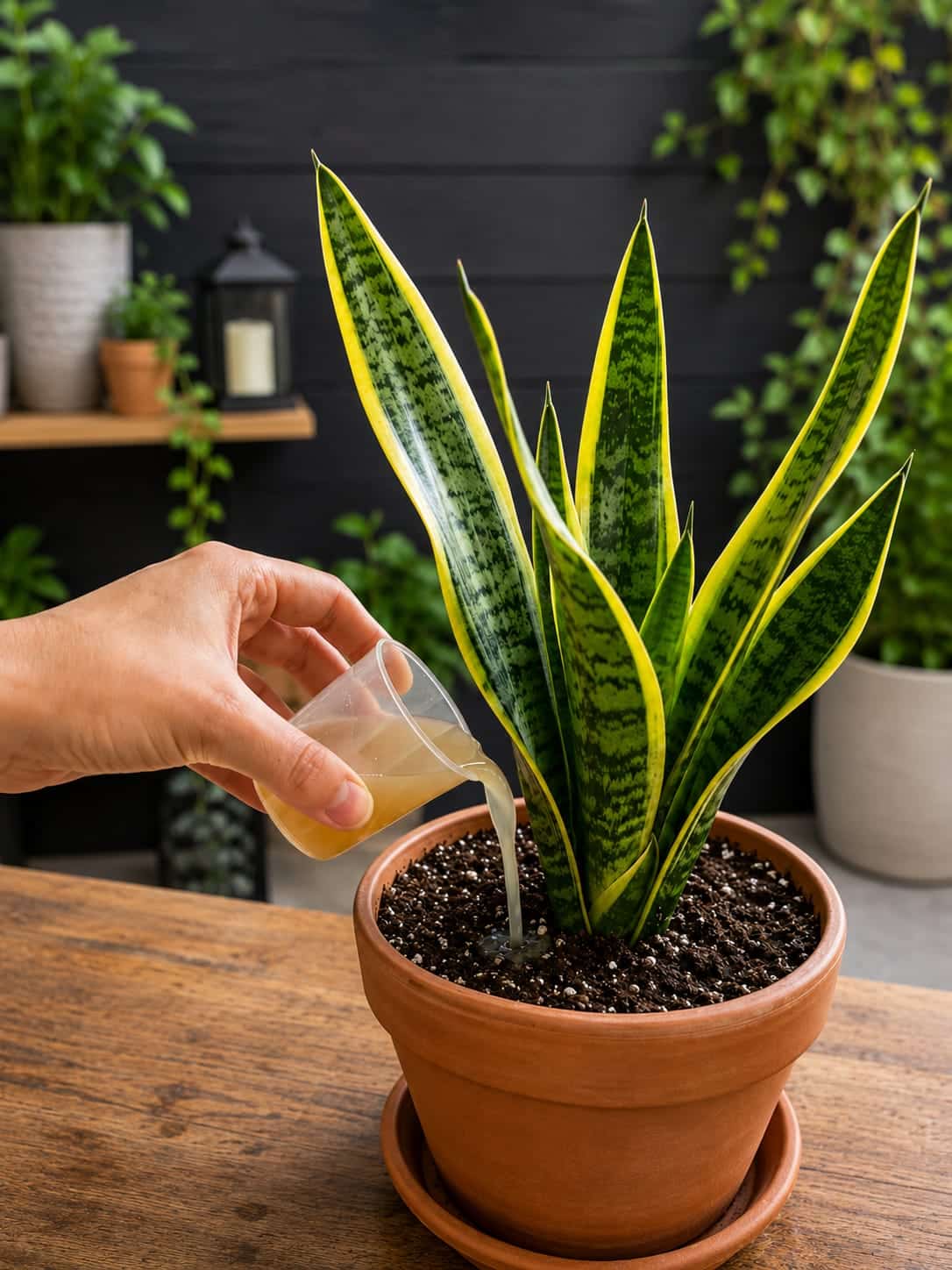
The image shows a healthy snake plant in a terracotta pot being watered with a light brown liquid. This “brown liquid idea” can represent a mild natural root-zone tonic, such as very diluted compost tea, diluted worm casting tea, or a gentle banana peel and compost-style infusion. These homemade liquids are popular because they look natural, simple, and easy to use. They are often presented as a way to support small pups, fresh upright leaves, and stronger roots.
But snake plants are not heavy feeders. They do not like soggy soil. They do not want thick, fermented, sticky, or strong homemade liquids poured into the pot. If a brown liquid is too rich, too old, or used too often, it can cause fungus gnats, sour soil, mold, root stress, and even rot. The safest version is fresh, weak, strained, diluted, and used only when the plant is already due for watering.
This guide explains how to use a gentle brown root-zone tonic for snake plants, why pups stop growing, how to support the underground rhizomes, when to avoid homemade liquids, and what really makes snake plants grow fuller, fresher, and more upright indoors.
Why Snake Plant Pups Stop Growing
Snake plant pups grow from underground rhizomes. These rhizomes are thick storage structures that hold water and energy. When the mother plant is healthy and has enough strength, it sends up new shoots from the soil. These small shoots slowly become upright leaves.
When pups stop growing, the problem is usually not one missing ingredient. It is often a care-condition issue. The plant may not be receiving enough light. The soil may be too compacted. The pot may be too wet. The root zone may be cold. The plant may be in a pot that is too large, holding extra moisture around the roots. Or the plant may simply be growing slowly because snake plants are naturally patient plants.
Many people think small pups need more fertilizer immediately. But if the root zone is stressed, extra feeding can make the situation worse. A snake plant with weak or wet roots cannot use nutrients properly. It first needs the right environment: bright indirect light, fast-draining soil, careful watering, and warmth.
A mild brown liquid tonic may support a healthy plant, but it cannot force pups to grow if the basic care is wrong.
What the Brown Liquid Might Be
The brown liquid in the image looks like a natural plant tonic. It may represent diluted compost tea, worm casting tea, banana peel water, weak tea-colored organic fertilizer, or another homemade root support liquid. In plant-care videos, brown liquids are often described as “root boosters” or “natural food.”
For snake plants, the safest brown liquid should be very weak. It should look like light tea, not thick syrup. It should not smell sour. It should not contain floating food pieces. It should not be fermented for days in a warm room. It should pour like water and drain easily through the pot.
A safe brown liquid for snake plants is not meant to replace proper fertilizer. It is only an occasional support step. The goal is to give the soil a mild refresh without making the pot too wet or too rich.
Because snake plants are drought-tolerant, the strength of the liquid matters less than the safety of the root zone. Weak and occasional is better than strong and frequent.
The Safest Brown Liquid Recipe for Snake Plants
A safe homemade brown liquid can be made from worm castings or finished compost. These ingredients are gentler than raw kitchen scraps and less likely to create strong odors if used correctly.
To make a mild worm casting tea, place one teaspoon of worm castings in two cups of clean water. Stir gently and let it sit for one to two hours. Strain the liquid very well so no solid particles remain. Then dilute the strained liquid with two more cups of plain water. The final liquid should be pale brown, thin, and mild.
To make a mild compost tea, use only fully finished compost. Add one teaspoon of finished compost to two cups of water, stir, let it sit briefly, strain well, and dilute with two more cups of water.
Do not use unfinished compost, fresh manure, rotten food water, meat-based liquids, milk mixtures, sugary liquids, or anything that smells sour. Indoor snake plant pots are not compost bins.
Use the brown liquid fresh the same day. Do not store it for a week. Old organic liquid can ferment and become risky indoors.
A Banana Peel Brown Tonic Option
Some people like banana peel water because it creates a pale golden-brown liquid and is easy to make. If you want to use banana peel for snake plants, keep it extremely mild.
Use a small piece of clean banana peel, about two inches long. Place it in two cups of water for two to four hours. Remove the peel completely. Strain the water and dilute it with two more cups of plain water.
Do not blend banana into the water. Do not use thick banana pulp. Do not leave banana peels in the pot. Do not use fermented banana water. Banana can attract gnats and mold if used too heavily.
This kind of tonic should be used rarely, only when the plant is healthy and the soil is dry enough for watering.
For snake plants, banana peel water should be treated as a light occasional supplement, not a powerful fertilizer.
How to Apply the Brown Liquid Correctly
Apply the brown liquid only when your snake plant is already due for watering. This rule matters more than the recipe. If the soil is still damp, do not add any liquid.
Check the soil deeply. The top may look dry while the lower soil is still moist. Use a wooden stick, moisture meter, or your finger if the pot is small enough. Snake plants prefer to dry well between waterings.
When the soil is dry, pour a small amount of the diluted brown liquid onto the soil near the outer root zone. Do not pour it into the center crown where the leaves emerge. Liquid sitting inside the leaf base can increase rot risk.
Water slowly and let the liquid soak through the soil. Make sure the pot drains. Empty the saucer after watering. A snake plant should never sit in standing water, even if the liquid is natural.
The brown liquid counts as a watering. Do not use it and then water again immediately.
How Often to Use It
Use a brown root-zone tonic rarely. Once every six to eight weeks during active growth is enough. For many snake plants, once every two or three months is safer.
Do not use it weekly. Do not use it every watering. Do not use it every time you see a pup. Too much organic liquid can make the soil stay damp and encourage fungus gnats.
The best time to use it is spring or summer, when the plant receives more light and is naturally more likely to grow. If your snake plant is growing under a bright grow light all year, you may use it occasionally when active growth is visible.
During winter, low light, or cool indoor conditions, skip homemade tonics. The plant uses less water, the soil dries more slowly, and organic liquids are more likely to cause problems.
Why Pups Need Healthy Rhizomes
Snake plant pups are not separate miracles. They come from the mother plant’s rhizome system. If the rhizomes are firm, healthy, and energetic, pups can continue growing. If the rhizomes are weak or rotting, pups may stall or collapse.
Healthy rhizomes are usually firm and pale to orange-tan, depending on the variety and growing conditions. Rotten rhizomes are soft, mushy, dark, and may smell unpleasant.
When pups stop growing, do not immediately feed more. First ask whether the plant has enough light and whether the roots are healthy. A pup that sits in wet soil may rot before it ever becomes a full leaf.
The brown liquid routine is only helpful when rhizomes are healthy. If the rhizomes are already stressed, the plant needs correction, not extra homemade food.
Fresh Upright Leaves Start Below the Soil
The fresh upright leaves of a snake plant depend on strong roots and rhizomes. If the root system is healthy, new leaves grow firm, vertical, and well-colored. If roots are struggling, leaves may lean, wrinkle, soften, or yellow.
A good root zone has three things: air, drainage, and controlled moisture. Snake plants need oxygen around their roots. Dense wet soil blocks oxygen and creates rot conditions.
This is why a terracotta pot, like the one in the image, can be helpful. Terracotta allows moisture to evaporate more easily than plastic. It helps the soil dry faster, which is useful for a drought-tolerant plant.
The brown liquid may support the root zone mildly, but only if the potting mix drains well. If the soil is heavy and wet, the tonic may become trapped and cause problems.
Strong upright leaves are a sign of good root care, not just feeding.
Best Soil for Snake Plant Pups
Snake plants need fast-draining soil. A cactus or succulent mix is usually a good base. You can improve it with pumice, perlite, coarse sand, lava rock, or small bark chips.
The soil should feel loose and gritty, not dense and muddy. After watering, excess liquid should drain quickly. The pot should not stay wet for many days.
If your snake plant pups are not growing and the soil feels compacted, repotting may help more than any brown liquid. Old soil can collapse around roots and hold too much moisture.
When repotting, choose a pot with drainage holes and use a mix that dries well. Do not move the plant into a huge pot. A pot that is too large holds too much soil and may stay wet too long.
Healthy soil gives pups the foundation they need to continue growing.
Continue to Page 2
Continue to page 2 for more details about this article and the key points many readers miss on the first page.