Best Light for Growing Snake Plant Pups
Snake plants tolerate low light, but pups grow best in bright indirect light. If the plant is in a dark corner, the pups may stop growing because the plant does not have enough energy.
Move the plant closer to a bright window. Morning sun is usually gentle and helpful. Bright filtered light throughout the day is ideal. If the plant has been in low light for a long time, move it gradually so the leaves do not scorch.
If you do not have a bright window, a grow light can help. More light means more photosynthesis. More photosynthesis means more stored energy in the rhizomes. More rhizome energy means a better chance of new pups and stronger leaves.
The brown liquid idea will not work well without light. Light is the real growth engine.
How to Water Snake Plants the Right Way
Water only when the soil is dry. This is the most important watering rule for snake plants. Do not water on a strict calendar. A snake plant in bright light may dry faster than one in low light. A terracotta pot may dry faster than a plastic pot.
When watering, water thoroughly until the excess drains from the bottom. Then let the pot dry again before the next watering. Do not give small daily sips. Frequent small watering keeps the surface damp and can attract gnats while failing to water the deeper roots evenly.
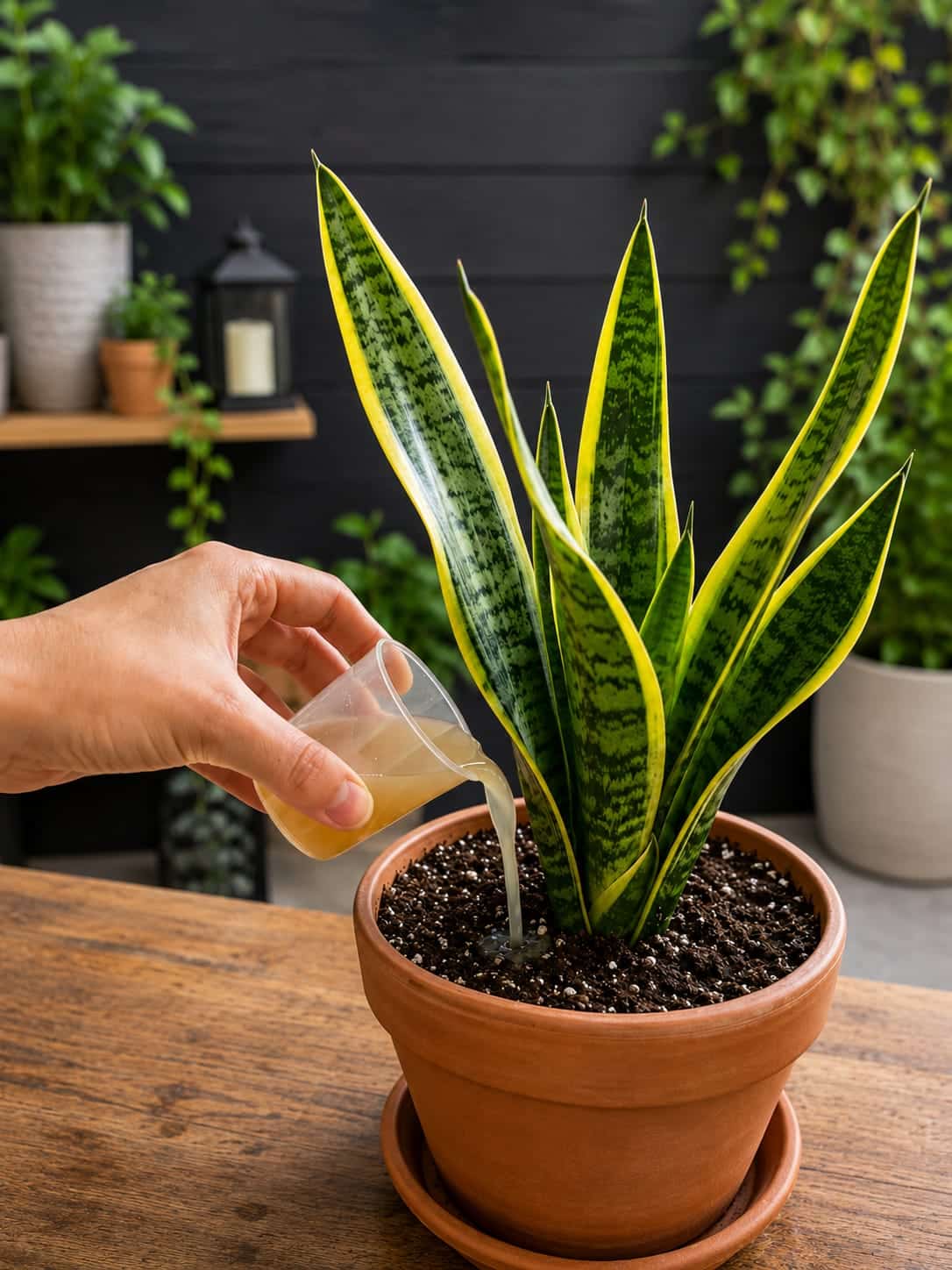
If using the brown liquid, use it exactly like a watering. Apply it only when the plant is ready. Let it drain fully.
Overwatering is much more dangerous than underwatering for snake plants. A thirsty snake plant can often recover. A rotten snake plant is much harder to save.
Signs Your Snake Plant Needs Support
A snake plant may need better root-zone support if growth has stopped during the active season, pups remain tiny for months, leaves look slightly dull, or the soil seems exhausted but not rotten.
It may also benefit from a mild routine if the plant is healthy but has not been fed or refreshed in a long time. A gentle brown tonic can be part of this care, especially if the plant is in bright light and draining well.
But support does not always mean feeding. Sometimes support means moving the plant to brighter light. Sometimes it means repotting into better soil. Sometimes it means watering less often. Sometimes it means dividing an overcrowded plant.
The best support depends on the real cause of slow growth.
Signs You Should Avoid Brown Liquid
Do not use brown liquid if the soil is wet. Do not use it if the leaves are yellow and soft. Do not use it if the base of the plant feels mushy. Do not use it if the pot smells sour. Do not use it if fungus gnats are already present.
Do not use it in a pot without drainage holes. Do not use it in cold rooms where the soil stays damp. Do not use it on a newly repotted plant with damaged roots unless it has already recovered.
Do not use thick, old, fermented, or unstrained homemade liquid. Anything with floating particles can decay in the pot.
If the plant is struggling, diagnose first. Homemade tonics should never be used blindly on a sick plant.
What to Do If Pups Are Completely Stalled
If pups are not growing at all, check light first. Move the plant to a brighter location and give it a few weeks. Snake plants respond slowly, so do not expect instant change.
Next, check watering. If the soil stays wet too long, reduce watering and improve light. If the soil is extremely dry for months and the leaves wrinkle, water thoroughly and adjust the routine.
Then check pot size and soil. If the pot is too large or the soil is heavy, repot into a smaller or better-draining setup. If roots are crowded but healthy, the plant may still grow well, but severe overcrowding can sometimes slow pups.
Finally, consider gentle feeding during active growth. A diluted cactus fertilizer or mild brown root-zone tonic can support growth once the care conditions are right.
Do not rush. Snake plant pups often grow slowly before they suddenly begin rising.
Can Brown Liquid Replace Fertilizer?
No. A homemade brown liquid cannot fully replace fertilizer because its nutrient content is not measured or complete. It may contain some useful compounds, but the amount is unpredictable.
Snake plants are light feeders, so they do not need much fertilizer. During spring or summer, you can use a cactus or succulent fertilizer diluted to half strength once or twice. This is often enough.
If you prefer natural methods, a mild worm casting tea or compost tea can be used occasionally, but it should still be treated as a supplement, not a complete nutrition program.
Do not combine fertilizer and brown tonic at the same time. Too many inputs can stress the roots.
Simple and mild is safest for snake plants.
Can It Fix Yellow Leaves?
No. Brown liquid will not turn yellow snake plant leaves green again. Yellowing is a sign of stress or aging. The cause must be identified.
If one old outer leaf slowly yellows, it may simply be aging. If several leaves yellow, especially from the base, overwatering is a likely cause. If leaves are yellow and soft, inspect the roots immediately.
Do not apply brown liquid to a yellowing plant in wet soil. That adds more moisture and can worsen rot.
Remove badly damaged leaves and correct the care issue. Future leaves can grow healthy if the root zone recovers.
Can It Fix Leaning Leaves?
Brown liquid cannot straighten leaves that are already weak or damaged. Leaning leaves can happen because of low light, overwatering, root damage, physical bending, or a plant becoming top-heavy.
If the plant leans toward a window, rotate it regularly and provide more even light. If leaves are soft at the base, check the roots. If the plant is top-heavy, use a heavier pot or repot slightly deeper while keeping leaf bases dry.
Future leaves may grow stronger if the root system is healthy and the plant receives better light.
A root-zone tonic may support future growth, but it is not a physical repair tool.
Can It Help Brown Tips?
Brown tips on snake plants can happen from inconsistent watering, mineral buildup, fertilizer burn, dry stress, sunburn, cold drafts, or physical damage. A brown tonic will not repair old brown tips.
You can trim brown tips with clean scissors if you want a neater look. To prevent new brown tips, improve watering consistency, avoid overfertilizing, protect the plant from cold drafts, and use bright indirect light.
If your tap water is very hard, occasional flushing with plain water may help. Always let the pot drain fully.
Do not add a homemade tonic to solve brown tips unless you are sure the plant is otherwise healthy and due for watering.
What If the Brown Liquid Causes Gnats?
If fungus gnats appear after using a brown liquid, stop using all homemade tonics immediately. Let the soil dry more between waterings. Remove any decaying material from the soil surface.
Use yellow sticky traps to catch adult gnats. Check whether the potting mix is too rich or staying wet too long. If the infestation continues, replace the top layer of soil or repot into a drier, grittier mix.
Gnats are a sign that the root-zone environment is too moist or too organic. Snake plants should not have constantly damp soil.
Next time, use a weaker liquid or skip homemade tonics entirely.
What If the Soil Smells Sour?
Sour soil is a warning sign. It usually means the pot is staying too wet, organic material is decomposing badly, or roots are rotting.
Do not add more brown liquid. Remove the plant from the pot and inspect the roots. Healthy roots and rhizomes should be firm. Rotten parts are soft, dark, mushy, or smelly.
Cut away rotten tissue with clean tools. Repot the healthy parts into fresh fast-draining soil. Use a pot with drainage holes. Wait before watering again.
Sour soil cannot be fixed with more tonic. It needs correction.
Easy Home Routine for Snake Plant Pups
Place the snake plant in bright indirect light. Use a terracotta or well-draining pot. Grow it in cactus or succulent mix improved with perlite or pumice. Water only when the soil is dry. Rotate the pot every few weeks.
During spring and summer, feed lightly once or twice with diluted cactus fertilizer, or use a mild brown root-zone tonic once every six to eight weeks. Do not do both at the same time.
Keep the leaves clean by wiping them with a damp cloth. Remove dead or damaged leaves. Watch small pups patiently and avoid disturbing them too often.
This simple routine supports the plant without overwhelming it.
How to Make Pups Grow Stronger Over Time
Patience is important. Snake plant pups do not always grow quickly. Once they emerge, they may pause while the root system strengthens. With good care, they eventually rise and harden into strong upright leaves.
To help them, avoid overwatering around the tiny pup bases. Keep the crown dry. Give the plant more light. Avoid moving or repotting too often. Stable conditions help pups develop.
If the mother plant is very crowded, you can divide it, but only when the pups are large enough and have their own roots. Dividing too early can stress them.
A mild tonic may support root activity, but stability and light matter more.
Should You Divide Snake Plant Pups?
You can divide snake plant pups when they are large enough to have their own roots and rhizome section. Very tiny pups should usually stay attached longer because they still depend on the mother plant.
When dividing, remove the plant from the pot and gently separate the rhizome with clean tools. Let cut areas dry briefly before repotting. Use fresh, fast-draining soil.
Do not water heavily immediately after division. Give the plant time to settle. Keep it in bright indirect light.
Do not use brown tonic right after division. Wait until the plant has recovered and is ready for normal watering.
Common Mistakes to Avoid
The first mistake is using brown liquid too often. Snake plants do not need frequent feeding.
The second mistake is using thick or fermented liquid. It can create sour soil and gnats.
The third mistake is applying tonic to wet soil. Always wait until the plant needs water.
The fourth mistake is pouring liquid into the center of the plant. Water the soil around the root zone instead.
The fifth mistake is using homemade tonic to treat root rot. Rotten roots need trimming and repotting.
The sixth mistake is keeping the plant in low light and expecting pups to grow quickly.
The seventh mistake is using a pot without drainage holes.
The eighth mistake is adding multiple homemade ingredients at once. Keep the routine simple.
Frequently Asked Questions
What is the brown liquid for snake plants?
It may be a mild natural root-zone tonic such as diluted worm casting tea, weak compost tea, or very diluted banana peel water. It should be fresh, strained, diluted, and used rarely.
Can brown liquid make snake plant pups grow faster?
It may support healthy root activity, but pups grow best with bright indirect light, warm temperatures, fast-draining soil, and proper watering. It cannot force growth by itself.
How often should I use it?
Use it once every six to eight weeks during active growth, or less often. Do not use it every watering.
Can I use it in winter?
Usually no. Skip homemade tonics during winter or low-light periods unless the plant is actively growing and the soil dries well.
Can it fix yellow leaves?
No. Yellow leaves will not turn green again. Check for overwatering, root rot, cold stress, or old age.
Can it cause fungus gnats?
Yes, if it is too strong, used too often, or applied to damp soil. Stop using it if gnats appear.
Should I pour it on the leaves?
No. Apply it to the soil only. Keep the leaf crown dry.
Can it replace fertilizer?
No. It is not a complete fertilizer. A diluted cactus or succulent fertilizer is more predictable if feeding is needed.
What is the best way to support small pups?
Give bright indirect light, use fast-draining soil, avoid overwatering, keep the plant warm, and let pups stay attached until they are strong.
Final Thoughts
A light brown root-zone tonic can be a gentle support step for snake plants, especially when small pups are growing slowly. The safest version is fresh, strained, diluted, and mild—such as weak worm casting tea, weak compost tea, or very diluted banana peel water.
But this method is not magic. It cannot replace light, drainage, correct watering, healthy rhizomes, and patience. Snake plant pups grow from stored energy in the underground rhizomes, and that energy comes mostly from healthy leaves receiving bright indirect light.
Use the brown liquid only when the soil is dry and the plant is due for watering. Apply it to the soil, not the crown. Let the pot drain fully. Use it rarely during active growth. Stop immediately if you notice gnats, mold, sour smells, yellow leaves, or soft bases.
For the best results, keep your snake plant in fast-draining soil, a pot with drainage holes, bright indirect light, and a simple watering routine. With steady care, the small pups can continue growing, the leaves can stay fresh and upright, and your snake plant can become fuller and stronger over time.