The Best Soil for Pothos
Pothos grows best in a light, airy potting mix that holds some moisture but drains well. A basic indoor potting mix can work, but it often becomes better when mixed with perlite or orchid bark.
A simple pothos mix can include two parts indoor potting soil, one part perlite, and one part orchid bark. This gives the roots both moisture and oxygen.
If your pothos soil stays wet for many days after watering, it may be too dense. If the plant has yellow leaves and a damp pot, check the roots. If the soil smells sour, repot the plant.
Cinnamon should not be used to hide soil problems. Fresh airy soil is much more important.
How to Water Pothos Correctly
Watering is one of the most important parts of pothos care. Pothos likes the soil to dry slightly between waterings. It does not want to sit in soggy soil.
Check the top inch or two of soil. If it feels dry, the plant may be ready for water. If it feels damp, wait. In brighter light, pothos may need water more often. In lower light, it uses water more slowly.
When watering, water thoroughly until excess drains from the bottom. Then empty the saucer. Do not leave the plant standing in water.
Avoid tiny daily sips. Small frequent watering can keep the soil surface damp and encourage gnats or mold.
If you are using cinnamon because of mold or dampness, your watering routine probably needs adjustment.
Bright Indirect Light for Healthy Pothos
Pothos can tolerate low light, but it grows best in bright indirect light. If you want bigger leaves, fuller vines, and stronger growth, light matters more than cinnamon.
Place pothos near a bright window where it receives filtered light. Morning sun is usually gentle. Harsh afternoon sun can scorch leaves if the plant is too close to the glass.
If your pothos is losing variegation, producing small leaves, or growing long empty vines, it probably needs more light.
Cinnamon will not make a pothos lush in a dark corner. Light gives the plant energy. Without enough energy, growth stays weak.
Pruning for Fuller Growth
If your pothos looks thin, pruning is one of the best solutions. Cut long vines just above a node. This can encourage new growth and branching. It also gives you cuttings that can be rooted and planted back into the pot.
Use clean scissors. After cutting, you can apply a tiny dusting of cinnamon to the cut end on the mother plant if you want. This is especially helpful if the room is humid or the plant has had stem rot problems before.
Do not prune a severely stressed pothos heavily. If the plant is weak because of root rot or poor care, fix the root issue first.
For a healthy plant, regular pruning creates a fuller, bushier shape over time.
How to Propagate Pothos Successfully
Take a cutting with at least one node and one leaf. Place the node in water or moist potting mix. Keep the leaf above the water or soil.
For water propagation, use clean water and change it every few days. Do not add cinnamon to the water. Once roots are a few inches long, plant the cutting in soil.
For soil propagation, use a light moist mix. You can dust the cut end lightly with cinnamon if desired, then place the node into the mix. Keep the soil lightly moist but not soggy.
Rooted cuttings can be planted back into the mother pot to make it fuller.
Propagation is one of the easiest ways to multiply pothos and improve the plant’s shape.
Can Cinnamon Help Root Rot?
Cinnamon may help dry a small cut surface after rotten parts are removed, but it does not cure root rot by itself.
If your pothos has root rot, remove the plant from the pot. Wash or shake away old wet soil. Trim off black, mushy, or smelly roots with clean scissors. If the stems are also soft and rotten, cut back to healthy green tissue.
After trimming, you may lightly dust cut areas with cinnamon. Then repot the plant in fresh airy soil and a pot with drainage holes.
Do not water heavily immediately after repotting. Keep the plant in bright indirect light and let it recover.
Cinnamon is only a small helper after the real work is done.
Signs Your Pothos Needs Repotting Instead of Cinnamon
If the soil smells sour, repot. If roots are circling tightly and the plant dries too fast, repot. If water sits on top and drains slowly, repot. If the pot has no drainage, repot. If the plant has many yellow leaves and wet soil, inspect the roots and repot if needed.
Cinnamon cannot refresh old compacted soil. It cannot add oxygen to the lower root zone. It cannot remove rotten roots.
Sometimes the best plant trick is simply fresh soil and a better pot.
If your pothos has been in the same soil for years, a small bowl of cinnamon will not solve the real issue. Repotting may give the plant a much better chance to grow.
Can Cinnamon Replace Fertilizer?
No. Cinnamon is not fertilizer. It does not feed pothos in a balanced way. It does not provide enough nitrogen for leafy growth, and it does not replace a complete plant food.
During spring and summer, pothos can be fed with a balanced liquid houseplant fertilizer diluted to half strength. Feeding once a month or every six weeks during active growth is enough for many plants.
Do not overfertilize. Too much fertilizer can cause brown tips, salt buildup, and root stress.
Cinnamon is for small cut surfaces and minor surface issues. Fertilizer is for nutrition. They are not the same.
Can Cinnamon Damage Pothos?
Yes, if used incorrectly. Too much cinnamon can create a dry dusty layer on the soil. It may interfere with water absorption and make the pot look messy. If mixed deeply and heavily into soil, it may irritate roots or change the root environment.
Cinnamon dust can also be irritating if inhaled, especially when used in large amounts. Apply it gently and avoid creating clouds of powder.
Do not put cinnamon on wet leaves. It may stick, stain, or clog the surface. Pothos leaves should be cleaned with plain water, not coated with powder.
Used lightly, cinnamon is usually fine. Used heavily, it becomes a problem.
How to Keep Pothos Leaves Shiny Naturally
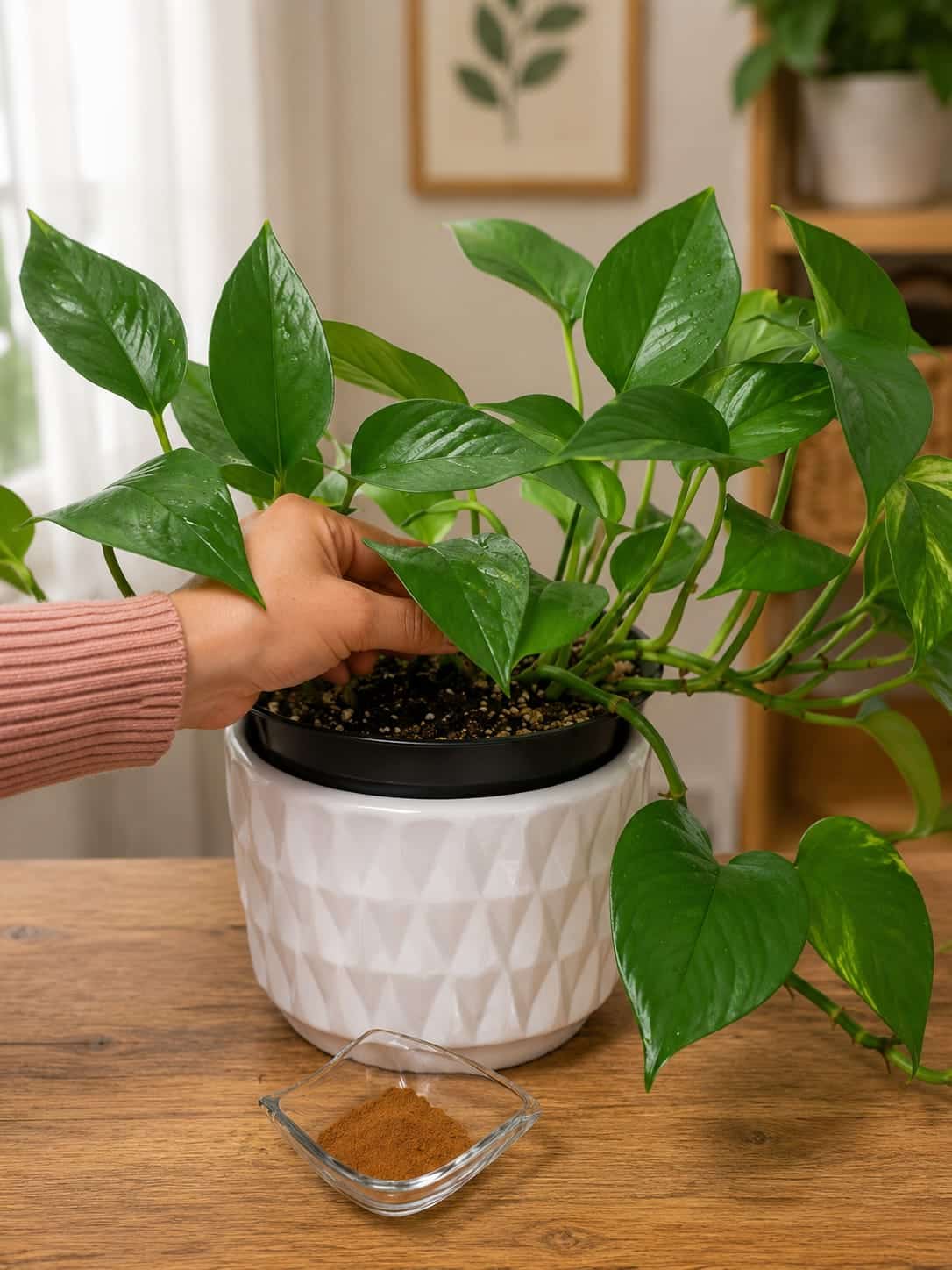
The pothos in the image has fresh, glossy leaves. The best way to keep pothos leaves shiny is simple: wipe them with a soft damp cloth. Dust can make leaves look dull and block light.
Do not use oily leaf shine products. Oils can attract dust and interfere with the leaf surface. Plain water is enough.
If the plant is very dusty, you can rinse it gently in the shower with lukewarm water. Let the pot drain fully afterward.
Clean leaves absorb light better and make the whole plant look healthier.
Cinnamon belongs on cut points or soil spots, not on leaf surfaces.
Best Indoor Routine for a Strong Pothos
Place the pothos in bright indirect light. Water when the top inch or two of soil dries. Use a pot with drainage holes. Keep the soil airy and fresh. Prune long vines to encourage fullness. Root cuttings and plant them back into the pot.
Feed lightly during spring and summer if the plant is actively growing. Wipe the leaves to remove dust. Rotate the pot every few weeks so growth stays balanced.
Use cinnamon only when needed: after pruning, when preparing soil cuttings, or for tiny surface mold spots after correcting moisture.
This routine is much more effective than sprinkling cinnamon regularly without understanding the plant’s needs.
Common Mistakes to Avoid
The first mistake is using cinnamon as fertilizer. It does not feed the plant.
The second mistake is pouring cinnamon into water propagation jars. It makes water dirty and is not needed.
The third mistake is covering the whole soil surface with a thick cinnamon layer. Use only a light dusting where needed.
The fourth mistake is using cinnamon instead of fixing overwatering. Wet soil must be corrected.
The fifth mistake is using cinnamon to hide sour soil. Sour soil means the plant may need repotting.
The sixth mistake is applying cinnamon to leaves. Leaves should be wiped with plain water.
The seventh mistake is expecting cinnamon to make pothos fuller. Pruning and light create fullness.
Frequently Asked Questions
Is cinnamon good for pothos?
Cinnamon can be useful in small amounts on cut stems, soil cuttings, and minor surface mold spots. It should be used dry and lightly. It is not fertilizer.
Can I sprinkle cinnamon on pothos soil?
Yes, but only a tiny amount on a problem area. Do not cover the entire soil surface with a thick layer.
Can cinnamon stop root rot?
No. Root rot must be fixed by removing rotten roots and repotting in fresh airy soil. Cinnamon may be used lightly on trimmed areas, but it is not the cure.
Can I put cinnamon in pothos propagation water?
No. Use plain clean water for propagation jars. Cinnamon can cloud the water and stick to the stem.
Does cinnamon make pothos grow faster?
No. Faster growth comes from bright indirect light, healthy roots, proper watering, pruning, and gentle feeding.
Can cinnamon replace fertilizer?
No. Cinnamon does not provide balanced nutrients. Use diluted houseplant fertilizer during active growth if needed.
How often should I use cinnamon?
Only when needed. It is not a weekly treatment. Use it after pruning, on soil cuttings, or for small surface mold spots.
Can cinnamon harm pothos?
It can cause problems if used too heavily. Thick layers may crust on soil, irritate roots, or make watering uneven.
Final Thoughts
Cinnamon can be a helpful natural tool for pothos care, but it works best when used gently and realistically. A tiny dusting on a fresh cut stem, a soil cutting, or a small surface mold spot can help keep the area dry and clean. It is simple, affordable, and easy to use.
But cinnamon is not a miracle solution. It will not feed pothos, fix root rot, create instant growth, or make long vines fuller by itself. The real secrets to a beautiful pothos are bright indirect light, proper watering, airy soil, good drainage, pruning, propagation, and occasional balanced feeding.
Use cinnamon only as a small support step. Keep it dry, light, and targeted. Avoid thick layers, water jars, leaves, and wet soil. If your pothos is yellowing, smelling sour, or collapsing, check the roots and soil before adding anything.
With the right care, your pothos can stay glossy, green, full, and healthy. Cinnamon can help with small details, but the strongest growth always comes from understanding what the plant truly needs.