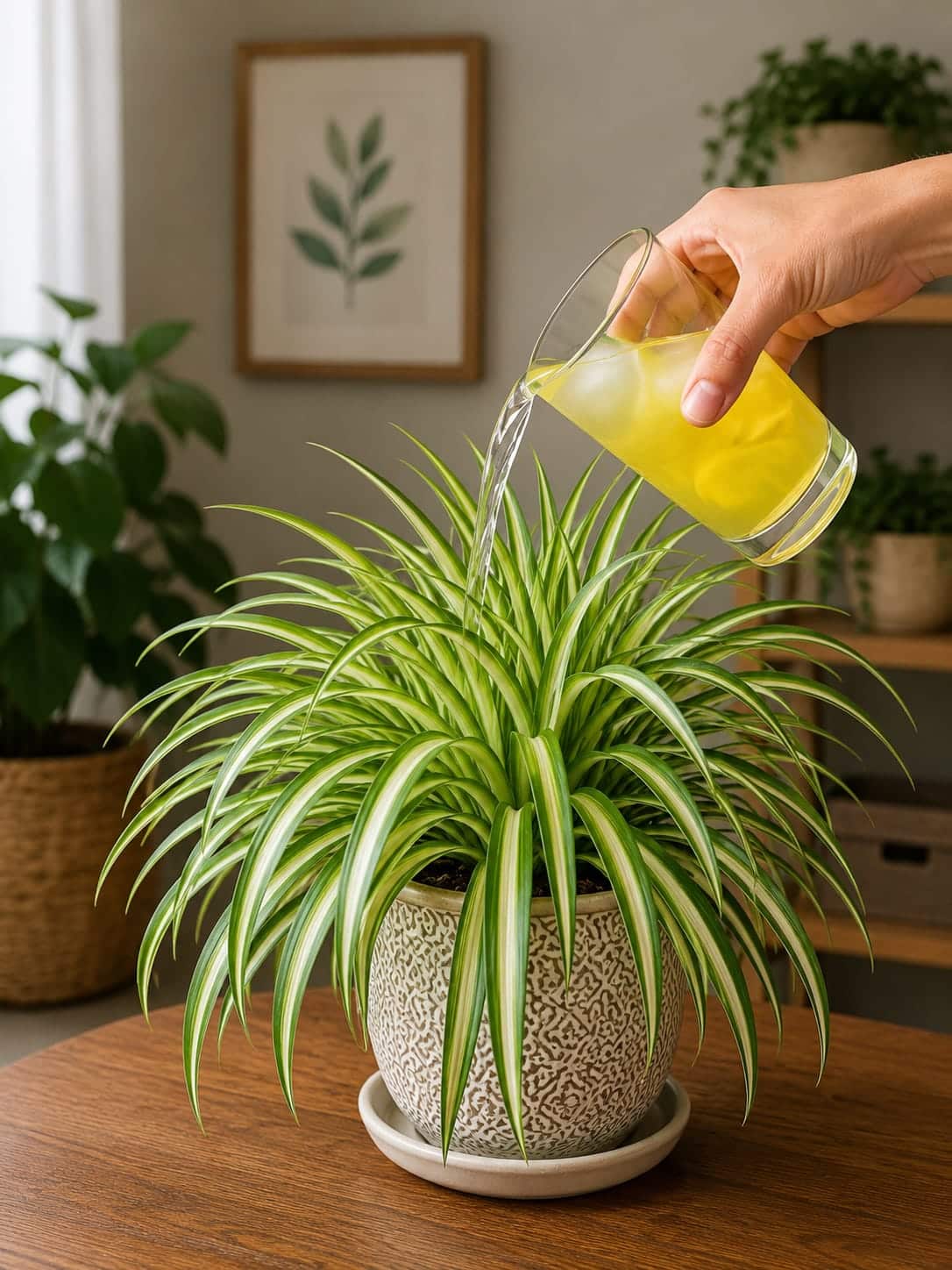
Should You Use Tap Water on Spider Plants? – Water Quality Matters
Spider plants can be sensitive to minerals and chemicals in tap water. In some homes, tap water causes brown tips over time. If you notice frequent browning even with good care, try filtered water, rainwater, or water left out overnight.
This does not mean tap water is always bad. Many spider plants grow perfectly well with tap water. But if brown tips are a constant problem, water quality is worth checking.
Best Soil for Spider Plants – Well-Draining Potting Mix
Spider plants need soil that holds some moisture but drains well. A standard indoor potting mix can work, but it is often better when improved with perlite or bark. Choosing the best potting mix for spider plants is half the battle.
Simple Spider Plant Soil Mix
- 2 parts indoor potting mix
- 1 part perlite
- 1 part coco chips, orchid bark, or coarse material
This mix stays lightly moist while allowing airflow around the roots. Spider plants have thick tuberous roots that store water, so they need oxygen as well as moisture.
Best Pot for Spider Plants – Drainage and Size
A spider plant should be in a pot with drainage holes. Hanging baskets, plastic nursery pots, terracotta pots, and ceramic pots can all work if they drain well. Using a pot with drainage for spider plants is non-negotiable.
Spider plants often enjoy being slightly root-bound. If the pot is too large, the soil may stay wet too long and the plant may focus on roots instead of producing babies.
When to Repot a Spider Plant – Signs of Root Crowding
Spider plants grow thick roots and may eventually push themselves upward in the pot. Repot when the plant dries out too quickly, roots circle tightly, or the pot becomes crowded. This when to repot spider plants guide helps you decide.
Repotting Signs
- Roots coming out of drainage holes
- Plant lifting out of the pot
- Water running through too quickly
- Soil becoming compacted
- Growth slowing despite good care
Repot in spring or early summer if possible. Choose a pot only one size larger.
How to Repot a Spider Plant – Gentle Transplanting
- Water the plant lightly a day before repotting if soil is very dry.
- Remove the plant from its pot.
- Loosen the roots gently.
- Remove old compacted soil.
- Place fresh potting mix in the new pot.
- Set the plant at the same depth.
- Fill around the roots.
- Water lightly and let drain.
- Keep in bright indirect light while it settles.
Do not fertilize immediately after repotting. Wait 4 to 6 weeks before using homemade golden water or any fertilizer.
How to Propagate Spider Plant Babies – Grow New Plants for Free
One of the best things about spider plants is how easy they are to multiply. The baby plantlets can be rooted in water or soil. This how to propagate spider plant babies in water or soil method is simple and fun.
Water Propagation Method
- Choose a baby plantlet with small root bumps.
- Cut it from the runner with clean scissors.
- Place the base in a small jar of water.
- Keep leaves above water.
- Change the water every few days.
- When roots are 1 to 2 inches long, plant in soil.
Soil Propagation Method
- Place a small pot of moist soil near the mother plant.
- Set the baby plantlet on top of the soil.
- Pin it gently with a bent paperclip if needed.
- Keep soil lightly moist.
- After roots form, cut the runner.
Do not use homemade fertilizer on fresh baby plants right away. Wait until they are established.
Can You Use Banana Peel Water on Spider Plants? – Yes, with Caution
Yes, banana peel water can be used on spider plants if it is fresh, strained, and diluted. It should not be used too often. Banana peel water may provide a mild potassium boost, but it is not a complete fertilizer. This banana peel water for spider plants tip is gentle when used occasionally.
Never bury banana peels directly in an indoor spider plant pot. They can rot, smell, and attract gnats.
Can You Use Onion Peel Water on Spider Plants? – Use Sparingly
Onion peel water can be used as a mild tonic when diluted. It creates a golden color and may contain trace nutrients. However, strong onion mixtures can smell, so keep the recipe light and always strain well.
Can You Use Lemon Peel Water on Spider Plants? – Mild Option
A small amount of lemon peel water can be used occasionally, but avoid lemon juice. Lemon juice can be too acidic if used directly. If adding lemon peel to the golden tonic, use only a small strip and dilute the final liquid well.
Can You Use Rice Water on Spider Plants? – Use Fresh and Diluted
Rice water is another popular plant trick. It may contain starch and small nutrients, but it can sour quickly. If you use rice water, use it fresh and diluted. Do not use thick fermented rice water indoors unless you are experienced with it.
Can You Use Coffee Grounds on Spider Plants? – Not Recommended
It is better not to add coffee grounds directly to spider plant soil. They can compact, mold, and attract gnats. If you compost coffee grounds first, they can be part of compost, but direct use in indoor pots is risky.
Commercial Fertilizer vs Homemade Golden Water – Which Is Better?
A balanced houseplant fertilizer is more predictable than homemade golden water. It contains measured nutrients. Homemade fertilizer is gentle and natural, but its nutrient content is uncertain. The best fertilizer for spider plants is the one that works for your care routine.
The best approach is moderation. You can use a balanced liquid houseplant fertilizer diluted to half strength during spring and summer, or you can occasionally use homemade golden water. Do not use both heavily at the same time.
Safe Feeding Schedule for Spider Plants – Gentle Routine
Here is a simple feeding plan for spider plants. This natural spider plant care routine will keep your plant healthy.
- Spring: feed once every 4 to 6 weeks
- Summer: feed once every 4 to 6 weeks
- Early fall: feed lightly if the plant is still growing
- Winter: stop feeding or feed very rarely
If using homemade golden water, count it as a feeding. Do not add commercial fertilizer the same week.
Signs You Are Overfeeding a Spider Plant – Fertilizer Burn Symptoms
Spider plants show stress when they receive too much fertilizer or too many homemade tonics. Recognizing spider plant overfertilization symptoms helps you act fast.
Watch for:
- More brown leaf tips
- Yellowing leaves
- White crust on soil
- Wilting after feeding
- Sour soil smell
- Fungus gnats
- Leaf edges becoming dry
If these signs appear, stop feeding and water with plain water only for a while.
How to Flush Spider Plant Soil – Removing Mineral Buildup
If fertilizer salts build up, flushing can help. This how to flush spider plant soil method is simple.
- Place the pot in a sink, tub, or outdoors.
- Pour room-temperature plain water slowly through the soil.
- Let water drain out the bottom.
- Repeat once if needed.
- Let the pot drain fully.
- Do not fertilize again for at least one month.
Only flush pots with drainage holes. If the plant is in a no-drainage pot, repotting is safer.
How to Avoid Fungus Gnats – Prevention Tips for Homemade Fertilizer
Fungus gnats are tiny flying insects that love moist organic soil. Homemade fertilizers can attract them if used too often or if scraps remain in the pot. This natural fungus gnat prevention for spider plants guide will help.
Prevention Tips
- Strain all homemade liquids
- Never bury banana peels indoors
- Let the top inch of soil dry between waterings
- Remove dead leaves from the pot
- Use sticky traps if gnats appear
- Improve airflow
- Avoid sour or fermented liquids
If gnats appear, stop using homemade fertilizer until the problem is gone.
How to Clean Spider Plant Leaves – Natural Shine Tips
Spider plant leaves are narrow, but they still collect dust. Clean leaves absorb light better and look fresher. For naturally shiny spider plant leaves, stick to gentle wiping.
Cleaning Method
- Use a soft damp cloth.
- Hold each leaf gently.
- Wipe from base to tip.
- Remove dead or dry leaves at the base.
- Do not use oily leaf shine products.
You can also rinse the plant gently in the shower with lukewarm water, but let it drain well afterward.
How to Trim Brown Tips – Leaf Grooming Guide
Brown tips will not turn green again, but you can trim them to improve appearance. This how to trim spider plant brown tips guide is simple.
- Use clean sharp scissors.
- Follow the natural shape of the leaf tip.
- Cut only the brown part.
- Leave a tiny edge of brown if possible to avoid cutting healthy tissue.
Trimming is cosmetic. To prevent new brown tips, improve water quality, reduce fertilizer, and keep watering consistent.
Why Spider Plant Leaves Curl – Diagnosis and Fix
Curled leaves may mean the plant is thirsty, too hot, exposed to too much sun, or stressed by dry air. Check the soil first. If it is dry, water. If it is wet, the roots may be struggling.
Fertilizer is not the solution for curled leaves unless the plant is otherwise healthy and simply needs seasonal support.
Why Spider Plant Leaves Turn Pale – Light or Nutrition
Pale leaves can come from too much direct sun, too little nutrition, old soil, or lack of light depending on the appearance. If the plant looks washed out and scorched, reduce direct sun. If it looks dull and weak in a dark room, increase bright indirect light. If growth is slow and the soil is old, gentle feeding may help.
Why Spider Plants Stop Producing Babies – Troubleshooting
A spider plant may stop making babies because it is too young, not receiving enough light, recently repotted into a large pot, overfed with nitrogen, or stressed by poor watering. This why spider plant won’t produce babies guide will help you diagnose.
To encourage babies, give bright indirect light, keep the plant slightly snug in its pot, and feed lightly during active growth.
Can You Use This Trick on Baby Spider Plants? – Wait Before Feeding
It is better to wait. Baby spider plants have small developing roots and do not need fertilizer immediately. Let them establish in soil for at least 4 to 6 weeks before feeding. When you do feed, dilute the tonic more than usual.
Can You Use This Trick on Outdoor Spider Plants? – Yes, Carefully
Yes, outdoor spider plants can use diluted golden water during warm growing months, but be careful in hot sun. Feed in the morning and avoid splashing leaves in direct sunlight. Outdoor pots dry faster, but they still need drainage.
Can You Use This Trick on Hanging Spider Plants? – Yes, Drain Properly
Yes. Take the hanging basket down, apply the diluted tonic slowly, and let it drain completely before hanging it back. Do not let fertilizer water drip onto furniture or floors.
What If the Golden Water Smells Bad? – Discard Immediately
Do not use it. A bad smell means the mixture has started to ferment or rot. Pour it out, wash the container, and make a fresh batch. Indoor plant soil should never be treated with sour-smelling kitchen liquid.
What If You Used Too Much? – Emergency Fix
If you applied too much homemade fertilizer, let the plant drain well. Do not feed again for several months. If the soil smells sour or gnats appear, remove the top layer of soil or repot the plant in fresh mix. If the pot has drainage, you can flush with plain water at the next watering.
Quick Recipe Card: Golden Spider Plant Fertilizer – Homemade Tonic
Ingredients:
- 1 banana peel
- A small handful of onion skins
- 4 cups water
- Optional: 1 small strip lemon peel
Steps:
- Rinse ingredients.
- Soak in water for 12 to 24 hours.
- Strain completely.
- Dilute 1 part tonic with 3 parts water.
- Pour onto lightly dry soil.
- Let the pot drain fully.
- Use once every 4 to 6 weeks during spring and summer.
Quick Spider Plant Care Checklist – Essential Tips
- Bright indirect light
- Water when top inch dries
- Use a pot with drainage
- Use airy, well-draining soil
- Feed lightly in spring and summer
- Avoid strong homemade liquids
- Strain all tonics well
- Remove dead leaves
- Trim brown tips if desired
- Keep slightly root-bound for more babies
Short Caption for This Trick
“To make a gentle golden fertilizer for a spider plant, soak one chopped banana peel and a small handful of onion skins in 4 cups of water for 12 to 24 hours. Strain very well, then dilute 1 part tonic with 3 parts plain water. Pour it slowly onto the soil when the top inch feels lightly dry, let the pot drain completely, and repeat only once every 4 to 6 weeks during spring and summer. Do not leave food scraps in the pot, and do not use sour-smelling liquid – this natural spider plant food supports fuller leaves, stronger roots, and more baby plants.”
Frequently Asked Questions – Spider Plant Golden Water Q&A
Can I use banana peel water on spider plants?
Yes, but it should be fresh, strained, diluted, and used only occasionally. Do not bury banana peels in the pot.
How often should I fertilize a spider plant?
Once every 4 to 6 weeks during spring and summer is usually enough. Feed less or stop during winter.
Can homemade fertilizer make spider plants produce babies?
It may support baby production if the plant is mature and receiving bright indirect light, but it will not force babies by itself.
Why does my spider plant have brown tips?
Brown tips are often caused by mineral-heavy water, inconsistent watering, dry air, too much fertilizer, or salt buildup.
Should I cut brown tips off?
Yes, you can trim them with clean scissors for appearance. Cut along the natural leaf shape.
Can I use lemon water on spider plants?
A tiny amount of lemon peel water may be used if diluted, but avoid lemon juice. Lemon juice can be too acidic.
Can I spray this golden fertilizer on the leaves?
It is better to pour it into the soil. Spraying homemade fertilizer on leaves can leave residue and attract dust.
Can I use this on a newly repotted spider plant?
Wait 4 to 6 weeks after repotting before feeding. Fresh soil usually contains enough nutrients at first.
What if my spider plant is drooping?
Check the soil. If dry, water with plain water. If wet, check for root stress. Do not fertilize a drooping plant until you know the cause.
What is the best fertilizer for spider plants?
A diluted balanced houseplant fertilizer is the most reliable. A homemade golden tonic can be used occasionally as a gentle supplement.
Final Thoughts – The Best Natural Spider Plant Fertilizer for Lush Growth
The golden homemade water trick can be a gentle and satisfying way to support a spider plant, especially during the active growing season. A mild banana peel and onion skin tonic may help refresh old soil and support new growth when it is strained, diluted, and used carefully. The important thing is not to overdo it. Spider plants are easy to grow, but they can react badly to too much fertilizer, strong homemade liquids, or soggy soil. This natural spider plant care method is best used as an occasional supplement, not a primary treatment.
Use the golden water only once every 4 to 6 weeks during spring and summer. Apply it when the top inch of soil feels lightly dry. Always strain out every piece of kitchen scrap. Always dilute the liquid before pouring. Always let the pot drain completely. If the mixture smells sour or rotten, throw it away. Following this complete spider plant care guide will keep your plant thriving for years.
Most importantly, remember that spider plants become lush because of good everyday care. They need bright indirect light, consistent watering, airy soil, drainage, and light feeding. If your plant is mature, slightly snug in its pot, and receiving enough light, it may reward you with long runners and baby spider plants. The golden fertilizer trick can support that process, but it cannot replace the basics. These professional indoor plant care secrets will help you succeed.
Treat this trick as a small natural boost, not a miracle. Keep the plant clean, avoid overwatering, protect it from harsh direct sun, and feed gently. With patience, your spider plant can grow into a full, arching, lively houseplant with bright striped leaves and plenty of new baby plants to share. Start your spider plant care journey today with the right fundamentals.