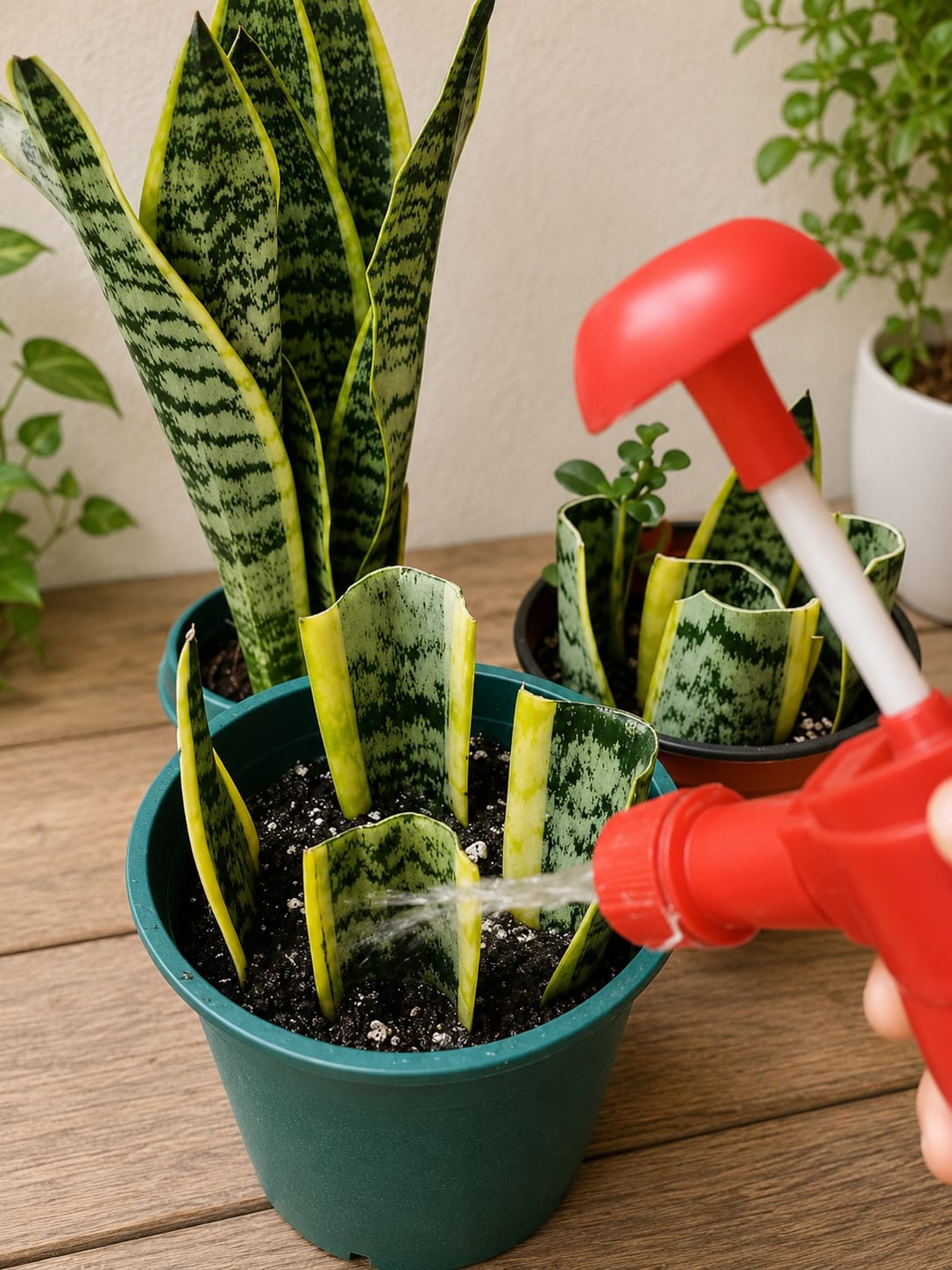
Snake plants are some of the easiest houseplants to love because they look strong, clean, and architectural. Their upright leaves, green marbled patterns, and yellow-edged varieties make them perfect for modern home decor. A single mature snake plant can make a room feel more elegant, while several small cuttings in matching pots can create a beautiful indoor plant collection with very little effort.
One of the most interesting snake plant care tricks is propagating the plant from leaf cuttings. Instead of buying new plants, you can cut one strong leaf into several sections, let the wounds dry, place the pieces into clean soil, water lightly, and wait for roots and new baby shoots to appear. It is a simple method, but it works best when done carefully. The most important part is not just cutting the leaf. The secret is preventing rot before the cutting has roots.
Snake plant cuttings are thick and full of moisture. That is good because it helps them survive without roots for a while. But it also creates a risk. If a fresh cut is placed immediately into wet soil, the open wound can rot before it has time to heal. This is why many plant lovers allow the cut pieces to dry in a cool, ventilated place before planting them. That short drying period can make the difference between a cutting that survives and one that turns black or mushy.
This article explains the snake plant cutting trick in a practical way: how to choose the right leaf, how to cut it, why drying the wound matters, how deep to plant each section, how to water after planting, and how to style the new cuttings so they look decorative even before they become full plants.
What Plant This Trick Is For
This trick is for the snake plant, also known as Sansevieria or Dracaena trifasciata. It is one of the most popular houseplants in the world because it is tough, drought-tolerant, and beautiful in almost any interior style.
Snake plants are easy to recognize by their upright sword-like leaves. Many varieties have dark green horizontal markings, while variegated types also have yellow or cream edges. The leaves are thick because they store water, which makes the plant very forgiving if you forget to water it.
Common signs of a snake plant include:
- Firm upright leaves
- Green marbled or striped patterns
- Yellow edges on variegated varieties
- Thick water-storing leaf tissue
- Slow but steady growth
- Strong vertical shape
- Good tolerance for indoor conditions
Because the leaves are thick and strong, snake plants can be propagated from leaf pieces. Each section has the potential to produce roots and eventually create new growth from the base.
The Basic Snake Plant Cutting Trick
The trick is simple: cut a healthy snake plant leaf into sections, let the cut ends dry, then place the sections into clean potting mix. The key is to keep the wound dry first so the cutting does not rot.
The basic method is:
- Choose a mature, healthy snake plant leaf.
- Cut the leaf into sections about 8 to 12 cm long.
- Remember which side was the bottom of each piece.
- Place the cut pieces in a cool, airy spot.
- Let the wounds dry and callus.
- Prepare a clean, fast-draining potting mix.
- Insert the bottom end of each cutting about 2 to 3 cm deep.
- Water lightly.
- Keep the pot in bright indirect light.
- Wait patiently for roots and new shoots.
This method is not instant. Snake plant cuttings can take weeks or even months to produce visible new growth. But if the cuttings stay firm and do not rot, they are still alive and working below the soil.
Why the Leaf Must Be Strong
The first step is choosing the right leaf. A weak, damaged, yellowing, or rotting leaf is not a good choice for propagation. A cutting survives by using the stored energy inside the leaf, so the stronger the leaf is, the better the chance of success.
Choose a leaf that is:
- Firm to the touch
- Thick and healthy
- Free from mushy spots
- Not yellowing from the base
- Not damaged by rot
- Mature but not old and collapsing
- Clean and pest-free
A strong leaf gives each cutting more stored moisture and energy. This helps the piece survive while roots are forming.
Why You Should Cut Sections Around 10 cm
Cutting the leaf into sections around 8 to 12 cm is a practical size. Very tiny pieces dry out too quickly and may not have enough stored energy. Very large sections can work, but they may be less stable in the pot and take up more space.
A section around 10 cm is useful because:
- It has enough stored energy
- It is easy to plant upright
- It fits well in a small pot
- It does not fall over easily
- It allows one leaf to create several cuttings
If you want a fuller future pot, use several cuttings together. Planting multiple pieces in one container creates a denser look once new shoots begin to appear.
The Most Important Detail: Keep the Direction Correct
Snake plant leaf cuttings have a top and a bottom. The bottom end is the part that was closer to the root when the leaf was attached to the plant. That bottom end is the side that should go into the soil.
If you plant a cutting upside down, it may fail to root. This is one of the most common mistakes with snake plant propagation.
To avoid confusion:
- Lay the pieces in order after cutting
- Make a tiny angled cut on the bottom end
- Mark the bottom with a small pencil dot
- Keep all pieces facing the same direction
- Do not mix them up before planting
This simple detail can greatly improve the success rate.
Why the Cut Wound Must Dry First
The drying step is one of the most important parts of the trick. When a snake plant leaf is cut, the wound is fresh and moist. If that fresh wound goes directly into wet soil, bacteria or fungi can attack it. The cutting may turn black, soft, and rotten before roots form.
Letting the wound dry allows the cut surface to callus. A callus is a dry protective layer that forms over the wound. It reduces the risk of rot when the cutting is planted.
This step helps by:
- Sealing the fresh wound
- Reducing moisture loss
- Lowering the risk of black rot
- Making the cutting safer to plant
- Improving survival chances
For most indoor conditions, letting the cuttings dry for 24 to 72 hours is helpful. In humid weather, they may need longer. The cut surface should feel dry before planting.
Where to Dry Snake Plant Cuttings
The best drying spot is cool, shaded, and ventilated. Do not place fresh cuttings in harsh direct sun, because the leaf sections may dehydrate too quickly. Do not place them in a damp bathroom or sealed container either, because moisture slows the drying process.
A good drying spot has:
- Fresh airflow
- No direct harsh sun
- No standing moisture
- Room temperature conditions
- A clean surface
You can place the pieces on a tray, paper towel, or clean plate. Keep them separated so air can move around the cut edges.
Best Soil for Snake Plant Cuttings
Snake plant cuttings need soil that drains quickly. Heavy wet soil can cause rot. A loose, gritty mix gives the cuttings oxygen and helps prevent excess moisture from sitting around the wound.
A good mix can include:
- Cactus or succulent mix
- Perlite
- Pumice
- Coarse sand
- Small bark pieces
- A little regular potting soil for structure
The goal is not rich, heavy soil. The goal is clean, airy soil that holds a little moisture but dries within a reasonable time. Snake plant cuttings root better when they are not sitting in a soggy environment.
How Deep to Plant the Cuttings
Plant each cutting about 2 to 3 cm deep. That is deep enough to hold the cutting upright, but not so deep that too much of the leaf is buried.
If the cutting is buried too deeply, the lower part may stay too wet and rot. If it is planted too shallowly, it may fall over before roots form.
A good planting method is:
- Make a small hole in the soil.
- Insert the bottom end of the cutting.
- Firm the soil gently around it.
- Keep the cutting upright.
- Leave space between cuttings for airflow.
You can plant several pieces in one pot, but avoid overcrowding. Crowding traps moisture and makes it harder to see if any cutting begins to rot.
How to Water After Planting
After planting, water lightly. The soil should become slightly moist, not soaked. The cutting has no roots yet, so it cannot drink like a normal plant. Too much water at this stage is dangerous.
A safe watering approach is:
- Moisten the soil lightly after planting
- Do not flood the pot
- Let the soil dry before watering again
- Use a pot with drainage holes
- Do not let the pot sit in standing water
- Water less in cool weather
The cutting needs humidity in the soil, but it also needs oxygen. A wet, airless pot is the main reason cuttings fail.
Best Light for Snake Plant Cuttings
Snake plant cuttings should be placed in bright indirect light. This gives them enough energy to stay healthy without burning or drying them out.
Good light locations include:
- Near an east-facing window
- A bright room with filtered sunlight
- A few feet from a sunny window
- A shelf with gentle natural light
- A warm indoor corner that is not dark
Avoid very dark corners while rooting. Snake plants can survive low light once established, but cuttings root more reliably with bright indirect light.
How Long Snake Plant Cuttings Take to Root
Snake plant cuttings are slow. Roots may begin forming after several weeks, but new baby shoots can take much longer. It is normal to wait two to four months before seeing new growth above the soil.
During this time, the cutting may look unchanged. That does not mean it failed. If the leaf section is still firm, green, and not rotting, it may be rooting below the surface.
Signs of success include:
- The cutting stays firm
- The base does not turn black
- The leaf does not collapse
- Gentle resistance when tugged lightly
- Small new shoots appear near the base
- Roots become visible if grown in a clear container
Patience is essential. Snake plants do not rush.
Why Some Cuttings Rot
Rot is the biggest problem with snake plant cuttings. It usually happens because the cutting was planted too soon, the soil stayed too wet, or the pot had poor drainage.
Common reasons for failure include:
- Fresh wound planted before drying
- Heavy soil
- Overwatering
- No drainage holes
- Cold temperatures
- Low light
- Cutting planted upside down
- Weak or damaged leaf used
- Too much buried leaf tissue
If one cutting turns mushy, remove it quickly. A rotting cutting can spread problems to the surrounding soil and nearby cuttings.
How to Tell If a Cutting Is Rotting
Check the cuttings gently every few weeks. Do not pull them out constantly, because that can damage new roots. But you can inspect the visible part of the leaf and the soil surface.
Signs of rot include:
- Black base
- Mushy texture
- Bad smell
- Leaf collapsing
- Wet slimy surface
- Dark spreading spots
If the rot is only at the bottom, you may be able to cut above the damaged part, let the cutting dry again, and retry. But if the whole section is soft, it is better to discard it.
Should You Use Rooting Powder?
Rooting powder can be used, but it is not always necessary. Snake plants can root without it if the cutting is healthy and the conditions are correct. However, some growers like to dip the dried bottom end into rooting hormone before planting.
If using rooting powder:
- Use only a small amount
- Apply it to the bottom end
- Do not coat the whole leaf
- Do not combine it with soggy soil
- Follow the product instructions
Rooting powder may help, but it cannot fix overwatering or poor soil. The environment still matters more.
Will Variegated Snake Plant Cuttings Keep Yellow Edges?
This is an important point. Many variegated snake plants with yellow edges do not always reproduce the same variegation from leaf cuttings. New babies from a variegated leaf cutting may grow plain green, depending on the variety.
If you want to keep the exact yellow-edged look, division is usually better. Division means separating a baby plant or rhizome from the mother plant while keeping the original growth pattern.
Leaf cuttings are great for making more snake plants, but they may not always preserve the same variegation.
Leaf Cutting vs. Division
| Method | Best For | Main Benefit | Main Limitation |
|---|---|---|---|
| Leaf cuttings | Making many new plants from one leaf | Easy and productive | Can be slow and may lose variegation |
| Division | Keeping the same plant look | Faster and reliable | Needs an established plant with pups |
| Water propagation | Watching roots grow | Decorative and fun | Higher risk of rot if water is dirty |
| Soil propagation | Stronger transition to pot growth | Less transplant shock | Roots are hidden while developing |
Continue to Page 2
Continue to page 2 for more details about this article and the key points many readers miss on the first page.