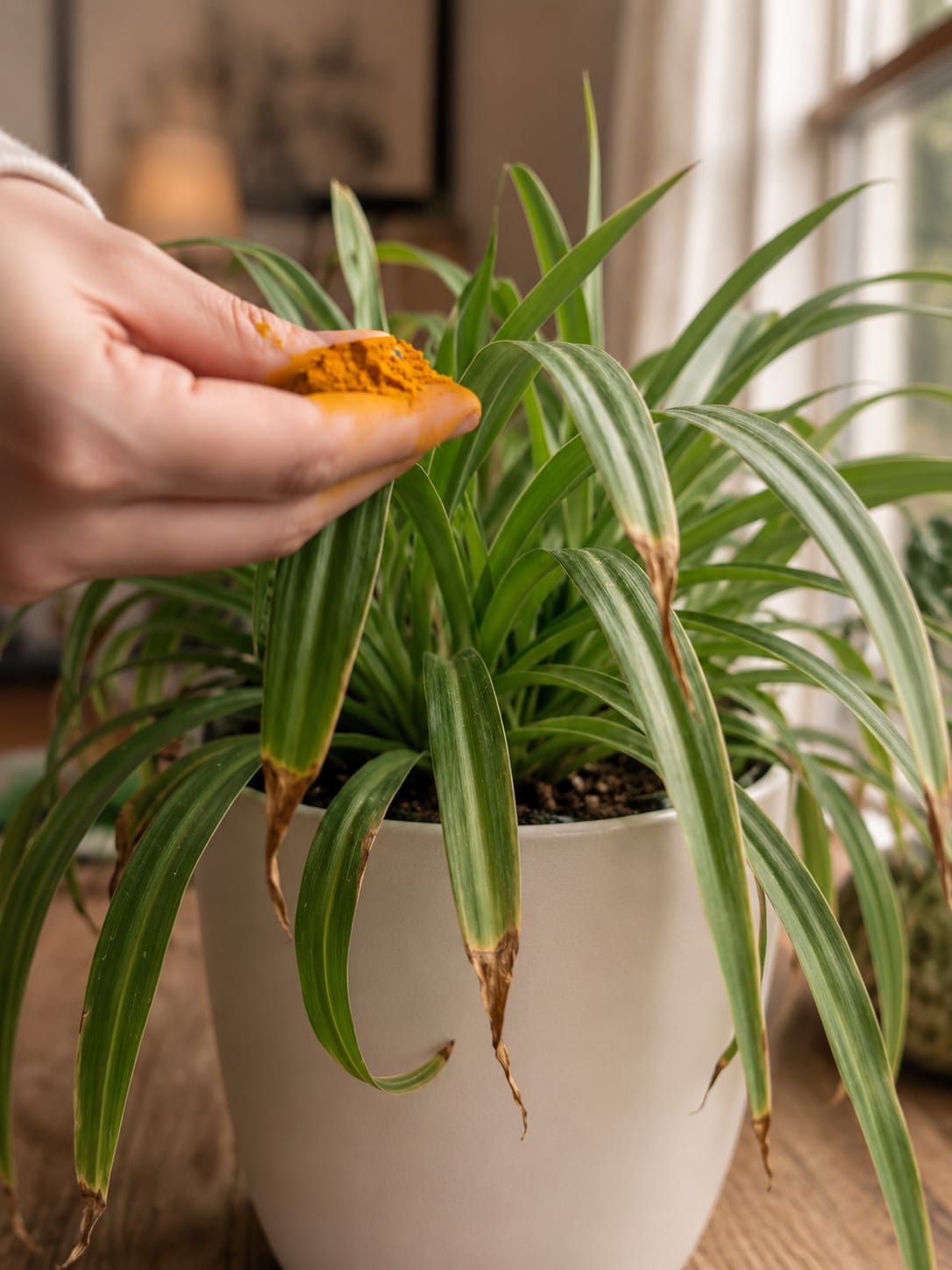
Repotting a Weak Spider Plant
Repotting can help if the plant is root-bound, the soil is old, or the pot has poor drainage. Remove the plant gently and inspect the roots. Healthy spider plant roots are often thick, pale, and firm. Rotten roots are soft, dark, or smelly.
Trim damaged roots with clean scissors. Place the plant into a slightly larger pot with fresh well-draining mix. Do not bury the crown too deeply. The leaf bases should remain above the soil surface.
After repotting, water lightly and let excess drain. Keep the plant in bright indirect light while it adjusts. Avoid fertilizer and homemade powders until new growth looks stable.
How to Flush Mineral Buildup
If brown tips are caused by mineral or fertilizer buildup, flushing the soil can help. Use clean water and let it run through the potting mix and out of the drainage holes. This helps carry away some soluble salts.
Flushing works only if the pot drains. If the pot has no drainage, flushing is impossible and the plant should be moved to a draining container. Without drainage, minerals and water collect around the roots.
After flushing, let the plant drain completely. Do not leave it sitting in water. Use better-quality water going forward if possible. This can reduce future tip burn.
How to Encourage New Healthy Leaves
New healthy leaves come from stable care. Give the plant bright indirect light, clean water, even watering, fresh soil, and mild feeding only during active growth. Remove severely damaged leaves if they make the plant look messy, but do not remove too many at once.
Spider plants can recover well when the roots are healthy. New leaves may grow cleaner after the stress factors are corrected. The old brown tips may remain until trimmed, but the overall plant can look fresh again over time.
Patience is important. A stressed spider plant may need several weeks to show improvement. Look for new leaves emerging with fewer brown tips and stronger color. That is the best sign that the routine is working.
Indoor Decor Value
Spider plants have strong indoor decor value because they create soft movement and fresh greenery. Their arching leaves look beautiful in hanging baskets, ceramic pots, plant stands, shelves, windowsills, and bright corners. A healthy spider plant can make a room feel relaxed and natural.
Brown tips reduce the clean look, but they can be managed. Trimming the damaged ends and improving care can restore a more polished display. A clean pot, fresh leaves, and balanced light make the plant look more premium.
Yellow powder should not become part of the visible decor. If it makes the plant look stained or messy, it takes away from the display. The best indoor plant styling keeps the plant fresh, clean, and natural.
Room-by-Room Styling
In the living room, a spider plant can sit on a plant stand, shelf, side table, or hanging basket. Its arching leaves soften furniture and add movement. Bright indirect light helps keep it full and attractive.
In the bedroom, spider plant creates a calm and fresh accent. Avoid strong-smelling homemade treatments or powders that may make the pot dusty. Clean leaves and stable watering are better for a restful space.
In a home office, spider plant works well on shelves or near windows. It adds greenery without looking heavy. Brown tips should be trimmed so the plant looks professional and tidy.
In the kitchen, spider plants can thrive near bright filtered light. However, avoid using cooking spices as plant treatments too often. Kitchen ingredients can create residue and pests if used carelessly.
Office and Commercial Styling
Spider plants can work well in commercial interior landscaping because they look friendly, fresh, and low-maintenance. They fit reception areas, office shelves, wellness corners, waiting rooms, boutique displays, and staged homes. Their soft leaves create a more relaxed look than stiff architectural plants.
For commercial spaces, yellow powder treatments are usually not ideal. They can look messy and inconsistent. Professional plant care should focus on proper watering, good light, drainage, fresh soil, and controlled feeding.
A premium commercial spider plant should have clean leaves, trimmed tips, no powder residue, no sour smell, no fungus gnats, and a planter that matches the space. The care routine should be invisible and reliable.
Product and Tool Guide
Helpful materials for spider plant recovery include filtered water, a pot with drainage holes, fresh indoor potting mix, perlite, clean scissors, a soft cloth, a narrow-spout watering can, and diluted balanced houseplant fertilizer for active growth. A moisture meter can help if watering is difficult, but finger-checking the soil is often enough.
If a yellow powder is used, it should be identified, plant-safe, and used only in a tiny amount. A soft brush can remove excess powder. Fresh soil can replace a contaminated top layer. Clean water is useful for flushing residue.
The best toolkit is simple. Better water, better drainage, bright indirect light, fresh soil, and careful feeding will do more for brown tips and weak leaves than most powders.
Care Timeline After Correcting the Problem
During the first 24 hours, remove excess powder, trim only dead brown tips, check the soil moisture, and make sure the pot drains. Move the plant to bright indirect light if it has been in a dark spot.
During the first week, water only when needed and avoid adding fertilizer or more homemade treatments. Watch for mold, sour smell, or fungus gnats. If the soil is old or compacted, plan to repot.
After two to four weeks, new growth should begin to look stronger if the roots are healthy. Existing damaged tips will not heal, but fewer new brown tips should appear. After several months of stable care, the plant can become fuller and cleaner again.
Professional Styling Note
In high-end indoor horticulture, spider plants are valued for their soft movement, easy growth, and fresh green appearance. They work beautifully in modern apartment decor, bedroom styling, home office greenery, hanging basket displays, commercial plant design, luxury home staging, and polished property presentation.
However, the premium look depends on clean details. Brown tips should be trimmed neatly. Leaves should be dust-free. The soil surface should not be crusted with powder. A refined spider plant display should look fresh, healthy, and naturally full.
A beautiful spider plant depends on healthy roots, clean water, bright indirect light, drainage holes, balanced moisture, and gentle feeding. Yellow powder may look like a quick fix, but the strongest results come from correcting the cause of stress.
Final Thoughts
Spider plant brown tips and weak leaves are usually caused by water quality, mineral buildup, inconsistent watering, dry air, low light, root crowding, old soil, or too much fertilizer. A yellow powder such as turmeric may be used by some homeowners as a natural surface treatment, but it is not the main solution and should not be applied heavily.
The safest recovery plan is to trim brown tips cleanly, use filtered or rested water, flush mineral buildup if needed, repot into fresh airy soil when necessary, provide bright indirect light, keep the pot draining well, and feed only lightly during active growth. Avoid unknown powders, heavy spice coatings, strong fertilizer, and too many homemade treatments at once.
With clean care and the right presentation, spider plant can recover into a full, graceful, and decorative accent for living rooms, bedrooms, home offices, kitchens, bright windowsills, hanging baskets, modern apartments, commercial interior landscaping, luxury home staging, and polished property presentation. Healthy roots, clean leaves, controlled watering, and simple consistent care will always create a stronger display than risky yellow-powder shortcuts.