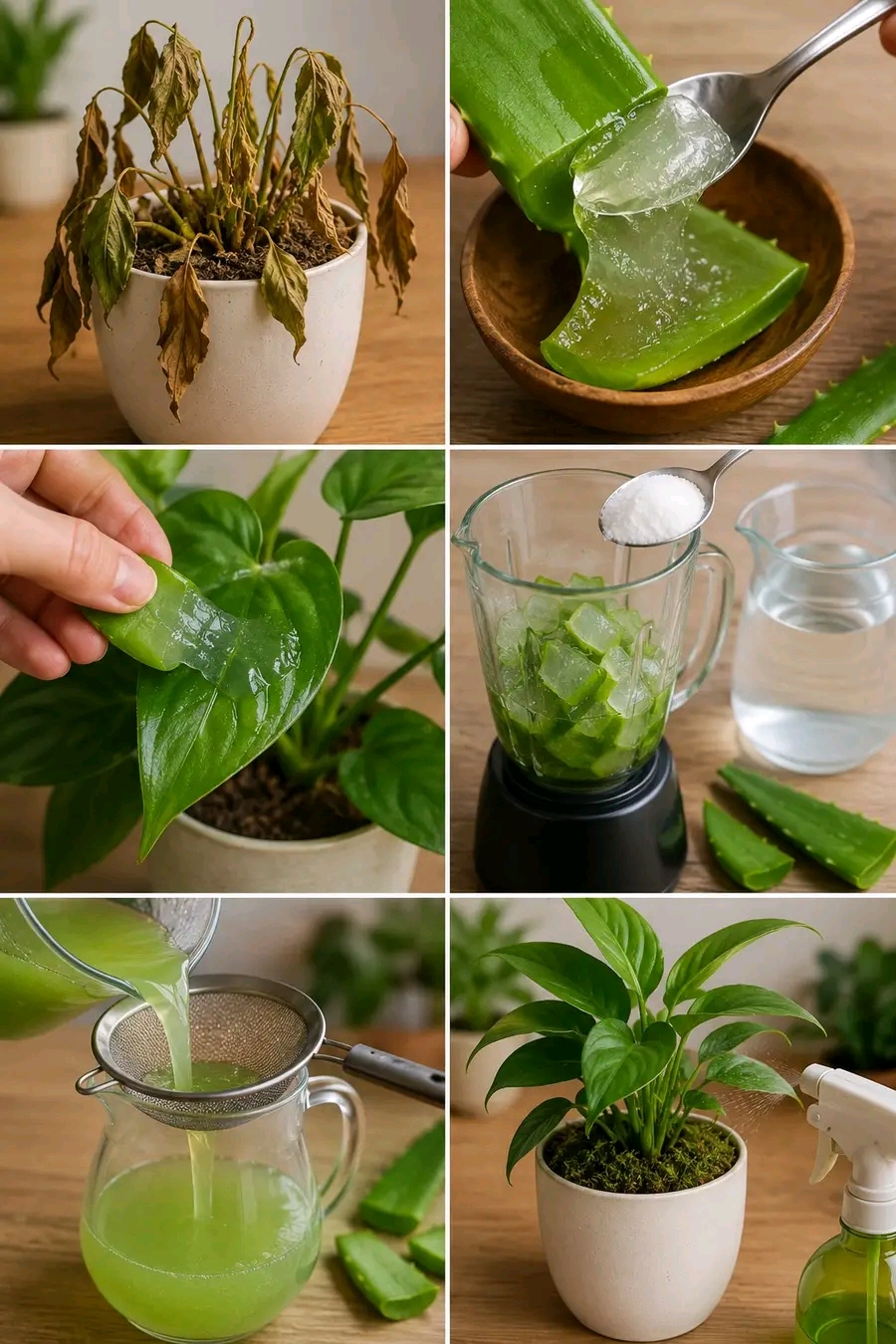
Aloe vera is one of the most useful natural ingredients in home plant care. Many plant lovers know it as a soothing gel for skin, but it can also become part of a gentle houseplant routine when prepared correctly. When blended with water, strained well, and used as a light spray or mild soil drench, aloe vera can help support stressed plants, refresh dusty leaves, and encourage a cleaner, healthier-looking indoor garden.
This routine is especially helpful for houseplants that look tired, dull, slightly wilted, or stressed after inconsistent watering, dry indoor air, heat, or poor care. Aloe vera is not a magic cure for dead plants, and it cannot replace proper watering, light, drainage, or nutrition. However, as a gentle plant-care support, it can fit beautifully into a natural indoor gardening routine.
Why Aloe Vera Is Popular in Plant Care
Aloe vera gel contains moisture, natural sugars, enzymes, and organic compounds that make it interesting for gardeners. It is commonly used in propagation routines, leaf-cleaning sprays, and mild plant tonics. The gel has a soft, slippery texture, which helps it spread easily when diluted with water.
For houseplants, the safest way to use aloe is always diluted. Pure thick gel can sit on leaves or soil and attract dust, mold, or pests. A light aloe spray should feel like water, not sticky syrup.
A Simple Aloe Vera Spray Recipe
To make a gentle aloe spray, use this simple recipe:
- 1 small piece of fresh aloe vera gel
- 2 cups clean water
- Blend for a few seconds
- Strain through a fine sieve or cloth
- Pour into a clean spray bottle
The finished liquid should be thin and pale green. If it feels thick, dilute it with more water. Always strain it well so no gel pieces block the spray bottle or sit on the plant leaves.
How to Use Aloe Spray on Leaves
Spray lightly over the leaves, then wipe large leaves with a soft cloth. This can remove dust and leave the foliage looking fresher and glossier. Do not soak the plant heavily. A fine mist is enough.
For plants with fuzzy leaves, such as African violets, avoid spraying directly. Fuzzy leaves can hold moisture and develop spots. For smooth-leaved plants like peace lilies, pothos, philodendrons, rubber plants, and anthuriums, a diluted aloe spray can be used carefully.
Using Aloe Water Around the Roots
Aloe water can also be used as a mild soil drench. Pour a small amount around the soil only when the plant is already due for watering. Do not add aloe water to soil that is already wet.
Use it once every 4 to 6 weeks during active growth. Overusing homemade tonics can make soil sour, especially indoors where airflow is limited.
Best Plants for This Routine
This gentle aloe routine can be used for many common houseplants, including:
- Peace lily
- Pothos
- Philodendron
- Snake plant
- ZZ plant
- Anthurium
- Rubber plant
- Monstera
- Dracaena
- Spider plant
Always test on one leaf first before spraying the whole plant. If the leaf looks fine after 24 hours, continue lightly.
Can Aloe Revive a Wilted Plant?
Aloe can support a stressed plant, but first you must know why the plant is wilting. Wilting may happen from underwatering, overwatering, root rot, heat, cold drafts, or poor soil.
If the soil is bone dry, water the plant properly. If the soil is soggy and the plant is still drooping, check the roots. Aloe spray will not fix rotten roots. The real solution is correcting the cause of stress.
Light Matters More Than Any Spray
Most houseplants need bright indirect light to grow well. A plant kept in a dark corner may stay weak even with natural sprays. Move tired plants closer to a bright window, but avoid harsh direct sun unless the plant can tolerate it.
Good light helps the plant use water and nutrients properly. Without enough light, soil stays wet longer and growth slows down.
Watering Correctly
Before using any natural tonic, check your watering routine. Many indoor plant problems come from watering too often or too little.
Use your finger to test the soil. If the top layer is dry and the pot feels light, water thoroughly. If the soil is still wet, wait. Plants need oxygen around their roots, not constant moisture.
Why Drainage Is Essential
Every houseplant pot should have drainage holes. If water cannot escape, roots may rot. Aloe water, fertilizer, or any homemade mixture becomes risky in a pot without drainage.
If you love decorative pots, use them as cover pots. Keep the plant in a plastic nursery pot with holes, then place it inside the decorative container.
How Often to Use Aloe Spray
For most plants, once or twice a month is enough as a leaf refresh. For soil use, once every 4 to 6 weeks is safer.
Do not spray every day. Too much moisture on leaves can encourage fungal problems, especially in rooms with low airflow.
When Not to Use Aloe Spray
Avoid aloe spray if the plant has:
- Fungal spots
- Rotting stems
- Very wet soil
- Pest infestation
- Fuzzy leaves
- Sunburned leaves
- Freshly damaged foliage
Fix the main problem first, then use gentle care later.
Continue to Page 2
Continue to page 2 for more details about this article and the key points many readers miss on the first page.