Best Light for Orchids
Phalaenopsis orchids grow best in bright indirect light. They should not sit in harsh direct afternoon sun because the leaves can burn. They also should not sit in a dark corner because low light prevents reblooming.
A bright east-facing window is often ideal. A filtered south or west window can also work if direct sun is softened by a curtain.
Healthy orchid leaves are usually medium green. Very dark green leaves may mean the plant needs more light. Yellowish leaves may mean too much sun, root stress, or nutrient imbalance.
Best Watering Routine for Orchids
Orchids should be watered based on root condition, not a strict calendar. When Phalaenopsis roots are dry, they often look silvery gray. After watering, they turn green.
Water when the roots look silvery and the pot feels lighter. Pour water through the bark mix and let it drain fully. Never leave the pot sitting in standing water.
If the orchid is growing in moss, water even more carefully because moss holds moisture longer than bark.
Why Drainage Matters
Drainage is essential for orchids. A pot without drainage holes can trap water around the roots and cause rot. If you use a decorative pot, keep the orchid in a plastic inner pot with holes and place it inside the decorative container.
After watering, remove the inner pot and let it drain before putting it back. This is especially important when using any homemade plant tonic.
Best Potting Mix for Orchids
Orchid roots need air. Regular potting soil is usually too dense. A good orchid mix should be chunky, clean, and fast-draining.
A good orchid mix can include:
- Orchid bark
- Perlite
- Charcoal
- Coconut husk chips
- A small amount of sphagnum moss
If the bark is old, soft, sour-smelling, or broken down, repot before using any homemade tonic. Fresh bark is often the best root treatment.
How to Check Orchid Roots Before Using Apple Peel Water
Always check root health first. Homemade plant tonics should be used only on stable orchids.
Healthy Roots
- Firm
- Plump
- Green when wet
- Silvery gray when dry
- No bad smell
Unhealthy Roots
- Brown
- Black
- Mushy
- Hollow
- Slimy
- Sour-smelling
If the roots are rotten, do not use apple peel water. Repot the orchid and remove damaged roots first.
Can Apple Peel Water Attract Fungus Gnats?
Yes, if used too strong or too often. Fruit-based liquids can attract fungus gnats if residue remains in the potting mix. This is why dilution, straining, and drainage are important.
To avoid fungus gnats:
- Use fresh apple peel water only
- Do not ferment it
- Strain well
- Dilute heavily
- Apply only when watering is needed
- Do not leave fruit pieces in the pot
- Let the pot drain fully
- Use it only occasionally
If fungus gnats appear, stop using all fruit-based plant tonics until the problem is gone.
Can Apple Peels Be Put Directly in the Orchid Pot?
No. Do not place apple peels directly in orchid bark. They can rot, smell bad, attract pests, and encourage mold. Orchid pots are not compost bins. Organic scraps should break down in a compost pile, not around delicate orchid roots.
Use only strained, diluted liquid.
Can You Ferment Apple Peel Water for Orchids?
Fermented fruit fertilizers are used by some experienced gardeners, especially outdoors. But for indoor orchids, fermentation is risky. Fermented apple peel water can become too acidic, too strong, or too microbially active for orchid roots.
For home orchid care, use a short fresh soak instead of fermentation.
Can Apple Peel Water Replace Orchid Fertilizer?
No. Apple peel water is not a complete fertilizer. It does not provide balanced nitrogen, phosphorus, potassium, calcium, magnesium, and trace minerals in the way orchids need for long-term growth.
Use a balanced orchid fertilizer during active growth, diluted according to label directions. Apple peel water can be used occasionally as a gentle supplement, not as the main food source.
Should You Use Egg With This Orchid Trick?
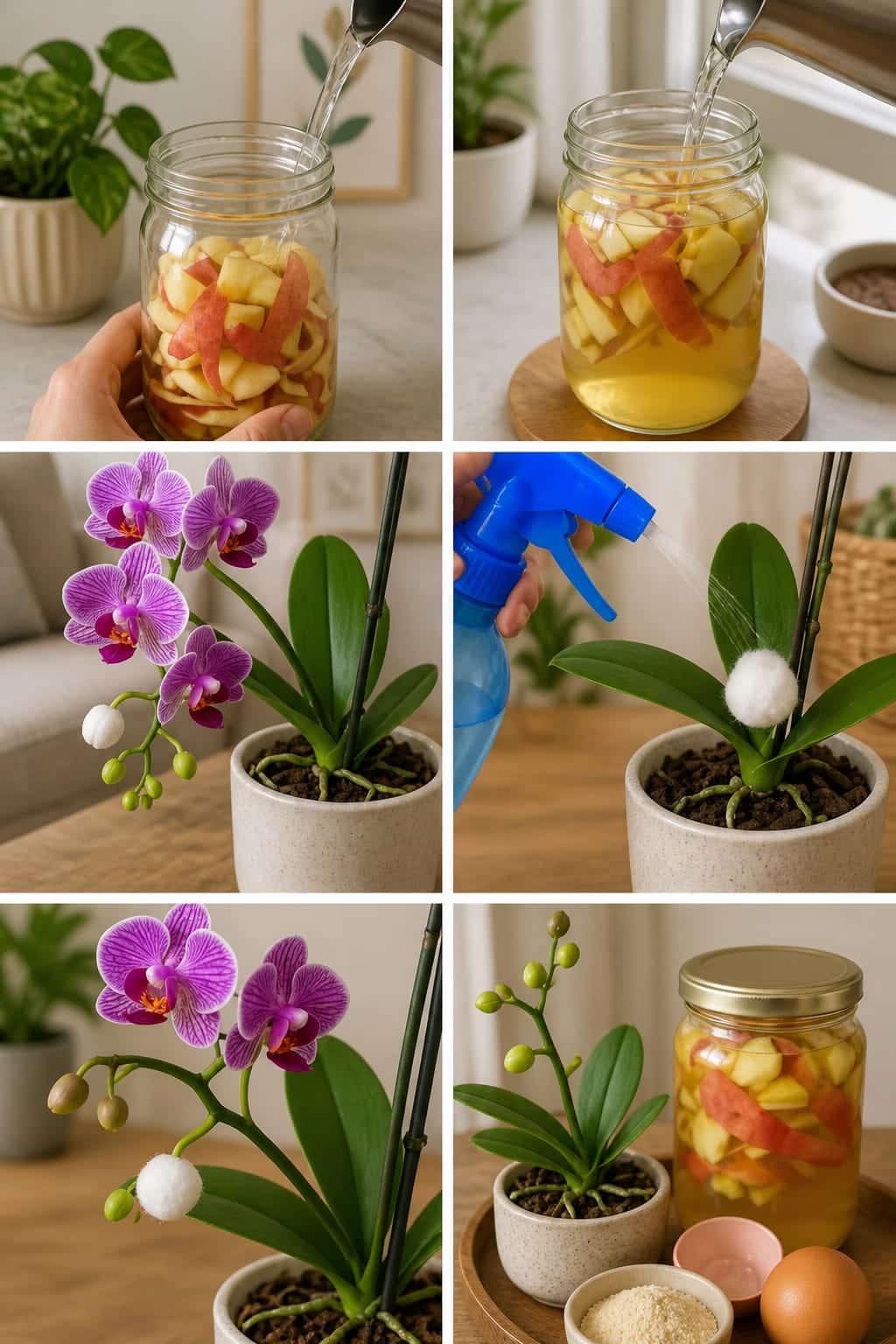
The final image panel shows an egg near the apple peel infusion. Some gardeners use eggshell powder or eggshell water as a calcium source for plants. However, raw egg should never be used in orchid pots. It can smell, rot, attract pests, and create bacteria problems.
If using eggshells, use only clean, dried, crushed eggshell powder in very tiny amounts, and preferably not directly in orchid bark. Orchids usually do better with balanced orchid fertilizer than kitchen scraps.
Do not pour raw egg into an orchid pot.
Should You Use Powder With This Trick?
The image also shows a powder, which may represent rice powder, eggshell powder, or another homemade plant ingredient. Be careful with powders in orchid pots. Fine powders can clog bark, reduce airflow, and trap moisture.
For orchids, liquid treatments should be thin and clear. Avoid thick powders unless they are specifically made for orchid use.
What to Do If You Used Too Much Apple Peel Water
If you accidentally used strong apple peel water or poured fruit pieces into the orchid pot, act quickly.
Fix Steps
- Remove any fruit pieces from the potting mix.
- Flush the pot with clean room-temperature water.
- Let the pot drain completely.
- Check for sour smell over the next few days.
- If the bark smells bad, repot into fresh orchid mix.
- Do not fertilize for several weeks.
- Watch for fungus gnats or mold.
If the potting mix becomes sticky or sour, repotting is usually the safest option.
Signs the Apple Peel Trick Is Helping
This trick should produce subtle support, not instant flowers. Look for slow improvements in plant condition.
Good signs include:
- Firm green leaves
- Healthy root tips
- No sour smell
- No fungus gnats
- Potting mix drains normally
- Flowers remain stable
- New roots during active growth
- Plant looks fresh and hydrated
If the orchid remains stable after treatment, the mixture was mild enough.
Signs Apple Peel Water Is Too Strong
Stop using it if you notice:
- Sour smell from the pot
- Mold on bark
- Fungus gnats
- Sticky residue
- Yellowing leaves
- Bud drop
- Brown root tips
- Soft or mushy roots
- Crown moisture problems
Flush with plain water and return to simple orchid care.
Orchid Care Table
| Care Factor | Best Setup | Why It Matters |
|---|---|---|
| Light | Bright indirect light | Supports reblooming |
| Watering | When roots turn silvery | Prevents rot and dehydration |
| Potting mix | Chunky orchid bark | Keeps roots airy |
| Drainage | Drainage holes required | Stops standing water |
| Apple peel water | Fresh, strained, diluted | Gentle root-zone support |
| Humidity | Moderate, with airflow | Helps buds and leaves |
| Fertilizer | Weak orchid fertilizer | Provides balanced nutrition |
Simple Apple Peel Orchid Tonic Recipe
Ingredients
- Peels from 1 washed apple
- 1 liter clean water
Instructions
- Place clean apple peels in a jar.
- Add 1 liter water.
- Soak for 6 to 12 hours.
- Strain completely.
- Mix 1 part apple peel water with 4 parts clean water.
- Pour gently through the orchid bark when watering is needed.
- Let the pot drain fully.
- Use only once every six to eight weeks.
Common Mistakes to Avoid
- Using fermented apple water
- Putting apple peels directly in the pot
- Using apple juice instead of apple peel water
- Adding sugar or honey
- Using the tonic every week
- Pouring it over flowers
- Letting it sit in the crown
- Using it on rotten roots
- Using it in a pot without drainage
- Combining it with raw egg or thick powder
Best Orchid Bloom Routine
If your goal is to encourage an orchid to bloom again, combine gentle root support with proven orchid care.
During Active Growth
- Give bright indirect light
- Water when roots turn silvery
- Use weak orchid fertilizer
- Keep leaves clean
- Watch for new root tips
Before Blooming
- Provide a slight nighttime temperature drop
- Keep light bright but indirect
- Avoid overwatering
- Do not repot unless necessary
- Keep care stable
During Blooming
- Do not move the orchid too often
- Keep flowers dry
- Avoid strong homemade treatments
- Maintain gentle humidity
- Let water drain completely
Orchids bloom from health and consistency, not from one strong ingredient.
Can This Trick Be Used on Other Houseplants?
A very diluted apple peel water tonic can be used carefully on some common houseplants, but not all plants need it. It may be tested on pothos, philodendron, peace lily, anthurium, spider plant, or outdoor container plants.
Always dilute well and avoid using fruit water on plants with fungus gnats, wet soil, root rot, or poor drainage.
Short Caption for This Trick
“For orchids, soak clean apple peels in water for 6 to 12 hours, strain well, then dilute 1 part apple peel water with 4 parts clean water. Pour only through the orchid bark when the plant needs watering. Do not use fermented fruit water, apple juice, raw egg, or fruit pieces in the pot. Keep it away from the crown, leaves, buds, and flowers.”
Frequently Asked Questions
Is apple peel water good for orchids?
Apple peel water can be used as a gentle occasional tonic if it is fresh, strained, and heavily diluted. It should not be used often.
Can apple peel water make orchids bloom?
It may support plant health, but it does not directly force blooms. Orchids bloom from healthy roots, bright indirect light, proper watering, and seasonal care.
How long should I soak apple peels?
Soak for 6 to 12 hours only. Do not ferment the mixture for indoor orchids.
Can I put apple peels directly in the orchid pot?
No. Apple peels can rot, smell, attract pests, and create mold. Use only strained diluted liquid.
Can I use apple juice on orchids?
No. Apple juice is too sugary and can attract pests. Use only weak apple peel water.
How often should I use apple peel water?
Once every six to eight weeks during active growth is enough. Do not use it weekly.
Can I spray apple peel water on orchid leaves?
No. It may leave residue and attract pests. Apply only through the potting mix.
Can apple peel water attract fungus gnats?
Yes, if it is too strong, fermented, or used too often. Always dilute and drain well.
Should I use egg with apple peel water?
No raw egg should be used in orchid pots. It can rot and attract pests. Use balanced orchid fertilizer instead.
What if the orchid pot smells sour after using it?
Flush the pot with plain water. If the smell remains, repot into fresh orchid bark.
Final Thoughts
The apple peel orchid trick can be a gentle, natural way to support orchid care when it is prepared correctly. The image shows apple peels soaking in water and an orchid being treated, but the safest real-life method is always fresh, strained, and diluted. Orchids are not ordinary soil plants. Their roots need air, drainage, and clean moisture.
Apple peel water should never be fermented, sweetened, poured thick, or used with fruit pieces left in the pot. It should not be sprayed on flowers or leaves, and it should never sit in the crown. Used rarely and weakly, it may help refresh the root zone and support a cleaner indoor plant care routine.
For beautiful orchid blooms, focus first on the essentials: bright indirect light, healthy roots, fresh orchid bark, drainage holes, careful watering, gentle humidity, and weak balanced fertilizer during active growth. Apple peel water can be a small support step, but the real secret to reblooming is consistent orchid care.
When used wisely, this simple homemade orchid tonic can help your plant stay fresh, rooted, and ready for future flower spikes without overwhelming its delicate root system.