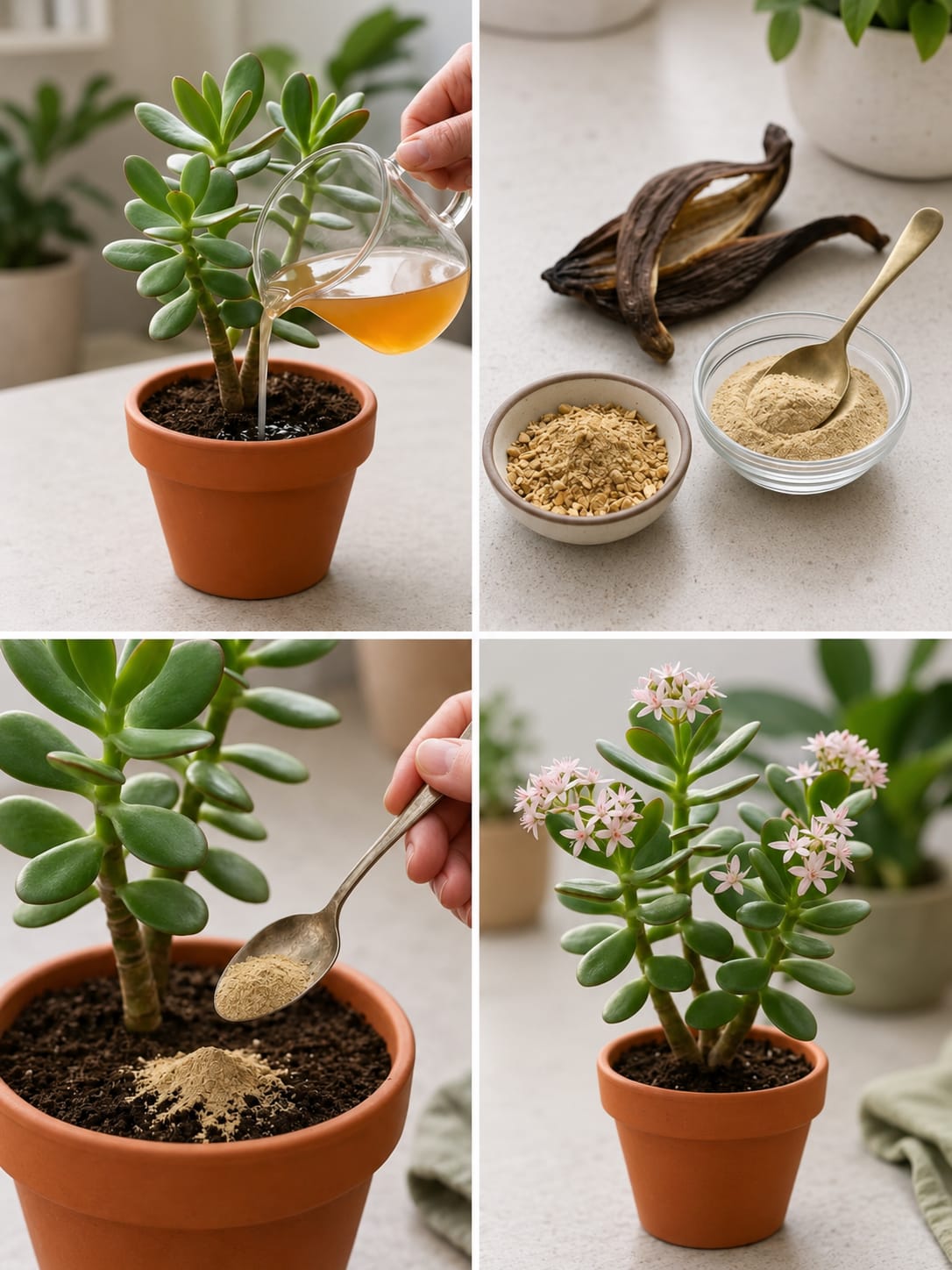
Jade plants are some of the most loved indoor succulents because they look like miniature trees. Their thick woody stems, rounded green leaves, and calm sculptural shape make them perfect for windowsills, desks, shelves, side tables, and sunny indoor corners. A healthy jade plant can live for many years, slowly becoming fuller, stronger, and more beautiful with age.
Many plant lovers enjoy using simple natural ingredients to support houseplant growth, and banana peel is one of the most popular. Dried banana peel powder or diluted banana peel water is often used as a gentle homemade plant tonic because banana peels contain potassium and other small nutrients. For jade plants, however, this routine must be used carefully. Jade plants are succulents, and they do not like rich, wet, heavy soil. Too much banana peel, especially fresh banana pieces, can attract pests, create mold, and keep the soil too damp.
The safest banana peel routine for jade plants is light, dry, strained, and occasional. It should support the plant without overwhelming the roots. The real secret to a thriving jade plant is still bright light, fast-draining soil, proper watering, good drainage, gentle feeding, and patience.
Why Jade Plants Need a Light Touch
Jade plants store water inside their thick leaves and stems. This makes them drought-tolerant and easy to care for, but it also means they can suffer when the soil stays wet for too long. Their roots need oxygen, dryness between waterings, and a loose soil mix.
Unlike peace lilies, pothos, or ferns, jade plants do not want constant moisture. They grow best when watered deeply, then allowed to dry well before the next watering. Any homemade fertilizer or tonic must respect this natural rhythm.
If a jade plant is overwatered, the leaves may become soft, yellow, or mushy. The stems may darken near the base, and the soil may smell sour. In that situation, banana peel will not help. The plant needs dry soil, root inspection, and better drainage.
Why Banana Peel Is Popular for Plants
Banana peels are often used in garden routines because they contain potassium, small amounts of phosphorus, calcium, magnesium, and organic matter. Potassium supports general plant strength, water movement, and overall growth. This is why many gardeners associate banana peel with stronger plants and better flowering.
But banana peel is not a complete fertilizer. It does not provide everything a jade plant needs in a balanced and controlled way. It should not replace a proper diluted succulent fertilizer during the growing season.
Think of banana peel as a small optional soil amendment, not a miracle plant food.
The Best Banana Peel Method for Jade Plants
For jade plants, dried banana peel powder is safer than fresh banana peel pieces. Fresh peels rot inside the pot, hold moisture, attract fungus gnats, and may smell unpleasant. Dried powder is easier to use in tiny amounts and less likely to create a messy soil problem.
To prepare banana peel powder:
- Wash the banana peel well
- Cut it into small pieces
- Dry it completely in the sun, oven, or dehydrator
- Grind it into a fine powder
- Store it in a dry jar
The peel must be fully dry before grinding. If it still feels soft or sticky, it can mold in storage or in the pot.
How Much Banana Peel Powder to Use
Use a very small amount. Jade plants do not need heavy feeding.
For a small jade plant, use only a tiny pinch. For a medium pot, use about one-quarter teaspoon. For a large mature jade plant, use no more than one-half teaspoon at a time.
Sprinkle the powder lightly around the outer soil surface, away from the stem. Then gently mix it into the top layer of soil. Do not pile it against the trunk, because organic material near the stem can hold moisture and increase rot risk.
How Often to Use Banana Peel Powder
Use banana peel powder only once every 2 to 3 months during active growth. Spring and summer are the best seasons because the plant is naturally growing more.
Do not use it every week. Indoor pots are small, and repeated organic amendments can build up quickly. Too much can make the soil sour, attract insects, or disturb the balance around the roots.
During winter, avoid banana peel powder because jade plants usually grow slowly and need less water and nutrition.
Banana Peel Water for Jade Plants
Banana peel water can be used, but it must be very diluted and strained. A strong, fermented banana liquid is not recommended for indoor succulents.
A safer mild version:
- Use one small piece of dried banana peel
- Soak it in 2 cups of water for a few hours
- Strain well
- Dilute with 2 more cups of clean water
- Use only a small amount on soil that is already due for watering
Do not use banana peel water if it smells sour, fermented, or rotten. Fresh, mild, and diluted is safest.
When Not to Use Banana Peel
Avoid banana peel routines if the jade plant has:
- Wet soil
- Root rot
- Fungus gnats
- Mold on the soil
- Soft leaves
- Yellow mushy leaves
- A bad smell from the pot
- No drainage holes
Adding organic material to unhealthy wet soil can make the problem worse. Always fix drainage and watering first.
The Real Secret: Bright Light
Jade plants need bright light to grow strong. A jade plant in low light may stretch, lean, drop leaves, and grow weak stems. No banana peel routine can replace sunlight.
Place your jade plant near a bright window. Morning sun is excellent. Several hours of bright indirect light also help. If you have a very sunny window, introduce the plant gradually so the leaves do not burn.
Strong light helps jade plants keep compact growth, thick stems, and rich green leaves.
How to Water Jade Plants Correctly
Watering is the most important part of jade plant care. Let the soil dry well before watering again. Use your finger, a wooden stick, or the weight of the pot to check moisture.
When the soil is dry, water deeply until water drains from the bottom. Then empty the saucer. Do not leave the plant sitting in water.
Jade plants prefer deep watering followed by a dry period. Small daily splashes are not good because they keep the surface damp and may encourage pests.
Signs Your Jade Plant Needs Water
A thirsty jade plant may have slightly wrinkled leaves, softer leaves, or leaves that feel less plump than usual. The soil will be dry, and the pot may feel light.
After watering, the leaves should slowly firm up again. Do not water again immediately. Wait until the soil dries before the next watering.
Jade plants can tolerate dry soil better than soggy soil.
Signs of Overwatering
Overwatering is dangerous for jade plants. Watch for:
- Yellow leaves dropping
- Soft mushy leaves
- Black or brown soft stem base
- Wet soil that does not dry
- Sour smell from the pot
- Fungus gnats
- Leaves falling even though soil is wet
If these signs appear, stop watering. Remove the plant from the pot if necessary, trim rotten roots, and repot into dry succulent soil.
The Best Soil for Jade Plants
Jade plants need fast-draining soil. Heavy potting mix can hold too much water around the roots.
A good jade plant mix may include:
- Cactus or succulent soil
- Perlite
- Pumice
- Coarse sand
- Small bark chips
- A little regular potting soil
The soil should feel loose and gritty. Water should pass through easily. If the mix stays wet for many days, it needs more drainage material.
Why Drainage Holes Matter
Every jade plant pot needs drainage holes. Without holes, water collects at the bottom and causes root rot.
Terracotta pots are excellent because they breathe and help the soil dry faster. Ceramic pots can work if they have drainage holes. Decorative pots without holes should only be used as cover pots.
Good drainage is more important than any homemade fertilizer trick.
Should You Mix Banana Peel Into the Soil?
Only dried powder should be mixed lightly into the top layer. Do not bury fresh banana peel pieces deep in the pot. They will decompose slowly, hold moisture, and may create odor or pests.
If using banana peel powder, keep it near the top layer and use a tiny amount. The goal is gentle support, not heavy feeding.
Less is safer for succulents.
Can Banana Peel Make Jade Plants Bloom?
Jade plants can produce small star-shaped flowers when mature and grown in the right conditions, but blooming is not guaranteed indoors. Banana peel alone will not force flowers.
Jade plants are more likely to bloom when they are mature, receive strong light, experience a natural seasonal rhythm, and are not overwatered. Cooler nights and bright light can help encourage blooming in some cases.
If your jade plant does not bloom, do not worry. Many indoor jade plants are grown mainly for their sculptural leaves and tree-like form.
Feeding Jade Plants Properly
Banana peel powder is not a complete fertilizer. During spring and summer, you can feed a jade plant with diluted cactus or succulent fertilizer once every 6 to 8 weeks.
Use half strength or weaker. Jade plants do not need strong fertilizer. Too much feeding can cause weak growth or salt buildup.
Do not fertilize during winter unless the plant is actively growing under strong light.
How to Combine Banana Peel and Fertilizer
Do not use banana peel powder and fertilizer at the same time. Space them apart. For example, use a diluted succulent fertilizer one month, then a tiny banana peel powder sprinkle several weeks later.
Observe the plant. If leaves look healthy, firm, and green, you do not need to keep adding more. Overfeeding causes more problems than underfeeding with jade plants.
A slow-growing healthy jade is better than a forced weak jade.
Cleaning Jade Plant Leaves
Jade leaves naturally look glossy when clean. Dust can dull their shine and reduce light absorption.
Use a soft damp cloth to wipe each leaf gently. Support the branch while cleaning so stems do not snap. Avoid oily leaf-shine products because they can clog the leaf surface and attract dust.
Clean leaves make the whole plant look fresher and more decorative.
Pruning for a Fuller Shape
Pruning helps jade plants become bushier and more tree-like. If a stem grows too long or thin, trim it above a leaf node. New branches may grow from that area.
Use clean scissors or pruning shears. Let cut areas dry naturally. Do not spray or soak freshly cut stems.
Pruning during active growth helps the plant recover faster.
Propagating Jade Plants
Jade plants are easy to propagate from cuttings. Cut a healthy stem, let the cut end dry and callus for a few days, then place it in dry succulent soil.
Wait before watering. A fresh cutting without roots can rot if the soil is too wet.
Once roots form, water lightly and keep the young plant in bright indirect light.
Leaf Propagation
You can also grow jade plants from individual leaves. Gently twist off a healthy leaf, let the end dry, and place it on top of succulent soil.
Roots and tiny new leaves may form over time. This method is slow, but it is fun and rewarding.
Do not bury the leaf deeply or water too much. Light moisture and patience are enough.
Repotting Jade Plants
Jade plants do not need frequent repotting. They often prefer being slightly snug in their pots.
Repot when the plant becomes top-heavy, the soil breaks down, or roots fill the pot. Choose a pot only one size larger.
Repot in spring or summer, and wait several days before watering if roots were disturbed.
Common Jade Plant Problems
Many jade plant problems come from care imbalance. Here are common issues:
- Leggy growth from low light
- Soft leaves from overwatering
- Wrinkled leaves from underwatering
- Leaf drop from sudden changes
- Brown spots from sunburn or damage
- Root rot from poor drainage
- Weak stems from too little light
Correct the cause before adding any homemade tonic.
Continue to Page 2
Continue to page 2 for more details about this article and the key points many readers miss on the first page.